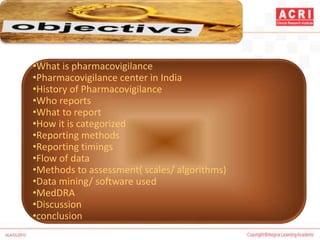
•What is pharmacovigilance
•Pharmacovigilance center in India
•History of Pharmacovigilance
•Who reports
•What to report
•How it is categorized
•Reporting methods
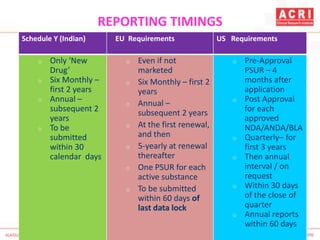
•Reporting timings
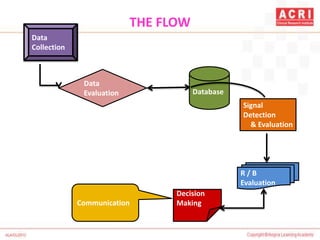
•Flow of data
•Methods to assessment( scales/ algorithms)
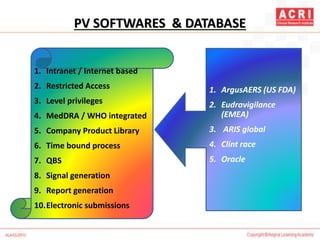
•Data mining/ software used
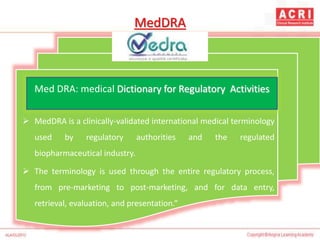
•MedDRA
•Discussion
•conclusion
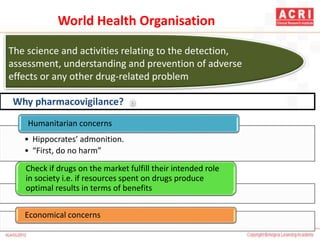
The science and activities relating to the detection,
assessment, understanding and prevention of adverse
effects or any other drug-related problem
a
• Hippocrates’ admonition.
• “First, do no harm”
Humanitarian concerns
Check if drugs on the market fulfill their intended role
in society i.e. if resources spent on drugs produce
optimal results in terms of benefits
Economical concerns
Why pharmacovigilance?
World Health Organisation
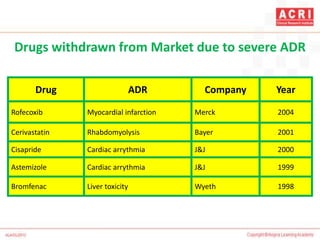
Drugs withdrawn from Market due to severe ADR
Drug ADR Company Year
Rofecoxib Myocardial infarction Merck 2004
Cerivastatin Rhabdomyolysis Bayer 2001
Cisapride Cardiac arrythmia J&J 2000
Astemizole Cardiac arrythmia J&J 1999
Bromfenac Liver toxicity Wyeth 1998
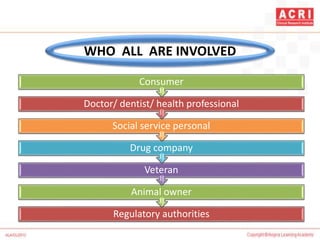
WHO ALL ARE INVOLVED
Regulatory authorities
Animal owner
Veteran
Drug company
Social service personal
Doctor/ dentist/ health professional
Consumer
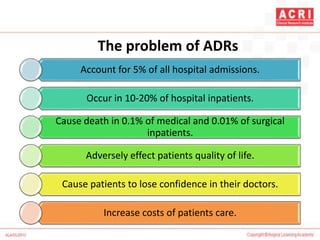
The problem of ADRs
Account for 5% of all hospital admissions.
Occur in 10-20% of hospital inpatients.
Cause death in 0.1% of medical and 0.01% of surgical
inpatients.
Adversely effect patients quality of life.
Cause patients to lose confidence in their doctors.
Increase costs of patients care.
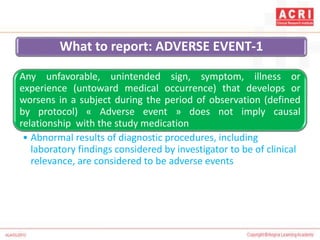
What to report: ADVERSE EVENT-1
Any unfavorable, unintended sign, symptom, illness or
experience (untoward medical occurrence) that develops or
worsens in a subject during the period of observation (defined
by protocol) « Adverse event » does not imply causal
relationship with the study medication
• Abnormal results of diagnostic procedures, including
laboratory findings considered by investigator to be of clinical
relevance, are considered to be adverse events
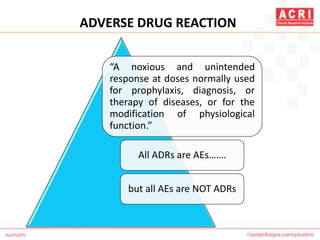
ADVERSE DRUG REACTION
“A noxious and unintended
response at doses normally used
for prophylaxis, diagnosis, or
therapy of diseases, or for the
modification of physiological
function.”
All ADRs are AEs…….
but all AEs are NOT ADRs
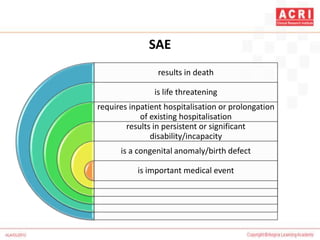
SAE
results in death
is life threatening
requires inpatient hospitalisation or prolongation
of existing hospitalisation
results in persistent or significant
disability/incapacity
is a congenital anomaly/birth defect
is important medical event
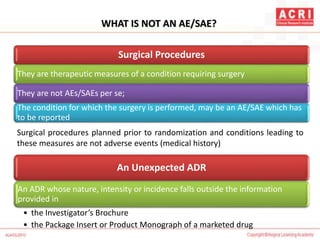
WHAT IS NOT AN AE/SAE?
Surgical Procedures
They are therapeutic measures of a condition requiring surgery
They are not AEs/SAEs per se;
The condition for which the surgery is performed, may be an AE/SAE which has
to be reported
Surgical procedures planned prior to randomization and conditions leading to
these measures are not adverse events (medical history)
An Unexpected ADR
An ADR whose nature, intensity or incidence falls outside the information
provided in
• the Investigator’s Brochure
• the Package Insert or Product Monograph of a marketed drug
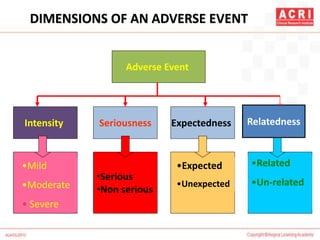
Adverse Event
Intensity Seriousness Expectedness
•Mild
•Moderate
• Severe
•Serious
•Non serious
•Expected
•Unexpected
•Related
•Un-related
Relatedness
DIMENSIONS OF AN ADVERSE EVENT
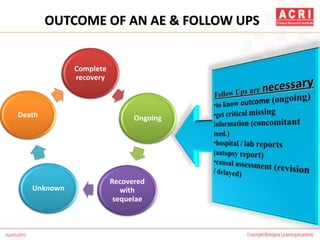
OUTCOME OF AN AE & FOLLOW UPS
Complete
recovery
Ongoing
Recovered
with
sequelae
Unknown
Death
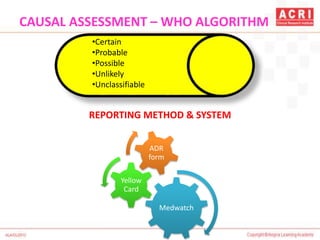
CAUSAL ASSESSMENT – WHO ALGORITHM
•Certain
•Probable
•Possible
•Unlikely
•Unclassifiable
REPORTING METHOD & SYSTEM
Medwatch
Yellow
Card
ADR
form
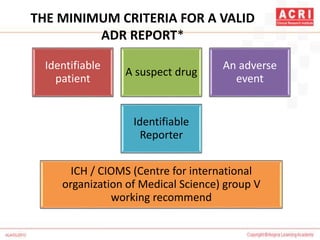
THE MINIMUM CRITERIA FOR A VALID
ADR REPORT*
Identifiable
patient
A suspect drug
An adverse
event
Identifiable
Reporter
ICH / CIOMS (Centre for international
organization of Medical Science) group V
working recommend
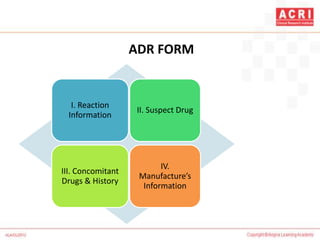
ADR FORM
I. Reaction
Information
II. Suspect Drug
III. Concomitant
Drugs & History
IV.
Manufacture’s
Information
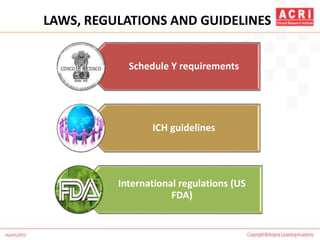
LAWS, REGULATIONS AND GUIDELINES
Schedule Y requirements
ICH guidelines
International regulations (US
FDA)
12/17/2015 17
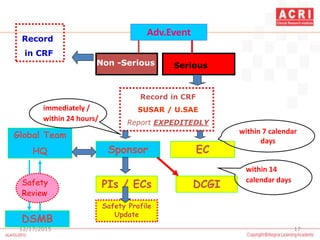
Adv.Event
DCGI
Sponsor
within 14
calendar days
SeriousNon -Serious
Record
in CRF
Record in CRF
SUSAR / U.SAE
Report EXPEDITEDLY
Global Team
HQ
PIs / ECs
DSMB
EC
immediately /
within 24 hours/
within 7 calendar
days
Safety
Review
Safety Profile
Update
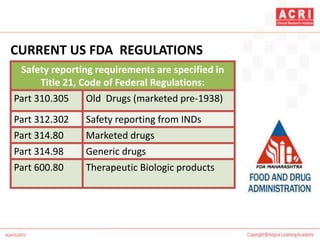
CURRENT US FDA REGULATIONS
Safety reporting requirements are specified in
Title 21, Code of Federal Regulations:
Part 310.305 Old Drugs (marketed pre-1938)
Part 312.302 Safety reporting from INDs
Part 314.80 Marketed drugs
Part 314.98 Generic drugs
Part 600.80 Therapeutic Biologic products
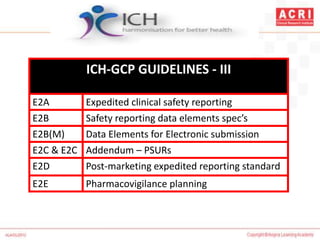
ICH-GCP GUIDELINES - III
E2A Expedited clinical safety reporting
E2B Safety reporting data elements spec’s
E2B(M) Data Elements for Electronic submission
E2C & E2C Addendum – PSURs
E2D Post-marketing expedited reporting standard
E2E Pharmacovigilance planning
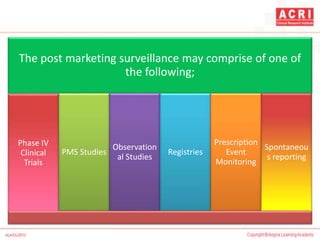
The post marketing surveillance may comprise of one of
the following;
Phase IV
Clinical
Trials
PMS Studies
Observation
al Studies
Registries
Prescription
Event
Monitoring
Spontaneou
s reporting
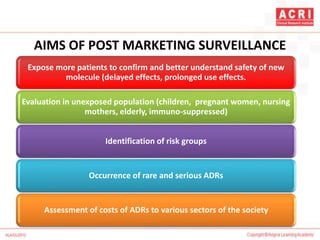
AIMS OF POST MARKETING SURVEILLANCE
Expose more patients to confirm and better understand safety of new
molecule (delayed effects, prolonged use effects.
Evaluation in unexposed population (children, pregnant women, nursing
mothers, elderly, immuno-suppressed)
Identification of risk groups
Occurrence of rare and serious ADRs
Assessment of costs of ADRs to various sectors of the society
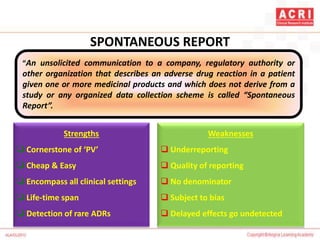
SPONTANEOUS REPORT
“An unsolicited communication to a company, regulatory authority or
other organization that describes an adverse drug reaction in a patient
given one or more medicinal products and which does not derive from a
study or any organized data collection scheme is called “Spontaneous
Report”.
Strengths
 Cornerstone of ‘PV’
 Cheap & Easy
 Encompass all clinical settings
 Life-time span
 Detection of rare ADRs
Weaknesses
 Underreporting
 Quality of reporting
 No denominator
 Subject to bias
 Delayed effects go undetected
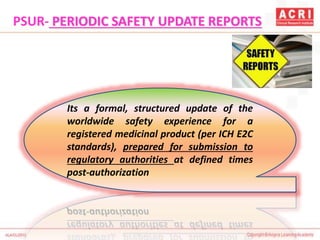
Its a formal, structured update of the
worldwide safety experience for a
registered medicinal product (per ICH E2C
standards), prepared for submission to
regulatory authorities at defined times
post-authorization
PSUR- PERIODIC SAFETY UPDATE REPORTS
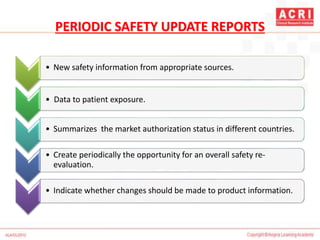
PERIODIC SAFETY UPDATE REPORTS
• New safety information from appropriate sources.
1 • Data to patient exposure.
• Summarizes the market authorization status in different countries.
• Create periodically the opportunity for an overall safety re-
evaluation.
• Indicate whether changes should be made to product information.
REPORTING TIMINGS
Schedule Y (Indian) EU Requirements US Requirements
o Only ‘New
Drug’
o Six Monthly –
first 2 years
o Annual –
subsequent 2
years
o To be
submitted
within 30
calendar days
o Even if not
marketed
o Six Monthly – first 2
years
o Annual –
subsequent 2 years
o At the first renewal,
and then
o 5-yearly at renewal
thereafter
o One PSUR for each
active substance
o To be submitted
within 60 days of
last data lock
o Pre-Approval
PSUR – 4
months after
application
o Post Approval
for each
approved
NDA/ANDA/BLA
o Quarterly– for
first 3 years
o Then annual
interval / on
request
o Within 30 days
of the close of
quarter
o Annual reports
within 60 days
THE FLOW
Data
Evaluation Database
Signal
Detection
& Evaluation
R / B
Evaluation
Decision
MakingCommunication
Data
Collection
PV SOFTWARES & DATABASE
1. Intranet / Internet based
2. Restricted Access
3. Level privileges
4. MedDRA / WHO integrated
5. Company Product Library
6. Time bound process
7. QBS
8. Signal generation
9. Report generation
10.Electronic submissions
1. ArgusAERS (US FDA)
2. Eudravigilance
(EMEA)
3. ARIS global
4. Clint race
5. Oracle
MedDRA
 MedDRA is a clinically-validated international medical terminology
used by regulatory authorities and the regulated
biopharmaceutical industry.
 The terminology is used through the entire regulatory process,
from pre-marketing to post-marketing, and for data entry,
retrieval, evaluation, and presentation.”
Med DRA: medical Dictionary for Regulatory Activities
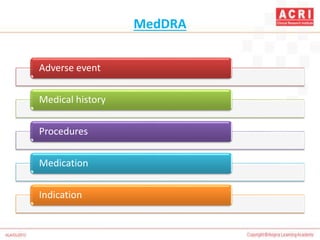
MedDRA
Adverse event
Medical history
Procedures
Medication
Indication
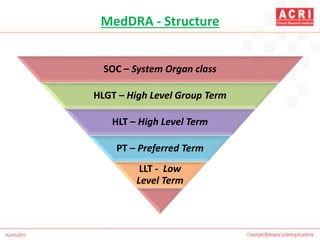
MedDRA - Structure
SOC – System Organ class
HLGT – High Level Group Term
HLT – High Level Term
PT – Preferred Term
LLT - Low
Level Term
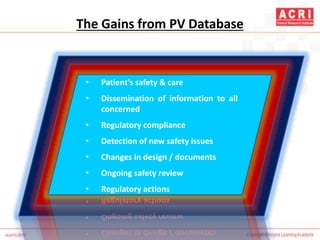
The Gains from PV Database
• Patient’s safety & care
• Dissemination of information to all
concerned
• Regulatory compliance
• Detection of new safety issues
• Changes in design / documents
• Ongoing safety review
• Regulatory actions
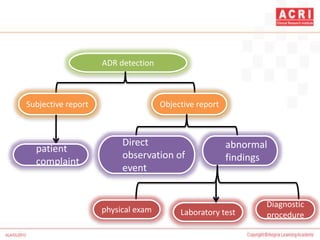
ADR detection
Subjective report Objective report
patient
complaint
Direct
observation of
event
abnormal
findings
physical exam Laboratory test
Diagnostic
procedure
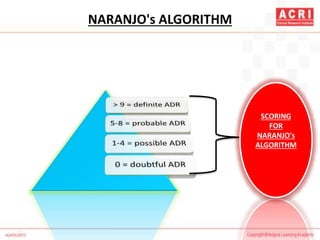
NARANJO's ALGORITHM
Question Yes No Don't
know
Are there previous conclusion reports on this reaction? +1 0 0
Did the adverse event appear after the suspect drug was
administered?
+2 -1 0
Did the AR improve when the drug was discontinued or a
specific antagonist was administered?
+1 0 0
Did the AR reappear when drug was re administered? +2 -1 0
Are there alternate causes [other than the drug] that could
solely have caused the reaction?
-1 +2 0
Did the reaction reappear when a placebo was given? -1 +1 0
NARANJO's ALGORITHM
Question Yes No Don’t
know
Was the drug detected in the blood [or other fluids] in a
concentration known to be toxic?
+1 0 0
Was the reaction more severe when the dose was increased,
or less severe when the dose was decreased?
+1 0 0
Did the patient have a similar reaction to the same or similar
drugs in any previous exposure?
+1 0 0
Was the adverse event confirmed by objective evidence? +1 0 0
NARANJO's ALGORITHM
SCORING
FOR
NARANJO's
ALGORITHM
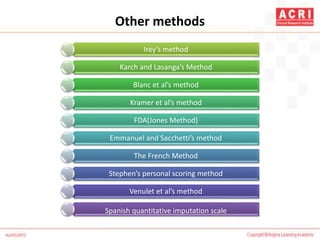
Other methods
Irey’s method
Karch and Lasanga’s Method
Blanc et al’s method
Kramer et al’s method
FDA(Jones Method)
Emmanuel and Sacchetti’s method
The French Method
Stephen’s personal scoring method
Venulet et al’s method
Spanish quantitative imputation scale
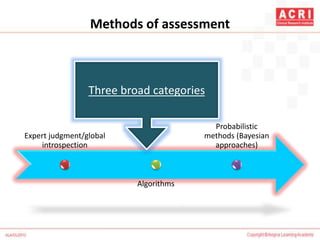
Methods of assessment
Expert judgment/global
introspection
Algorithms
Probabilistic
methods (Bayesian
approaches)
Three broad categories
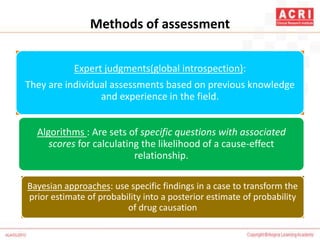
Methods of assessment
Expert judgments(global introspection):
They are individual assessments based on previous knowledge
and experience in the field.
Algorithms : Are sets of specific questions with associated
scores for calculating the likelihood of a cause-effect
relationship.
Bayesian approaches: use specific findings in a case to transform the
prior estimate of probability into a posterior estimate of probability
of drug causation
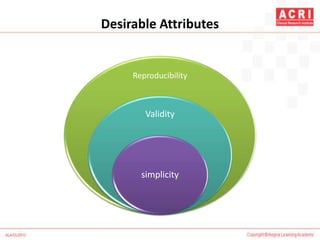
Desirable Attributes
Reproducibility
Validity
simplicity
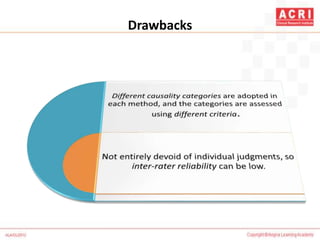
Drawbacks
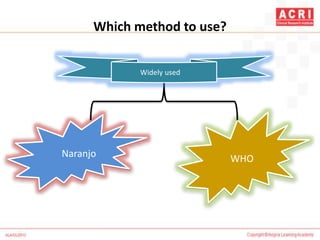
Which method to use?
Naranjo WHO
Widely used
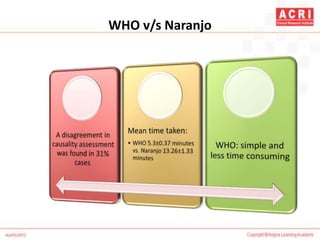
WHO v/s Naranjo
Pharmacovigilance overview

Pharmacovigilance overview

  • 2.
    •What is pharmacovigilance •Pharmacovigilancecenter in India •History of Pharmacovigilance •Who reports •What to report •How it is categorized •Reporting methods •Reporting timings •Flow of data •Methods to assessment( scales/ algorithms) •Data mining/ software used •MedDRA •Discussion •conclusion
  • 3.
    The science andactivities relating to the detection, assessment, understanding and prevention of adverse effects or any other drug-related problem a • Hippocrates’ admonition. • “First, do no harm” Humanitarian concerns Check if drugs on the market fulfill their intended role in society i.e. if resources spent on drugs produce optimal results in terms of benefits Economical concerns Why pharmacovigilance? World Health Organisation
  • 4.
    Drugs withdrawn fromMarket due to severe ADR Drug ADR Company Year Rofecoxib Myocardial infarction Merck 2004 Cerivastatin Rhabdomyolysis Bayer 2001 Cisapride Cardiac arrythmia J&J 2000 Astemizole Cardiac arrythmia J&J 1999 Bromfenac Liver toxicity Wyeth 1998
  • 5.
    WHO ALL AREINVOLVED Regulatory authorities Animal owner Veteran Drug company Social service personal Doctor/ dentist/ health professional Consumer
  • 6.
    The problem ofADRs Account for 5% of all hospital admissions. Occur in 10-20% of hospital inpatients. Cause death in 0.1% of medical and 0.01% of surgical inpatients. Adversely effect patients quality of life. Cause patients to lose confidence in their doctors. Increase costs of patients care.
  • 7.
    What to report:ADVERSE EVENT-1 Any unfavorable, unintended sign, symptom, illness or experience (untoward medical occurrence) that develops or worsens in a subject during the period of observation (defined by protocol) « Adverse event » does not imply causal relationship with the study medication • Abnormal results of diagnostic procedures, including laboratory findings considered by investigator to be of clinical relevance, are considered to be adverse events
  • 8.
    ADVERSE DRUG REACTION “Anoxious and unintended response at doses normally used for prophylaxis, diagnosis, or therapy of diseases, or for the modification of physiological function.” All ADRs are AEs……. but all AEs are NOT ADRs
  • 9.
    SAE results in death islife threatening requires inpatient hospitalisation or prolongation of existing hospitalisation results in persistent or significant disability/incapacity is a congenital anomaly/birth defect is important medical event
  • 10.
    WHAT IS NOTAN AE/SAE? Surgical Procedures They are therapeutic measures of a condition requiring surgery They are not AEs/SAEs per se; The condition for which the surgery is performed, may be an AE/SAE which has to be reported Surgical procedures planned prior to randomization and conditions leading to these measures are not adverse events (medical history) An Unexpected ADR An ADR whose nature, intensity or incidence falls outside the information provided in • the Investigator’s Brochure • the Package Insert or Product Monograph of a marketed drug
  • 11.
    Adverse Event Intensity SeriousnessExpectedness •Mild •Moderate • Severe •Serious •Non serious •Expected •Unexpected •Related •Un-related Relatedness DIMENSIONS OF AN ADVERSE EVENT
  • 12.
    OUTCOME OF ANAE & FOLLOW UPS Complete recovery Ongoing Recovered with sequelae Unknown Death
  • 13.
    CAUSAL ASSESSMENT –WHO ALGORITHM •Certain •Probable •Possible •Unlikely •Unclassifiable REPORTING METHOD & SYSTEM Medwatch Yellow Card ADR form
  • 14.
    THE MINIMUM CRITERIAFOR A VALID ADR REPORT* Identifiable patient A suspect drug An adverse event Identifiable Reporter ICH / CIOMS (Centre for international organization of Medical Science) group V working recommend
  • 15.
    ADR FORM I. Reaction Information II.Suspect Drug III. Concomitant Drugs & History IV. Manufacture’s Information
  • 16.
    LAWS, REGULATIONS ANDGUIDELINES Schedule Y requirements ICH guidelines International regulations (US FDA)
  • 17.
    12/17/2015 17 Adv.Event DCGI Sponsor within 14 calendardays SeriousNon -Serious Record in CRF Record in CRF SUSAR / U.SAE Report EXPEDITEDLY Global Team HQ PIs / ECs DSMB EC immediately / within 24 hours/ within 7 calendar days Safety Review Safety Profile Update
  • 18.
    CURRENT US FDAREGULATIONS Safety reporting requirements are specified in Title 21, Code of Federal Regulations: Part 310.305 Old Drugs (marketed pre-1938) Part 312.302 Safety reporting from INDs Part 314.80 Marketed drugs Part 314.98 Generic drugs Part 600.80 Therapeutic Biologic products
  • 19.
    ICH-GCP GUIDELINES -III E2A Expedited clinical safety reporting E2B Safety reporting data elements spec’s E2B(M) Data Elements for Electronic submission E2C & E2C Addendum – PSURs E2D Post-marketing expedited reporting standard E2E Pharmacovigilance planning
  • 20.
    The post marketingsurveillance may comprise of one of the following; Phase IV Clinical Trials PMS Studies Observation al Studies Registries Prescription Event Monitoring Spontaneou s reporting
  • 21.
    AIMS OF POSTMARKETING SURVEILLANCE Expose more patients to confirm and better understand safety of new molecule (delayed effects, prolonged use effects. Evaluation in unexposed population (children, pregnant women, nursing mothers, elderly, immuno-suppressed) Identification of risk groups Occurrence of rare and serious ADRs Assessment of costs of ADRs to various sectors of the society
  • 22.
    SPONTANEOUS REPORT “An unsolicitedcommunication to a company, regulatory authority or other organization that describes an adverse drug reaction in a patient given one or more medicinal products and which does not derive from a study or any organized data collection scheme is called “Spontaneous Report”. Strengths  Cornerstone of ‘PV’  Cheap & Easy  Encompass all clinical settings  Life-time span  Detection of rare ADRs Weaknesses  Underreporting  Quality of reporting  No denominator  Subject to bias  Delayed effects go undetected
  • 23.
    Its a formal,structured update of the worldwide safety experience for a registered medicinal product (per ICH E2C standards), prepared for submission to regulatory authorities at defined times post-authorization PSUR- PERIODIC SAFETY UPDATE REPORTS
  • 24.
    PERIODIC SAFETY UPDATEREPORTS • New safety information from appropriate sources. 1 • Data to patient exposure. • Summarizes the market authorization status in different countries. • Create periodically the opportunity for an overall safety re- evaluation. • Indicate whether changes should be made to product information.
  • 25.
    REPORTING TIMINGS Schedule Y(Indian) EU Requirements US Requirements o Only ‘New Drug’ o Six Monthly – first 2 years o Annual – subsequent 2 years o To be submitted within 30 calendar days o Even if not marketed o Six Monthly – first 2 years o Annual – subsequent 2 years o At the first renewal, and then o 5-yearly at renewal thereafter o One PSUR for each active substance o To be submitted within 60 days of last data lock o Pre-Approval PSUR – 4 months after application o Post Approval for each approved NDA/ANDA/BLA o Quarterly– for first 3 years o Then annual interval / on request o Within 30 days of the close of quarter o Annual reports within 60 days
  • 26.
    THE FLOW Data Evaluation Database Signal Detection &Evaluation R / B Evaluation Decision MakingCommunication Data Collection
  • 27.
    PV SOFTWARES &DATABASE 1. Intranet / Internet based 2. Restricted Access 3. Level privileges 4. MedDRA / WHO integrated 5. Company Product Library 6. Time bound process 7. QBS 8. Signal generation 9. Report generation 10.Electronic submissions 1. ArgusAERS (US FDA) 2. Eudravigilance (EMEA) 3. ARIS global 4. Clint race 5. Oracle
  • 28.
    MedDRA  MedDRA isa clinically-validated international medical terminology used by regulatory authorities and the regulated biopharmaceutical industry.  The terminology is used through the entire regulatory process, from pre-marketing to post-marketing, and for data entry, retrieval, evaluation, and presentation.” Med DRA: medical Dictionary for Regulatory Activities
  • 29.
  • 30.
    MedDRA - Structure SOC– System Organ class HLGT – High Level Group Term HLT – High Level Term PT – Preferred Term LLT - Low Level Term
  • 31.
    The Gains fromPV Database • Patient’s safety & care • Dissemination of information to all concerned • Regulatory compliance • Detection of new safety issues • Changes in design / documents • Ongoing safety review • Regulatory actions
  • 32.
    ADR detection Subjective reportObjective report patient complaint Direct observation of event abnormal findings physical exam Laboratory test Diagnostic procedure
  • 33.
    NARANJO's ALGORITHM Question YesNo Don't know Are there previous conclusion reports on this reaction? +1 0 0 Did the adverse event appear after the suspect drug was administered? +2 -1 0 Did the AR improve when the drug was discontinued or a specific antagonist was administered? +1 0 0 Did the AR reappear when drug was re administered? +2 -1 0 Are there alternate causes [other than the drug] that could solely have caused the reaction? -1 +2 0 Did the reaction reappear when a placebo was given? -1 +1 0
  • 34.
    NARANJO's ALGORITHM Question YesNo Don’t know Was the drug detected in the blood [or other fluids] in a concentration known to be toxic? +1 0 0 Was the reaction more severe when the dose was increased, or less severe when the dose was decreased? +1 0 0 Did the patient have a similar reaction to the same or similar drugs in any previous exposure? +1 0 0 Was the adverse event confirmed by objective evidence? +1 0 0
  • 35.
  • 36.
    Other methods Irey’s method Karchand Lasanga’s Method Blanc et al’s method Kramer et al’s method FDA(Jones Method) Emmanuel and Sacchetti’s method The French Method Stephen’s personal scoring method Venulet et al’s method Spanish quantitative imputation scale
  • 37.
    Methods of assessment Expertjudgment/global introspection Algorithms Probabilistic methods (Bayesian approaches) Three broad categories
  • 38.
    Methods of assessment Expertjudgments(global introspection): They are individual assessments based on previous knowledge and experience in the field. Algorithms : Are sets of specific questions with associated scores for calculating the likelihood of a cause-effect relationship. Bayesian approaches: use specific findings in a case to transform the prior estimate of probability into a posterior estimate of probability of drug causation
  • 39.
  • 40.
  • 41.
    Which method touse? Naranjo WHO Widely used
  • 42.