PHARMACOVIGILANCE
Presented by
Jabeen Fatima
M pharmacy 1st year
Pharmacology
Under the guidance of
Dr. b veeresh, H.O.D
CONTENTS:
Introduction.
Collection of data.
Reporting of ADRs.
Pharmacovigilance method.
Assessment.
Periodic safety update report(psur).
Risk-benefit assessment and management.
Pharmacovigilance program of India.
INTRODUCTION:
Before drugs become available to the patients, they
are subjected to rigorous clinical studies.
However, some adverse drug reactions (ADRs) are
often detected ONLY after marketing.
 The study of ADRs is the concern of the field
known as pharmacovigilance
DEFINITION:
Pharmaco (Greek): drug
Vigilance (Latin): –to keep awake or alert
–to keep watch
–the process of paying close and continuous
attention
Definition: PV is the science and activities dealing with the detection,
assessment, understanding and prevention of adverse effects of drugs.
It has been widened to include biological products, herbals, traditional
and complementary medicines.
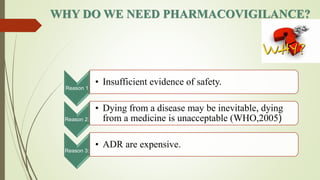
WHY DO WE NEED PHARMACOVIGILANCE?
Reason 1
• Insufficient evidence of safety.
Reason 2:
• Dying from a disease may be inevitable, dying
from a medicine is unacceptable (WHO,2005)
Reason 3:
• ADR are expensive.
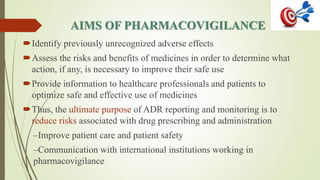
AIMS OF PHARMACOVIGILANCE
Identify previously unrecognized adverse effects
Assess the risks and benefits of medicines in order to determine what
action, if any, is necessary to improve their safe use
Provide information to healthcare professionals and patients to
optimize safe and effective use of medicines
Thus, the ultimate purpose of ADR reporting and monitoring is to
reduce risks associated with drug prescribing and administration
–Improve patient care and patient safety
–Communication with international institutions working in
pharmacovigilance
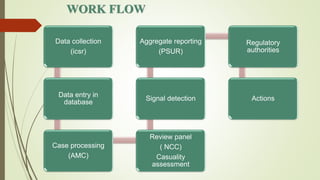
WORK FLOW
Data collection
(icsr)
Data entry in
database
Case processing
(AMC)
Review panel
( NCC)
Casuality
assessment
Signal detection
Aggregate reporting
(PSUR)
Regulatory
authorities
Actions
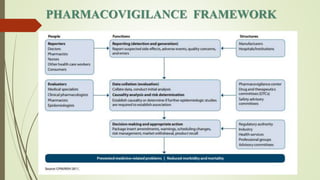
PHARMACOVIGILANCE FRAMEWORK
COLLECTION OF DATA:
Passive data collection
Mandatory data collection
Active data collection
PASSIVE DATA COLLECTION:
Voluntary case reporting.
Requires health care professionals to be active participant in safety.
Encouraged – improving patient care and reducing the risks of
ADRs.
Barries:
 Punishment
 Liability
 Incidence of occurrence
 Facilities (reporting method)
 Lack of time.
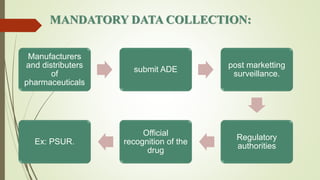
MANDATORY DATA COLLECTION:
Manufacturers
and distributers
of
pharmaceuticals
submit ADE
post marketting
surveillance.
Regulatory
authorities
Official
recognition of the
drug
Ex: PSUR.
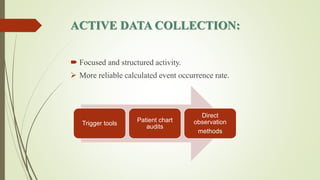
ACTIVE DATA COLLECTION:
 Focused and structured activity.
 More reliable calculated event occurrence rate.
Trigger tools
Patient chart
audits
Direct
observation
methods
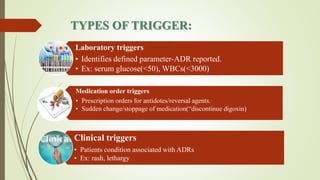
TYPES OF TRIGGER:
Laboratory triggers
• Identifies defined parameter-ADR reported.
• Ex: serum glucose(<50), WBCs(<3000)
Medication order triggers
• Prescription orders for antidotes/reversal agents.
• Sudden change/stoppage of medication(“discontinue digoxin)
Clinical triggers
• Patients condition associated with ADRs
• Ex: rash, lethargy
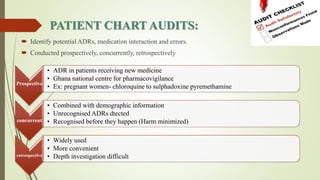
PATIENT CHART AUDITS:
 Identify potential ADRs, medication interaction and errors.
 Conducted prospectively, concurrently, retrospectively
Prospective
• ADR in patients receiving new medicine
• Ghana national centre for pharmacovigilance
• Ex: pregnant women- chloroquine to sulphadoxine pyremethamine
concurrent
• Combined with demographic information
• Unrecognised ADRs dtected
• Recognised before they happen (Harm minimized)
retrospective
• Widely used
• More convenient
• Depth investigation difficult
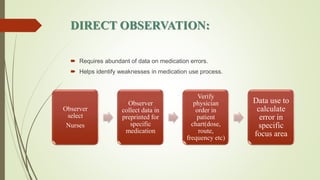
DIRECT OBSERVATION:
 Requires abundant of data on medication errors.
 Helps identify weaknesses in medication use process.
Observer
select
Nurses
Observer
collect data in
preprinted for
specific
medication
Verify
physician
order in
patient
chart(dose,
route,
frequency etc)
Data use to
calculate
error in
specific
focus area
DATA COLLECTION TOOLS:
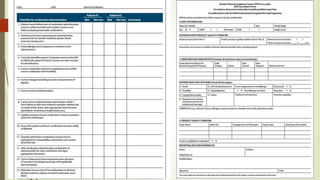
Filling standardized forms
Adapted from standards of practice and procedures
Country have pharmacovigilance program(own standard form)
For ADR data, identifying specifics about patient is important
Concominent therapies and conditions
Patient’s reaction to medicine
Medicine suspected for causing reaction
Manufacturer and batch number, if available
REPORTING:
Spontaneous reporting
Expedited reporting
Clinical trial reporting
Aggregate reporting
others
SPONTANEOUS REPORTING:
Clinician's normal diagnosis of a patient.
Relies on vigilant physicians and other healthcare
professionals, generate a suspicion of an ADR, but
also report it.
core data-generating system of international
pharmacovigilance and WHO Database, 4.6
million reports growing annually by about
250,000.
EXPEDITED REPORTING:
Involve a serious and unlisted event.
The timeframe for reporting expedited cases
7/15 calendar days
Within clinical trials - SUSAR (a Suspected Unexpected
Serious Adverse Reaction).
SUSAR, life-threatening or fatal, subject to a 7-day
"clock".
CLINICAL TRIAL REPORTING
Also known as SAE (serious adverse event) reporting.
 key component that drug regulatory authorities consider in
the decision-making - to grant or deny market authorization
for a drug.
SAE reporting occurs as a result of study patients (subjects)
who experience serious adverse events during the
conducting of clinical trials.
AGGREGATE REPORTING
Also known as periodic reporting.
 key role in the safety assessment of drugs
compilation of safety data for a drug over a
prolonged period of time (months or years)-
(broader view)
Example: PSUR.
PHARMACOVIGILANCE METHODS:
 Passive Surveillance
 Spontaneous reporting
 Case Series
 Stimulated Reporting
 Active Surveillance
 Sentinel Sites
 Drug Event Monitoring
 Registries
 Comparative Observational Studies
 Cross-sectional Study (Survey)
 Case-control Study
 Cohort Study
 Targeted Clinical Investigations
 Descriptive Studies
 Natural History of Disease
PASSIVE SURVEILLANCE:
Spontaneous reporting
• A report of an ADR received directly from healthcare
professionals/consumers/patients.
Case series:
• Series of case reports can provide evidence of an association
between a drug and an adverse event
• more useful for generating hypotheses than for verifying an
association between drug exposure and outcome
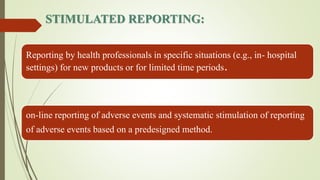
STIMULATED REPORTING:
Reporting by health professionals in specific situations (e.g., in- hospital
settings) for new products or for limited time periods.
on-line reporting of adverse events and systematic stimulation of reporting
of adverse events based on a predesigned method.
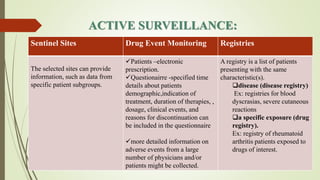
ACTIVE SURVEILLANCE:
Sentinel Sites Drug Event Monitoring Registries
The selected sites can provide
information, such as data from
specific patient subgroups.
Patients –electronic
prescription.
Questionairre -specified time
details about patients
demographic,indication of
treatment, duration of therapies, ,
dosage, clinical events, and
reasons for discontinuation can
be included in the questionnaire
more detailed information on
adverse events from a large
number of physicians and/or
patients might be collected.
A registry is a list of patients
presenting with the same
characteristic(s).
disease (disease registry)
Ex: registries for blood
dyscrasias, severe cutaneous
reactions
a specific exposure (drug
registry).
Ex: registry of rheumatoid
arthritis patients exposed to
drugs of interest.
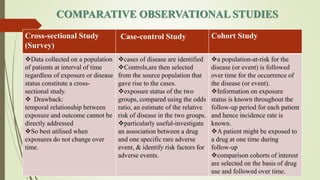
COMPARATIVE OBSERVATIONAL STUDIES
Cross-sectional Study
(Survey)
Case-control Study Cohort Study
Data collected on a population
of patients at interval of time
regardless of exposure or disease
status constitute a cross-
sectional study.
 Drawback:
temporal relationship between
exposure and outcome cannot be
directly addressed
So best utilised when
exposures do not change over
time.
cases of disease are identified
Controls,are then selected
from the source population that
gave rise to the cases.
exposure status of the two
groups, compared using the odds
ratio, an estimate of the relative
risk of disease in the two groups.
particularly useful-investigate
an association between a drug
and one specific rare adverse
event, & identify risk factors for
adverse events.
a population-at-risk for the
disease (or event) is followed
over time for the occurrence of
the disease (or event).
Information on exposure
status is known throughout the
follow-up period for each patient
and hence incidence rate is
known.
A patient might be exposed to
a drug at one time during
follow-up
comparison cohorts of interest
are selected on the basis of drug
use and followed over time.
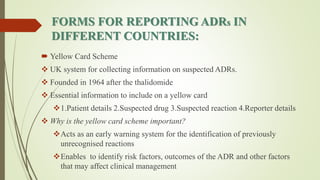
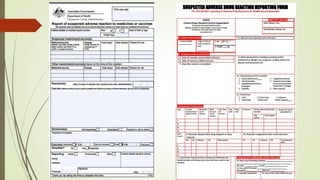
FORMS FOR REPORTING ADRs IN
DIFFERENT COUNTRIES:
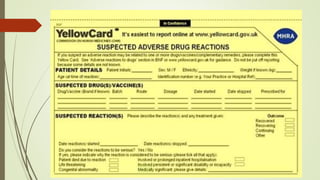
 Yellow Card Scheme
 UK system for collecting information on suspected ADRs.
 Founded in 1964 after the thalidomide
 Essential information to include on a yellow card
1.Patient details 2.Suspected drug 3.Suspected reaction 4.Reporter details
 Why is the yellow card scheme important?
Acts as an early warning system for the identification of previously
unrecognised reactions
Enables to identify risk factors, outcomes of the ADR and other factors
that may affect clinical management
ADR REPORTING THROUGH VIGIFLOW
 VigiFlow is a web-based Individual Case Safety Report (ICSR)
management system
Specially designed for use by national centres in the WHO Programme
for International Drug Monitoring.
 VigiFlow 5.1(Released on 14 June 2013)
 Subscription for Vigiflow is free in India.
 Other tools:
 ARISg (mainly used by Drug manufacturer in Europe)
 Argus (mainly used by Drug manufacturer in USA)
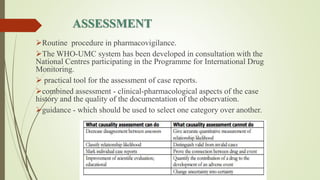
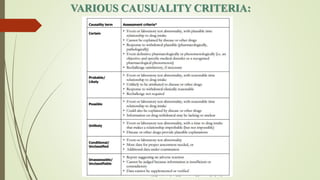
ASSESSMENT
Routine procedure in pharmacovigilance.
The WHO-UMC system has been developed in consultation with the
National Centres participating in the Programme for International Drug
Monitoring.
 practical tool for the assessment of case reports.
combined assessment - clinical-pharmacological aspects of the case
history and the quality of the documentation of the observation.
guidance - which should be used to select one category over another.
CAUSALITYASSESSMENT
KEY QUESTIONS
 Can the drug cause the adverse reaction?
 Has the drug caused the adverse reaction?
 Will the drug cause the adverse reaction?
 how likely is it that this medication is the cause of this problem in this particular
patient?
 making a differential diagnosis
VARIOUS CAUSUALITY CRITERIA:
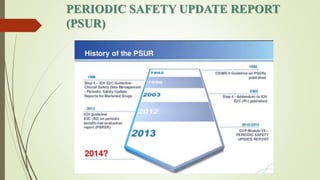
PERIODIC SAFETY UPDATE REPORT
(PSUR)
OVERVIEW OF PSUR:
Important Aggregate Reporting
 Key role in safety assessment of Drugs.
 It involves compilation of safety data of drug over a prolonged period of time.
Advantages: Provides broader view of safety profile of a drug.
 (PSURs) now called as PBRER (Periodic benefit risk evaluation report):
are Pharmacovigilance documents intended to provide an evaluation of the risk-
benefit balance of a medicinal product for submission at defined time points during the
post- authorisation phase.
The PSUR should focus on summary information, scientific safety assessment and integrated
benefit-risk evaluation.
PERIODIC SAFETY UPDATE REPORT
(PSUR) cont…
 As per Schedule Y, PSUR includes all safety reports
 Spontaneous AE reports,
 PMS studies,
 Safety info from other sources
 published articles etc.
 After approval of the product, new drugs should be closely monitored for
their clinical safety once they are marketed.
CONT..
 The applicants shall furnish Periodic Safety Update Reports (PSURs) in order to –
Report all the relevant new information from appropriate sources;
Relate these data to patient exposure;
Summarize the market authorization status in different countries and any
significant variations related to safety; and
Indicate whether changes should be made to product information in order to
optimize the use of the product.
Cont..
 Submission frequency for PSURs:
 First 2 yrs: every 6 month
 Next 2 yrs: every year
 After that every 3 years.
 On the basis of PSURs: Regulatory Authorities take the appropriate decision
for marketing of particular medicinal product.
RISK BENEFIT ASSESSMENT AND
MANAGEMENT:
 Risk management
responsible for signal detection and the monitoring of the risk-benefit
profile of drugs.
 compilation of Risk Management Plans (RMPs)
 Signal detection:
 Signal detection (SD) involves a range of techniques (CIOMS VIII).
 The WHO defines a safety signal as: "Reported information on a possible causal
relationship between an adverse event and a drug, the relationship being unknown
or incompletely documented previously".
 Usually more than a single report is required to generate a signal, depending upon
the event and quality of the information available.
SIGNAL DETECTION (CONT..)
Individual Case Safety Reports (ICSRs) in these databases are retrieved.
converted into structured format, and statistical methods (usually a mathematical
algorithm) are applied to calculate statistical measures of association.
If the statistical measure crosses an arbitrarily set threshold
A signal is declared for a given drug associated with a given adverse event.
 SD is an essential part of drug use and safety surveillance.
 Ideally, the goal of SD is to identify ADRs that were previously considered unexpected
 provide guidance in the product's labeling as to how to minimize the risk of using the drug in a
given patient population.
RISK MANAGEMENT PLANS:
 Documented plan that describes the risks (adverse drug reactions and potential
adverse reactions) associated with the use of a drug and how they are being
handled
 overall goal of an RMP is to assure a positive risk-benefit profile once the drug
is marketed.
 risks described in an RMP fall into one of three categories:
o Identified risks - Preclinical findings not adressed/resolved in clinical phase
o Potential risks -General pharmacology, Interactions, Toxicity; and
o Unknown risks - Populations not studied
RISK MANAGEMENT PLANS: (cont..)
 The Market Authorization Holder,
 usually a pharmaceutical company, will undertake measures
to minimize
the risks associated with the use of the drug.
 These measures are usually focused on the product's
labeling and healthcare professionals.
 The risks that are documented in a pre-authorization RMP
will inevitably become part of the product's post-marketing
labeling
RISK MANAGEMENT PLANS: (cont..)
In the US, the FDA may require a company to submit a document
called a Risk Evaluation and Mitigation Strategies (REMS) for a
drug that has a specific risk that FDA believes requires
mitigation.
REMS can require a sponsor to perform certain activities or to
follow a protocol, referred to as Elements to Assure Safe Use
(ETASU), to assure that a positive risk-benefit profile for the drug
is maintained for the circumstances under which the product is
marketed.
INTERNATIONAL COLLABORATION IN THE
FIELD OF PHARMACOVIGILANCE
WHO runs the Uppsala Monitoring Centre (Started in 1968,
Located in Uppsala, Sweden.
European Union runs the European Medicines Evaluation Agency
(EMEA)
United States, the FDA is responsible for monitoring post-
marketing studies.
Egyptian PV center
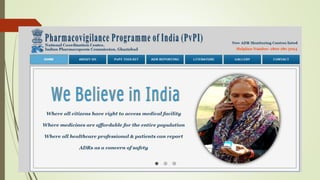
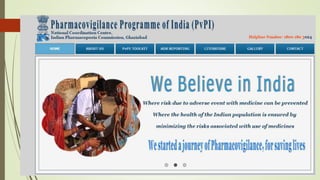
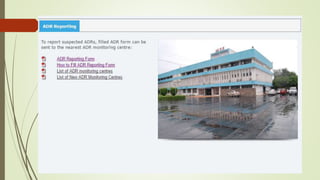
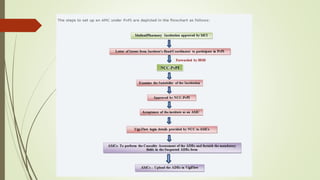
PHARMACOVIGILANCE PROGRAM OF
INDIA (PvPI)
launched with a broad objective to safe guard the health of 1.27 billion
people of India.
Adverse drug Reactions (ADRs) are reported from all over the
country to NCC-PvPI, which also work in collaboration with the
global ADR monitoring centre (WHO-UMC), Sweden to contribute in
the global ADRs data base.
NCC-PvPI monitors the ADRs among Indian population and helps the
regulatory authority of India (CDSCO) in taking decision for safe use
of medicines.
REFERENCES:
 Management science for health USA, chapter 35 Pharmacovigilance, by
Christopher olsan.
 ICH E2E guidelines.
 Clinical causality assessment by I. Ralph Edwards, R.H.B Meyboom
 The use of the WHO-UMC system for standardised case causality assessment –
the uppsala monitoring centre.
 Risk Benefit Assessment and Risk Management, National Regulatory
Conference 2013, Kuala Lumpur, Pia Caduff-Janosa MD; the uppsala
monitoring centre.
 Pharmacovigilance Wikipedia.
 Pharmacovigilance program of india (PvPI)
Pharmacovigilance

Pharmacovigilance

  • 1.
    PHARMACOVIGILANCE Presented by Jabeen Fatima Mpharmacy 1st year Pharmacology Under the guidance of Dr. b veeresh, H.O.D
  • 2.
    CONTENTS: Introduction. Collection of data. Reportingof ADRs. Pharmacovigilance method. Assessment. Periodic safety update report(psur). Risk-benefit assessment and management. Pharmacovigilance program of India.
  • 3.
    INTRODUCTION: Before drugs becomeavailable to the patients, they are subjected to rigorous clinical studies. However, some adverse drug reactions (ADRs) are often detected ONLY after marketing.  The study of ADRs is the concern of the field known as pharmacovigilance
  • 4.
    DEFINITION: Pharmaco (Greek): drug Vigilance(Latin): –to keep awake or alert –to keep watch –the process of paying close and continuous attention Definition: PV is the science and activities dealing with the detection, assessment, understanding and prevention of adverse effects of drugs. It has been widened to include biological products, herbals, traditional and complementary medicines.
  • 5.
    WHY DO WENEED PHARMACOVIGILANCE? Reason 1 • Insufficient evidence of safety. Reason 2: • Dying from a disease may be inevitable, dying from a medicine is unacceptable (WHO,2005) Reason 3: • ADR are expensive.
  • 6.
    AIMS OF PHARMACOVIGILANCE Identifypreviously unrecognized adverse effects Assess the risks and benefits of medicines in order to determine what action, if any, is necessary to improve their safe use Provide information to healthcare professionals and patients to optimize safe and effective use of medicines Thus, the ultimate purpose of ADR reporting and monitoring is to reduce risks associated with drug prescribing and administration –Improve patient care and patient safety –Communication with international institutions working in pharmacovigilance
  • 7.
    WORK FLOW Data collection (icsr) Dataentry in database Case processing (AMC) Review panel ( NCC) Casuality assessment Signal detection Aggregate reporting (PSUR) Regulatory authorities Actions
  • 8.
  • 9.
    COLLECTION OF DATA: Passivedata collection Mandatory data collection Active data collection
  • 10.
    PASSIVE DATA COLLECTION: Voluntarycase reporting. Requires health care professionals to be active participant in safety. Encouraged – improving patient care and reducing the risks of ADRs. Barries:  Punishment  Liability  Incidence of occurrence  Facilities (reporting method)  Lack of time.
  • 11.
    MANDATORY DATA COLLECTION: Manufacturers anddistributers of pharmaceuticals submit ADE post marketting surveillance. Regulatory authorities Official recognition of the drug Ex: PSUR.
  • 12.
    ACTIVE DATA COLLECTION: Focused and structured activity.  More reliable calculated event occurrence rate. Trigger tools Patient chart audits Direct observation methods
  • 13.
    TYPES OF TRIGGER: Laboratorytriggers • Identifies defined parameter-ADR reported. • Ex: serum glucose(<50), WBCs(<3000) Medication order triggers • Prescription orders for antidotes/reversal agents. • Sudden change/stoppage of medication(“discontinue digoxin) Clinical triggers • Patients condition associated with ADRs • Ex: rash, lethargy
  • 14.
    PATIENT CHART AUDITS: Identify potential ADRs, medication interaction and errors.  Conducted prospectively, concurrently, retrospectively Prospective • ADR in patients receiving new medicine • Ghana national centre for pharmacovigilance • Ex: pregnant women- chloroquine to sulphadoxine pyremethamine concurrent • Combined with demographic information • Unrecognised ADRs dtected • Recognised before they happen (Harm minimized) retrospective • Widely used • More convenient • Depth investigation difficult
  • 15.
    DIRECT OBSERVATION:  Requiresabundant of data on medication errors.  Helps identify weaknesses in medication use process. Observer select Nurses Observer collect data in preprinted for specific medication Verify physician order in patient chart(dose, route, frequency etc) Data use to calculate error in specific focus area
  • 16.
    DATA COLLECTION TOOLS: Fillingstandardized forms Adapted from standards of practice and procedures Country have pharmacovigilance program(own standard form) For ADR data, identifying specifics about patient is important Concominent therapies and conditions Patient’s reaction to medicine Medicine suspected for causing reaction Manufacturer and batch number, if available
  • 18.
    REPORTING: Spontaneous reporting Expedited reporting Clinicaltrial reporting Aggregate reporting others
  • 19.
    SPONTANEOUS REPORTING: Clinician's normaldiagnosis of a patient. Relies on vigilant physicians and other healthcare professionals, generate a suspicion of an ADR, but also report it. core data-generating system of international pharmacovigilance and WHO Database, 4.6 million reports growing annually by about 250,000.
  • 20.
    EXPEDITED REPORTING: Involve aserious and unlisted event. The timeframe for reporting expedited cases 7/15 calendar days Within clinical trials - SUSAR (a Suspected Unexpected Serious Adverse Reaction). SUSAR, life-threatening or fatal, subject to a 7-day "clock".
  • 21.
    CLINICAL TRIAL REPORTING Alsoknown as SAE (serious adverse event) reporting.  key component that drug regulatory authorities consider in the decision-making - to grant or deny market authorization for a drug. SAE reporting occurs as a result of study patients (subjects) who experience serious adverse events during the conducting of clinical trials.
  • 22.
    AGGREGATE REPORTING Also knownas periodic reporting.  key role in the safety assessment of drugs compilation of safety data for a drug over a prolonged period of time (months or years)- (broader view) Example: PSUR.
  • 23.
    PHARMACOVIGILANCE METHODS:  PassiveSurveillance  Spontaneous reporting  Case Series  Stimulated Reporting  Active Surveillance  Sentinel Sites  Drug Event Monitoring  Registries  Comparative Observational Studies  Cross-sectional Study (Survey)  Case-control Study  Cohort Study  Targeted Clinical Investigations  Descriptive Studies  Natural History of Disease
  • 24.
    PASSIVE SURVEILLANCE: Spontaneous reporting •A report of an ADR received directly from healthcare professionals/consumers/patients. Case series: • Series of case reports can provide evidence of an association between a drug and an adverse event • more useful for generating hypotheses than for verifying an association between drug exposure and outcome
  • 25.
    STIMULATED REPORTING: Reporting byhealth professionals in specific situations (e.g., in- hospital settings) for new products or for limited time periods. on-line reporting of adverse events and systematic stimulation of reporting of adverse events based on a predesigned method.
  • 26.
    ACTIVE SURVEILLANCE: Sentinel SitesDrug Event Monitoring Registries The selected sites can provide information, such as data from specific patient subgroups. Patients –electronic prescription. Questionairre -specified time details about patients demographic,indication of treatment, duration of therapies, , dosage, clinical events, and reasons for discontinuation can be included in the questionnaire more detailed information on adverse events from a large number of physicians and/or patients might be collected. A registry is a list of patients presenting with the same characteristic(s). disease (disease registry) Ex: registries for blood dyscrasias, severe cutaneous reactions a specific exposure (drug registry). Ex: registry of rheumatoid arthritis patients exposed to drugs of interest.
  • 27.
    COMPARATIVE OBSERVATIONAL STUDIES Cross-sectionalStudy (Survey) Case-control Study Cohort Study Data collected on a population of patients at interval of time regardless of exposure or disease status constitute a cross- sectional study.  Drawback: temporal relationship between exposure and outcome cannot be directly addressed So best utilised when exposures do not change over time. cases of disease are identified Controls,are then selected from the source population that gave rise to the cases. exposure status of the two groups, compared using the odds ratio, an estimate of the relative risk of disease in the two groups. particularly useful-investigate an association between a drug and one specific rare adverse event, & identify risk factors for adverse events. a population-at-risk for the disease (or event) is followed over time for the occurrence of the disease (or event). Information on exposure status is known throughout the follow-up period for each patient and hence incidence rate is known. A patient might be exposed to a drug at one time during follow-up comparison cohorts of interest are selected on the basis of drug use and followed over time.
  • 28.
    FORMS FOR REPORTINGADRs IN DIFFERENT COUNTRIES:  Yellow Card Scheme  UK system for collecting information on suspected ADRs.  Founded in 1964 after the thalidomide  Essential information to include on a yellow card 1.Patient details 2.Suspected drug 3.Suspected reaction 4.Reporter details  Why is the yellow card scheme important? Acts as an early warning system for the identification of previously unrecognised reactions Enables to identify risk factors, outcomes of the ADR and other factors that may affect clinical management
  • 31.
    ADR REPORTING THROUGHVIGIFLOW  VigiFlow is a web-based Individual Case Safety Report (ICSR) management system Specially designed for use by national centres in the WHO Programme for International Drug Monitoring.  VigiFlow 5.1(Released on 14 June 2013)  Subscription for Vigiflow is free in India.  Other tools:  ARISg (mainly used by Drug manufacturer in Europe)  Argus (mainly used by Drug manufacturer in USA)
  • 32.
    ASSESSMENT Routine procedure inpharmacovigilance. The WHO-UMC system has been developed in consultation with the National Centres participating in the Programme for International Drug Monitoring.  practical tool for the assessment of case reports. combined assessment - clinical-pharmacological aspects of the case history and the quality of the documentation of the observation. guidance - which should be used to select one category over another.
  • 33.
    CAUSALITYASSESSMENT KEY QUESTIONS  Canthe drug cause the adverse reaction?  Has the drug caused the adverse reaction?  Will the drug cause the adverse reaction?  how likely is it that this medication is the cause of this problem in this particular patient?  making a differential diagnosis
  • 34.
  • 35.
  • 36.
    OVERVIEW OF PSUR: ImportantAggregate Reporting  Key role in safety assessment of Drugs.  It involves compilation of safety data of drug over a prolonged period of time. Advantages: Provides broader view of safety profile of a drug.  (PSURs) now called as PBRER (Periodic benefit risk evaluation report): are Pharmacovigilance documents intended to provide an evaluation of the risk- benefit balance of a medicinal product for submission at defined time points during the post- authorisation phase. The PSUR should focus on summary information, scientific safety assessment and integrated benefit-risk evaluation.
  • 37.
    PERIODIC SAFETY UPDATEREPORT (PSUR) cont…  As per Schedule Y, PSUR includes all safety reports  Spontaneous AE reports,  PMS studies,  Safety info from other sources  published articles etc.  After approval of the product, new drugs should be closely monitored for their clinical safety once they are marketed.
  • 38.
    CONT..  The applicantsshall furnish Periodic Safety Update Reports (PSURs) in order to – Report all the relevant new information from appropriate sources; Relate these data to patient exposure; Summarize the market authorization status in different countries and any significant variations related to safety; and Indicate whether changes should be made to product information in order to optimize the use of the product.
  • 39.
    Cont..  Submission frequencyfor PSURs:  First 2 yrs: every 6 month  Next 2 yrs: every year  After that every 3 years.  On the basis of PSURs: Regulatory Authorities take the appropriate decision for marketing of particular medicinal product.
  • 40.
    RISK BENEFIT ASSESSMENTAND MANAGEMENT:  Risk management responsible for signal detection and the monitoring of the risk-benefit profile of drugs.  compilation of Risk Management Plans (RMPs)  Signal detection:  Signal detection (SD) involves a range of techniques (CIOMS VIII).  The WHO defines a safety signal as: "Reported information on a possible causal relationship between an adverse event and a drug, the relationship being unknown or incompletely documented previously".  Usually more than a single report is required to generate a signal, depending upon the event and quality of the information available.
  • 41.
    SIGNAL DETECTION (CONT..) IndividualCase Safety Reports (ICSRs) in these databases are retrieved. converted into structured format, and statistical methods (usually a mathematical algorithm) are applied to calculate statistical measures of association. If the statistical measure crosses an arbitrarily set threshold A signal is declared for a given drug associated with a given adverse event.  SD is an essential part of drug use and safety surveillance.  Ideally, the goal of SD is to identify ADRs that were previously considered unexpected  provide guidance in the product's labeling as to how to minimize the risk of using the drug in a given patient population.
  • 42.
    RISK MANAGEMENT PLANS: Documented plan that describes the risks (adverse drug reactions and potential adverse reactions) associated with the use of a drug and how they are being handled  overall goal of an RMP is to assure a positive risk-benefit profile once the drug is marketed.  risks described in an RMP fall into one of three categories: o Identified risks - Preclinical findings not adressed/resolved in clinical phase o Potential risks -General pharmacology, Interactions, Toxicity; and o Unknown risks - Populations not studied
  • 43.
    RISK MANAGEMENT PLANS:(cont..)  The Market Authorization Holder,  usually a pharmaceutical company, will undertake measures to minimize the risks associated with the use of the drug.  These measures are usually focused on the product's labeling and healthcare professionals.  The risks that are documented in a pre-authorization RMP will inevitably become part of the product's post-marketing labeling
  • 44.
    RISK MANAGEMENT PLANS:(cont..) In the US, the FDA may require a company to submit a document called a Risk Evaluation and Mitigation Strategies (REMS) for a drug that has a specific risk that FDA believes requires mitigation. REMS can require a sponsor to perform certain activities or to follow a protocol, referred to as Elements to Assure Safe Use (ETASU), to assure that a positive risk-benefit profile for the drug is maintained for the circumstances under which the product is marketed.
  • 45.
    INTERNATIONAL COLLABORATION INTHE FIELD OF PHARMACOVIGILANCE WHO runs the Uppsala Monitoring Centre (Started in 1968, Located in Uppsala, Sweden. European Union runs the European Medicines Evaluation Agency (EMEA) United States, the FDA is responsible for monitoring post- marketing studies. Egyptian PV center
  • 46.
    PHARMACOVIGILANCE PROGRAM OF INDIA(PvPI) launched with a broad objective to safe guard the health of 1.27 billion people of India. Adverse drug Reactions (ADRs) are reported from all over the country to NCC-PvPI, which also work in collaboration with the global ADR monitoring centre (WHO-UMC), Sweden to contribute in the global ADRs data base. NCC-PvPI monitors the ADRs among Indian population and helps the regulatory authority of India (CDSCO) in taking decision for safe use of medicines.
  • 51.
    REFERENCES:  Management sciencefor health USA, chapter 35 Pharmacovigilance, by Christopher olsan.  ICH E2E guidelines.  Clinical causality assessment by I. Ralph Edwards, R.H.B Meyboom  The use of the WHO-UMC system for standardised case causality assessment – the uppsala monitoring centre.  Risk Benefit Assessment and Risk Management, National Regulatory Conference 2013, Kuala Lumpur, Pia Caduff-Janosa MD; the uppsala monitoring centre.  Pharmacovigilance Wikipedia.  Pharmacovigilance program of india (PvPI)