PACKAGING OF
PHARMACEUTICALS
Prepared by – A. M. Akotkar
CONTENT
 Intrduction
 Features
 Types of containers
 Types of packaging material
 Types of packaging
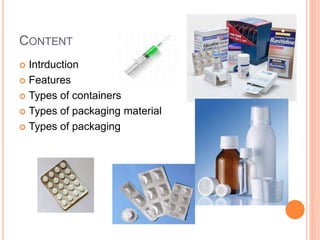
 Packaging is the science, art and technology of
enclosing or protecting products for distribution,
storage, sale, and use.
INTRODUCTION
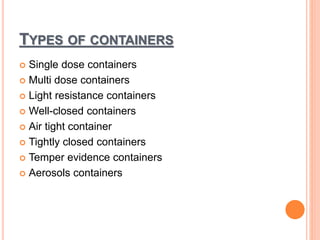
 Pharmaceutical packaging can be defined as the
economical means of providing, presentation
protection,identification,information,convenience,c
ompliance,integrity and stability of the product .
Desirable features or Quality of a container
 FDA approved
 Non-toxic
 Not impart odour /taste to the product
 Not reactive with the product
 They must protect the preparation from
environmental conditions and kept stability
 Pharmaceutically elegant.
 Dose can be drawn from container
 Labelled easily.
 Container not interact physically, chemically and
can not change quality as well as purity.
TYPES OF CONTAINERS
 Single dose containers
 Multi dose containers
 Light resistance containers
 Well-closed containers
 Air tight container
 Tightly closed containers
 Temper evidence containers
 Aerosols containers
TYPES OF PACKAGING MATERIAL
I) Glass
II) Metals
III) Rubbers
IV) Plastics
ν ) Paper and boards
GLASS
 Glass has been widely used as a drug
packaging material.
 Glass is composed of sand, soda ash,
limestone,& cullet.
 Si, Al, Na, K, Ca, Mg, Zn & Ba are generally
used into preparation of glass
Advantages
• They are hygienic and suitable for sterilization
• They are relatively non reactive
and transparent.
• Stable on various temperature and pressure.
• They have good protection power.
• They can be easily labelled.
• It can accept a variety of closures.
DISADVANTAGES
• It is relatively heavy and cost increase
in transportations.
• Glass is fragile so easily broken.
• Release alkali to aqueous preparation
TYPES OF GLASS
1)Lime soda
2)Borosilicate glass
3)Silicon treated
4)Sulphur glass
5)Neutral glass
6)Amber coloured glass
PLASTIC
Plastics may be defined as any group of
substances, of natural or synthetic origins,
consisting chiefly of polymers of high molecular
weight that can be moulded into a shape or form
by heat and pressure.
Advantages
 Less weight than glass, flexible and handling
easy.
 Poor conductor of heat and unbreakable.
 Essentially chemically inert, strong, rigid
Safety use, high quality, various designs
 Extremely resistant to breakage
Disadvantages
 permeable to water vapour and atmospheric
gases
 Poor printing, thermostatic charge
 Interact with certain chemical.
Composition of plastic
 Polyethylene
 Polyvinyl chloride
 Polymethyl methoacrelate
 Polysterene
 Polypropylene
 Polyamide(nylon)
 polycarbonate
TYPES OF PLASTICS
 Thermosetting type –
When heated they may become flexible but they
do not become liquid
e.g. Urea formaldehyde (UF),Phenol
formaldehyde ,Melamine formaldehyde (MF),
Epoxy resins (epoxides), Polyurethanes (PURs)
 Thermoplastics type-
On heating they are soften to viscous fluid which
harden again on cooling.
e.g. Polyethylene{HDPE – LDPE},
Polyvinylchloride(PVC),Polystyrene
Polypropylene, Nylon(PA),
Polyethylene terepthalate(PET)
METALS :
 Metals are used for construction of containers.
The metals commonly used for this purpose are
aluminium ,tin plated steel, stainless steel, tin and
lead
Advantages:
 They are impermeable to light, moisture and
gases.
 They are made into rigid unbreakable containers
by impact extrusion.
 They are light in weight compared to glass
containers.
 Labels can printed directly on to their surface.
Disadsvantages:
 They are expensive.
 They react with certain chemicals
 Generally Not used for extemporaneous
dispensing
COLLAPSIBLE TUBES METAL
 The collapsible metal tube is an attractive
container that permits controlled amounts to be
dispensed easily, with good reclosure, and
adequate protection of the product.
 It is light in weight and unbreakable and lends
itself to high speed automatic filling operations.
 Most commonly used are tin, aluminium and
lead.
Aluminium:
 Aluminium tubes offer significant savings in
product shipping costs because of their light
weight .
 They are attractive in nature
RUBBER:
 Rubber is used mainly for the construction of
closure meant for vials, transfusion fluid
bottles, dropping bottles and as washers in
many other types of product.
e.g. Nitrile rubber, chloroprene rubber
BUTYL RUBBER
Advantages:
 Permeability to water vapour .
 Water absorption is very low.
 They are relatively cheaper compared to other
synthetic rubbers.
Disadvantages:
 Slow decomposition takes place above 130 ▫ C.
 Oil and solvent resistance is not very good
TYPES OF PACKAGING
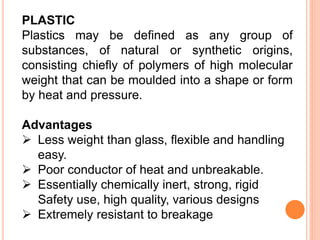
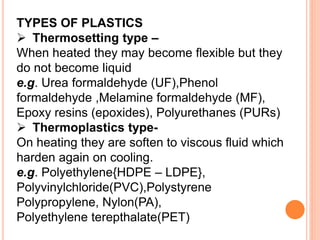
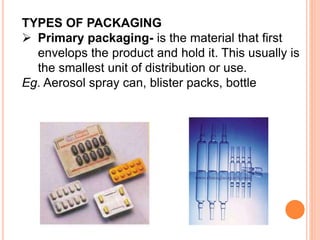
 Primary packaging- is the material that first
envelops the product and hold it. This usually is
the smallest unit of distribution or use.
Eg. Aerosol spray can, blister packs, bottle
 Secondary packaging –
Is outside the primary packaging perhaps used to
group primary package together.
Eg. Boxes, cartons
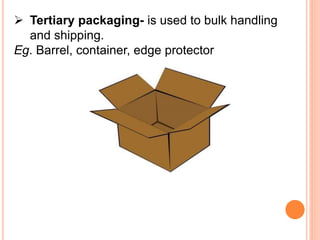
 Tertiary packaging- is used to bulk handling
and shipping.
Eg. Barrel, container, edge protector

Pharmaceutical packaging ppt

  • 1.
  • 2.
    CONTENT  Intrduction  Features Types of containers  Types of packaging material  Types of packaging
  • 3.
     Packaging isthe science, art and technology of enclosing or protecting products for distribution, storage, sale, and use. INTRODUCTION  Pharmaceutical packaging can be defined as the economical means of providing, presentation protection,identification,information,convenience,c ompliance,integrity and stability of the product .
  • 4.
    Desirable features orQuality of a container  FDA approved  Non-toxic  Not impart odour /taste to the product  Not reactive with the product  They must protect the preparation from environmental conditions and kept stability  Pharmaceutically elegant.  Dose can be drawn from container  Labelled easily.  Container not interact physically, chemically and can not change quality as well as purity.
  • 5.
    TYPES OF CONTAINERS Single dose containers  Multi dose containers  Light resistance containers  Well-closed containers  Air tight container  Tightly closed containers  Temper evidence containers  Aerosols containers
  • 6.
    TYPES OF PACKAGINGMATERIAL I) Glass II) Metals III) Rubbers IV) Plastics ν ) Paper and boards
  • 7.
    GLASS  Glass hasbeen widely used as a drug packaging material.  Glass is composed of sand, soda ash, limestone,& cullet.  Si, Al, Na, K, Ca, Mg, Zn & Ba are generally used into preparation of glass Advantages • They are hygienic and suitable for sterilization • They are relatively non reactive and transparent. • Stable on various temperature and pressure.
  • 8.
    • They havegood protection power. • They can be easily labelled. • It can accept a variety of closures. DISADVANTAGES • It is relatively heavy and cost increase in transportations. • Glass is fragile so easily broken. • Release alkali to aqueous preparation
  • 9.
    TYPES OF GLASS 1)Limesoda 2)Borosilicate glass 3)Silicon treated 4)Sulphur glass 5)Neutral glass 6)Amber coloured glass
  • 10.
    PLASTIC Plastics may bedefined as any group of substances, of natural or synthetic origins, consisting chiefly of polymers of high molecular weight that can be moulded into a shape or form by heat and pressure. Advantages  Less weight than glass, flexible and handling easy.  Poor conductor of heat and unbreakable.  Essentially chemically inert, strong, rigid Safety use, high quality, various designs  Extremely resistant to breakage
  • 11.
    Disadvantages  permeable towater vapour and atmospheric gases  Poor printing, thermostatic charge  Interact with certain chemical. Composition of plastic  Polyethylene  Polyvinyl chloride  Polymethyl methoacrelate  Polysterene  Polypropylene  Polyamide(nylon)  polycarbonate
  • 12.
    TYPES OF PLASTICS Thermosetting type – When heated they may become flexible but they do not become liquid e.g. Urea formaldehyde (UF),Phenol formaldehyde ,Melamine formaldehyde (MF), Epoxy resins (epoxides), Polyurethanes (PURs)  Thermoplastics type- On heating they are soften to viscous fluid which harden again on cooling. e.g. Polyethylene{HDPE – LDPE}, Polyvinylchloride(PVC),Polystyrene Polypropylene, Nylon(PA), Polyethylene terepthalate(PET)
  • 13.
    METALS :  Metalsare used for construction of containers. The metals commonly used for this purpose are aluminium ,tin plated steel, stainless steel, tin and lead Advantages:  They are impermeable to light, moisture and gases.  They are made into rigid unbreakable containers by impact extrusion.  They are light in weight compared to glass containers.  Labels can printed directly on to their surface.
  • 14.
    Disadsvantages:  They areexpensive.  They react with certain chemicals  Generally Not used for extemporaneous dispensing COLLAPSIBLE TUBES METAL  The collapsible metal tube is an attractive container that permits controlled amounts to be dispensed easily, with good reclosure, and adequate protection of the product.  It is light in weight and unbreakable and lends itself to high speed automatic filling operations.  Most commonly used are tin, aluminium and lead.
  • 15.
    Aluminium:  Aluminium tubesoffer significant savings in product shipping costs because of their light weight .  They are attractive in nature RUBBER:  Rubber is used mainly for the construction of closure meant for vials, transfusion fluid bottles, dropping bottles and as washers in many other types of product. e.g. Nitrile rubber, chloroprene rubber
  • 16.
    BUTYL RUBBER Advantages:  Permeabilityto water vapour .  Water absorption is very low.  They are relatively cheaper compared to other synthetic rubbers. Disadvantages:  Slow decomposition takes place above 130 ▫ C.  Oil and solvent resistance is not very good
  • 17.
    TYPES OF PACKAGING Primary packaging- is the material that first envelops the product and hold it. This usually is the smallest unit of distribution or use. Eg. Aerosol spray can, blister packs, bottle
  • 18.
     Secondary packaging– Is outside the primary packaging perhaps used to group primary package together. Eg. Boxes, cartons
  • 19.
     Tertiary packaging-is used to bulk handling and shipping. Eg. Barrel, container, edge protector