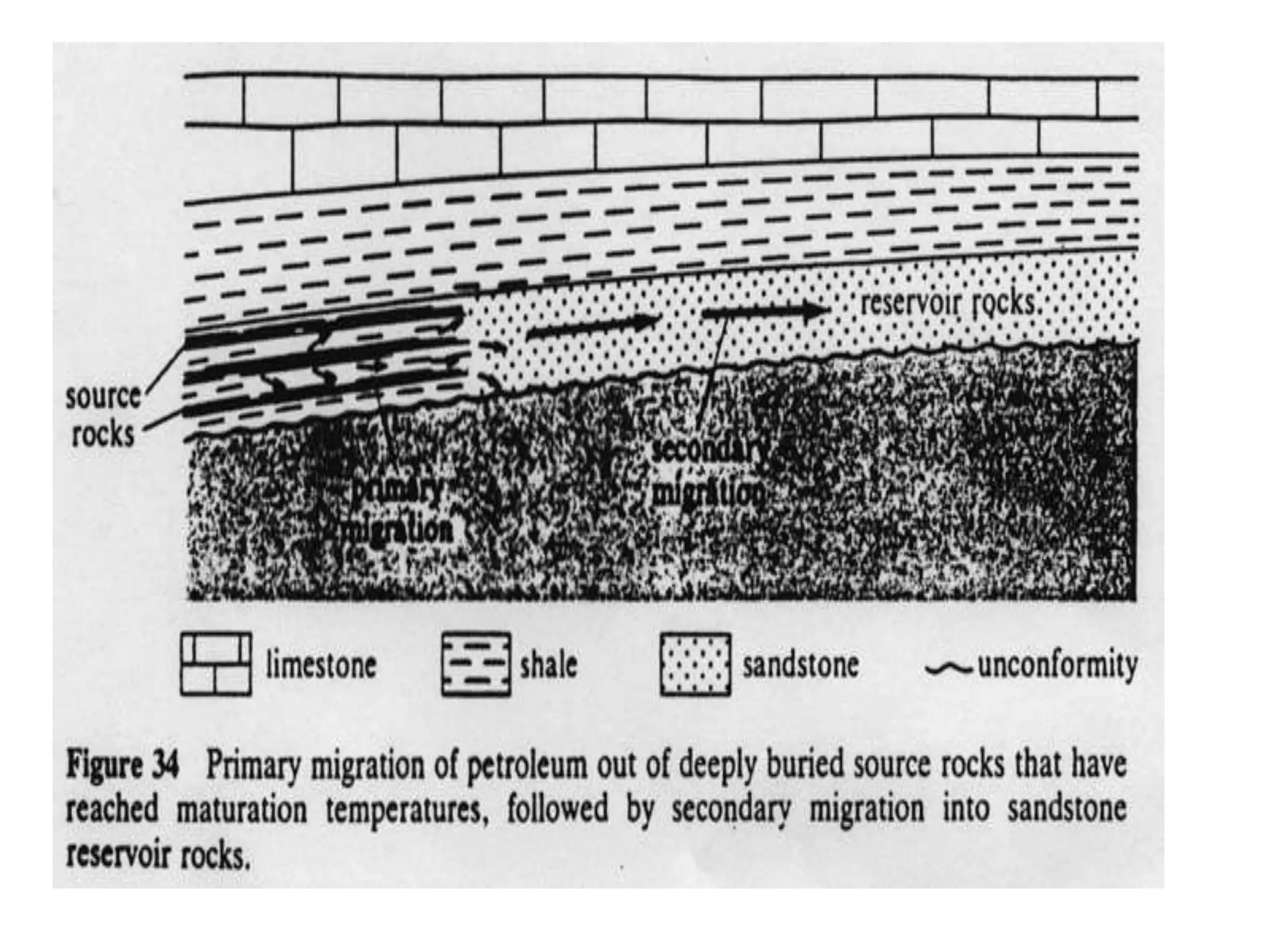
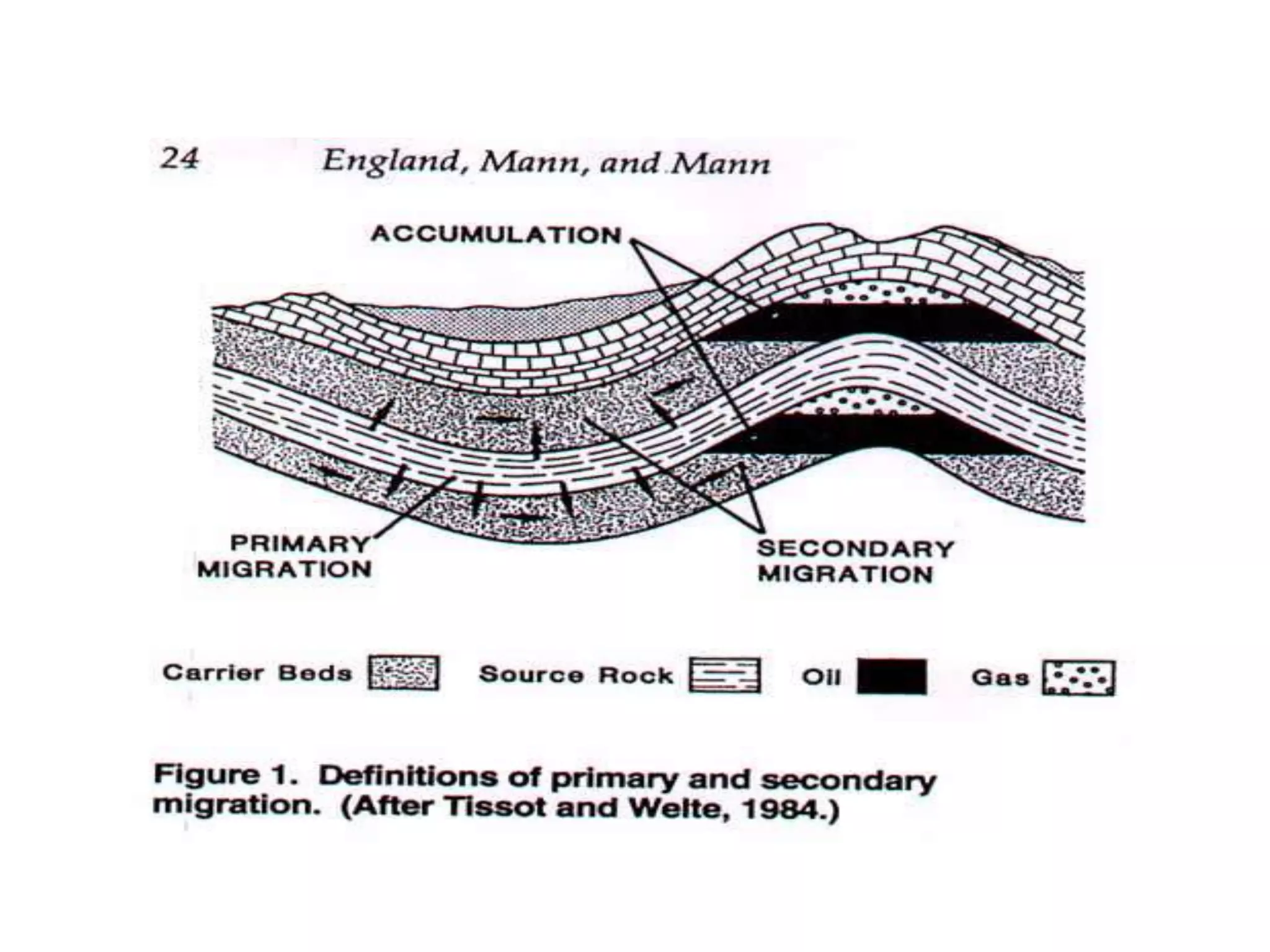
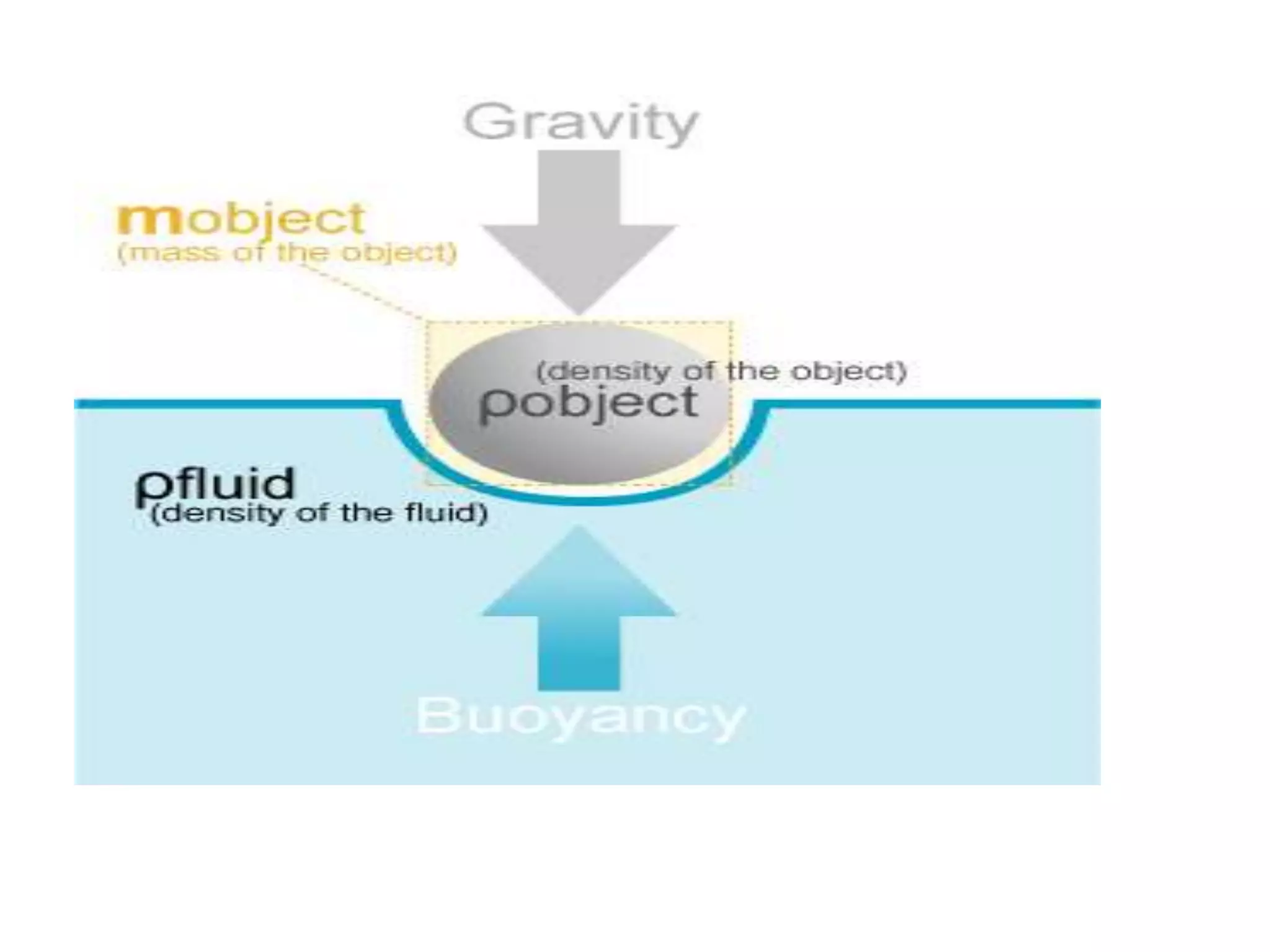
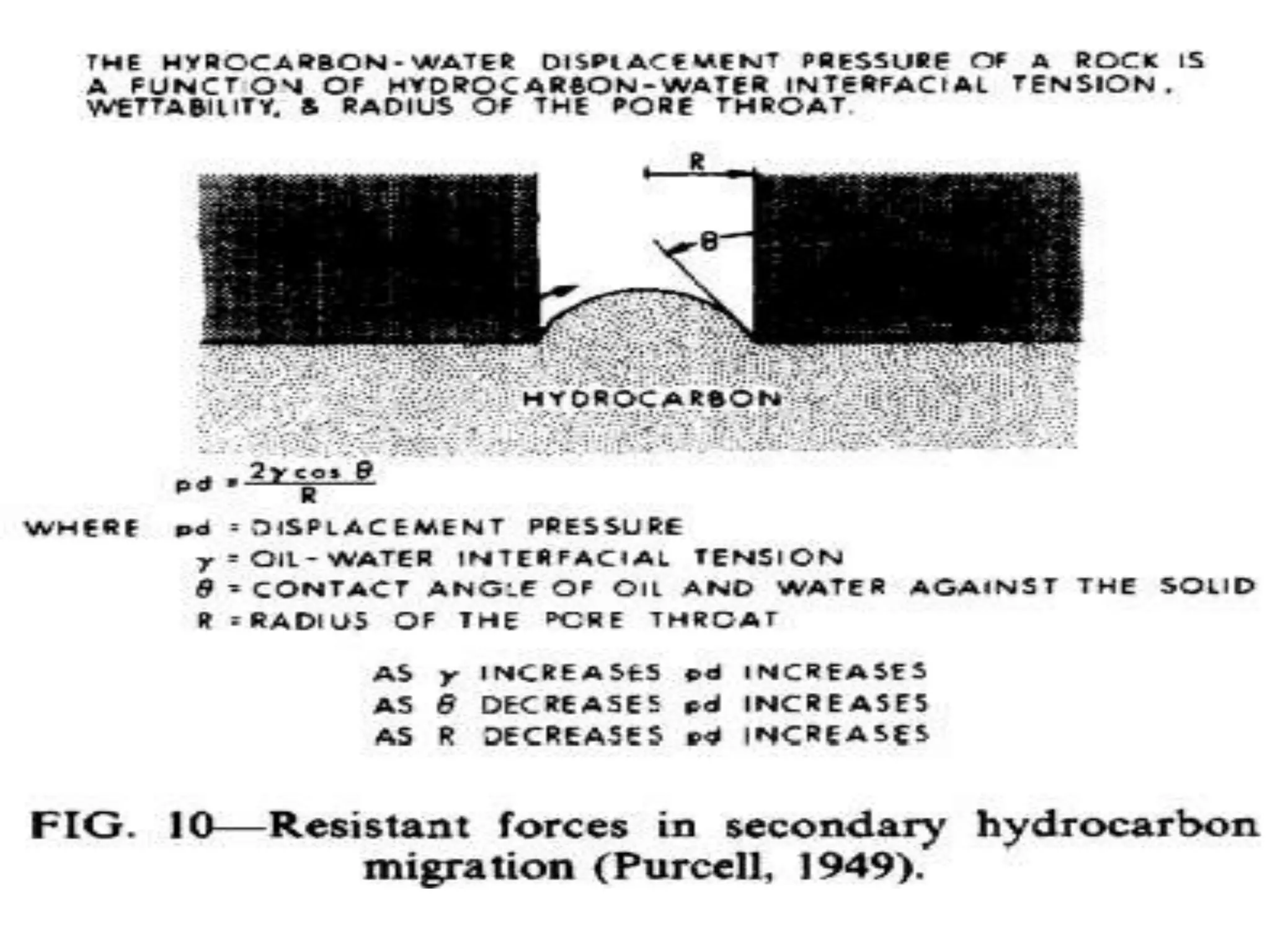
This document discusses secondary migration of petroleum, which is the movement of oil and gas within reservoir rocks after primary migration. The main forces driving secondary migration are buoyancy, as oil and gas are less dense than water, and hydrodynamic forces from water flow. Capillary pressure acts as a resistant force. Secondary migration can occur over distances ranging from hundreds of meters to over 100 km and is facilitated by porous and permeable pathways as well as pressure gradients within the rocks. Water drive and gas flushing are two mechanisms enabling secondary migration to traps and accumulations. Fractures also provide routes for secondary oil and gas to migrate through reservoir strata.