Introduction by Phil
   “A group of people, any people, that can help you
    develop and learn. I think it‟s very important to
    stress that a PLN is people, because so much talk
    about PLN gets tangled up in technology and
    websites etc, but at the heart of PLN is the concept
    of people who connect together to help each other
    grow and learn”

     ◦ - Nik Peachey, British Council‟s Teaching English website,
                                                  February 2011
   Spend a few minutes chatting to the person
    next to you about what you understand by a
    PLN?

   how do you think you can build one?

   what tools are there?
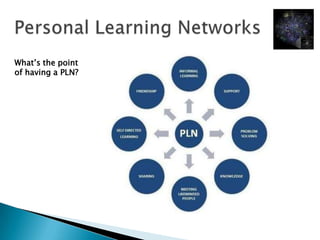
What‟s the point
of having a PLN?
A PLN is nebulous. It lacks structure and there is
                         nothing definite about it. Members in any network
                         are not constant. It changes shape and expands as
                         more contacts are made.

                         A PLN allows you to learn anything, anytime,
                         anywhere with anybody you choose!

Image: Bev Novak
                         A PLN allows you to decide for yourself what you
http://novanews19.word   want to learn or focus on. A PLN can be developed
press.com/
                         for any interest area, with a range of
                         communication tools used to stay in touch with
                         like-minded peers, experts or anyone who shares
                         an interest. A PLN makes active learners of us all.
                         But building a PLN requires some thought and
                         making the right choices. It also requires some
                         effort to set up and maintain the connections that
                         are made.
http://teachersusingtech.weebly.com/personal-learning-networks.html
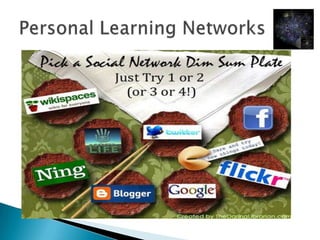
   A great way to start is to join
    Twitter and start following
    people.

   Social Networking sites
    include ones especially for
    teachers, such as
    classroom2.0.

   Starting and maintaining a
    blog is also a valuable tool
    which you can place at the
    heart of your PLN.
   Just like anything else that involves human experience or
    interaction, the act of learning does not happen in
    isolation. It is at the intersection of prior knowledge,
    experience, perception, reality, comprehension, and
    flexibility that learning occurs. Other traditional learning
    paradigms of behaviorism, cognitivism, and more
    recently, constructivism have been the benchmarks
    against which the learning process has been measured.
   At the heart of a PLN comes the idea of learning through
    connectivism.             According to George Siemens:

         “Connectivism is driven by the understanding that
         decisions are based on rapidly altering
         foundations. New information is continually being
         acquired and the ability to draw distinctions
         between important and unimportant information is
         vital. Also critical is the ability to recognize when
         new information alters the landscape based on
         decisions made yesterday” (Siemens, 2005).
Connectivism is not the same as Constructivism, which is a
learning theory which was developed before the modern
„digital age‟. Learning theories, including Constructivism
are concerned with the actual process of learning, not with
the value of what is being learned.

In a PLN or „networked learning environment‟, the very
manner of information that we acquire is worth exploring.
The need to evaluate the worthiness of learning something
is a meta-skill that is applied before learning itself begins.

When knowledge is abundant, and often untrustworthy, the
rapid evaluation of knowledge is important. In today‟s
environment, action is often needed without personal
learning – that is, we need to act by drawing information
outside of our primary knowledge. The ability to synthesize
and recognize connections and patterns is a valuable skill.
        Adapted from George Siemens.
                 http://www.itdl.org/Journal/Jan_05/article01.htm
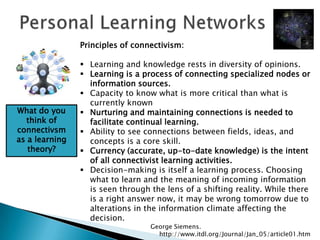
Principles of connectivism:

                 Learning and knowledge rests in diversity of opinions.
                 Learning is a process of connecting specialized nodes or
                  information sources.
                 Capacity to know what is more critical than what is
                  currently known
What do you      Nurturing and maintaining connections is needed to
   think of       facilitate continual learning.
connectivsm      Ability to see connections between fields, ideas, and
as a learning     concepts is a core skill.
   theory?       Currency (accurate, up-to-date knowledge) is the intent
                  of all connectivist learning activities.
                 Decision-making is itself a learning process. Choosing
                  what to learn and the meaning of incoming information
                  is seen through the lens of a shifting reality. While there
                  is a right answer now, it may be wrong tomorrow due to
                  alterations in the information climate affecting the
                  decision.
                                  George Siemens.
                                    http://www.itdl.org/Journal/Jan_05/article01.htm
now over to Sarah and Maria…

PLNs

  • 1.
  • 2.
    “A group of people, any people, that can help you develop and learn. I think it‟s very important to stress that a PLN is people, because so much talk about PLN gets tangled up in technology and websites etc, but at the heart of PLN is the concept of people who connect together to help each other grow and learn” ◦ - Nik Peachey, British Council‟s Teaching English website, February 2011
  • 3.
    Spend a few minutes chatting to the person next to you about what you understand by a PLN?  how do you think you can build one?  what tools are there?
  • 4.
    What‟s the point ofhaving a PLN?
  • 5.
    A PLN isnebulous. It lacks structure and there is nothing definite about it. Members in any network are not constant. It changes shape and expands as more contacts are made. A PLN allows you to learn anything, anytime, anywhere with anybody you choose! Image: Bev Novak A PLN allows you to decide for yourself what you http://novanews19.word want to learn or focus on. A PLN can be developed press.com/ for any interest area, with a range of communication tools used to stay in touch with like-minded peers, experts or anyone who shares an interest. A PLN makes active learners of us all. But building a PLN requires some thought and making the right choices. It also requires some effort to set up and maintain the connections that are made.
  • 6.
  • 7.
    A great way to start is to join Twitter and start following people.  Social Networking sites include ones especially for teachers, such as classroom2.0.  Starting and maintaining a blog is also a valuable tool which you can place at the heart of your PLN.
  • 8.
    Just like anything else that involves human experience or interaction, the act of learning does not happen in isolation. It is at the intersection of prior knowledge, experience, perception, reality, comprehension, and flexibility that learning occurs. Other traditional learning paradigms of behaviorism, cognitivism, and more recently, constructivism have been the benchmarks against which the learning process has been measured.  At the heart of a PLN comes the idea of learning through connectivism. According to George Siemens: “Connectivism is driven by the understanding that decisions are based on rapidly altering foundations. New information is continually being acquired and the ability to draw distinctions between important and unimportant information is vital. Also critical is the ability to recognize when new information alters the landscape based on decisions made yesterday” (Siemens, 2005).
  • 9.
    Connectivism is notthe same as Constructivism, which is a learning theory which was developed before the modern „digital age‟. Learning theories, including Constructivism are concerned with the actual process of learning, not with the value of what is being learned. In a PLN or „networked learning environment‟, the very manner of information that we acquire is worth exploring. The need to evaluate the worthiness of learning something is a meta-skill that is applied before learning itself begins. When knowledge is abundant, and often untrustworthy, the rapid evaluation of knowledge is important. In today‟s environment, action is often needed without personal learning – that is, we need to act by drawing information outside of our primary knowledge. The ability to synthesize and recognize connections and patterns is a valuable skill. Adapted from George Siemens. http://www.itdl.org/Journal/Jan_05/article01.htm
  • 10.
    Principles of connectivism:  Learning and knowledge rests in diversity of opinions.  Learning is a process of connecting specialized nodes or information sources.  Capacity to know what is more critical than what is currently known What do you  Nurturing and maintaining connections is needed to think of facilitate continual learning. connectivsm  Ability to see connections between fields, ideas, and as a learning concepts is a core skill. theory?  Currency (accurate, up-to-date knowledge) is the intent of all connectivist learning activities.  Decision-making is itself a learning process. Choosing what to learn and the meaning of incoming information is seen through the lens of a shifting reality. While there is a right answer now, it may be wrong tomorrow due to alterations in the information climate affecting the decision. George Siemens. http://www.itdl.org/Journal/Jan_05/article01.htm
  • 11.
    now over toSarah and Maria…