Downloaded 263 times
![ You have 12 pairs of cranial nerves
[s/m/mx]
▪controls the head, neck, face and
shoulders
And 31 pairs of spinal nerves [mx]
▪Take impulses (messages) to and
from the spinal cord.](https://image.slidesharecdn.com/peripheralnervoussystem-150304000914-conversion-gate01/75/Peripheral-nervous-system-4-2048.jpg)
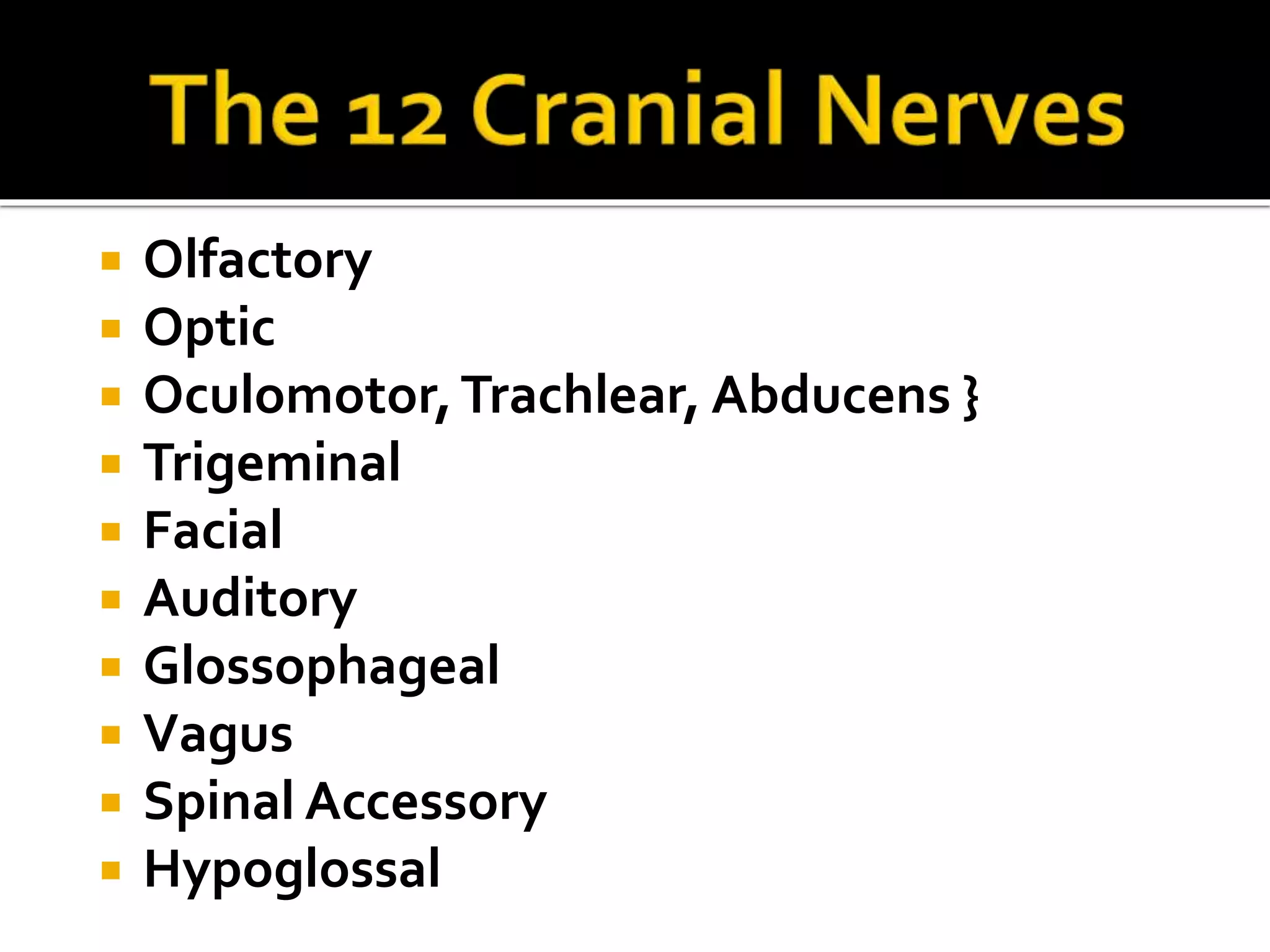
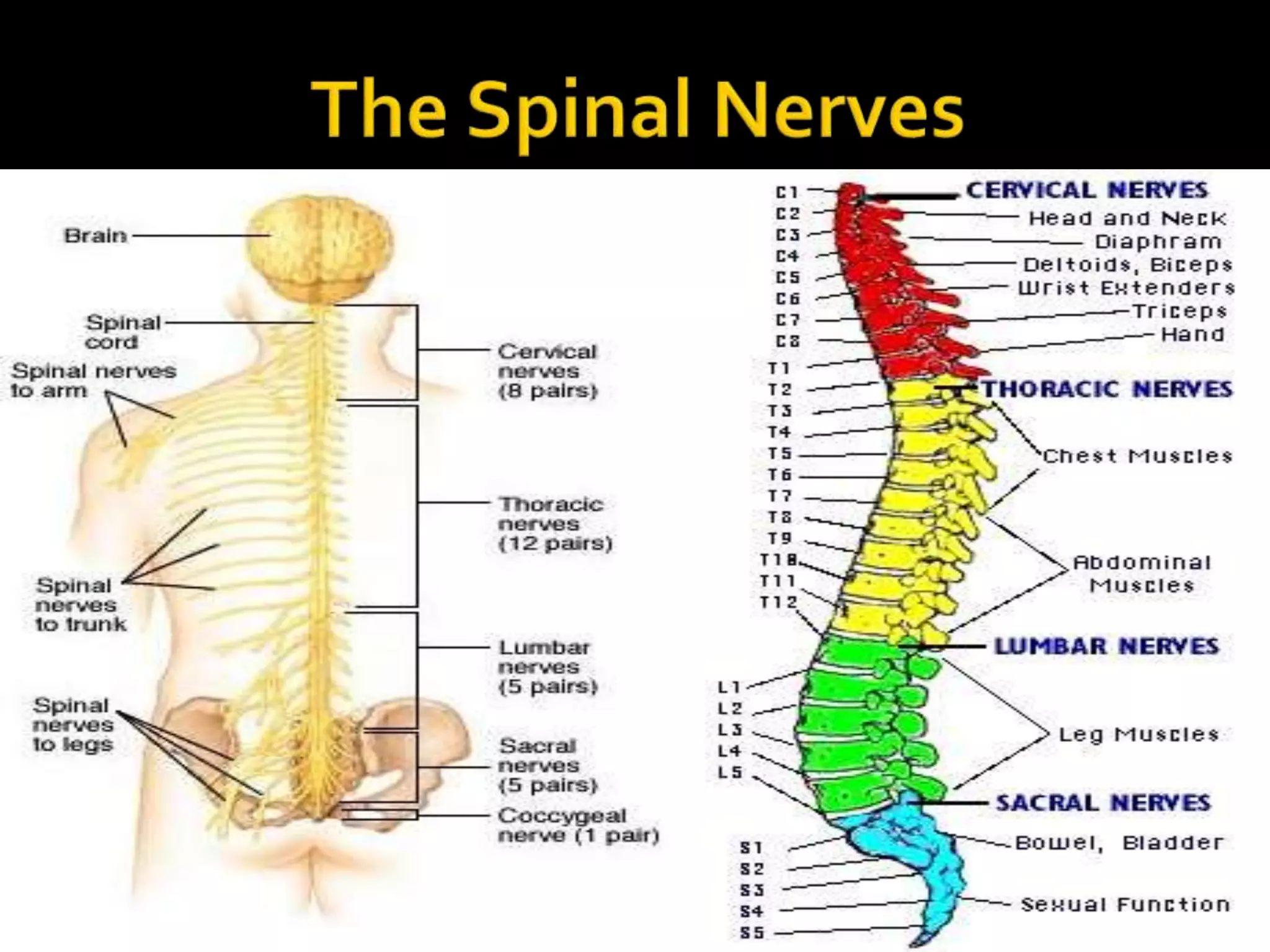
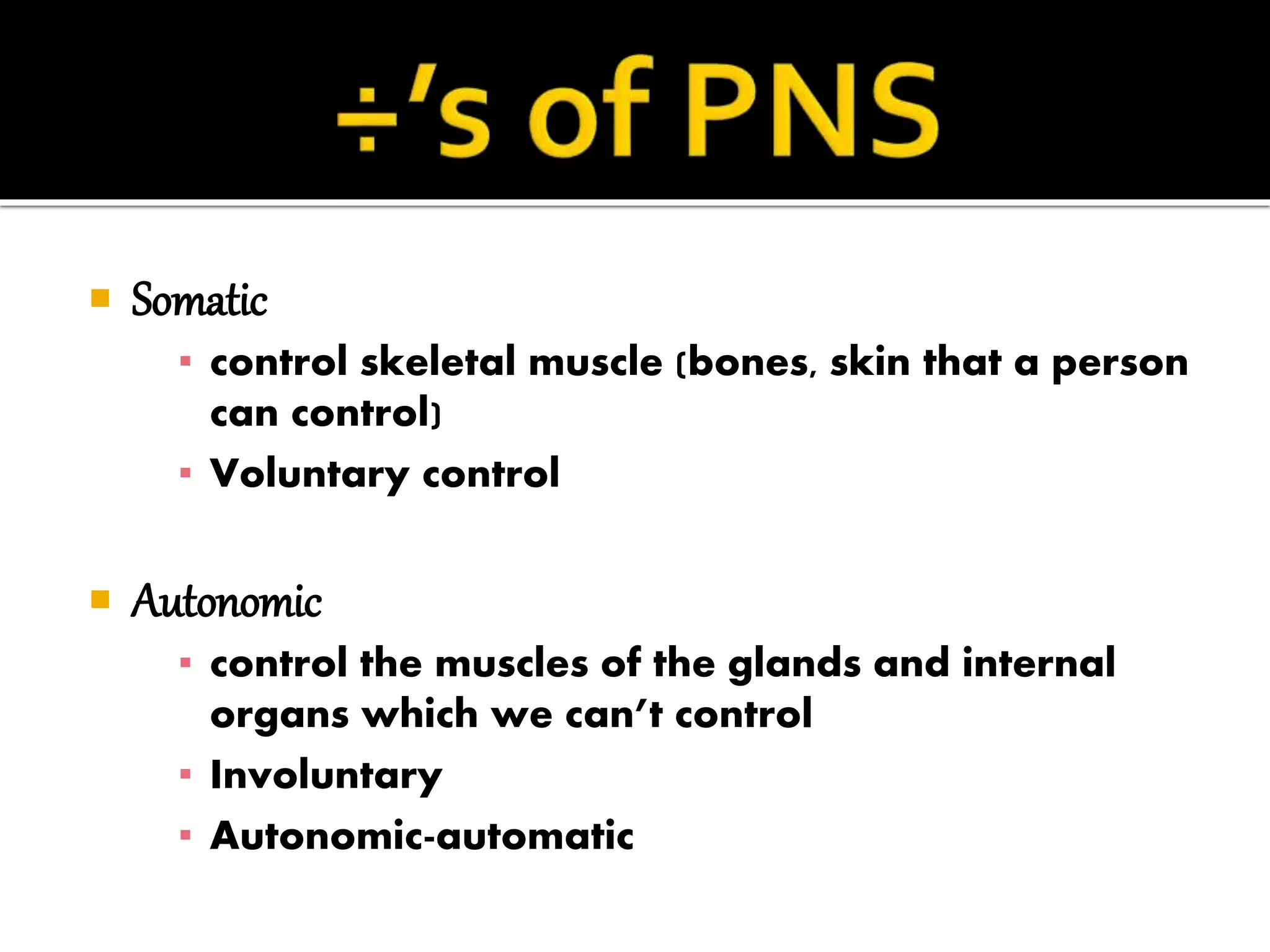
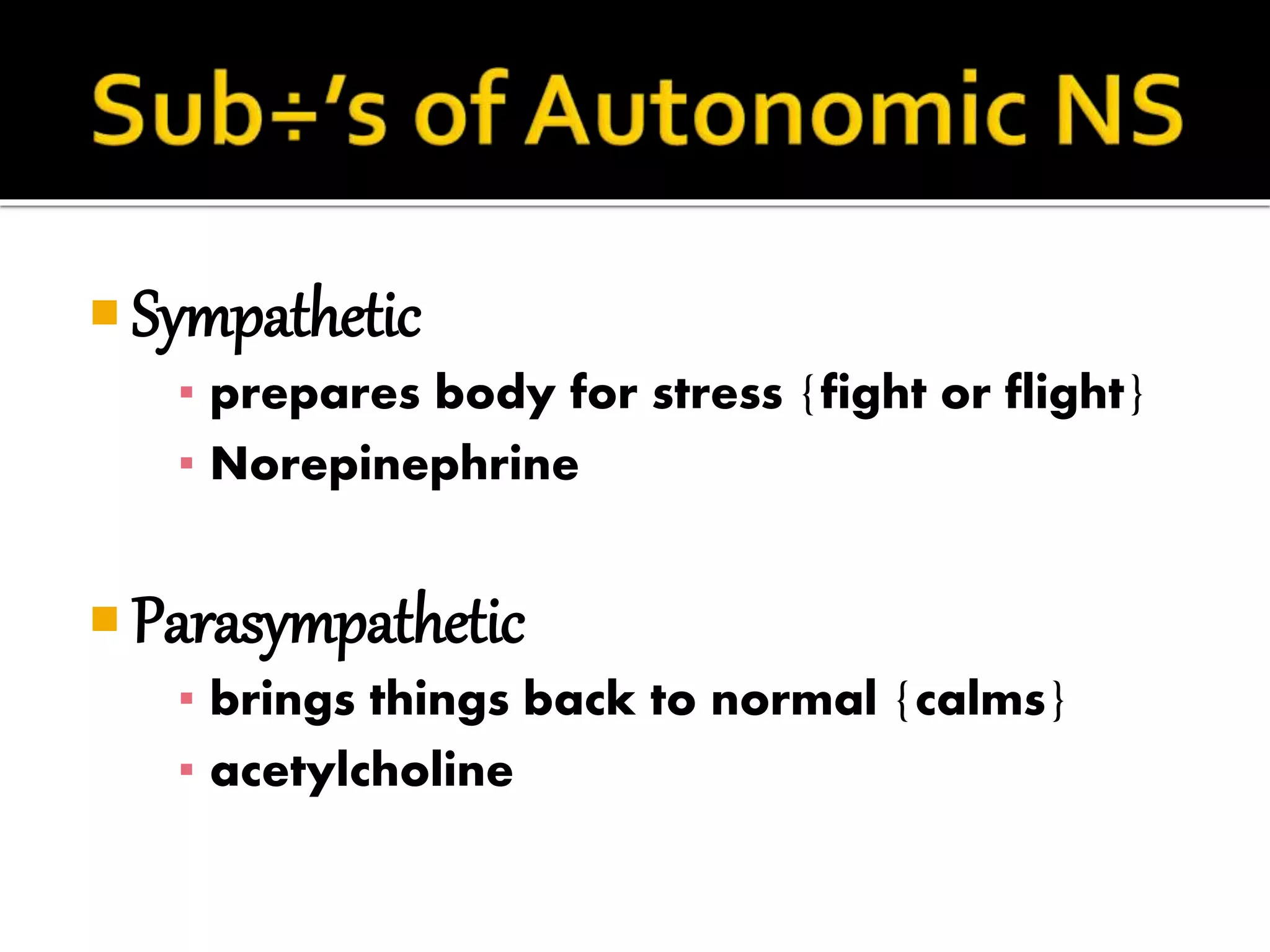
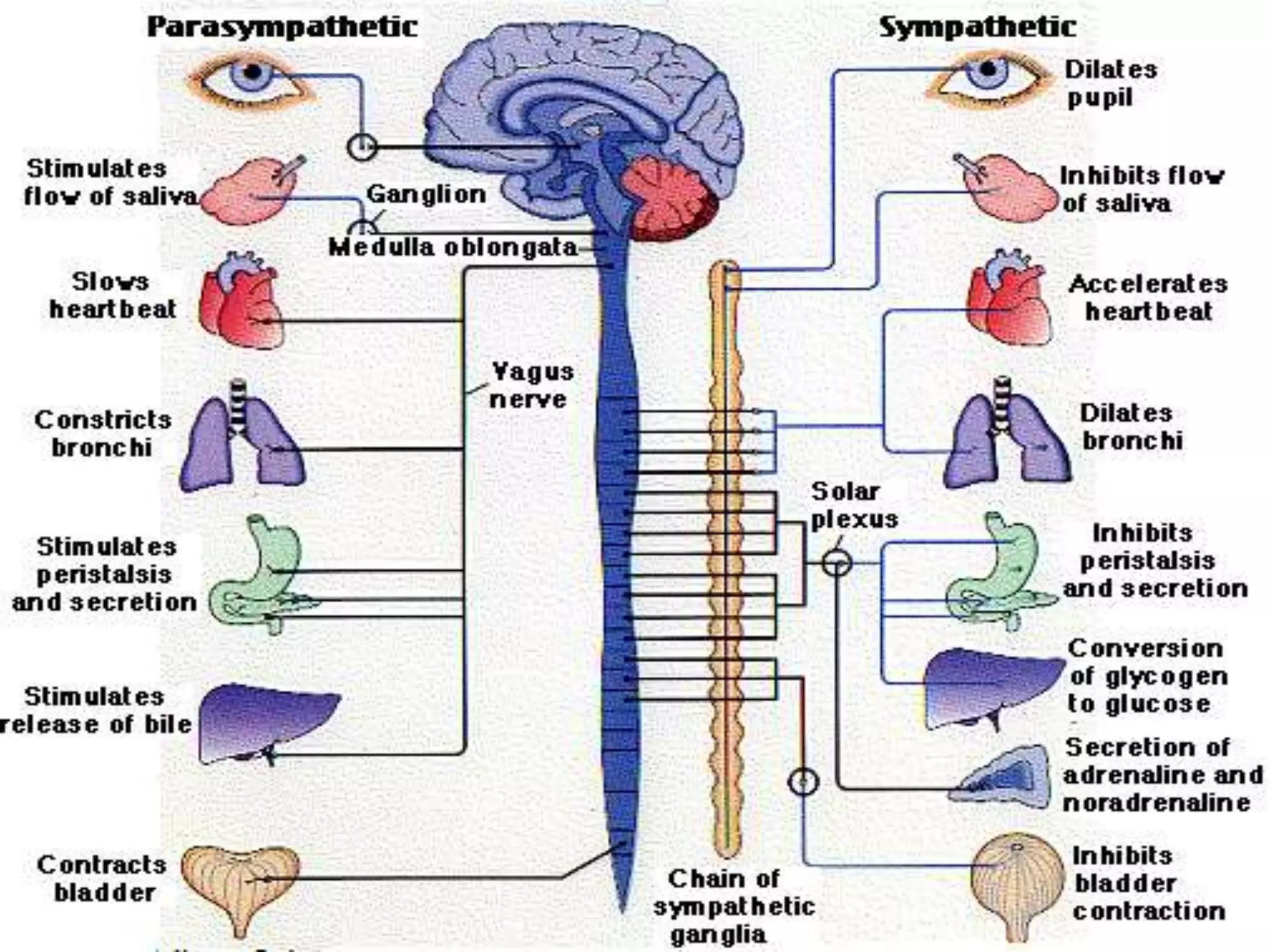

The peripheral nervous system consists of sensory and motor neurons that connect the central nervous system to organs and other parts of the body outside the brain and spinal cord. It carries information between the body and central nervous system through 12 pairs of cranial nerves that control the head, neck, and face and 31 pairs of spinal nerves that connect to the spinal cord. The peripheral nervous system is divided into the somatic and autonomic systems, with the somatic controlling skeletal muscles voluntarily and the autonomic regulating involuntary functions through the sympathetic and parasympathetic divisions.


