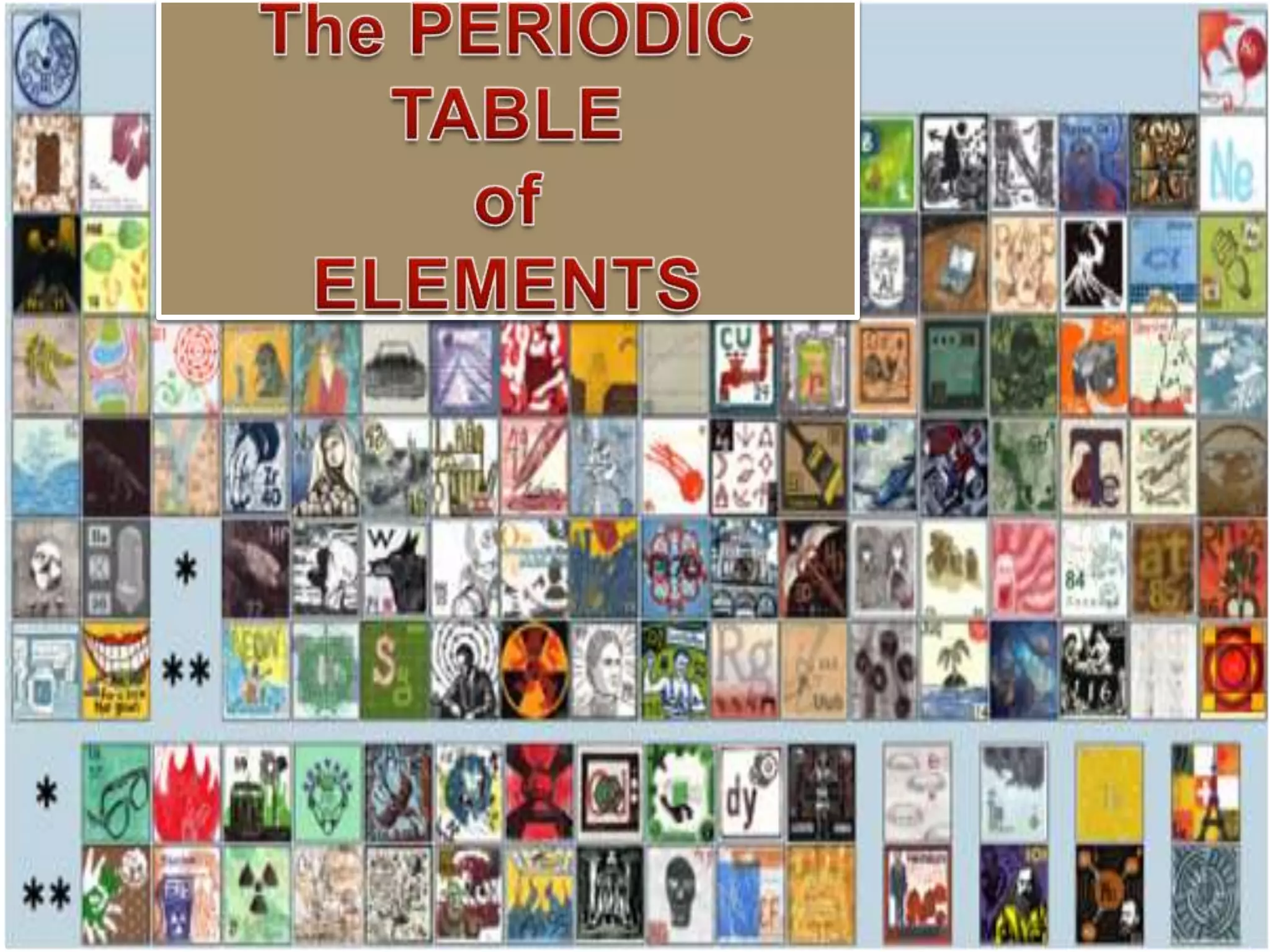
The PERIODIC TABLEofELEMENTS
The development
J.W. DobereinerClassified elements into several sets of triadsTRIADSLi, Na, KCa, Sr, BaHave similar chemical propertiesProperties of the middle element are approximate averages of the first and third elements
J.A.R Newlands62 elements are already known“law of octaves” (increasing atomic mass)Similar properties: 8th and 1st , 9th and 2nd , 10th and 3rd
Dmitri MendeleevTogether with Lothar Meyer, they published nearly identical schemes for classifying the elementsWrote the names of the elements nd its properties in cards and arranged the cards in various ways.

He noticed that a periodic repetition of the properties of the elements could be observed when the elements were arranged in increasing atomic masses.He eventually produced the first periodic table of elements.
H.G.J. MoseleyCorrectly hypothesized the fundamental property of each elements – the amount of positive charge in the nucleus = Atomic no.Proposed that the correct way to arrange elements was with the increasing atomic number
The PERIODIC LAWBasis for the Periodic TableWhen elements are arranged in increasing atomic number, heir physical and chemical properties show a periodic pattern.
Reading the periodic table
Groups or FamiliesThe arrangement of the elements in vertical columnsEach family has the similar properties
Period Horizontal rows in the periodic table
Labeling and naming groups
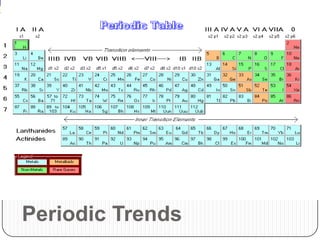
Periodic Trends
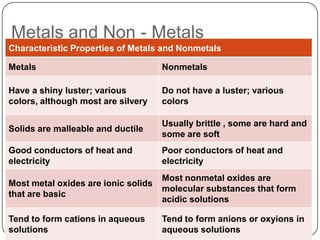
Metals and Non - Metals
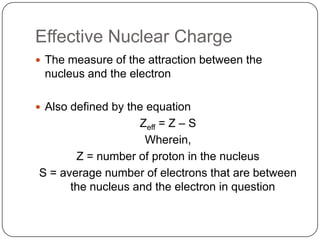
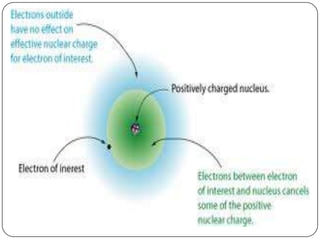
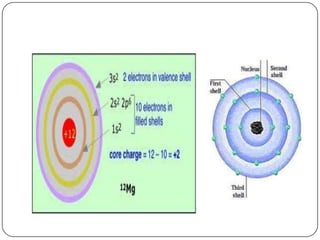
Effective Nuclear ChargeThe measure of the attraction between the nucleus and the electronAlso defined by the equationZeff = Z – SWherein,Z = number of proton in the nucleusS = average number of electrons that are between the nucleus and the electron in question
Greater ZeffThe greater the attraction between the nucleus and the electronThe electron are drawn closer to the nucleusThe atomic size is reduced
Greater Shielding constantThe lower the ZeffThe lesser the attraction between electrons and the nucleus
Electrons in the inner shell (lower n values), effectively shields the electrons in the outer shell (higher n values)However the electrons in the same shell do not effectively shield one anotherExample: electrons in the fourth energy level
Trend?Effective nuclear charge increases across any row in the periodic table.Effective nuclear charge increases slightly moving down a family/group
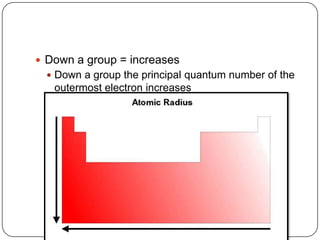
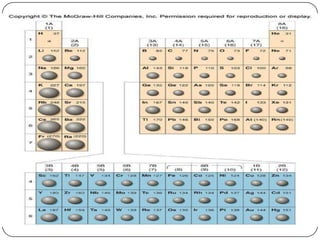
Atomic SizeHalf of the internuclear distance between adjacent atoms (atomic radii)Trend?Across a period (L-R) = decreasesThis is due to the fact that moving from left to right across a period, the atomic number increases while the shielding factor, does not significantly increase; therefore, the Zeff increases thus pulling the electrons towards the nucleus
Down a group = increasesDown a group the principal quantum number of the outermost electron increases
Check-upArrange the following atoms in order of increasing size:P, S, As, Se2. Arrange the following atoms in order of decreasing atomic radius: Na, Be, Mg
Ionic SizeAn estimate of the size of an ion in a crystalline ionic compoundFrom the relationship between the nuclear size and the atomic size, the size of the ion relative to its parent atom can be predicted
Cations are smaller than their parent atom.When cations form, electrons are removed from the outer levelAnions are larger than their parent atomWhen ions form, electrons are added to the outer levelThe increase in repulsion causes the electrons to occupy more space
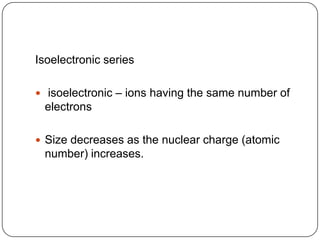
Isoelectronic seriesisoelectronic – ions having the same number of electronsSize decreases as the nuclear charge (atomic number) increases.
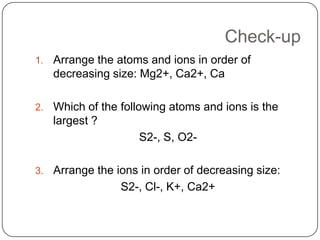
Check-upArrange the atoms and ions in order of decreasing size: Mg2+, Ca2+, CaWhich of the following atoms and ions is the largest ?S2-, S, O2-Arrange the ions in order of decreasing size: S2-, Cl-, K+, Ca2+
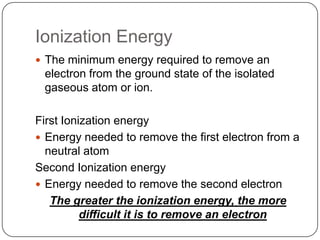
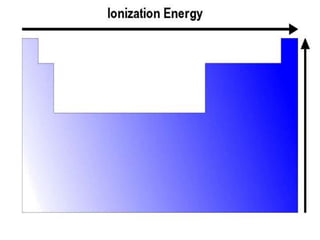
Ionization EnergyThe minimum energy required to remove an electron from the ground state of the isolated gaseous atom or ion. First Ionization energyEnergy needed to remove the first electron from a neutral atomSecond Ionization energyEnergy needed to remove the second electronThe greater the ionization energy, the more difficult it is to remove an electron
Check-upReferring to a periodic table, arrange the following atoms in order of increasing first ionization energy.Ne, Na, P, Ar, K
Electron Configuration of ionsWhen electrons are removed from an atom to form cation, they are always removed first from the orbitals with largest available principal quantum number, n.Example :Li  Li +
When electrons are added to an atom to form anion, they are added to an empty or partially filled orbitalExample:F  F-
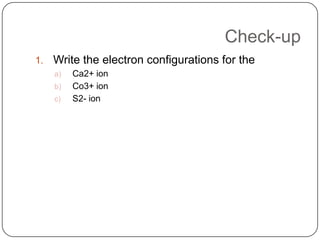
 Check-upWrite the electron configurations for the Ca2+ ionCo3+ ionS2- ion
SW
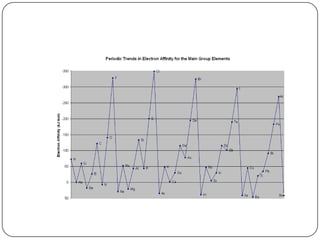
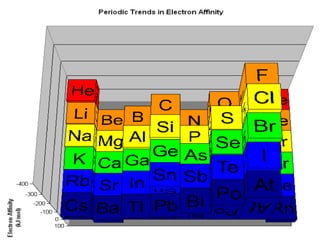
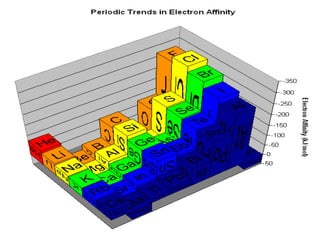
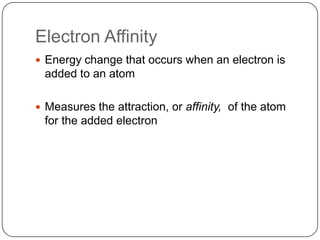
Electron AffinityEnergy change that occurs when an electron is added to an atomMeasures the attraction, or affinity,  of the atom for the added electron
Ionization energy vs Electron AffinityIonization energyMeasures the ease with which an atom loses an electronElectron affinityMeasures the ease with which an atom gains an electron
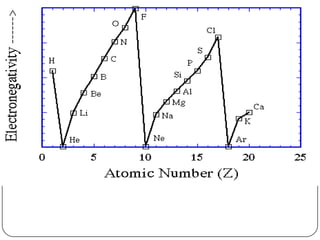
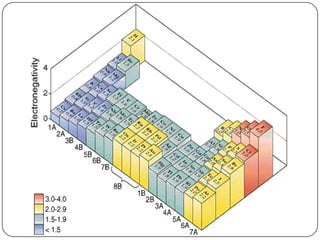
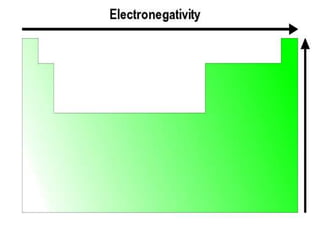
ElectronegativityAbility of an atom to attract electrons o itself
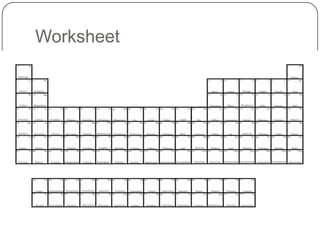
Worksheet
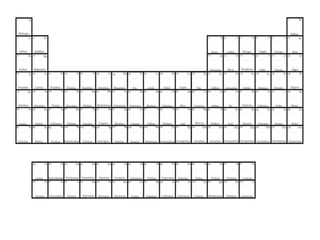
Periodic Table

Periodic Table

  • 1.
  • 2.
  • 3.
    J.W. DobereinerClassified elementsinto several sets of triadsTRIADSLi, Na, KCa, Sr, BaHave similar chemical propertiesProperties of the middle element are approximate averages of the first and third elements
  • 4.
    J.A.R Newlands62 elementsare already known“law of octaves” (increasing atomic mass)Similar properties: 8th and 1st , 9th and 2nd , 10th and 3rd
  • 5.
    Dmitri MendeleevTogether withLothar Meyer, they published nearly identical schemes for classifying the elementsWrote the names of the elements nd its properties in cards and arranged the cards in various ways.
  • 6.
    He noticed thata periodic repetition of the properties of the elements could be observed when the elements were arranged in increasing atomic masses.He eventually produced the first periodic table of elements.
  • 7.
    H.G.J. MoseleyCorrectly hypothesizedthe fundamental property of each elements – the amount of positive charge in the nucleus = Atomic no.Proposed that the correct way to arrange elements was with the increasing atomic number
  • 8.
    The PERIODIC LAWBasisfor the Periodic TableWhen elements are arranged in increasing atomic number, heir physical and chemical properties show a periodic pattern.
  • 9.
  • 10.
    Groups or FamiliesThearrangement of the elements in vertical columnsEach family has the similar properties
  • 11.
    Period Horizontal rowsin the periodic table
  • 12.
  • 14.
  • 15.
  • 16.
    Effective Nuclear ChargeThemeasure of the attraction between the nucleus and the electronAlso defined by the equationZeff = Z – SWherein,Z = number of proton in the nucleusS = average number of electrons that are between the nucleus and the electron in question
  • 18.
    Greater ZeffThe greaterthe attraction between the nucleus and the electronThe electron are drawn closer to the nucleusThe atomic size is reduced
  • 19.
    Greater Shielding constantThelower the ZeffThe lesser the attraction between electrons and the nucleus
  • 20.
    Electrons in theinner shell (lower n values), effectively shields the electrons in the outer shell (higher n values)However the electrons in the same shell do not effectively shield one anotherExample: electrons in the fourth energy level
  • 22.
    Trend?Effective nuclear chargeincreases across any row in the periodic table.Effective nuclear charge increases slightly moving down a family/group
  • 23.
    Atomic SizeHalf ofthe internuclear distance between adjacent atoms (atomic radii)Trend?Across a period (L-R) = decreasesThis is due to the fact that moving from left to right across a period, the atomic number increases while the shielding factor, does not significantly increase; therefore, the Zeff increases thus pulling the electrons towards the nucleus
  • 24.
    Down a group= increasesDown a group the principal quantum number of the outermost electron increases
  • 26.
    Check-upArrange the followingatoms in order of increasing size:P, S, As, Se2. Arrange the following atoms in order of decreasing atomic radius: Na, Be, Mg
  • 27.
    Ionic SizeAn estimateof the size of an ion in a crystalline ionic compoundFrom the relationship between the nuclear size and the atomic size, the size of the ion relative to its parent atom can be predicted
  • 28.
    Cations are smallerthan their parent atom.When cations form, electrons are removed from the outer levelAnions are larger than their parent atomWhen ions form, electrons are added to the outer levelThe increase in repulsion causes the electrons to occupy more space
  • 29.
    Isoelectronic seriesisoelectronic –ions having the same number of electronsSize decreases as the nuclear charge (atomic number) increases.
  • 30.
    Check-upArrange the atomsand ions in order of decreasing size: Mg2+, Ca2+, CaWhich of the following atoms and ions is the largest ?S2-, S, O2-Arrange the ions in order of decreasing size: S2-, Cl-, K+, Ca2+
  • 31.
    Ionization EnergyThe minimumenergy required to remove an electron from the ground state of the isolated gaseous atom or ion. First Ionization energyEnergy needed to remove the first electron from a neutral atomSecond Ionization energyEnergy needed to remove the second electronThe greater the ionization energy, the more difficult it is to remove an electron
  • 33.
    Check-upReferring to aperiodic table, arrange the following atoms in order of increasing first ionization energy.Ne, Na, P, Ar, K
  • 34.
    Electron Configuration ofionsWhen electrons are removed from an atom to form cation, they are always removed first from the orbitals with largest available principal quantum number, n.Example :Li  Li +
  • 35.
    When electrons areadded to an atom to form anion, they are added to an empty or partially filled orbitalExample:F  F-
  • 36.
    Check-upWrite theelectron configurations for the Ca2+ ionCo3+ ionS2- ion
  • 37.
  • 38.
    Electron AffinityEnergy changethat occurs when an electron is added to an atomMeasures the attraction, or affinity, of the atom for the added electron
  • 39.
    Ionization energy vsElectron AffinityIonization energyMeasures the ease with which an atom loses an electronElectron affinityMeasures the ease with which an atom gains an electron
  • 43.
    ElectronegativityAbility of anatom to attract electrons o itself
  • 47.