What it Includes??
KRA refers to general areas of outcomes or outputs
for which a role is responsible. Defines the key area
that the employee needs to produce in his specified
field.
Ex:- for HR manager area might be Recruitment
Importance
 Clarify their roles
 Focus on results
 Set goals and objectives.
 Improve their work management
 Make value added decisions
KPIs describe the indicators of performance or
success for an employee. KPI also called as Key
Success Indicators (KSI), help an organization define
and measure progress toward organizational goals.
Ex:- HR Manager who has Recruitment as one of their KRA's, a
typical KPI for this HR Manager might be "Recruitment of
Level 1 Positions within 3 months of notified vacancy and
within 90% of budget".
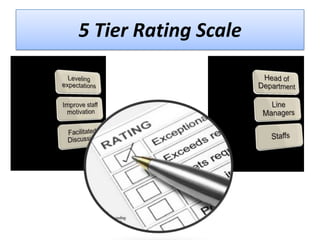
5 Tier Rating Scale
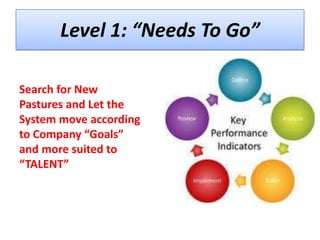
Level 1: “Needs To Go”
Search for New
Pastures and Let the
System move according
to Company “Goals”
and more suited to
“TALENT”
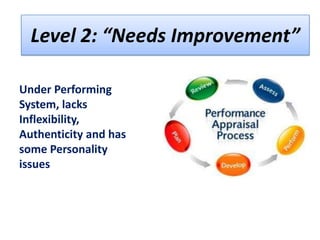
Level 2: “Needs Improvement”
Under Performing
System, lacks
Inflexibility,
Authenticity and has
some Personality
issues
Level 3: “Good but
Inconsistent”
Things Fly Along, Lack
of Motivation, waiting
for something better to
happen
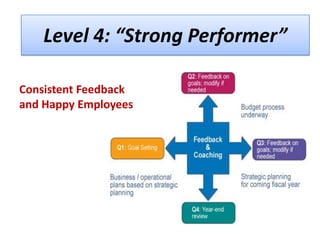
Level 4: “Strong Performer”
Consistent Feedback
and Happy Employees
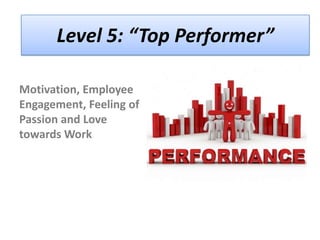
Level 5: “Top Performer”
Motivation, Employee
Engagement, Feeling of
Passion and Love
towards Work
Summary
Use H-A-P-P-Y Formula
Honestly tell the employee exactly how you
see the performance situation
Ask for their feedback about what you’ve said
and listen to their response

Partner with the employee to find the
solution
Persist until the change you’ve requested
happens

Remember Why you do performance review

Performance management

  • 2.
    What it Includes?? KRArefers to general areas of outcomes or outputs for which a role is responsible. Defines the key area that the employee needs to produce in his specified field. Ex:- for HR manager area might be Recruitment Importance  Clarify their roles  Focus on results  Set goals and objectives.  Improve their work management  Make value added decisions
  • 3.
    KPIs describe theindicators of performance or success for an employee. KPI also called as Key Success Indicators (KSI), help an organization define and measure progress toward organizational goals. Ex:- HR Manager who has Recruitment as one of their KRA's, a typical KPI for this HR Manager might be "Recruitment of Level 1 Positions within 3 months of notified vacancy and within 90% of budget".
  • 4.
  • 5.
    Level 1: “NeedsTo Go” Search for New Pastures and Let the System move according to Company “Goals” and more suited to “TALENT”
  • 6.
    Level 2: “NeedsImprovement” Under Performing System, lacks Inflexibility, Authenticity and has some Personality issues
  • 7.
    Level 3: “Goodbut Inconsistent” Things Fly Along, Lack of Motivation, waiting for something better to happen
  • 8.
    Level 4: “StrongPerformer” Consistent Feedback and Happy Employees
  • 9.
    Level 5: “TopPerformer” Motivation, Employee Engagement, Feeling of Passion and Love towards Work
  • 10.
    Summary Use H-A-P-P-Y Formula Honestlytell the employee exactly how you see the performance situation Ask for their feedback about what you’ve said and listen to their response Partner with the employee to find the solution Persist until the change you’ve requested happens Remember Why you do performance review