Webinars
The Future of Performance
Management: 2015 and Beyond
@7Geese #pmanagement2015
IT’S NICE TO MEET YOU.
Amin Palizban
CEO of 7Geese
Kelly Batke
Director of Marketing
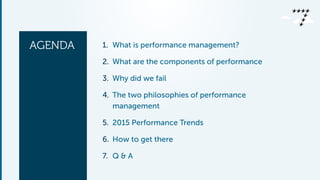
AGENDA 1. What is performance management?
2. What are the components of performance
3. Why did we fail
4. The two philosophies of performance
management
5. 2015 Performance Trends
6. How to get there
7. Q & A
WHAT IS PERFORMANCE MANAGEMENT?
“Performance Management is a process of aligning
employee, team, and company performance to achieve
organizational goals and objectives”
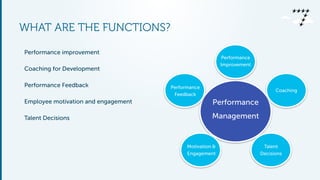
WHAT ARE THE FUNCTIONS?
Performance improvement
Coaching for Development
Performance Feedback
Employee motivation and engagement
Talent Decisions
Performance
Management
Performance
Improvement
Coaching
Performance
Feedback
Talent
Decisions
Motivation &
Engagement
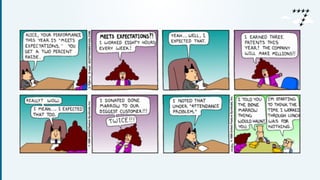
WE SCREWED UP!
“More than 90% of appraisal systems are not successful”
“Only 5% of H.R. professionals were ‘very satisfied’ with
their performance management systems.”
!
!
Survey by Society for Human Resource Management
WHY DID WE FAIL?
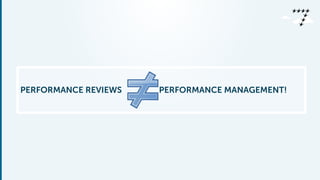
PERFORMANCE REVIEWS PERFORMANCE MANAGEMENT!
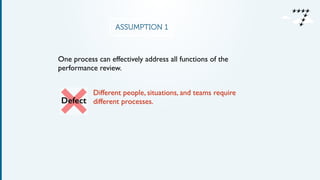
ASSUMPTION 1
Different people, situations, and teams require
different processes.	

Defect
One process can effectively address all functions of the
performance review.
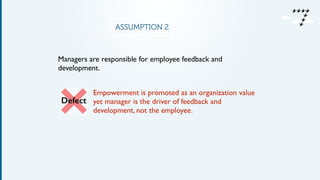
ASSUMPTION 2
Managers are responsible for employee feedback and
development.
Empowerment is promoted as an organization value
yet manager is the driver of feedback and
development, not the employee.
Defect
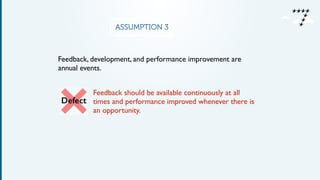
ASSUMPTION 3
Feedback, development, and performance improvement are
annual events.
Feedback should be available continuously at all
times and performance improved whenever there is
an opportunity.
Defect
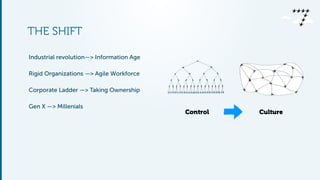
THE SHIFT
Industrial revolution—> Information Age
Rigid Organizations —> Agile Workforce
Corporate Ladder —> Taking Ownership
Gen X —> Millenials
THE TWO PHILOSOPHIES ON
PERFORMANCE MANAGEMENT
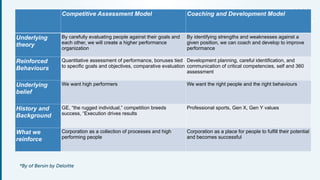
Competitive Assessment Model Coaching and Development Model
Underlying
theory
By carefully evaluating people against their goals and
each other, we will create a higher performance
organization
By identifying strengths and weaknesses against a
given position, we can coach and develop to improve
performance
Reinforced
Behaviours
Quantitative assessment of performance, bonuses tied
to specific goals and objectives, comparative evaluation
Development planning, careful identification, and
communication of critical competencies, self and 360
assessment
Underlying
belief
We want high performers We want the right people and the right behaviours
History and
Background
GE, “the rugged individual,” competition breeds
success, “Execution drives results
Professional sports, Gen X, Gen Y values
What we
reinforce
Corporation as a collection of processes and high
performing people
Corporation as a place for people to fulfill their potential
and becomes successful
*By of Bersin by Deloitte
2015 PM TRENDS
2015 PM TRENDS
1. Putting employees in the driver seat
Just like a professional tennis player that owns their career
and works with best coaches to excel, the shift of
performance management is to put employees in the driver
seat, rather than them being passive and forced through a
process they can’t control
2015 PM TRENDS
2. Elimination of ratings and rankings
The negative impacts of rating and ranking outweighs the
gains. People want to know how they perform relative to
their potential and unique talents, not in comparison to
others.
2015 PM TRENDS
3. Performance improvement mindset
A shift to a performance improvement mindset rather than
treating performance management as an event, process or
tool. The shift will create workplace cultures where there is
transparency, open feedback, and constant strive to improve
individual and team performance.
2015 PM TRENDS
4. Building alliances
Based on trust rather than a employee vs management
separation. Creating win-win alliances between employees
and the company that both helps the employee advance their
career and helps the company improve performance and
transform.
2015 PM TRENDS
5. Big Data and Analytics
HR has long operated without data. In 2015 and beyond big
data and analytics will enable us to identify high performing
teams and individuals, disengaged employees, and give us
predictive insights on how to increase performance,
engagement, and reduce turnover.
HOW TO GET THERE
HOW DO YOU GET THERE?
1. Design new processes that empower the employee
2. Eliminate ratings and rankings
3. Create training to embrace continuous improvement
4. Train leadership and managers on building alliances
5. Use technology that supports HR Analytics
Try 7Geese Now!
www.7Geese.com
30-day free trial - no risk.
Q & A
THANKS FOR
JOINING!
A recorded version of this Webinar will be available
on our blog at blog.7geese.com
Webinars

Future of Performance Management: 2015 and Beyond

  • 1.
    Webinars The Future ofPerformance Management: 2015 and Beyond
  • 2.
    @7Geese #pmanagement2015 IT’S NICETO MEET YOU. Amin Palizban CEO of 7Geese Kelly Batke Director of Marketing
  • 3.
    AGENDA 1. Whatis performance management? 2. What are the components of performance 3. Why did we fail 4. The two philosophies of performance management 5. 2015 Performance Trends 6. How to get there 7. Q & A
  • 4.
    WHAT IS PERFORMANCEMANAGEMENT? “Performance Management is a process of aligning employee, team, and company performance to achieve organizational goals and objectives”
  • 5.
    WHAT ARE THEFUNCTIONS? Performance improvement Coaching for Development Performance Feedback Employee motivation and engagement Talent Decisions Performance Management Performance Improvement Coaching Performance Feedback Talent Decisions Motivation & Engagement
  • 6.
    WE SCREWED UP! “Morethan 90% of appraisal systems are not successful” “Only 5% of H.R. professionals were ‘very satisfied’ with their performance management systems.” ! ! Survey by Society for Human Resource Management
  • 8.
  • 9.
  • 10.
    ASSUMPTION 1 Different people,situations, and teams require different processes. Defect One process can effectively address all functions of the performance review.
  • 11.
    ASSUMPTION 2 Managers areresponsible for employee feedback and development. Empowerment is promoted as an organization value yet manager is the driver of feedback and development, not the employee. Defect
  • 12.
    ASSUMPTION 3 Feedback, development,and performance improvement are annual events. Feedback should be available continuously at all times and performance improved whenever there is an opportunity. Defect
  • 13.
    THE SHIFT Industrial revolution—>Information Age Rigid Organizations —> Agile Workforce Corporate Ladder —> Taking Ownership Gen X —> Millenials
  • 14.
    THE TWO PHILOSOPHIESON PERFORMANCE MANAGEMENT
  • 15.
    Competitive Assessment ModelCoaching and Development Model Underlying theory By carefully evaluating people against their goals and each other, we will create a higher performance organization By identifying strengths and weaknesses against a given position, we can coach and develop to improve performance Reinforced Behaviours Quantitative assessment of performance, bonuses tied to specific goals and objectives, comparative evaluation Development planning, careful identification, and communication of critical competencies, self and 360 assessment Underlying belief We want high performers We want the right people and the right behaviours History and Background GE, “the rugged individual,” competition breeds success, “Execution drives results Professional sports, Gen X, Gen Y values What we reinforce Corporation as a collection of processes and high performing people Corporation as a place for people to fulfill their potential and becomes successful *By of Bersin by Deloitte
  • 16.
  • 17.
    2015 PM TRENDS 1.Putting employees in the driver seat Just like a professional tennis player that owns their career and works with best coaches to excel, the shift of performance management is to put employees in the driver seat, rather than them being passive and forced through a process they can’t control
  • 18.
    2015 PM TRENDS 2.Elimination of ratings and rankings The negative impacts of rating and ranking outweighs the gains. People want to know how they perform relative to their potential and unique talents, not in comparison to others.
  • 19.
    2015 PM TRENDS 3.Performance improvement mindset A shift to a performance improvement mindset rather than treating performance management as an event, process or tool. The shift will create workplace cultures where there is transparency, open feedback, and constant strive to improve individual and team performance.
  • 20.
    2015 PM TRENDS 4.Building alliances Based on trust rather than a employee vs management separation. Creating win-win alliances between employees and the company that both helps the employee advance their career and helps the company improve performance and transform.
  • 21.
    2015 PM TRENDS 5.Big Data and Analytics HR has long operated without data. In 2015 and beyond big data and analytics will enable us to identify high performing teams and individuals, disengaged employees, and give us predictive insights on how to increase performance, engagement, and reduce turnover.
  • 22.
  • 23.
    HOW DO YOUGET THERE? 1. Design new processes that empower the employee 2. Eliminate ratings and rankings 3. Create training to embrace continuous improvement 4. Train leadership and managers on building alliances 5. Use technology that supports HR Analytics
  • 24.
  • 25.
  • 26.
    THANKS FOR JOINING! A recordedversion of this Webinar will be available on our blog at blog.7geese.com Webinars