PEPSIN
Proteolytic enzyme
biochemistry
Prepared by Supervisor
Lezan Aso Dr. Azheen S. Ahmad
Laren Nahro
Soma Rostam
Muhamad Nafih
Suhaib Bilal
outline
Introduction: pepsin as a proteolytic enzyme
Pepsin
Pepsin activity measurement
Mechanism of action
Animal sources
Dairy products
Antimicrobial activity
Disease associated with reflux
Oral Salivary Pepsin Testing (Peptest)
Pepsin Defficiency
Introduction: pepsin as a proteolytic enzyme
• Proteolytic enzymes (proteases) are enzymes that break down
protein.
• Proteins are generally too large to be absorbed by the
intestine.
• They must, be hydrolyzed (smaller molecules) to be absorbed.
• Proteolytic enzymes responsible for degrading proteins are
produced by three different organs: the stomach, the pancreas,
and the small intestine.
• In stomach which secretes gastric juice , a unique solution
containing hydrochloric acid and the proenzyme pepsinogen.
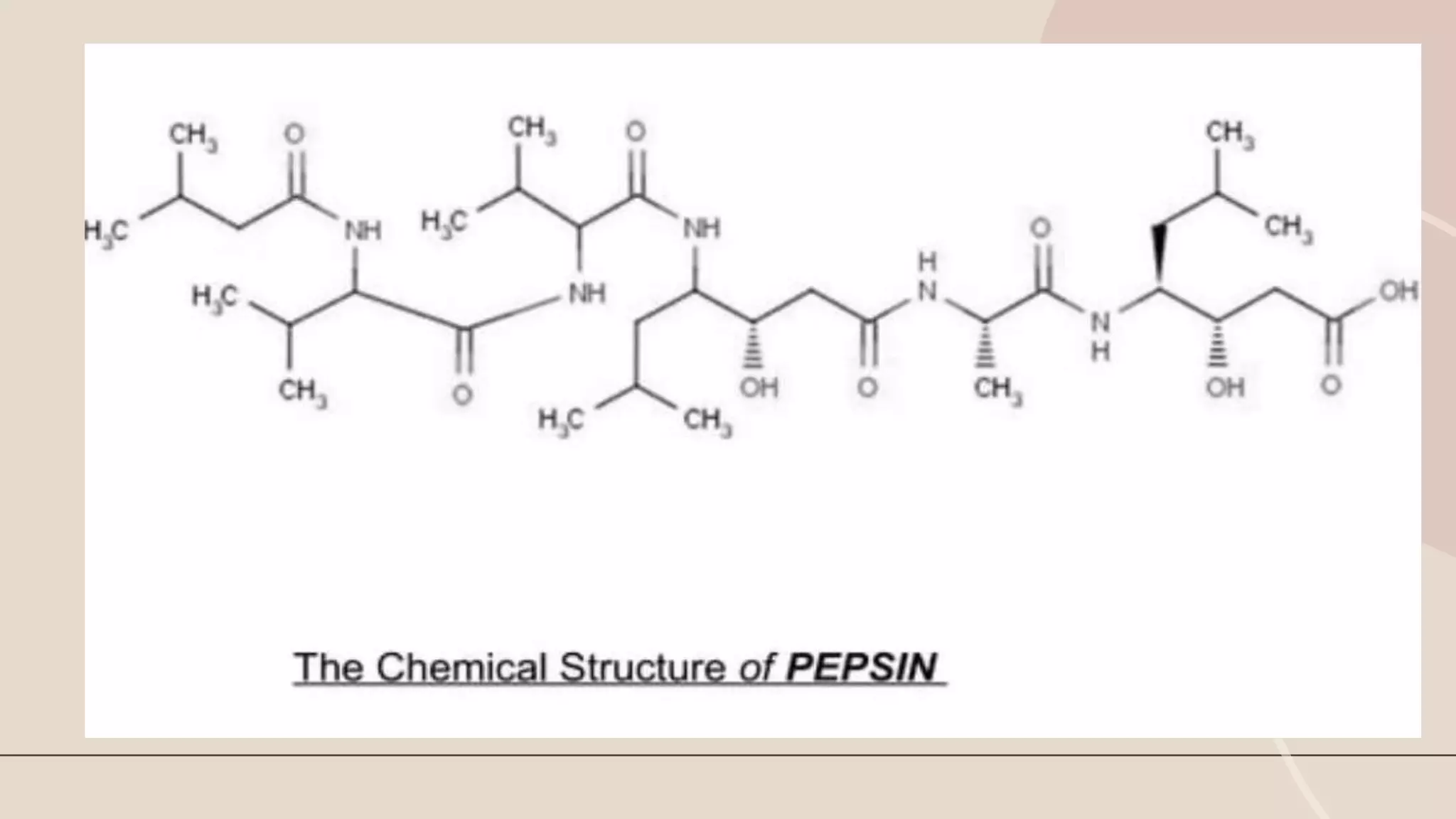
Pepsin
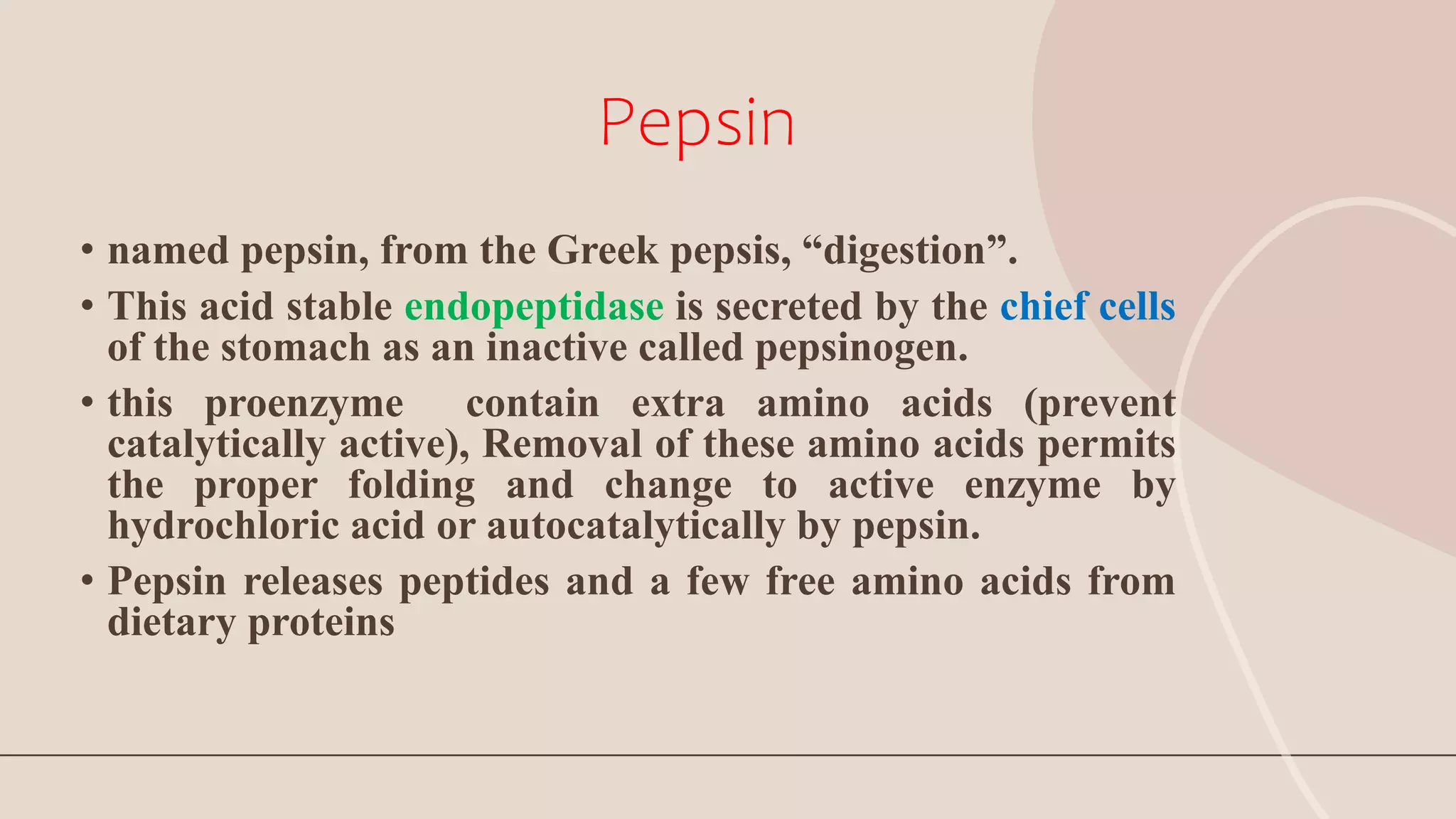
• named pepsin, from the Greek pepsis, “digestion”.
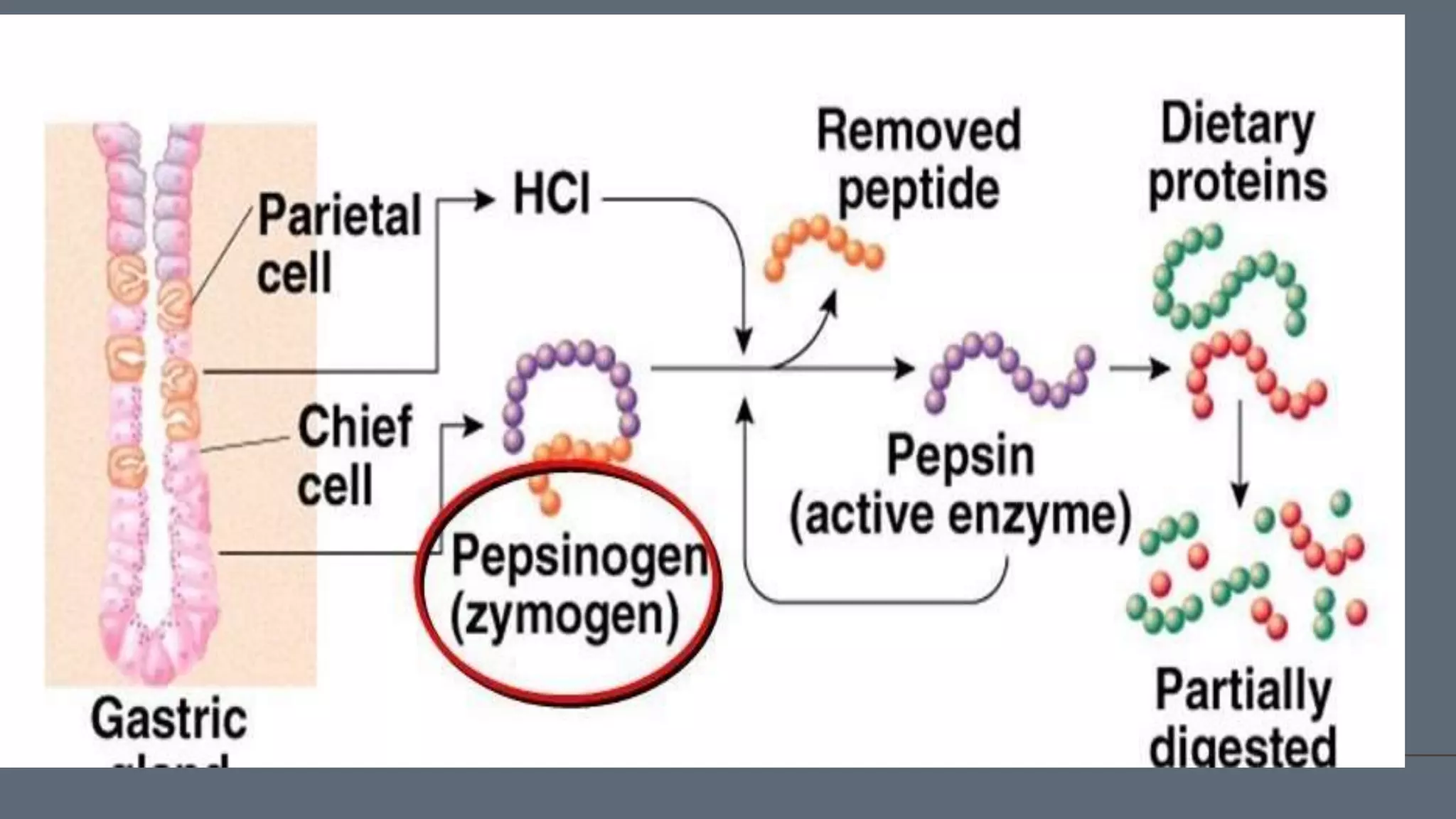
• This acid stable endopeptidase is secreted by the chief cells
of the stomach as an inactive called pepsinogen.
• this proenzyme contain extra amino acids (prevent
catalytically active), Removal of these amino acids permits
the proper folding and change to active enzyme by
hydrochloric acid or autocatalytically by pepsin.
• Pepsin releases peptides and a few free amino acids from
dietary proteins
Pepsin activity measurement (working)
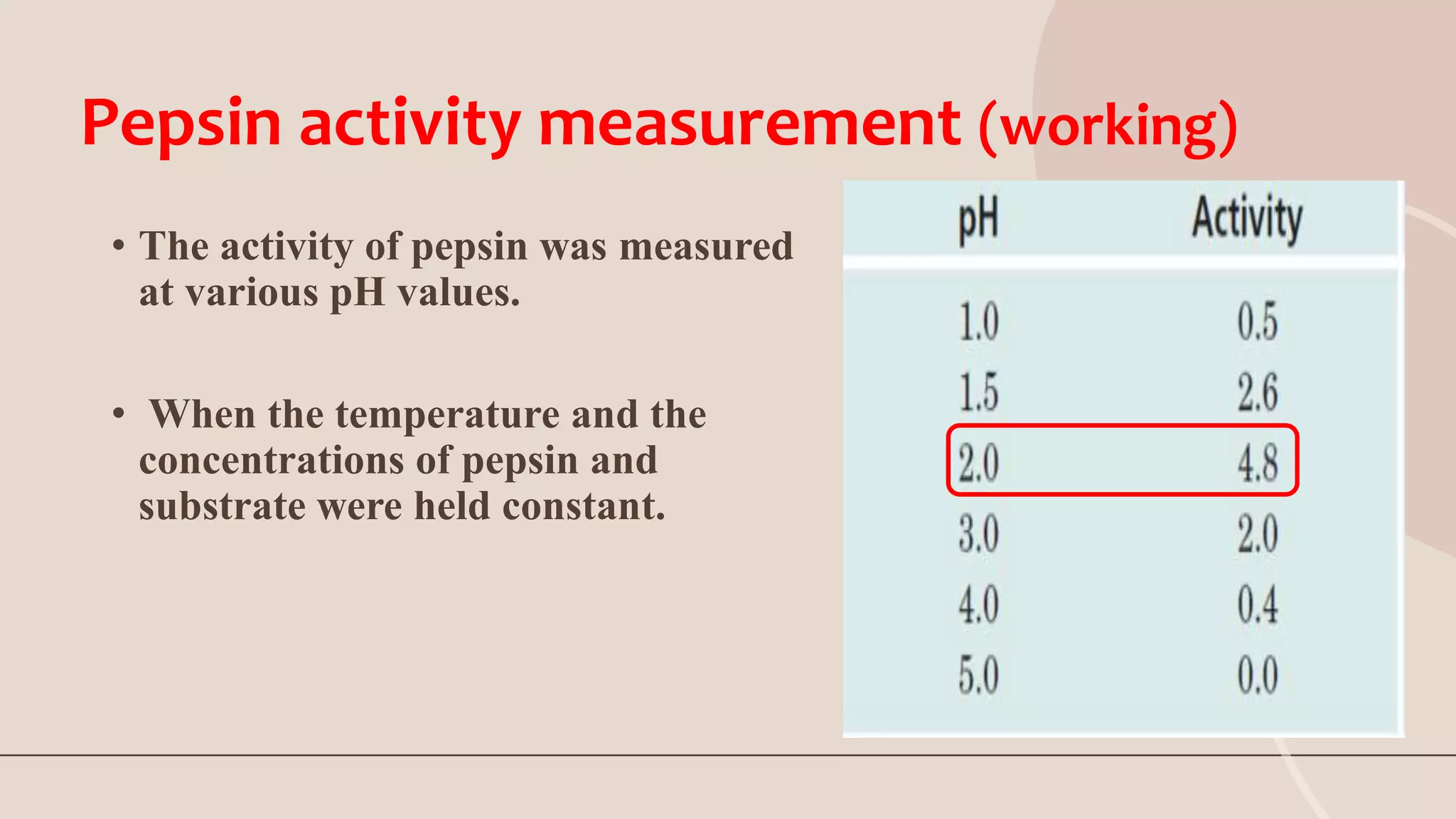
• The activity of pepsin was measured
at various pH values.
• When the temperature and the
concentrations of pepsin and
substrate were held constant.
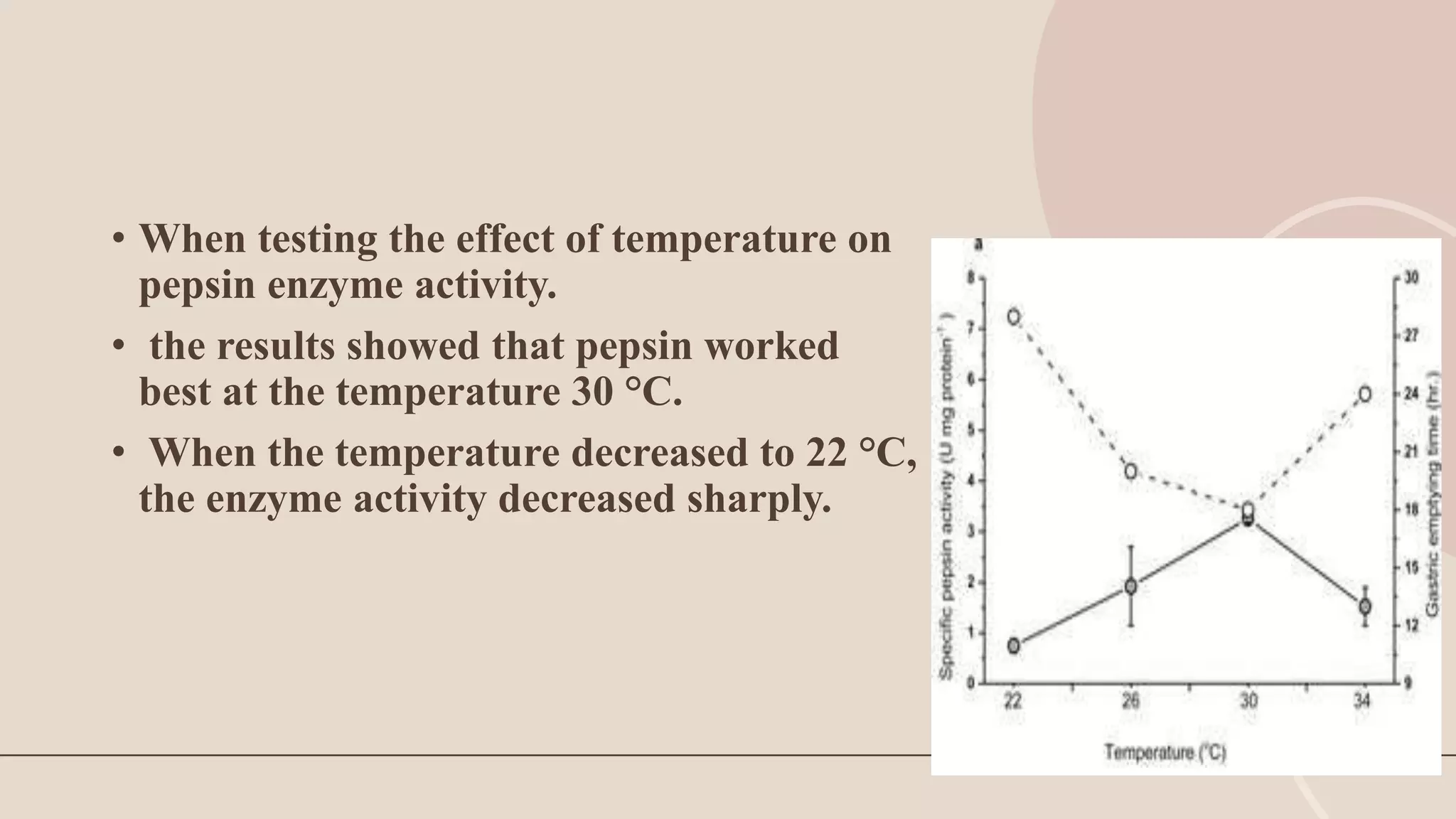
• When testing the effect of temperature on
pepsin enzyme activity.
• the results showed that pepsin worked
best at the temperature 30 °C.
• When the temperature decreased to 22 °C,
the enzyme activity decreased sharply.
• Pepsin, hydrolyzes peptide bonds on the
amino side of the aromatic amino acids:
tryptophan, phenylalanine, and tyrosine.
Mechanism of action
(Lock) (Key)
Aromatic amino acid
Animal sources of pepsin
sheep pig
calf
Dairy products (Cheese)
• Cheese is a milk product, synthesized by Rennet
• Rennet enzyme is a stomach enzyme (see in cow and sheep)
in Kurdish called (‫پەنیر‬ ‫دەرمان‬ ) that used for producing
Kurdish cheese
• Rennet, also called rennin, mixture of Chymosin and pepsin
• The enzyme coagulates milk quickly at neutral pH value
with little further degradation of the milk proteins.
• Industrially , manufactures using for making brand cheeses.
Antimicrobial activity of pepsinogen activation
peptides
• activation peptides from pepsinogen can also act as
antimicrobial peptides, for example
Escherichia coli
Salmonella typhimurium
Pseudomonas aeruginosa
Staphylococcus aureus
Listeria monocytogenes
Disease associated with reflux and identified by the
presence of pepsin
Reflux of pepsin into the esophagus and larynx causes
many damages
Laryngopharyngeal reflux (LPR)
 Gastro- oesophageal reflux disease (GORD)
 Otitis media with effusion (OME)
Laryngomalacia
Vocal fold leucoplakia (associated with LPR)
Rhinitis and sinusitis
Lung transplant rejection
Oesophageal atresia
Measuring pepsin (why and how)
• Pepsin is not secreted at proximal sites in the gastrointestinal
tract.
• Therefore, it represents a rational and objective marker of
recent reflux events when detected in biological samples from
the aerodigestive tract, like saliva and sputum.
• We have isolated pepsin using anion exchange HPLC, from
human gastric juice obtained at endoscopy.
• This Figure shows pepsin eluting at 10–15 minutes from the
HPLC column has a molecular weight just below 37,000. The
fraction collected between 10–15 minutes also showed
proteolytic activity at pH 2.2 using an N-terminal plate assay
Oral Salivary Pepsin Testing
(Peptest)
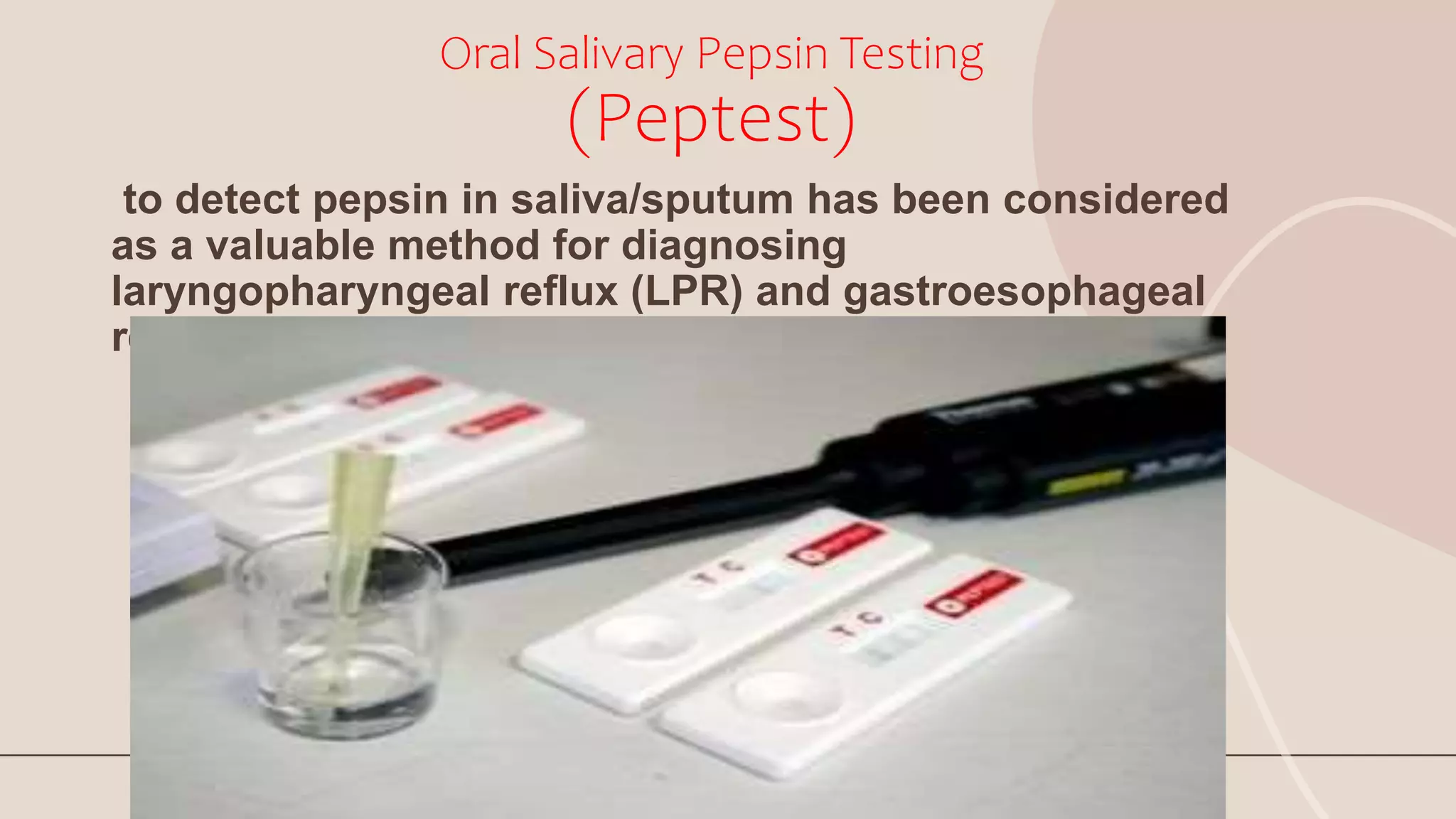
to detect pepsin in saliva/sputum has been considered
as a valuable method for diagnosing
laryngopharyngeal reflux (LPR) and gastroesophageal
reflux disease (GERD).
Pepsin Defficiency
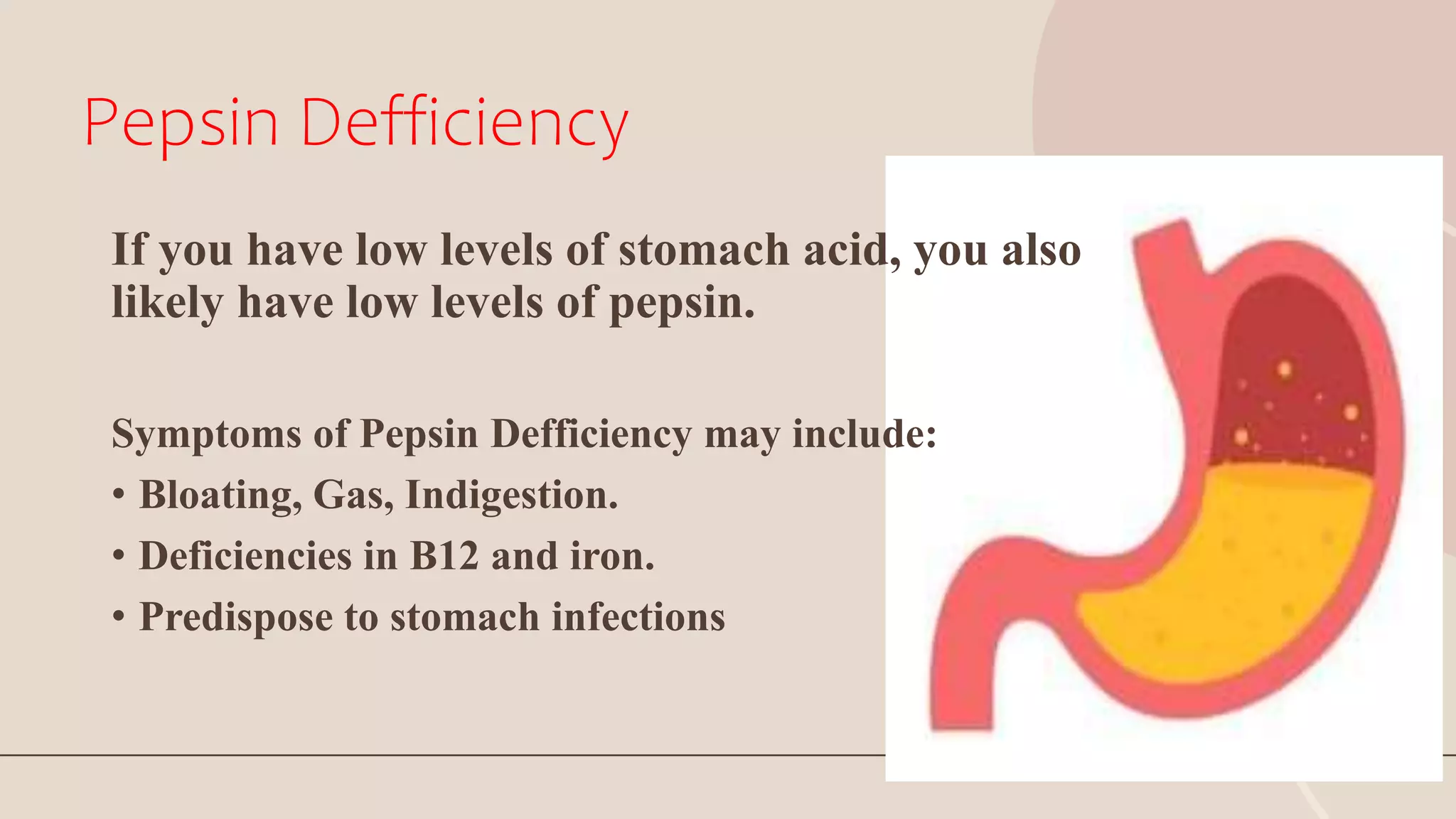
If you have low levels of stomach acid, you also
likely have low levels of pepsin.
Symptoms of Pepsin Defficiency may include:
• Bloating, Gas, Indigestion.
• Deficiencies in B12 and iron.
• Predispose to stomach infections
Treatment of Pepsin Defficiency
Today pepsin supplements are available that can aid in digestion.
Here are some vital pepsin benefits:
• Helps the body break down proteins that are hard to digest.
• Prevents indigestion and leaky gut.
• Stimulates the production of bile.
• Boosts nutrient absorption.
• Helps ward off nutritional deficiency.
• Kills bacteria in the stomach.
• Separates vitamin B12 from protein so it can be effectively
utilized by the body.
pepsin

pepsin

  • 1.
    PEPSIN Proteolytic enzyme biochemistry Prepared bySupervisor Lezan Aso Dr. Azheen S. Ahmad Laren Nahro Soma Rostam Muhamad Nafih Suhaib Bilal
  • 2.
    outline Introduction: pepsin asa proteolytic enzyme Pepsin Pepsin activity measurement Mechanism of action Animal sources Dairy products Antimicrobial activity Disease associated with reflux Oral Salivary Pepsin Testing (Peptest) Pepsin Defficiency
  • 3.
    Introduction: pepsin asa proteolytic enzyme • Proteolytic enzymes (proteases) are enzymes that break down protein. • Proteins are generally too large to be absorbed by the intestine. • They must, be hydrolyzed (smaller molecules) to be absorbed. • Proteolytic enzymes responsible for degrading proteins are produced by three different organs: the stomach, the pancreas, and the small intestine. • In stomach which secretes gastric juice , a unique solution containing hydrochloric acid and the proenzyme pepsinogen.
  • 5.
    Pepsin • named pepsin,from the Greek pepsis, “digestion”. • This acid stable endopeptidase is secreted by the chief cells of the stomach as an inactive called pepsinogen. • this proenzyme contain extra amino acids (prevent catalytically active), Removal of these amino acids permits the proper folding and change to active enzyme by hydrochloric acid or autocatalytically by pepsin. • Pepsin releases peptides and a few free amino acids from dietary proteins
  • 7.
    Pepsin activity measurement(working) • The activity of pepsin was measured at various pH values. • When the temperature and the concentrations of pepsin and substrate were held constant.
  • 8.
    • When testingthe effect of temperature on pepsin enzyme activity. • the results showed that pepsin worked best at the temperature 30 °C. • When the temperature decreased to 22 °C, the enzyme activity decreased sharply.
  • 9.
    • Pepsin, hydrolyzespeptide bonds on the amino side of the aromatic amino acids: tryptophan, phenylalanine, and tyrosine. Mechanism of action (Lock) (Key)
  • 10.
  • 11.
    Animal sources ofpepsin sheep pig calf
  • 12.
    Dairy products (Cheese) •Cheese is a milk product, synthesized by Rennet • Rennet enzyme is a stomach enzyme (see in cow and sheep) in Kurdish called (‫پەنیر‬ ‫دەرمان‬ ) that used for producing Kurdish cheese • Rennet, also called rennin, mixture of Chymosin and pepsin • The enzyme coagulates milk quickly at neutral pH value with little further degradation of the milk proteins. • Industrially , manufactures using for making brand cheeses.
  • 13.
    Antimicrobial activity ofpepsinogen activation peptides • activation peptides from pepsinogen can also act as antimicrobial peptides, for example Escherichia coli Salmonella typhimurium Pseudomonas aeruginosa Staphylococcus aureus Listeria monocytogenes
  • 14.
    Disease associated withreflux and identified by the presence of pepsin Reflux of pepsin into the esophagus and larynx causes many damages Laryngopharyngeal reflux (LPR)  Gastro- oesophageal reflux disease (GORD)  Otitis media with effusion (OME) Laryngomalacia Vocal fold leucoplakia (associated with LPR) Rhinitis and sinusitis Lung transplant rejection Oesophageal atresia
  • 15.
    Measuring pepsin (whyand how) • Pepsin is not secreted at proximal sites in the gastrointestinal tract. • Therefore, it represents a rational and objective marker of recent reflux events when detected in biological samples from the aerodigestive tract, like saliva and sputum. • We have isolated pepsin using anion exchange HPLC, from human gastric juice obtained at endoscopy. • This Figure shows pepsin eluting at 10–15 minutes from the HPLC column has a molecular weight just below 37,000. The fraction collected between 10–15 minutes also showed proteolytic activity at pH 2.2 using an N-terminal plate assay
  • 16.
    Oral Salivary PepsinTesting (Peptest) to detect pepsin in saliva/sputum has been considered as a valuable method for diagnosing laryngopharyngeal reflux (LPR) and gastroesophageal reflux disease (GERD).
  • 18.
    Pepsin Defficiency If youhave low levels of stomach acid, you also likely have low levels of pepsin. Symptoms of Pepsin Defficiency may include: • Bloating, Gas, Indigestion. • Deficiencies in B12 and iron. • Predispose to stomach infections
  • 19.
    Treatment of PepsinDefficiency Today pepsin supplements are available that can aid in digestion. Here are some vital pepsin benefits: • Helps the body break down proteins that are hard to digest. • Prevents indigestion and leaky gut. • Stimulates the production of bile. • Boosts nutrient absorption. • Helps ward off nutritional deficiency. • Kills bacteria in the stomach. • Separates vitamin B12 from protein so it can be effectively utilized by the body.