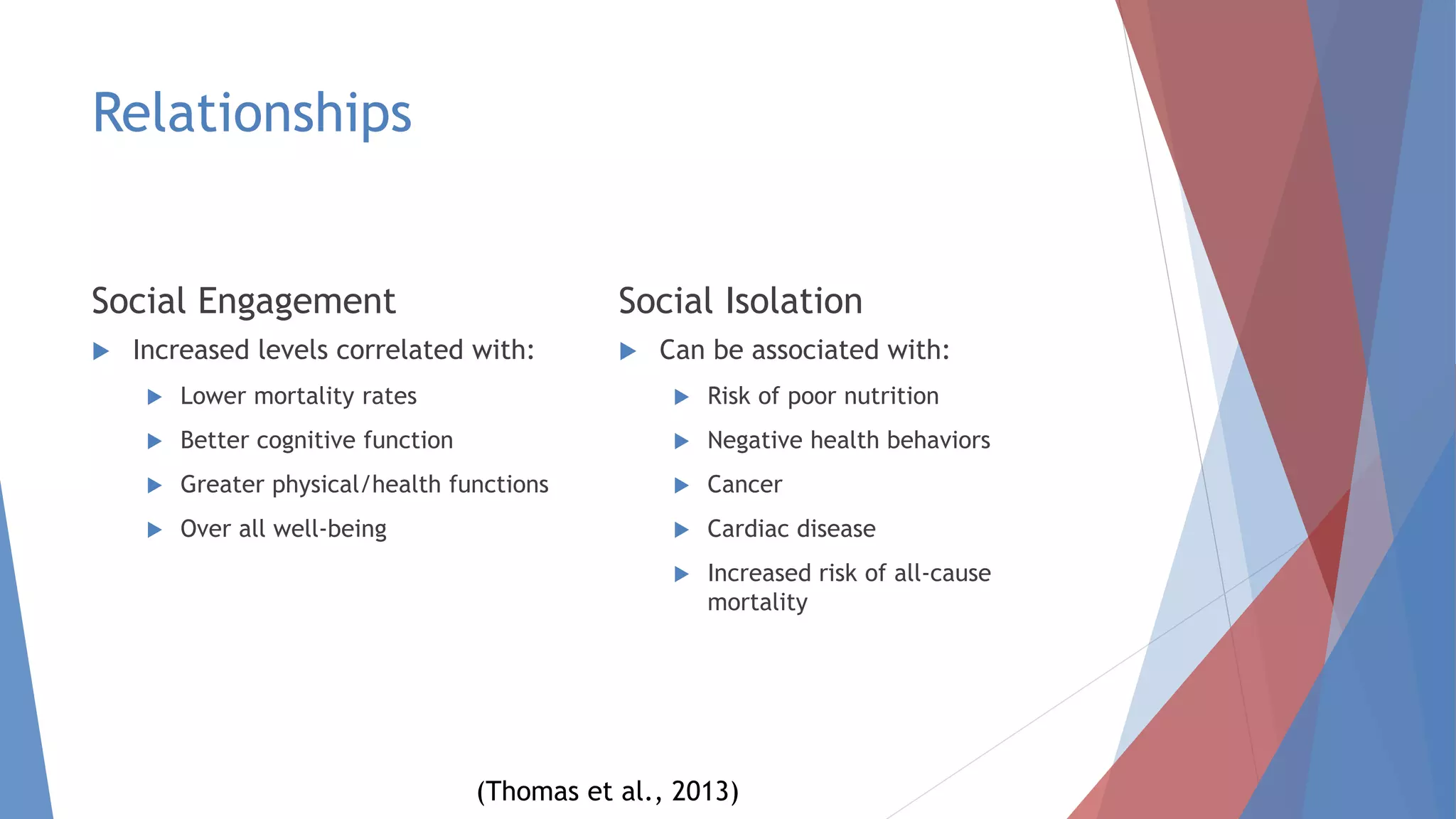
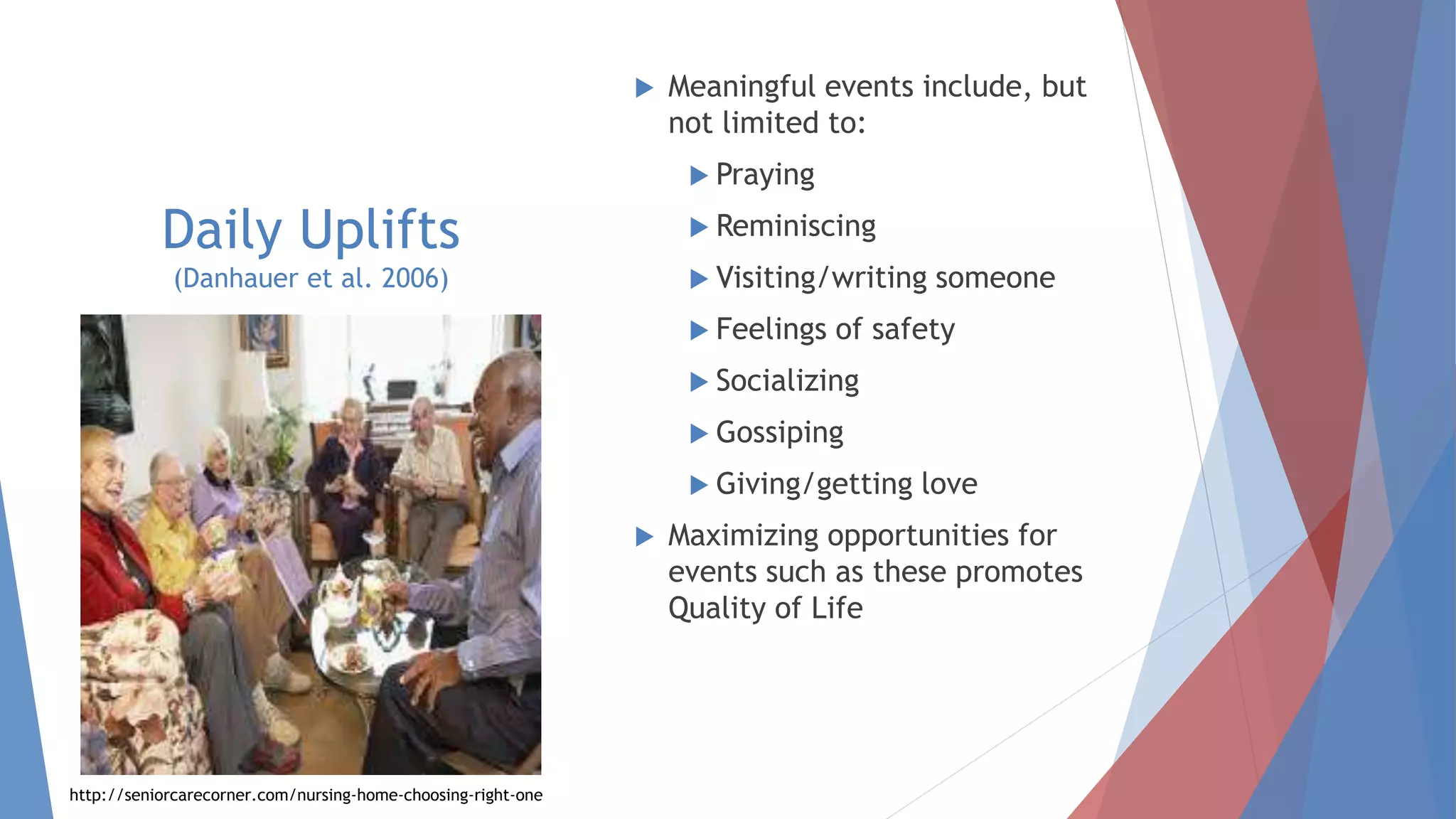
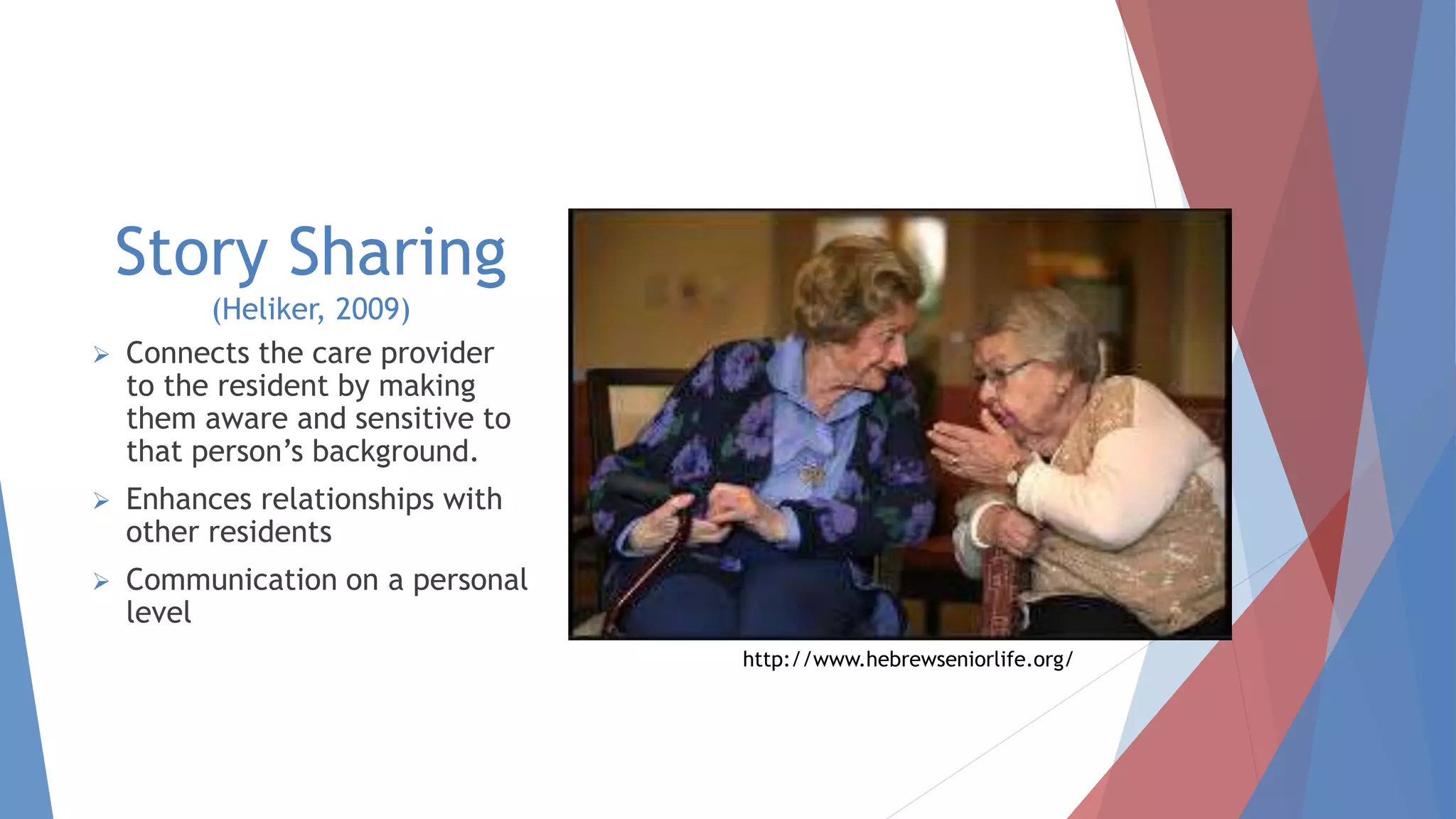
This literature review examines concepts of quality of life for residents in nursing home facilities. It discusses person-centered care which prioritizes resident autonomy, dignity and choice. Culture change aims to shift care from a medical model to a person-centered model through staff education, meaningful activities and consistent staffing. Relationships between residents and family, friends, staff and other residents impact well-being. Daily uplifts and story sharing can help staff build relationships. Resident choice in activities and spirituality can enhance satisfaction. The Selective Optimization with Compensation model describes how older adults adapt to loss of function through selection, optimization and compensation. Overall the literature emphasizes improving quality of life through individualized, enriched care plans.