Formal Inquiry into
the human rights of
older people receiving
home-based care in
England
01/30/15 2
• Nature of social care is changing rapidly with an increasing
number of care transactions likely to take place at the margins
of, or even outside of, regulated care.
• Much home based care is of a highly personal and sensitive
nature and delivered ‘behind closed doors’.
• Most of the attention has been on human rights in institutional
settings.
• Evidence of potential risks to older people’s human rights –
more often due to lack of awareness rather than deliberate
neglect.
Background
01/30/15 3
Under Section 3 of the Equality Act 2006, the Commission is
using its powers to conduct an Inquiry into older people and
human rights in home based (not residential homes) care and
support.
We are looking to gather positive and less satisfactory
experiences from older people, their carers and friends/family
in order to gauge a picture of the quality of care in relation to
human rights.
A report will then be submitted to government to influence the
Independent Commission on social care reform.
Inquiry
01/30/15 4
The Commission is looking for evidence from individuals, carers and
organisations representing older people (age 65 plus).
We are gathering experiences to find out:
* if homecare services promote the dignity and independence of older
people.
* how people's home and family life is respected. This includes ensuring
correspondence and personal information is kept private.
* if people are provided with information with which to make an informed
choice about their care.
* if people are listened to and have their opinions acknowledged, accepted
and acted on.
What we are looking for
01/30/15 5
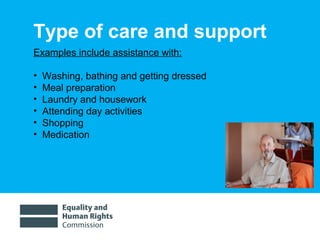
Type of care and support
Examples include assistance with:
• Washing, bathing and getting dressed
• Meal preparation
• Laundry and housework
• Attending day activities
• Shopping
• Medication
6
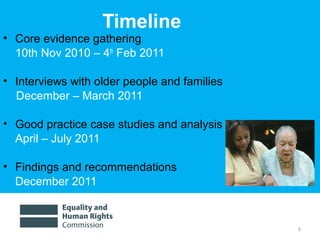
Timeline
• Core evidence gathering
10th Nov 2010 – 4th
Feb 2011
• Interviews with older people and families
December – March 2011
• Good practice case studies and analysis
April – July 2011
• Findings and recommendations
December 2011
01/30/15 7
How do I find out more?
All information including the Call for Evidence and Terms of Reference will be published on the
Commission’s website and available from our Helpline to order from 10th
November:
www.equalityhumanrights.com/homecareinquiry
Please note that the Commission will ensure all information we refer to in our final report is
anonymous unless the individual/organisation consents to being identified.
Queries should be directed to:
homecare@equalityhumanrights.com
Telephone: 08456 046 610
Textphone: 08456 046 620
Homecare Inquiry
Equality and Human Rights Commission
FREEPOST RRLL-GHUX-CTRX
Arndale House, Arndale Centre
Manchester, M4 3AQ
01/30/15 8
End of Presentation

Home care inquiry presentation

  • 1.
    Formal Inquiry into thehuman rights of older people receiving home-based care in England
  • 2.
    01/30/15 2 • Natureof social care is changing rapidly with an increasing number of care transactions likely to take place at the margins of, or even outside of, regulated care. • Much home based care is of a highly personal and sensitive nature and delivered ‘behind closed doors’. • Most of the attention has been on human rights in institutional settings. • Evidence of potential risks to older people’s human rights – more often due to lack of awareness rather than deliberate neglect. Background
  • 3.
    01/30/15 3 Under Section3 of the Equality Act 2006, the Commission is using its powers to conduct an Inquiry into older people and human rights in home based (not residential homes) care and support. We are looking to gather positive and less satisfactory experiences from older people, their carers and friends/family in order to gauge a picture of the quality of care in relation to human rights. A report will then be submitted to government to influence the Independent Commission on social care reform. Inquiry
  • 4.
    01/30/15 4 The Commissionis looking for evidence from individuals, carers and organisations representing older people (age 65 plus). We are gathering experiences to find out: * if homecare services promote the dignity and independence of older people. * how people's home and family life is respected. This includes ensuring correspondence and personal information is kept private. * if people are provided with information with which to make an informed choice about their care. * if people are listened to and have their opinions acknowledged, accepted and acted on. What we are looking for
  • 5.
    01/30/15 5 Type ofcare and support Examples include assistance with: • Washing, bathing and getting dressed • Meal preparation • Laundry and housework • Attending day activities • Shopping • Medication
  • 6.
    6 Timeline • Core evidencegathering 10th Nov 2010 – 4th Feb 2011 • Interviews with older people and families December – March 2011 • Good practice case studies and analysis April – July 2011 • Findings and recommendations December 2011
  • 7.
    01/30/15 7 How doI find out more? All information including the Call for Evidence and Terms of Reference will be published on the Commission’s website and available from our Helpline to order from 10th November: www.equalityhumanrights.com/homecareinquiry Please note that the Commission will ensure all information we refer to in our final report is anonymous unless the individual/organisation consents to being identified. Queries should be directed to: homecare@equalityhumanrights.com Telephone: 08456 046 610 Textphone: 08456 046 620 Homecare Inquiry Equality and Human Rights Commission FREEPOST RRLL-GHUX-CTRX Arndale House, Arndale Centre Manchester, M4 3AQ
  • 8.
    01/30/15 8 End ofPresentation