Peer Assessment in Online
Collaborative Learning
Increasing performance
Sven Ake Bjørke & Aleksandra
Lazareva
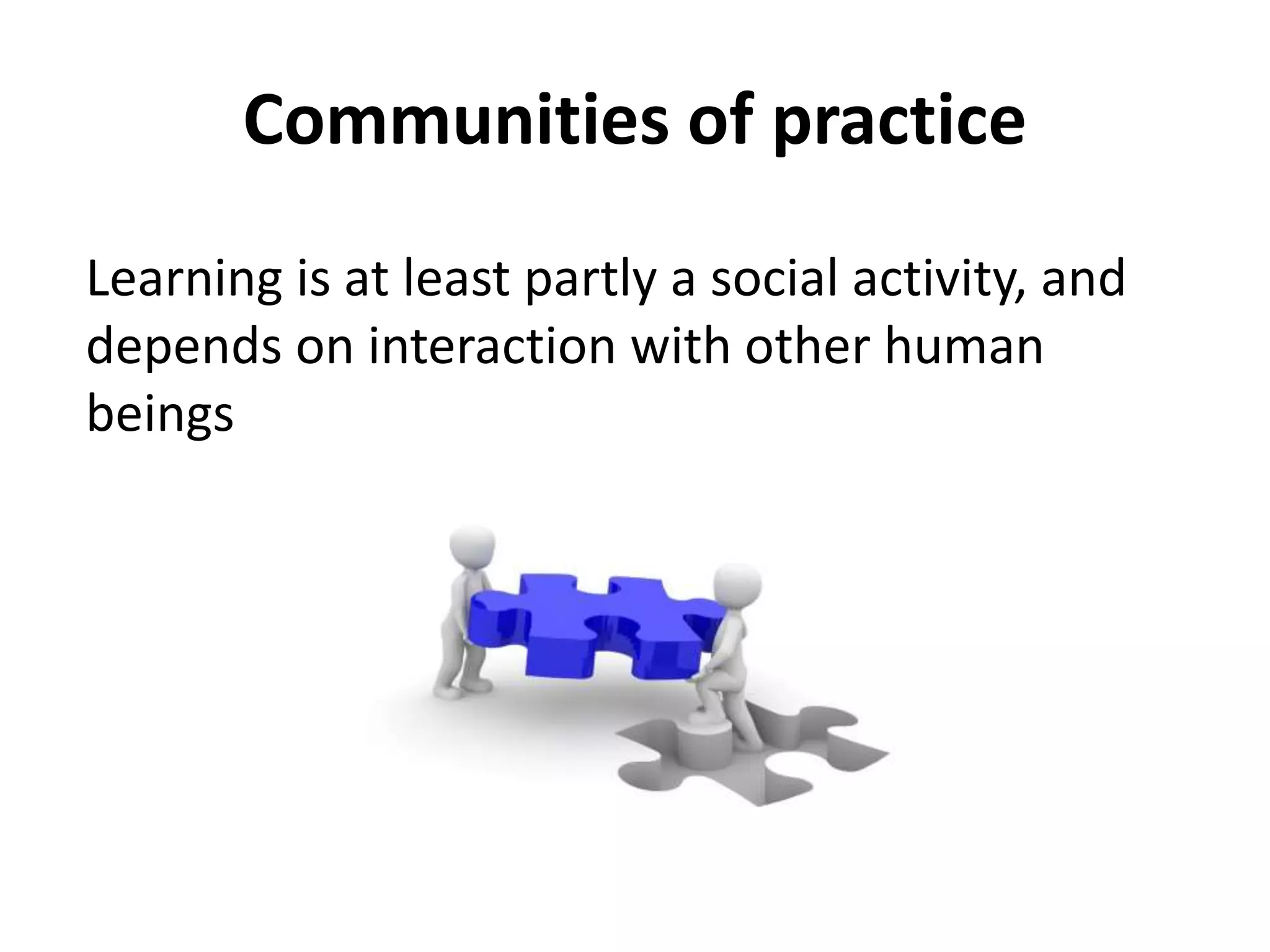
Communities of practice
Learning is at least partly a social activity, and
depends on interaction with other human
beings
Knowledge
• There is a vast difference between
information and knowledge
• To gain knowledge, learning must take place
• Deep learning requires advanced cognitive
processes
• Constructive alignment between content,
process and assessment
Traditional teaching
• The teacher transmits information to the
students covering the curriculum
• Individual learning
• Competition for grades
• CCR: Copy, Cram and Reproduce
• Knowledge perceived as objective
• Learning relation is between student - teacher
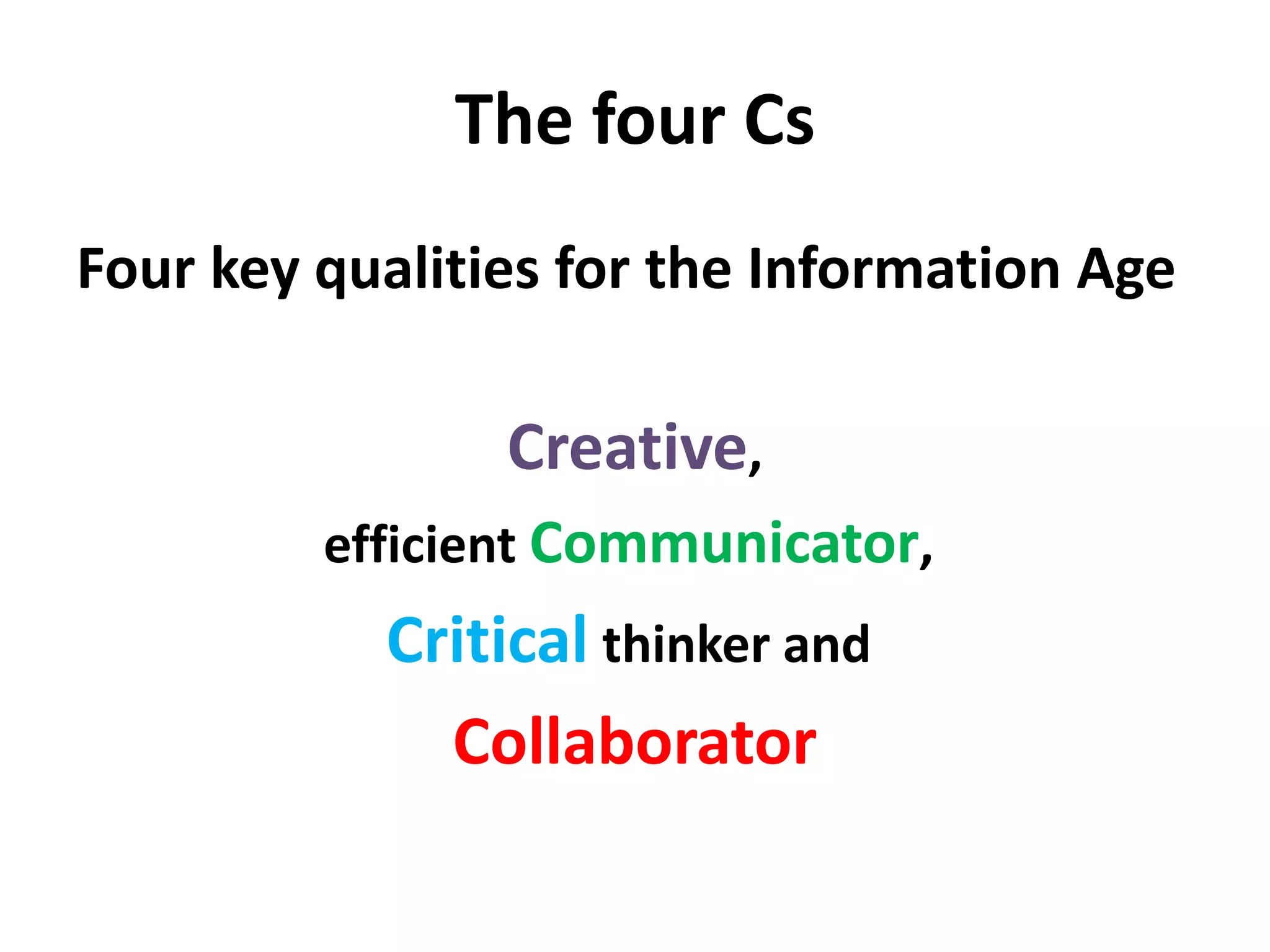
The four Cs
Four key qualities for the Information Age
Creative,
efficient Communicator,
Critical thinker and
Collaborator
Scaffolding
• Two categories of legitimate peripheral participants:
– Those who actually want to join
– Those who free-ride
• Scaffolding does not solve problems in case of free-
riding or social loafing
• What to do with free riders and social loafers to help
them become part of the CoP?
• Increase social pressure from the peers (e.g., peer
assessment)
– In the breakout session: practical introduction
Challenges for teachers
• From transmission of information to co-
constructing knowledge
• More responsibility to students
• From teacher-centred to learning-centred
collaboration
Challenges for students
• Information literacy – critical assessment
• Peers are collaborators, not competitors
• Manage group work – be proactive
• Intercultural communication
• Give feedback/assessment to peers
Learning
• Through elaborating on content, speculating,
solving problems, expressing and negotiating
meaning, reciprocal questioning
• Through formative feedback from tutors and
peers
• Through reflection
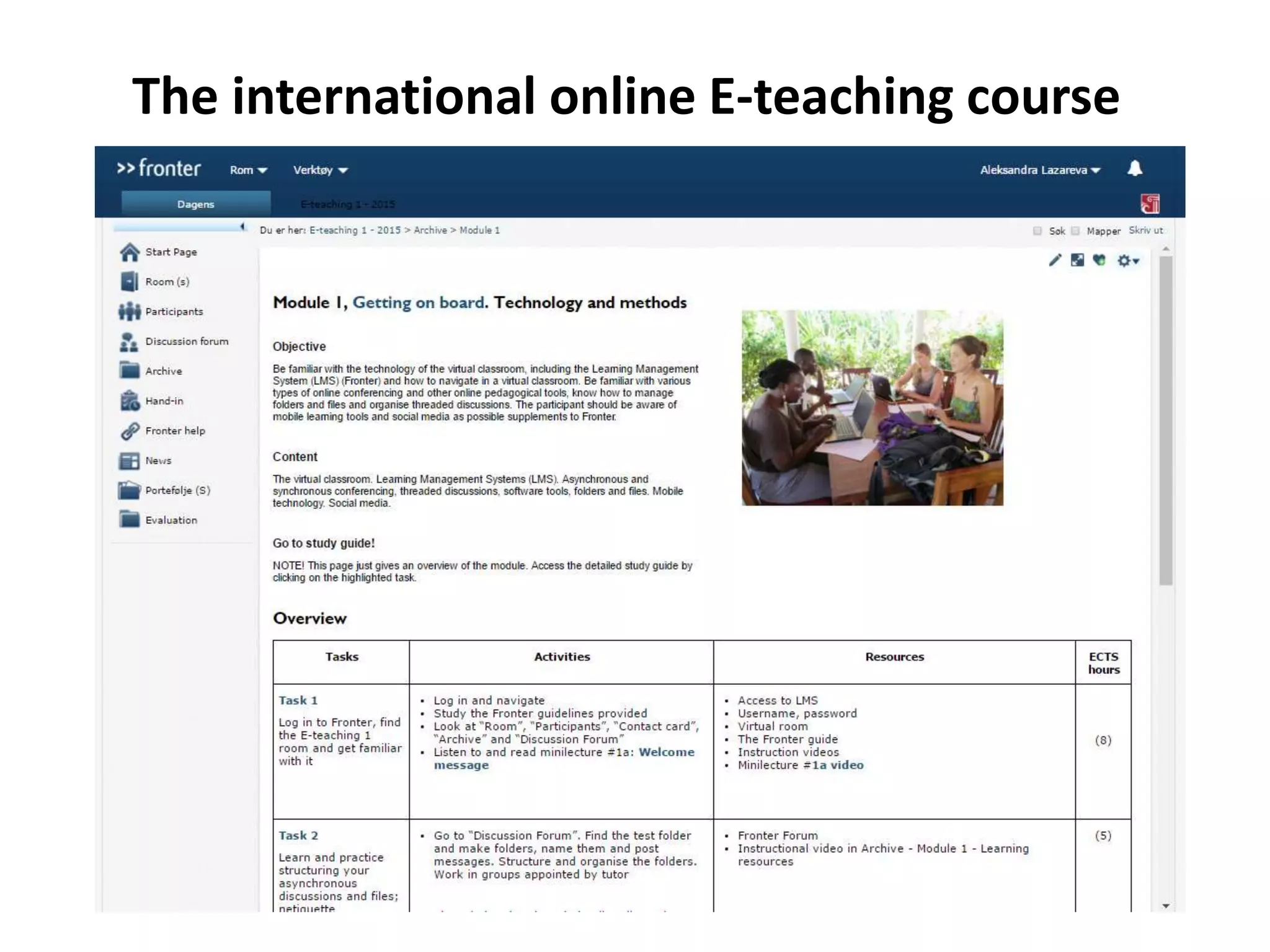
The international online E-teaching course
E-teaching 1 & 2 courses
• International online courses
• Heterogeneous student groups
• Learning-focused
• Process- and product-oriented
• Learning is increased participation
High quality learning situation -
”Productive interaction”
• Active engagement
• Frequent teamwork
• Regular interaction and feedback
• Basis in realistic and motivating tasks
• Contextualised
• Dynamic and adapted for change
• Peer assessment
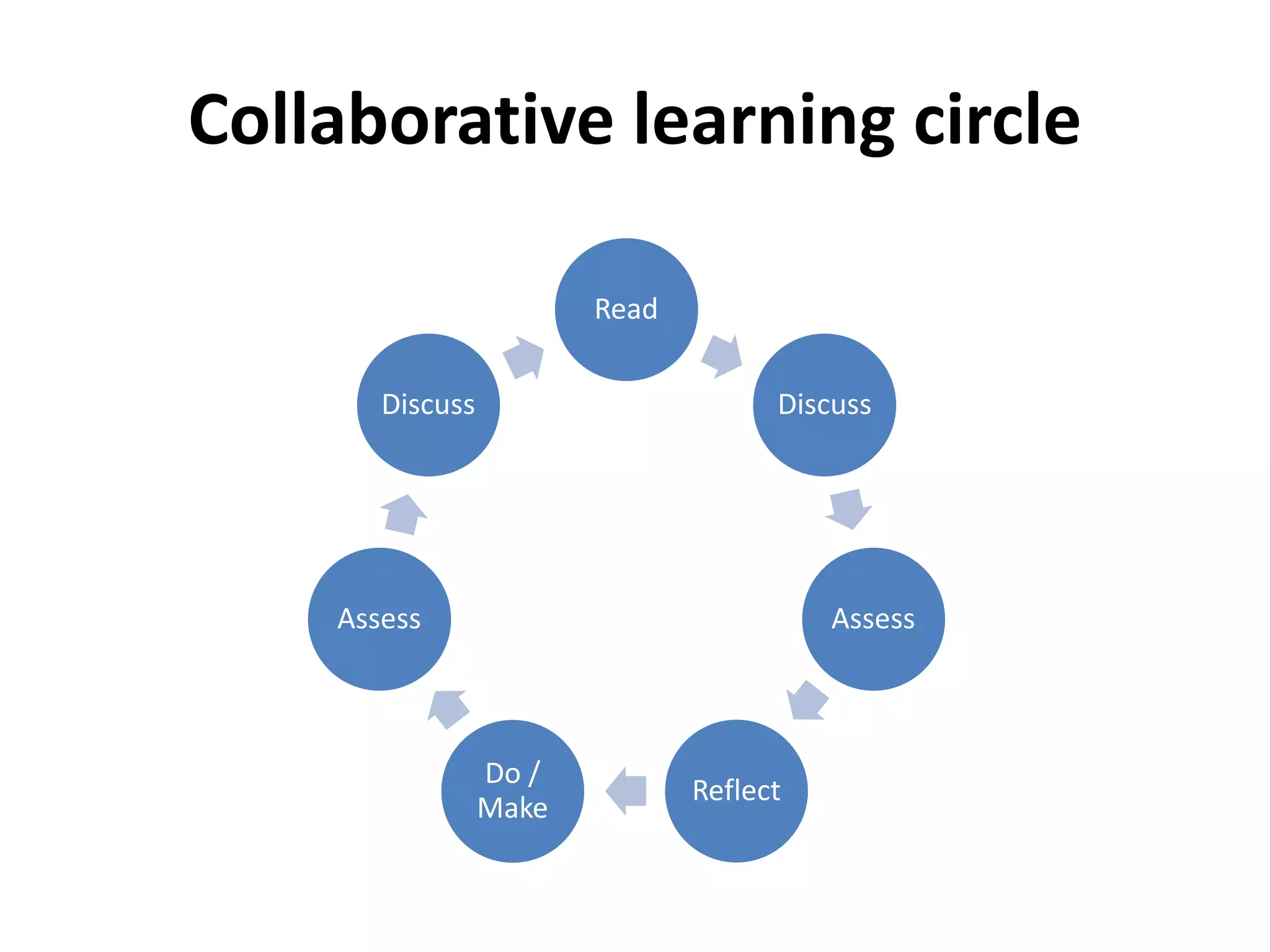
Collaborative learning circle
Read
Discuss
Assess
Reflect
Do /
Make
Assess
Discuss
Important points
• Course descriptions with clear ILOs
• Comprehensive study guides
• Caring and easily accessible online tutors
• Continuous formative feedback
– See the feedback form
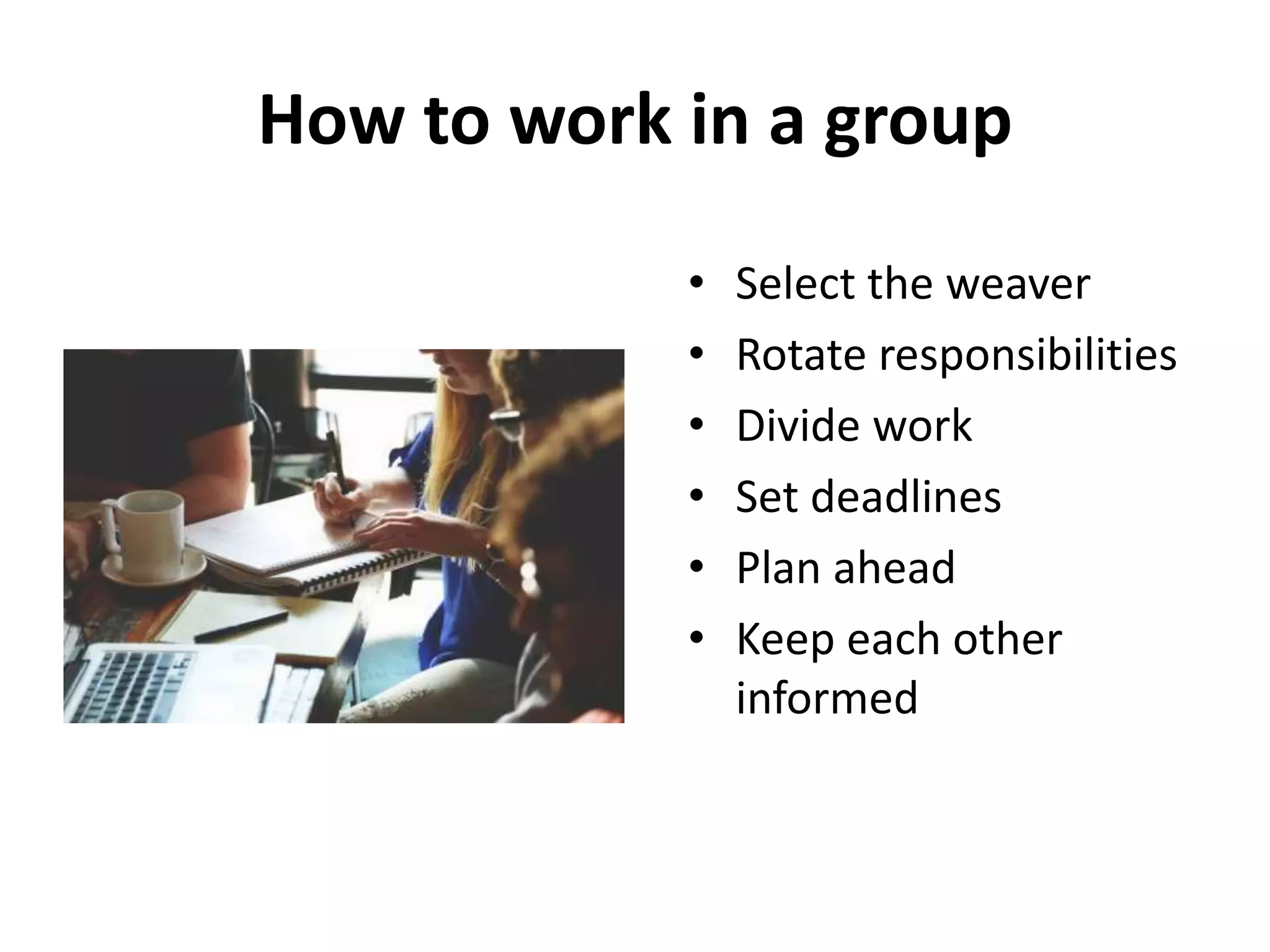
How to work in a group
• Select the weaver
• Rotate responsibilities
• Divide work
• Set deadlines
• Plan ahead
• Keep each other
informed
Weaving
• The “weaver” pulls together “threads”
contributed by all group members
• Good quality cloth needs good quality
threads
• Weaver is an editor, not the sole author
• Don't put all the load on the weaver!
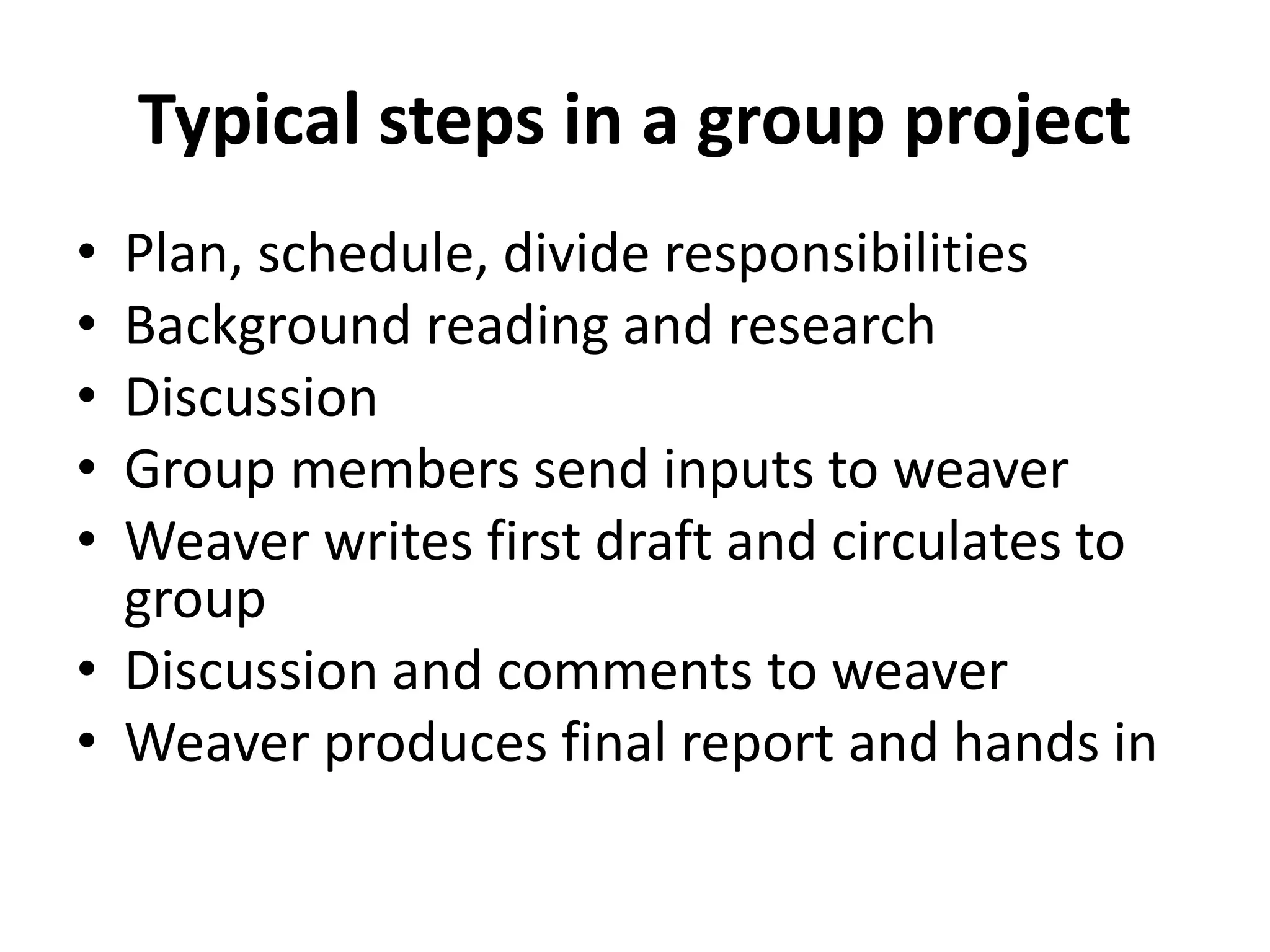
Typical steps in a group project
• Plan, schedule, divide responsibilities
• Background reading and research
• Discussion
• Group members send inputs to weaver
• Weaver writes first draft and circulates to
group
• Discussion and comments to weaver
• Weaver produces final report and hands in
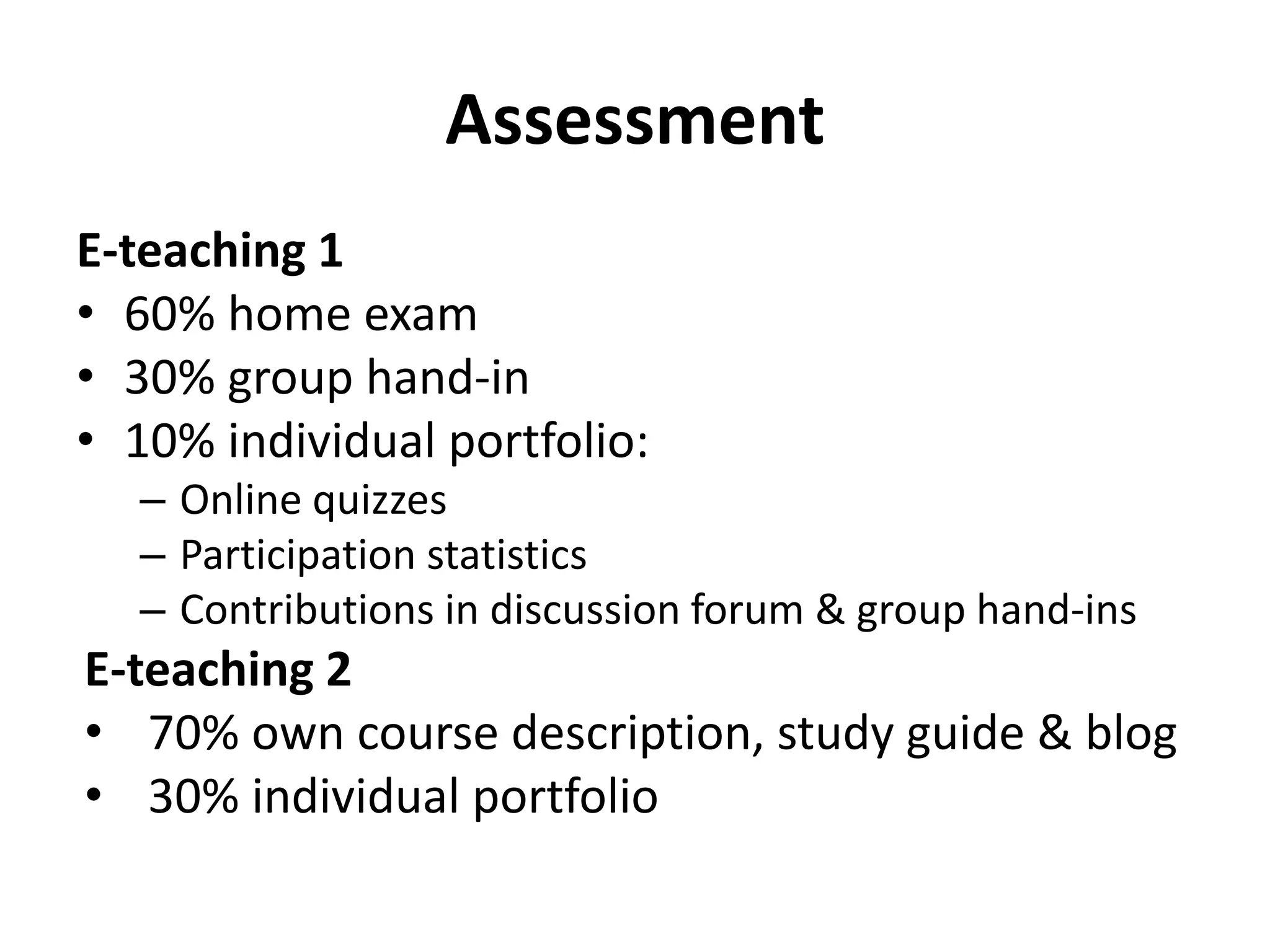
Assessment
E-teaching 1
• 60% home exam
• 30% group hand-in
• 10% individual portfolio:
– Online quizzes
– Participation statistics
– Contributions in discussion forum & group hand-ins
E-teaching 2
• 70% own course description, study guide & blog
• 30% individual portfolio
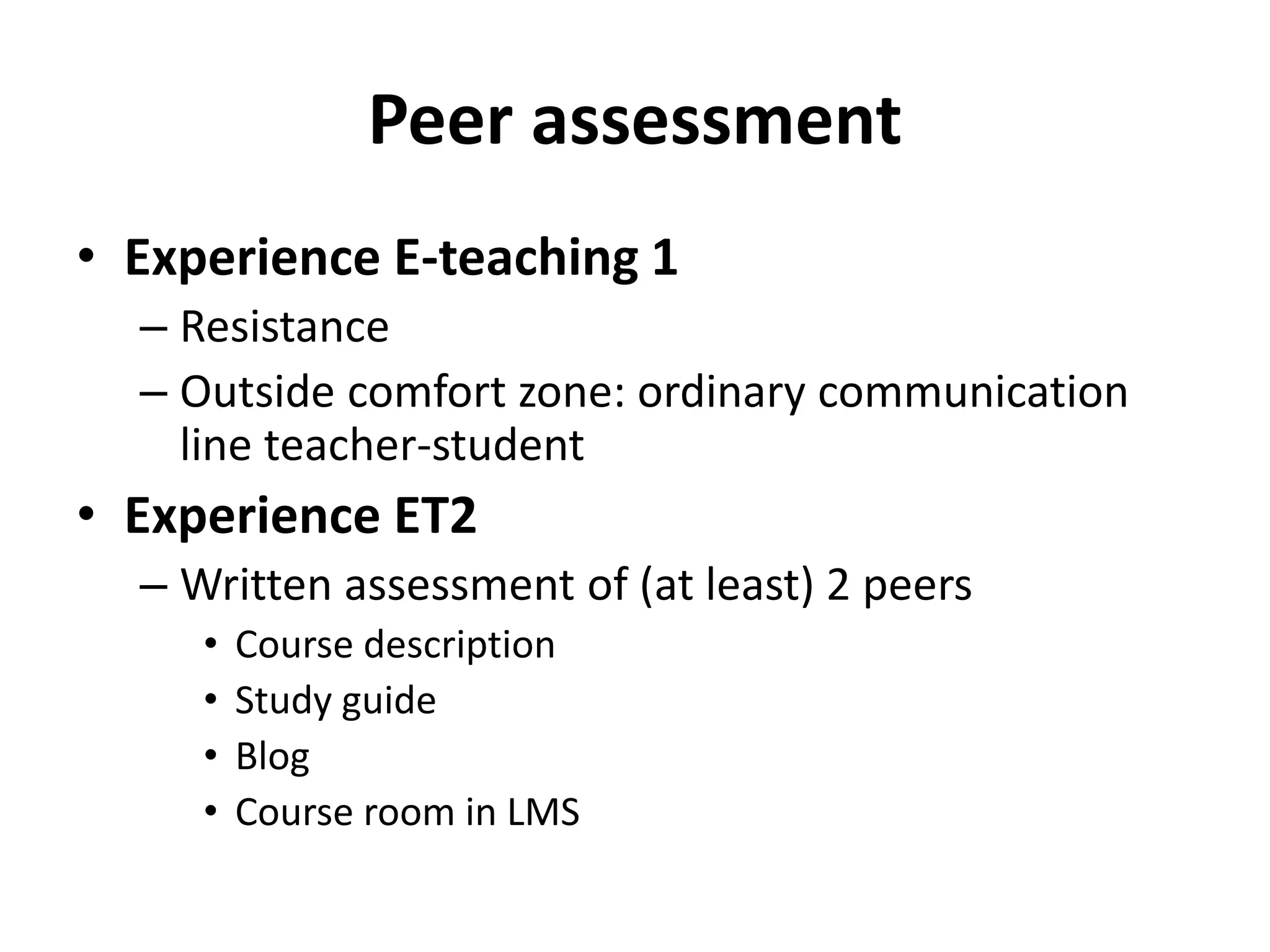
Peer assessment
• Experience E-teaching 1
– Resistance
– Outside comfort zone: ordinary communication
line teacher-student
• Experience ET2
– Written assessment of (at least) 2 peers
• Course description
• Study guide
• Blog
• Course room in LMS
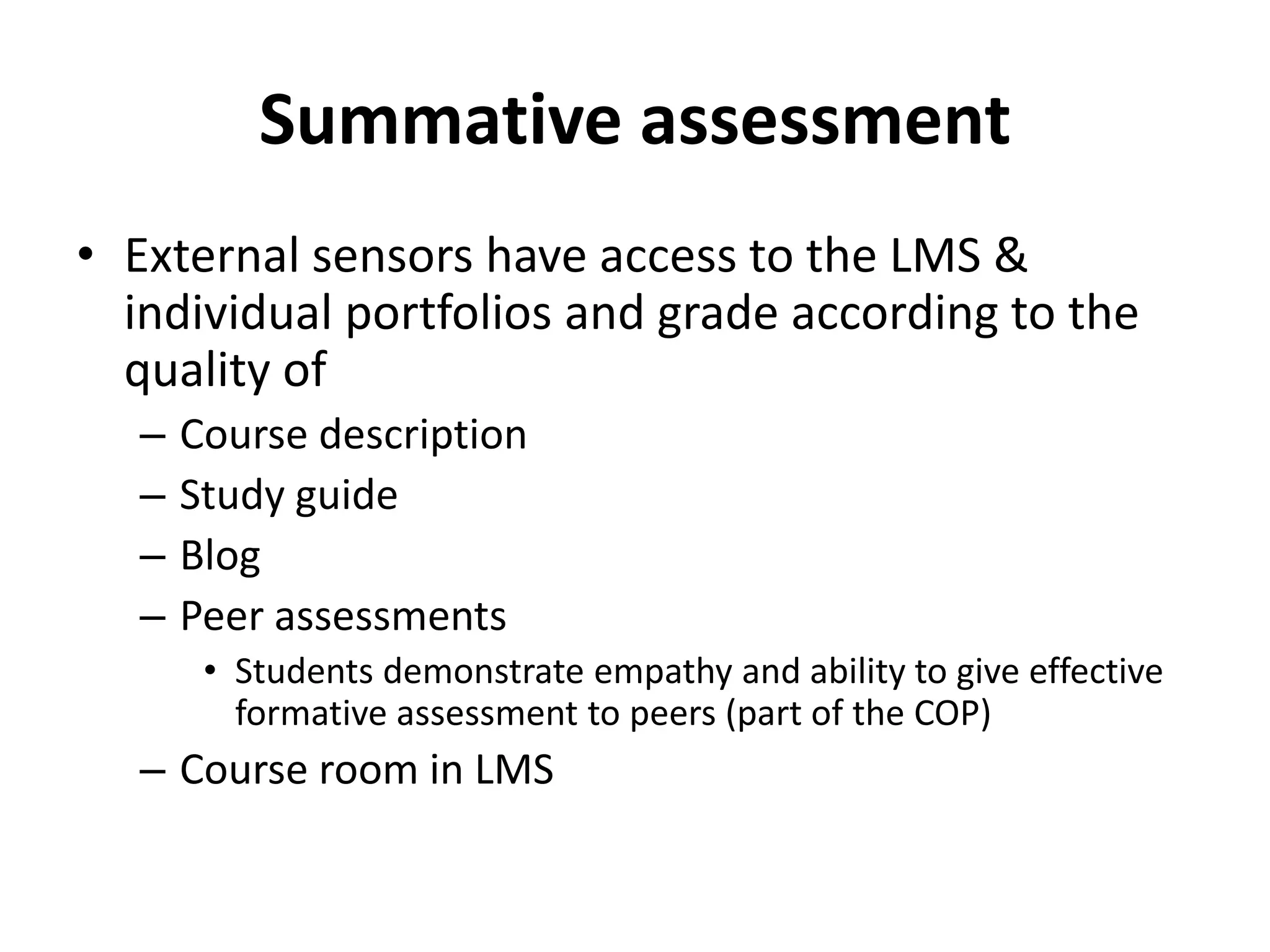
Summative assessment
• External sensors have access to the LMS &
individual portfolios and grade according to the
quality of
– Course description
– Study guide
– Blog
– Peer assessments
• Students demonstrate empathy and ability to give effective
formative assessment to peers (part of the COP)
– Course room in LMS
Thank you
• Images in the presentation
– https://pixabay.com/
– https://stocksnap.io/

Peer assessment in online collaborative learning

  • 1.
    Peer Assessment inOnline Collaborative Learning Increasing performance Sven Ake Bjørke & Aleksandra Lazareva
  • 2.
    Communities of practice Learningis at least partly a social activity, and depends on interaction with other human beings
  • 3.
    Knowledge • There isa vast difference between information and knowledge • To gain knowledge, learning must take place • Deep learning requires advanced cognitive processes • Constructive alignment between content, process and assessment
  • 4.
    Traditional teaching • Theteacher transmits information to the students covering the curriculum • Individual learning • Competition for grades • CCR: Copy, Cram and Reproduce • Knowledge perceived as objective • Learning relation is between student - teacher
  • 5.
    The four Cs Fourkey qualities for the Information Age Creative, efficient Communicator, Critical thinker and Collaborator
  • 6.
    Scaffolding • Two categoriesof legitimate peripheral participants: – Those who actually want to join – Those who free-ride • Scaffolding does not solve problems in case of free- riding or social loafing • What to do with free riders and social loafers to help them become part of the CoP? • Increase social pressure from the peers (e.g., peer assessment) – In the breakout session: practical introduction
  • 7.
    Challenges for teachers •From transmission of information to co- constructing knowledge • More responsibility to students • From teacher-centred to learning-centred collaboration
  • 8.
    Challenges for students •Information literacy – critical assessment • Peers are collaborators, not competitors • Manage group work – be proactive • Intercultural communication • Give feedback/assessment to peers
  • 9.
    Learning • Through elaboratingon content, speculating, solving problems, expressing and negotiating meaning, reciprocal questioning • Through formative feedback from tutors and peers • Through reflection
  • 10.
    The international onlineE-teaching course
  • 11.
    E-teaching 1 &2 courses • International online courses • Heterogeneous student groups • Learning-focused • Process- and product-oriented • Learning is increased participation
  • 12.
    High quality learningsituation - ”Productive interaction” • Active engagement • Frequent teamwork • Regular interaction and feedback • Basis in realistic and motivating tasks • Contextualised • Dynamic and adapted for change • Peer assessment
  • 13.
  • 14.
    Important points • Coursedescriptions with clear ILOs • Comprehensive study guides • Caring and easily accessible online tutors • Continuous formative feedback – See the feedback form
  • 15.
    How to workin a group • Select the weaver • Rotate responsibilities • Divide work • Set deadlines • Plan ahead • Keep each other informed
  • 16.
    Weaving • The “weaver”pulls together “threads” contributed by all group members • Good quality cloth needs good quality threads • Weaver is an editor, not the sole author • Don't put all the load on the weaver!
  • 17.
    Typical steps ina group project • Plan, schedule, divide responsibilities • Background reading and research • Discussion • Group members send inputs to weaver • Weaver writes first draft and circulates to group • Discussion and comments to weaver • Weaver produces final report and hands in
  • 18.
    Assessment E-teaching 1 • 60%home exam • 30% group hand-in • 10% individual portfolio: – Online quizzes – Participation statistics – Contributions in discussion forum & group hand-ins E-teaching 2 • 70% own course description, study guide & blog • 30% individual portfolio
  • 19.
    Peer assessment • ExperienceE-teaching 1 – Resistance – Outside comfort zone: ordinary communication line teacher-student • Experience ET2 – Written assessment of (at least) 2 peers • Course description • Study guide • Blog • Course room in LMS
  • 20.
    Summative assessment • Externalsensors have access to the LMS & individual portfolios and grade according to the quality of – Course description – Study guide – Blog – Peer assessments • Students demonstrate empathy and ability to give effective formative assessment to peers (part of the COP) – Course room in LMS
  • 21.
    Thank you • Imagesin the presentation – https://pixabay.com/ – https://stocksnap.io/