Secondary Two
Topic: Bones and Joints
Sub Topic: Bones
• Students will know and identify the various
parts of the bone
• Cartilage
• Compact bone
• Marrow cavity
• Periosteum
• Spongy bone
• Epiphysis
• Diaphysis
• One conversation
• Respect the questions asked
• Putting of palm on whiteboard
• Class too noisy and need to quieten
down
Trivial Time!
CLOSE all textbooks!
Question 1
How many bones are there in
an adult human skeleton?
206
Question 2
 Who has more bones? Adult or
newborn infant?
Newborn infant
 The skeleton of a newborn baby has approximately 300
different components, which are a mixture of bones and
cartilage. The cartilage eventually solidifies into bone in a
process called ossification — for example, the kneecaps of
newborns start off as cartilage and become bone in a few
years.
 Over time, the "extra" bones in infants fuse to form larger
bones, reducing the overall number of bones to 206 by
adulthood.
Question 3
Where can you find most of
your bones in the body?
Hands (27 each)
and
Legs (26 each)
Question 4
How many bones are there in
our skull?
8 pieces
(fused together)
Question 5
Which is the smallest bone in
the human skeleton?
Stape
(at the ear)
Question 6
Which is the longest bone in
the human skeleton?
Femur
(thigh bone, ~1/4 of body
height)
Question 7
Are the teeth part of the 206
bones?
No
(But our teeth are stronger
than our bones!)
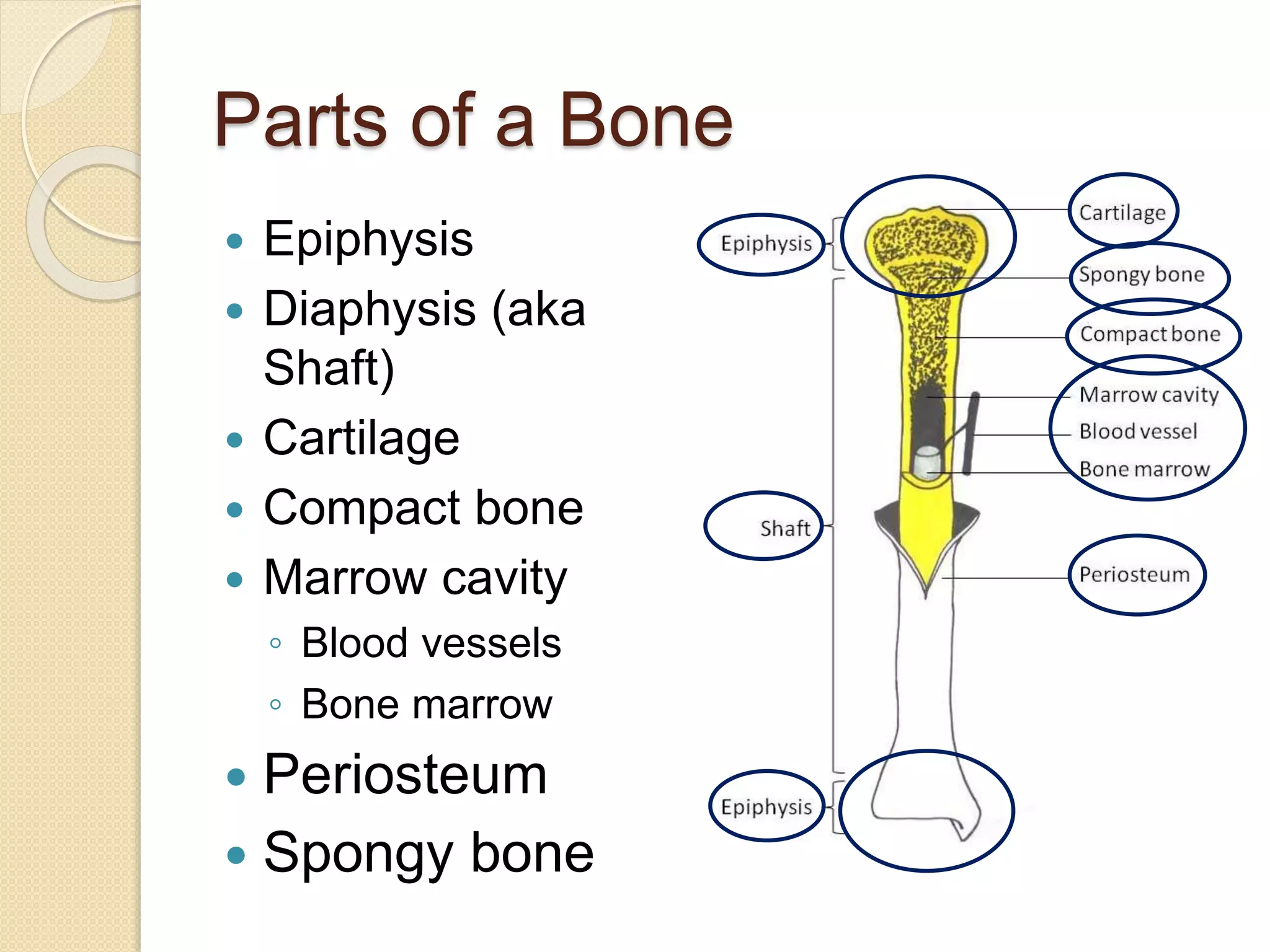
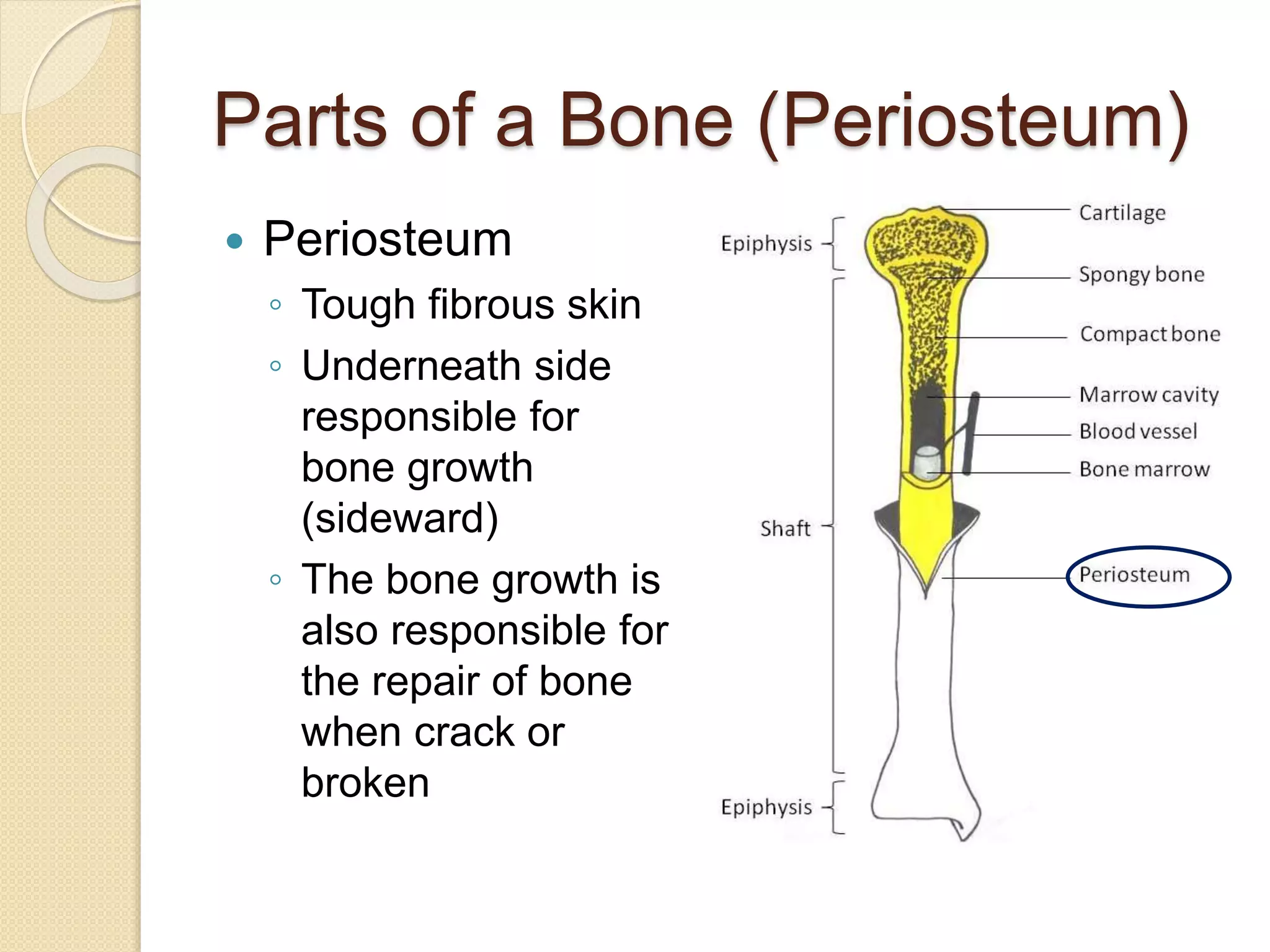
Parts of a Bone
 Epiphysis
 Diaphysis (aka
Shaft)
 Cartilage
 Compact bone
 Marrow cavity
◦ Blood vessels
◦ Bone marrow
 Periosteum
 Spongy bone
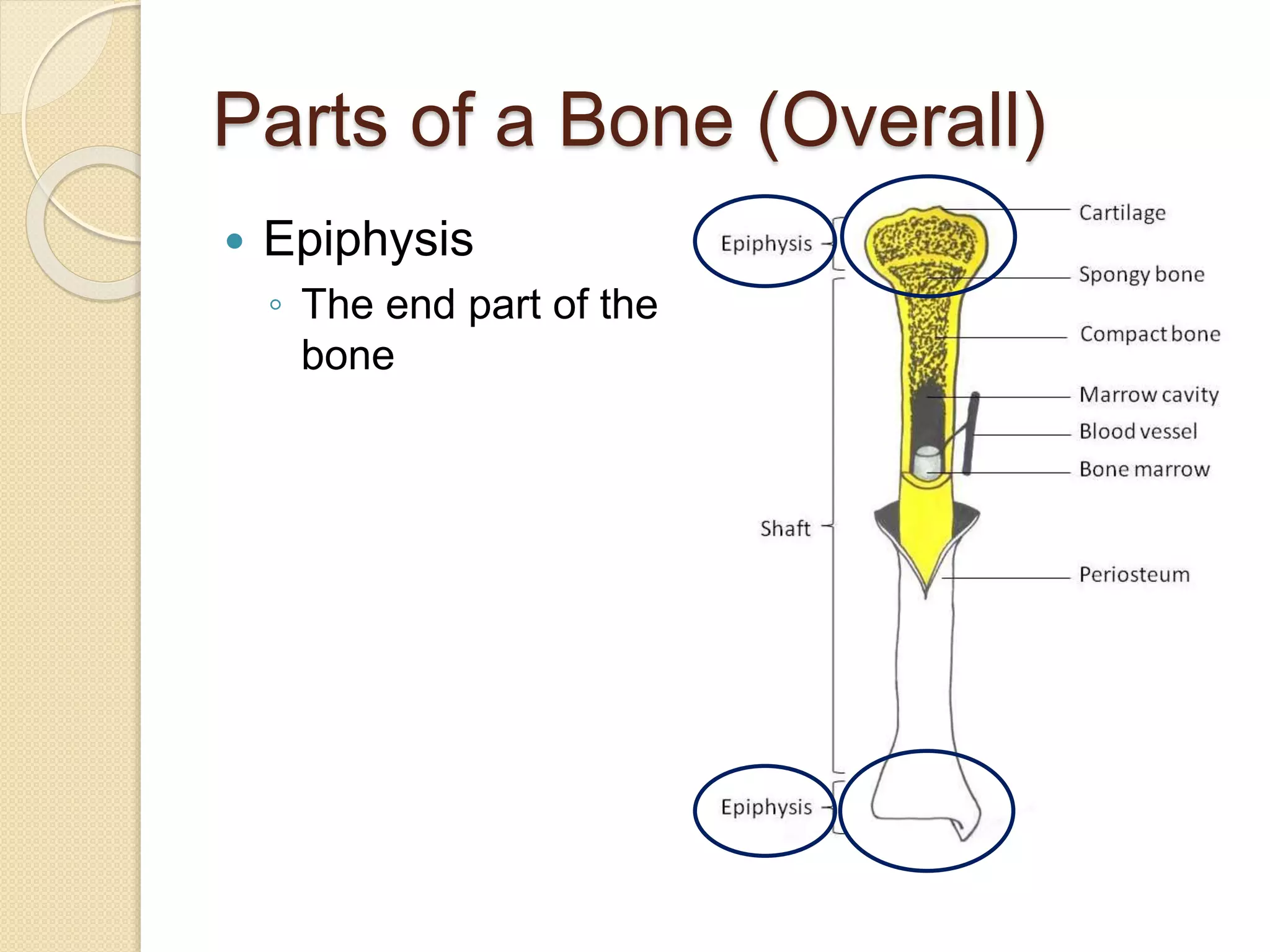
Parts of a Bone (Overall)
 Epiphysis
◦ The end part of the
bone
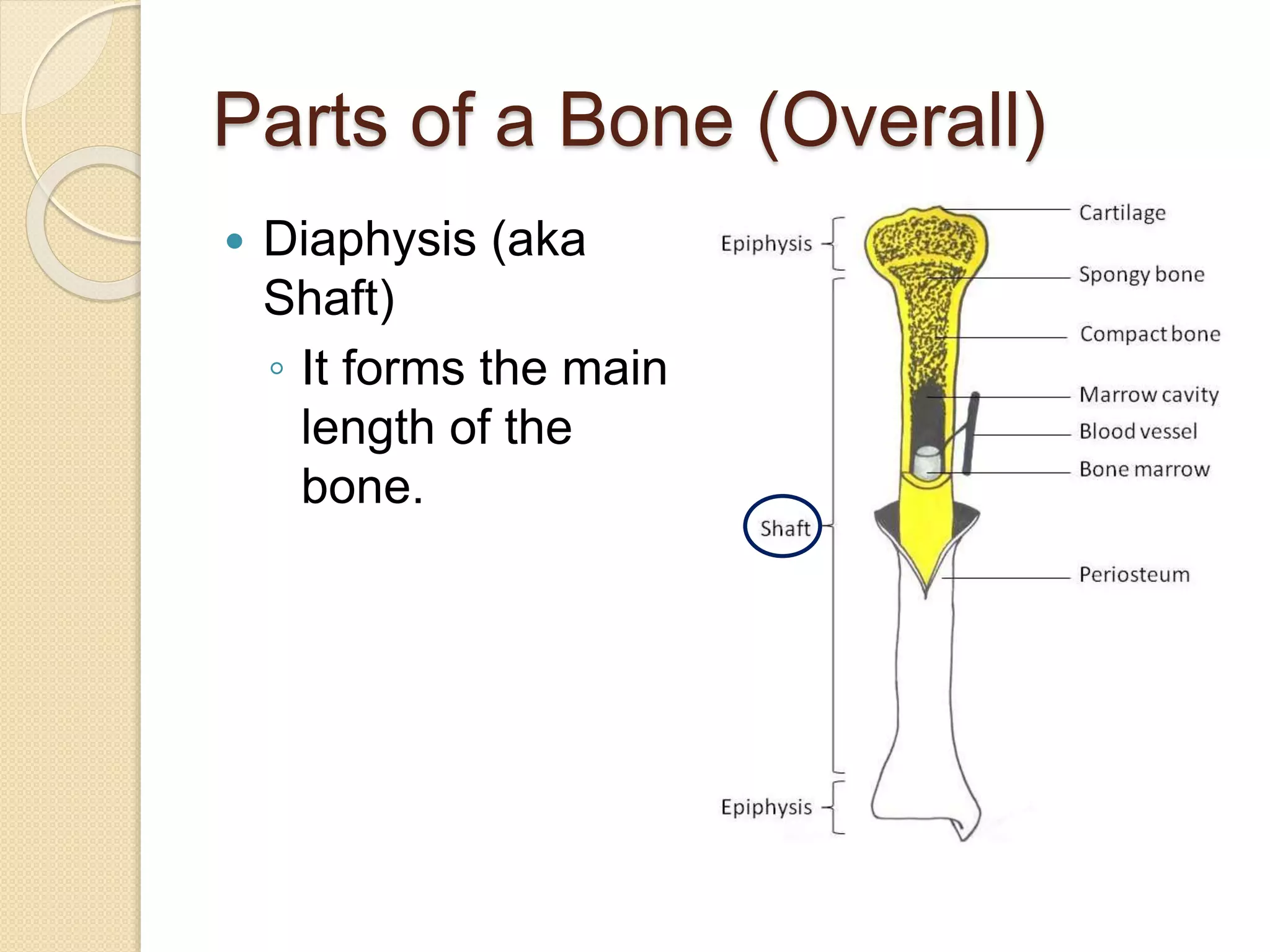
Parts of a Bone (Overall)
 Diaphysis (aka
Shaft)
◦ It forms the main
length of the
bone.
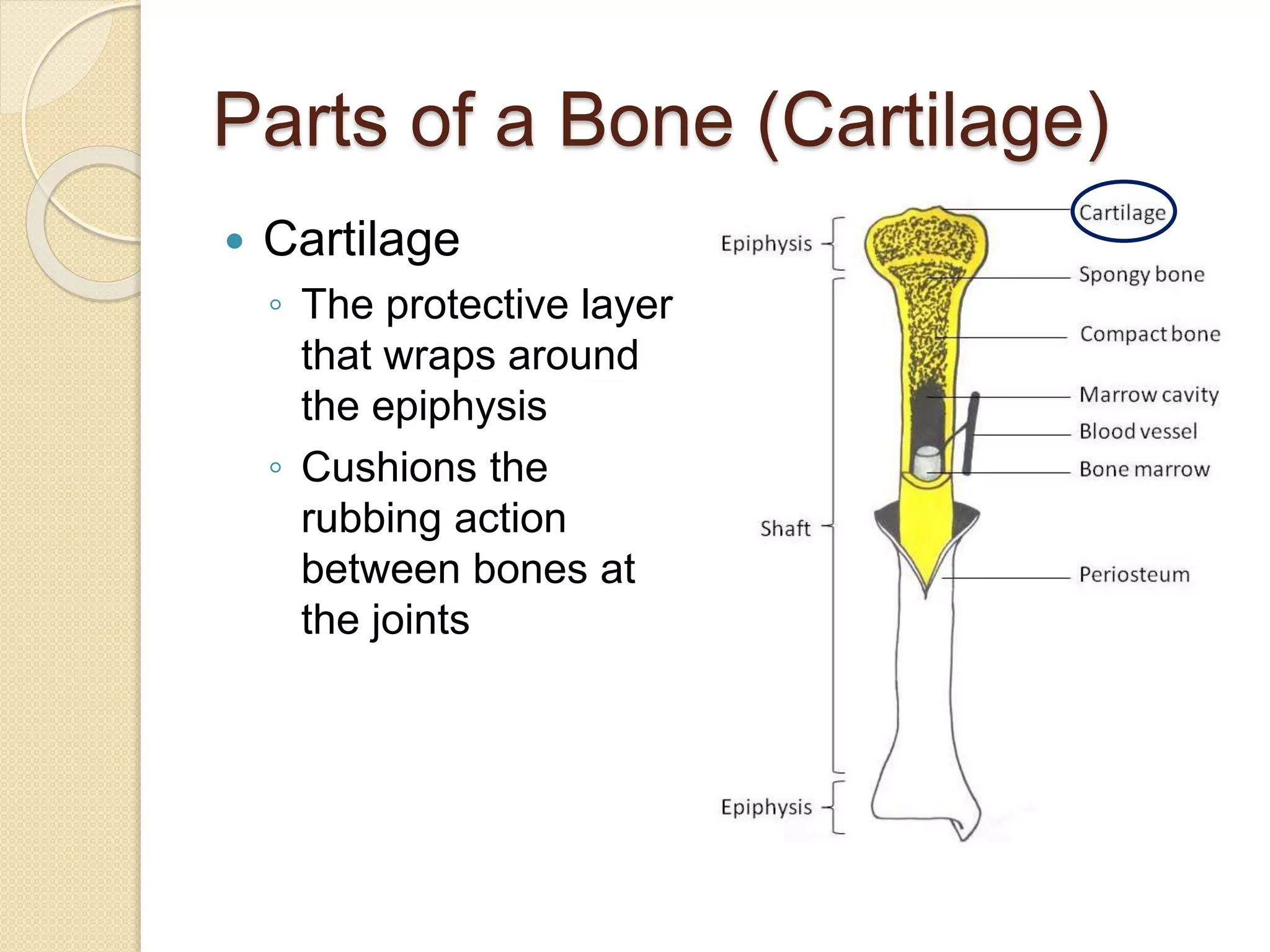
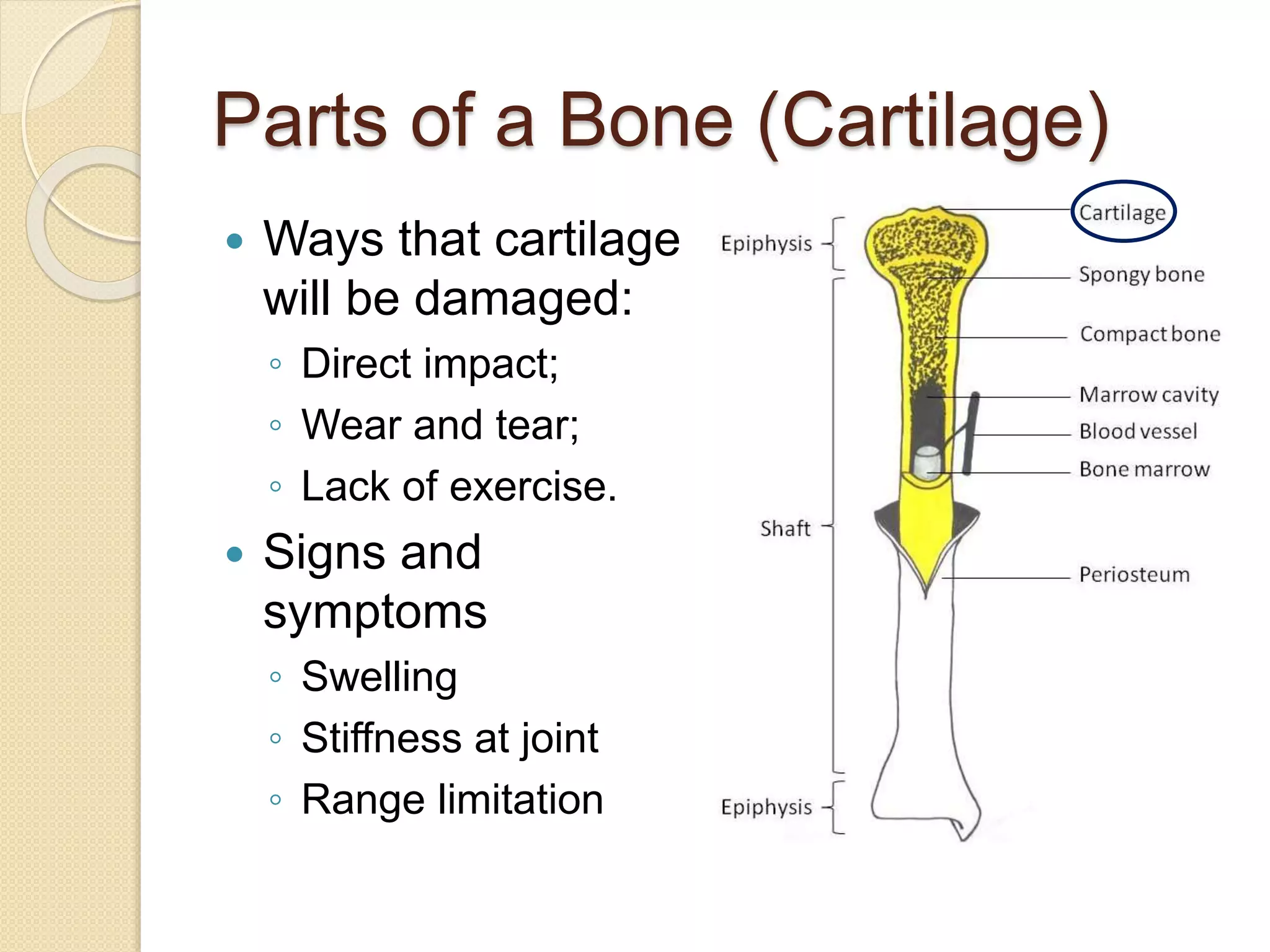
Parts of a Bone (Cartilage)
 Cartilage
◦ The protective layer
that wraps around
the epiphysis
◦ Cushions the
rubbing action
between bones at
the joints
Parts of a Bone (Cartilage)
 Ways that cartilage
will be damaged:
◦ Direct impact;
◦ Wear and tear;
◦ Lack of exercise.
 Signs and
symptoms
◦ Swelling
◦ Stiffness at joint
◦ Range limitation
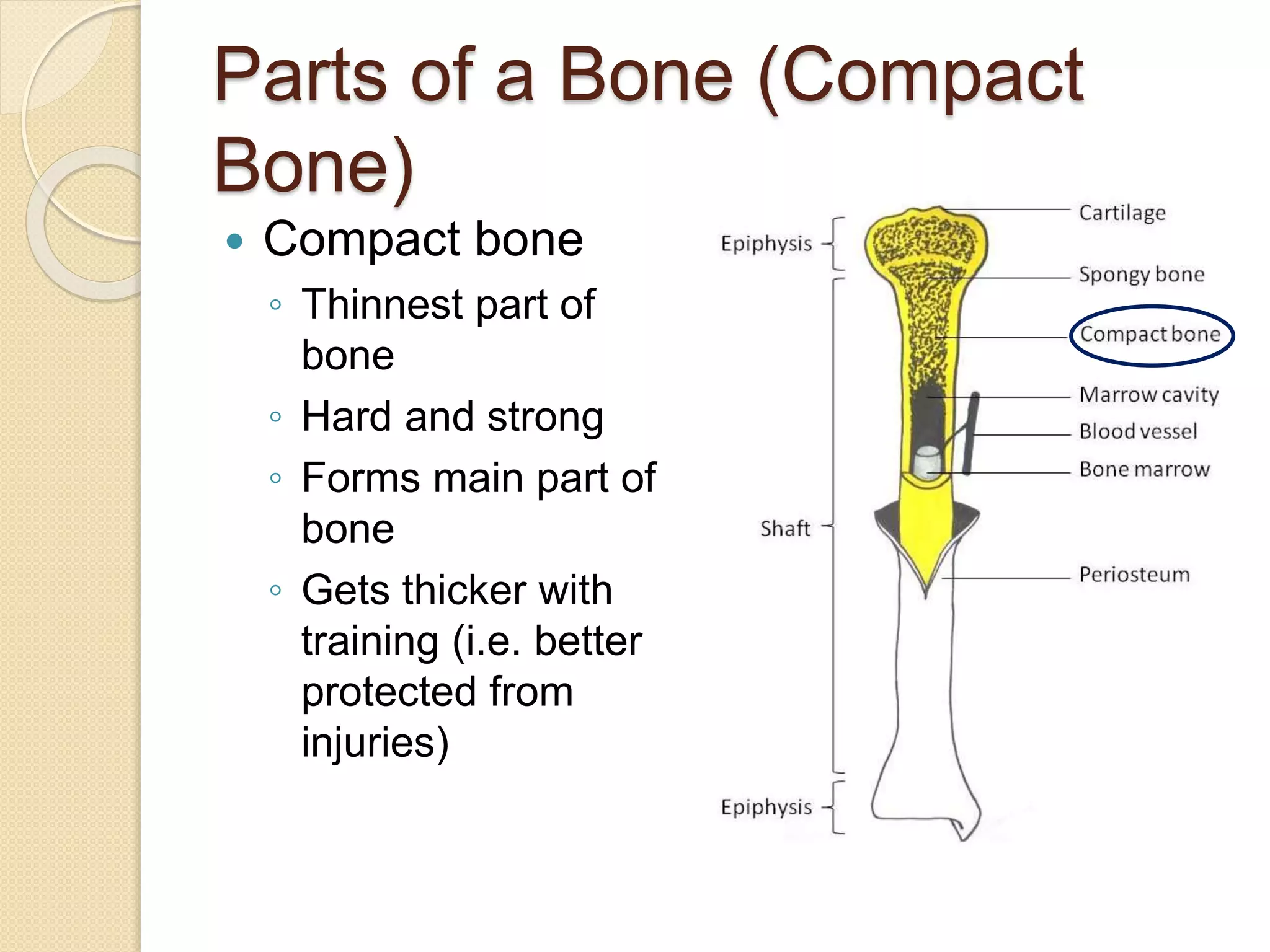
Parts of a Bone (Compact
Bone)
 Compact bone
◦ Thinnest part of
bone
◦ Hard and strong
◦ Forms main part of
bone
◦ Gets thicker with
training (i.e. better
protected from
injuries)
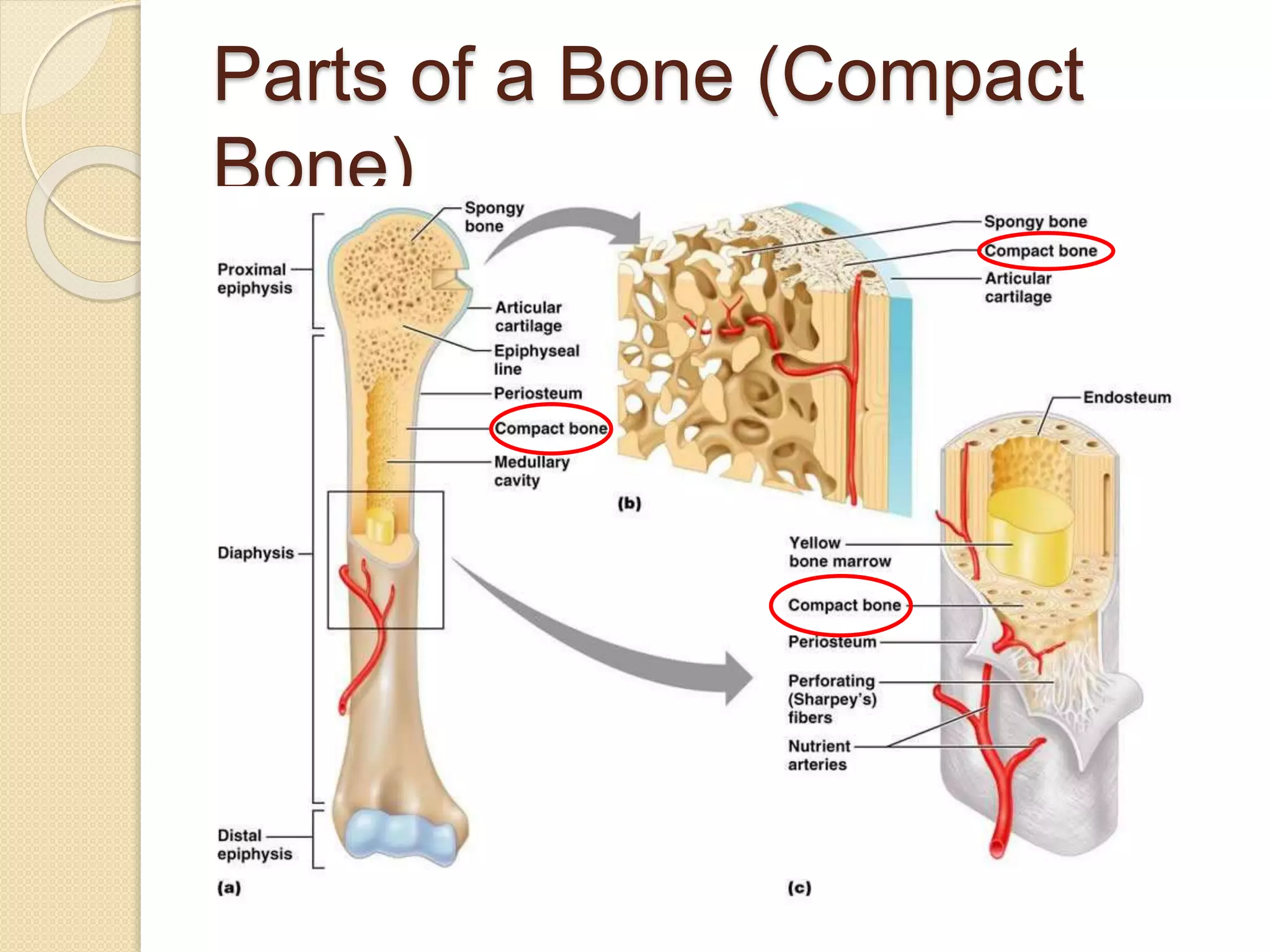
Parts of a Bone (Compact
Bone)
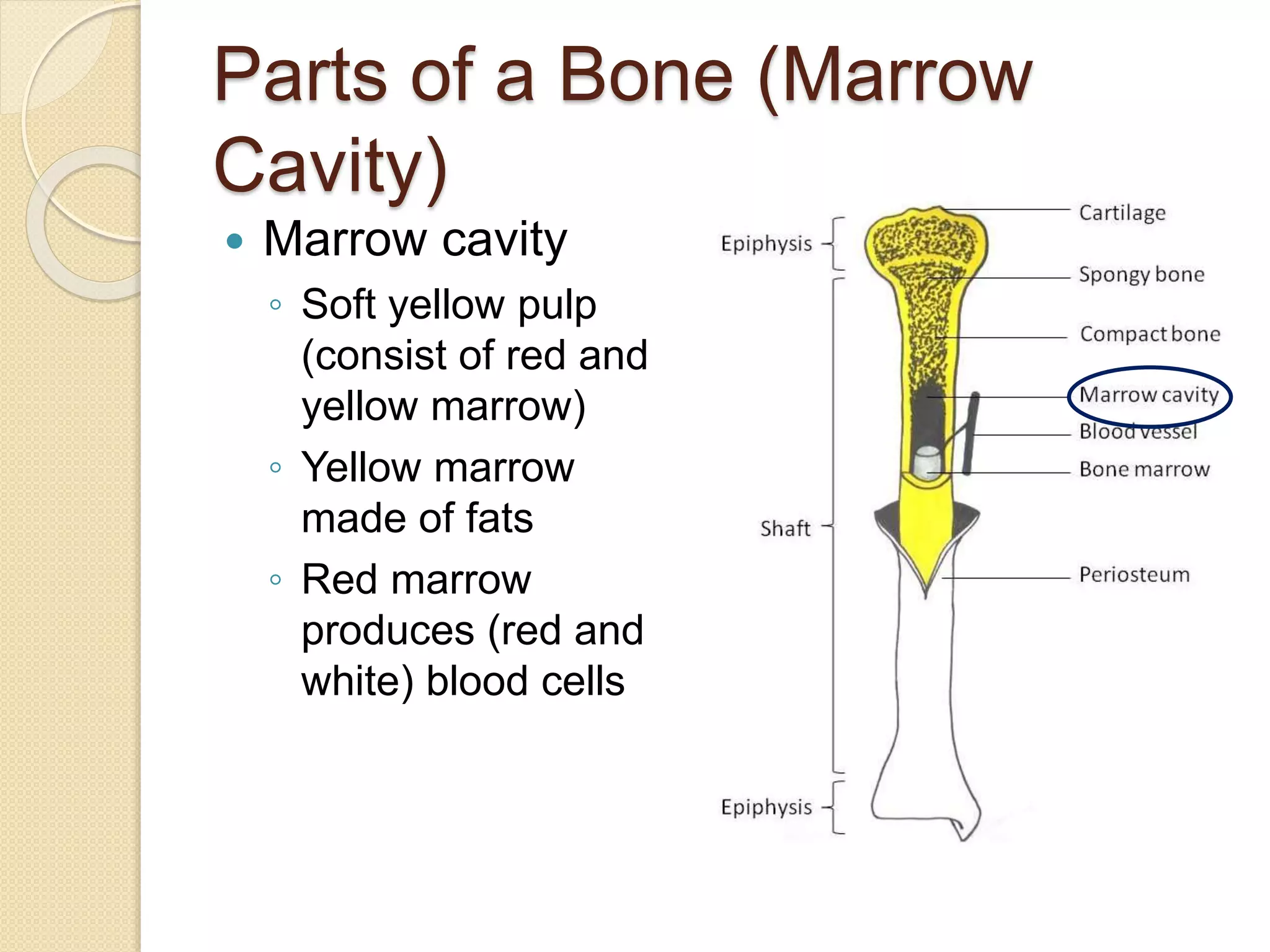
Parts of a Bone (Marrow
Cavity)
 Marrow cavity
◦ Soft yellow pulp
(consist of red and
yellow marrow)
◦ Yellow marrow
made of fats
◦ Red marrow
produces (red and
white) blood cells
Parts of a Bone (Periosteum)
 Periosteum
◦ Tough fibrous skin
◦ Underneath side
responsible for
bone growth
(sideward)
◦ The bone growth is
also responsible for
the repair of bone
when crack or
broken
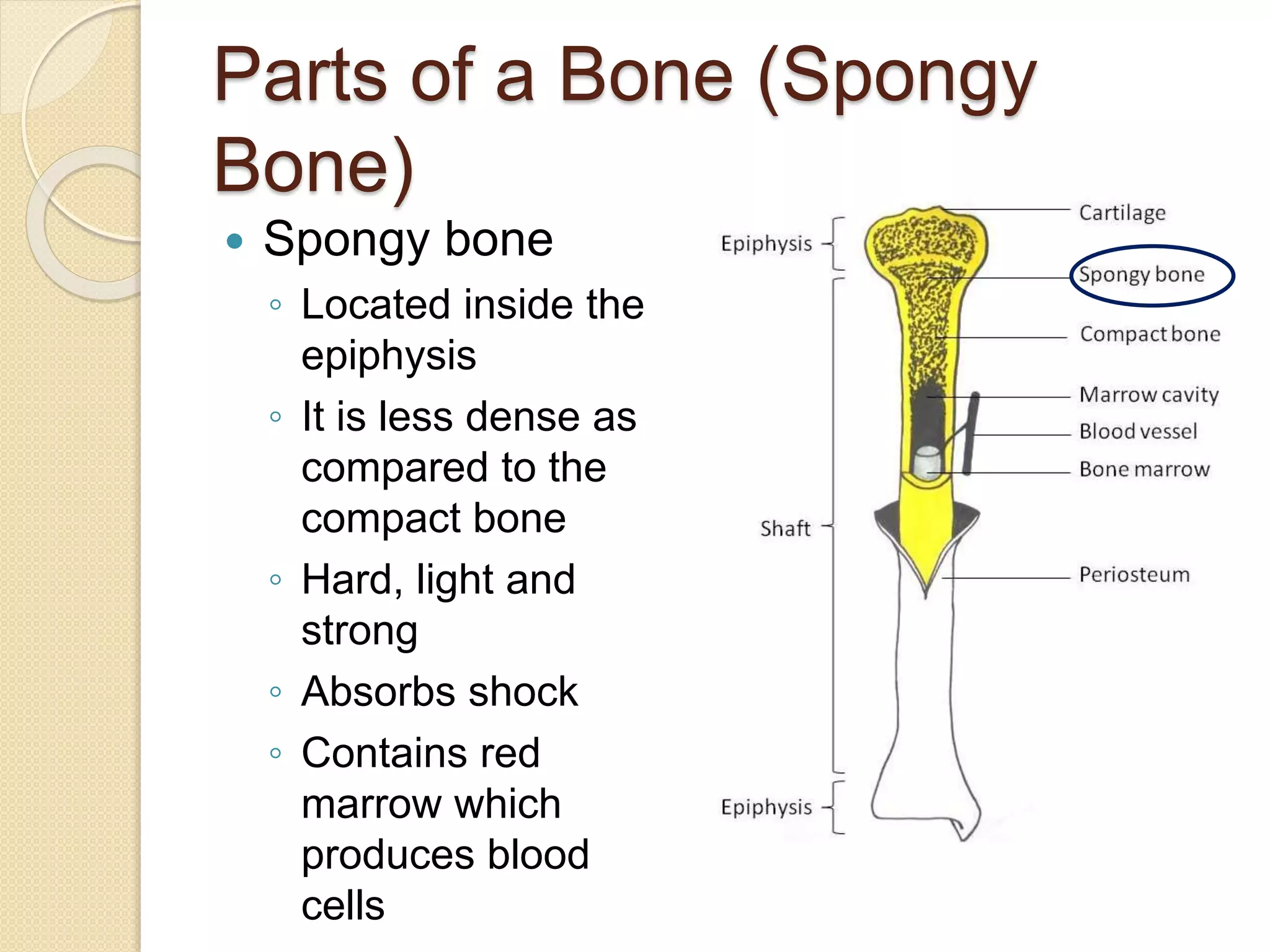
Parts of a Bone (Spongy
Bone)
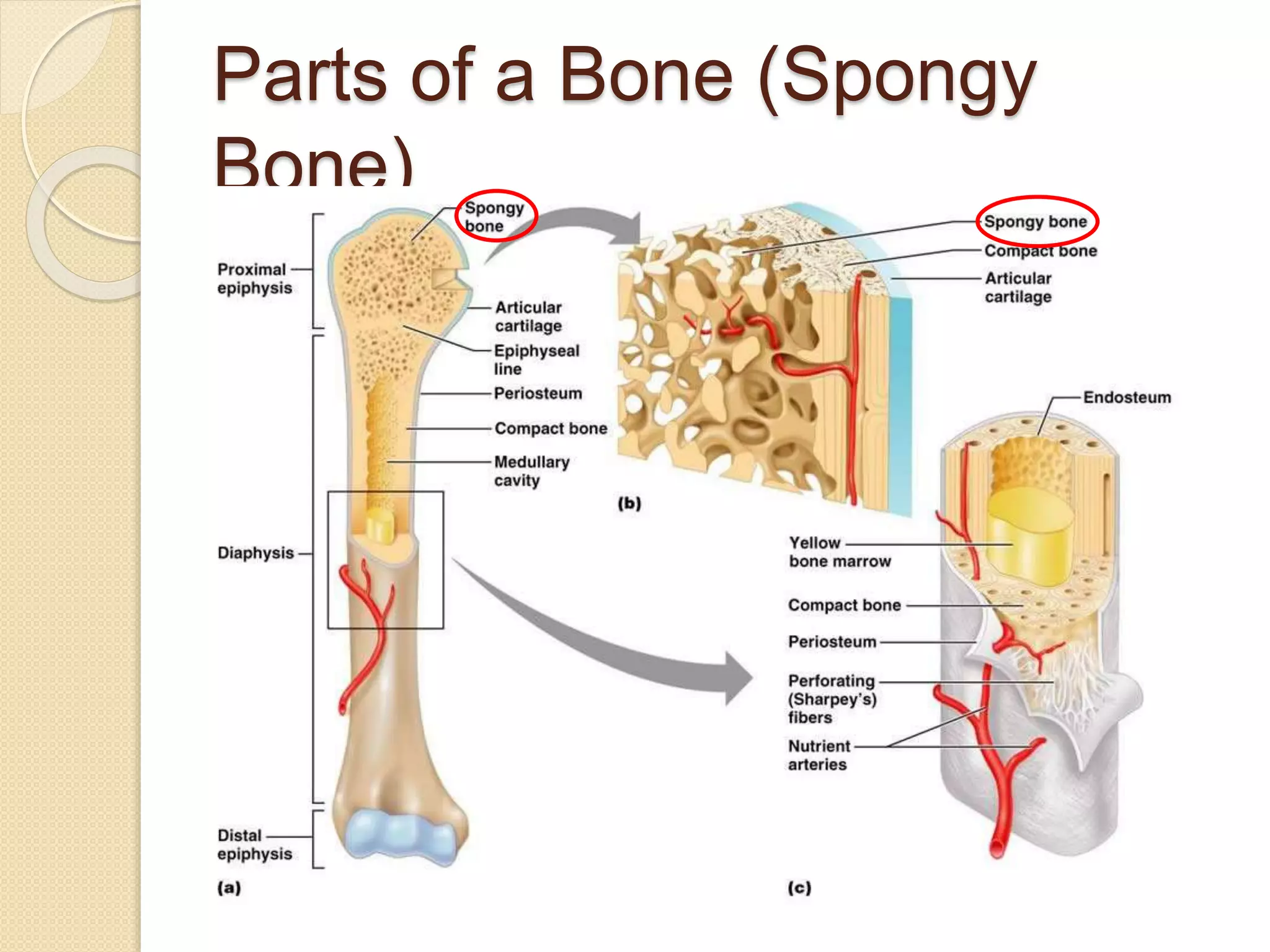
 Spongy bone
◦ Located inside the
epiphysis
◦ It is less dense as
compared to the
compact bone
◦ Hard, light and
strong
◦ Absorbs shock
◦ Contains red
marrow which
produces blood
cells
Parts of a Bone (Spongy
Bone)
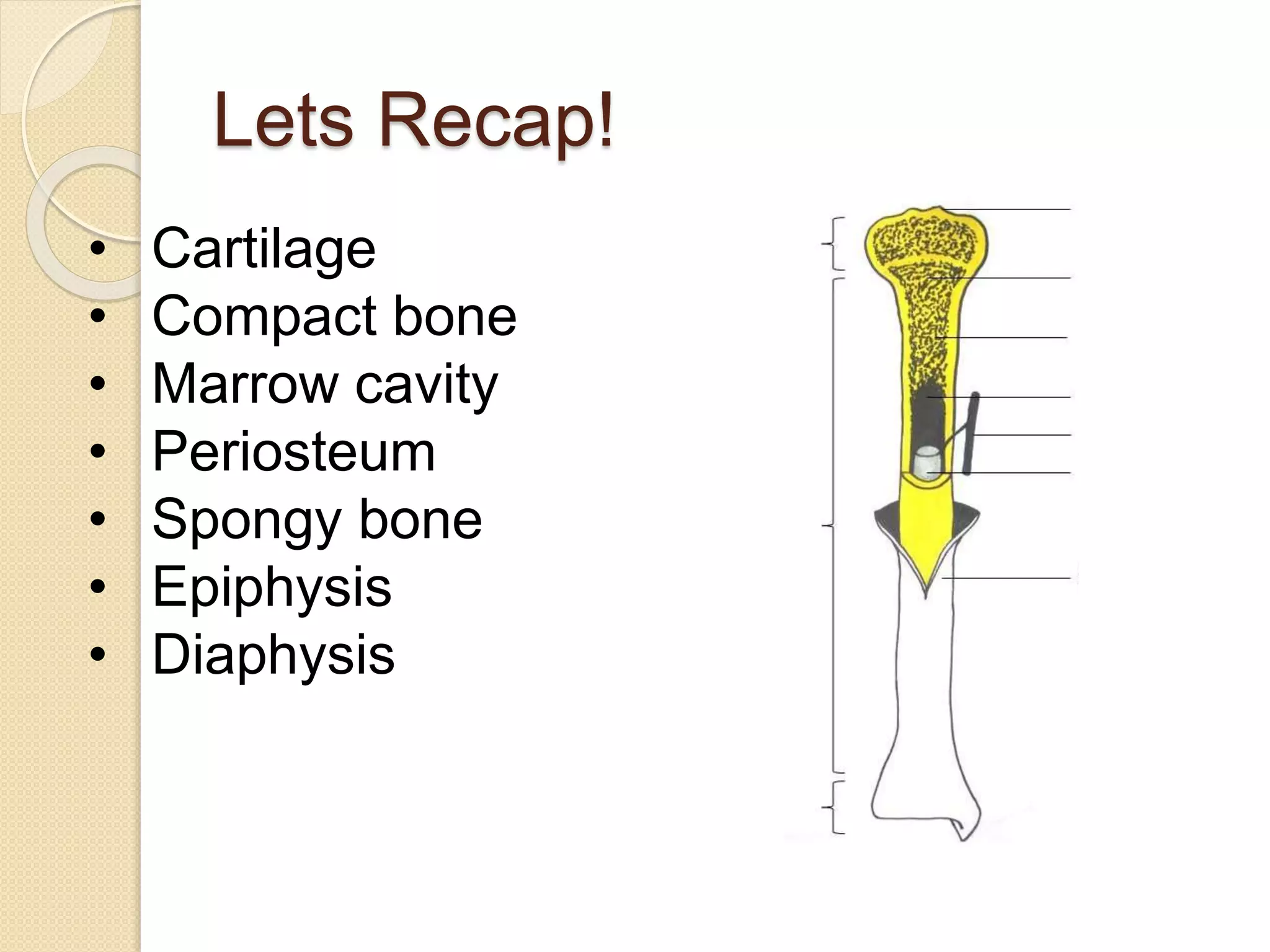
Lets Recap!
• Cartilage
• Compact bone
• Marrow cavity
• Periosteum
• Spongy bone
• Epiphysis
• Diaphysis

5.1 bone

  • 1.
    Secondary Two Topic: Bonesand Joints Sub Topic: Bones
  • 2.
    • Students willknow and identify the various parts of the bone
  • 3.
    • Cartilage • Compactbone • Marrow cavity • Periosteum • Spongy bone • Epiphysis • Diaphysis
  • 4.
    • One conversation •Respect the questions asked • Putting of palm on whiteboard • Class too noisy and need to quieten down
  • 5.
  • 6.
    Question 1 How manybones are there in an adult human skeleton? 206
  • 7.
    Question 2  Whohas more bones? Adult or newborn infant? Newborn infant  The skeleton of a newborn baby has approximately 300 different components, which are a mixture of bones and cartilage. The cartilage eventually solidifies into bone in a process called ossification — for example, the kneecaps of newborns start off as cartilage and become bone in a few years.  Over time, the "extra" bones in infants fuse to form larger bones, reducing the overall number of bones to 206 by adulthood.
  • 8.
    Question 3 Where canyou find most of your bones in the body? Hands (27 each) and Legs (26 each)
  • 9.
    Question 4 How manybones are there in our skull? 8 pieces (fused together)
  • 10.
    Question 5 Which isthe smallest bone in the human skeleton? Stape (at the ear)
  • 11.
    Question 6 Which isthe longest bone in the human skeleton? Femur (thigh bone, ~1/4 of body height)
  • 12.
    Question 7 Are theteeth part of the 206 bones? No (But our teeth are stronger than our bones!)
  • 13.
    Parts of aBone  Epiphysis  Diaphysis (aka Shaft)  Cartilage  Compact bone  Marrow cavity ◦ Blood vessels ◦ Bone marrow  Periosteum  Spongy bone
  • 14.
    Parts of aBone (Overall)  Epiphysis ◦ The end part of the bone
  • 15.
    Parts of aBone (Overall)  Diaphysis (aka Shaft) ◦ It forms the main length of the bone.
  • 16.
    Parts of aBone (Cartilage)  Cartilage ◦ The protective layer that wraps around the epiphysis ◦ Cushions the rubbing action between bones at the joints
  • 17.
    Parts of aBone (Cartilage)  Ways that cartilage will be damaged: ◦ Direct impact; ◦ Wear and tear; ◦ Lack of exercise.  Signs and symptoms ◦ Swelling ◦ Stiffness at joint ◦ Range limitation
  • 18.
    Parts of aBone (Compact Bone)  Compact bone ◦ Thinnest part of bone ◦ Hard and strong ◦ Forms main part of bone ◦ Gets thicker with training (i.e. better protected from injuries)
  • 19.
    Parts of aBone (Compact Bone)
  • 20.
    Parts of aBone (Marrow Cavity)  Marrow cavity ◦ Soft yellow pulp (consist of red and yellow marrow) ◦ Yellow marrow made of fats ◦ Red marrow produces (red and white) blood cells
  • 21.
    Parts of aBone (Periosteum)  Periosteum ◦ Tough fibrous skin ◦ Underneath side responsible for bone growth (sideward) ◦ The bone growth is also responsible for the repair of bone when crack or broken
  • 22.
    Parts of aBone (Spongy Bone)  Spongy bone ◦ Located inside the epiphysis ◦ It is less dense as compared to the compact bone ◦ Hard, light and strong ◦ Absorbs shock ◦ Contains red marrow which produces blood cells
  • 23.
    Parts of aBone (Spongy Bone)
  • 24.
    Lets Recap! • Cartilage •Compact bone • Marrow cavity • Periosteum • Spongy bone • Epiphysis • Diaphysis