Our Skeleton System
Learning Objectives
   5 Major Functions of the skeleton
   4 Different types of bones
   4 Different types of joints and their range of
    movements
   Parts of a joint: Ligament, tendon, cartilage,
                    Synovial fluid
   Names of bones
   Healthy management of bones
How do you think we will look like
       without skeleton?
Functions of skeleton

• Shape

• Support

• Body movement

• Protection

• Blood cell formation
Function 1: Shape
Bones provide basic shape and structure for the
                     body
Function 2: Support
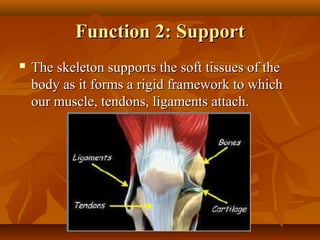
   The skeleton supports the soft tissues of the
    body as it forms a rigid framework to which
    our muscle, tendons, ligaments attach.
Function 3: Body Movement
   Bones act as levers for muscle
    attachment
   Our bones are levers which are
    pulled by the muscles to cause
    movement
Function 4: Protection
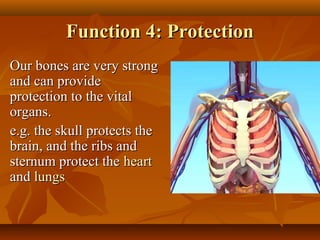
Our bones are very strong
and can provide
protection to the vital
organs.
e.g. the skull protects the
brain, and the ribs and
sternum protect the heart
and lungs
Function 5: Making Blood Cells
Inside long bones is
a substance called
bone marrow,
which makes new
blood cells.
Types of bones
   Long
   Short
   Flat
   Irregular
Long Bones
Any bone that is longer than its width
        Eg: Femur, Humerus
Short Bones
        As wide as they are long
Eg: Bones such as the Carpals and Tarsals
           in the wrist and foot
Flat bones
 Strong, flat pieces of bone


Can you think of others?
Irregular Bones
Do not fit into any of the other categories and
often have an unusual shape


Vertebrae        Sacrum          Mandible
Some interesting facts
1. How many bones do we have in our body?
    206
2. How many bones does the hand have?
    27
3. Giraffes and humans have the same number of
    bones in their neck.
   True or False
22 bones in skull
6 in middle ears
1 hyoid bone
26 in vertebral column
25 in thoracic cage

4 in pectoral girdle
60 in upper limbs
60 in lower limbs
2 in pelvic girdle

206 bones in all
Types of joints
   Ball and socket
   Hinge
   Pivot
   Gliding
Ball and Socket Joints
enables the bone to move in a 360°
              angle.


                    Which other joint is also
                    ball and socket?
Hinge Joints - motion only in one plane
      (backward and forward)


               Which other joint is also
               hinged?
Pivot Joints - moves by rotating


Which other joint is also
pivoted?
Gliding Joints - Flat or slightly flat
surfaces move against each other
Ligaments
A tissue that connects bone to bone


                            Video on Knee Anatomy
Tendons
A tissue that connects muscle to bone
Cartilage
 A tissue that helps to prevent the bones from
rubbing against each other and wearing down
                   the bone.
Cartilages


Knees Cartilage - Menicus   Intervertebral Disc Cartilage
Synovial fluid
   A fluid that reduce friction between the joints
    during movement.
Name of bones
   Skull
   Mid Section
   Lower body (Pelvic)
   Upper Limb
   Lower Limb
Skulls
Rib Cage
           Clavicle
           (Collar Bone)


 Sternum
Shoulder Blade and Collar Bone
Vertebral Column (Spine)
Bones of pelvis


Male pelvis: anterior view   Female pelvis: anterior view
Arms
       Humerus


       Radius


Ulna             Ulna
Femur (Thigh Bone)
Tibia and Fibula
Healthy Management of Bones
   Our bones start becoming thinner and lose
    their density as we age.

   This will lead to Osteoporosis (A disease of
    bones that leads to an increased risk of
    fracture) if we do not keep our bone healthy

   This is especially for women after menopause
Solution
Calcium and phosphorous are minerals that give
strength to bones. People must obtain these
minerals from food. People who do not have
enough of these minerals will have brittle bones
and become stooped when they are old.
Top 8 food for Healthy, Stronger
                 bones
   Milk
   Yogurt and Cheese
   Sardines
   Green-leafy Vegetables
   Soy Foods (Tofu)
   Fortified Foods (Food that has essential minerals and
    vitamins added eg: Orange Juice and Cereals)
   Calcium Supplements
   Nuts and Seeds (Almonds, Pistachios, sunflower
    seeds, seaweeds)


http://www.themedguru.com/20100305/feature/top-8-foods-healthy-bones-86132627.html
Workout for Healthy Bones
   Aerobics
   Cycling
   Dancing - especially contra dancing, tap dancing, polka and
    other folk dances that involve stomping, hopping etc.
   Gardening
   Gymnastics
   Jogging
   Jumping rope or doing Jumping Jacks
   Race Walking
   Tennis
   Stair climbing - going down stairs is best
   Weight Bearing Exercise

          http://www.osteopenia3.com/bone-density-exercises.html

Skeleton system

  • 1.
  • 2.
    Learning Objectives  5 Major Functions of the skeleton  4 Different types of bones  4 Different types of joints and their range of movements  Parts of a joint: Ligament, tendon, cartilage, Synovial fluid  Names of bones  Healthy management of bones
  • 3.
    How do youthink we will look like without skeleton?
  • 4.
    Functions of skeleton •Shape • Support • Body movement • Protection • Blood cell formation
  • 5.
    Function 1: Shape Bonesprovide basic shape and structure for the body
  • 6.
    Function 2: Support  The skeleton supports the soft tissues of the body as it forms a rigid framework to which our muscle, tendons, ligaments attach.
  • 7.
    Function 3: BodyMovement  Bones act as levers for muscle attachment  Our bones are levers which are pulled by the muscles to cause movement
  • 8.
    Function 4: Protection Ourbones are very strong and can provide protection to the vital organs. e.g. the skull protects the brain, and the ribs and sternum protect the heart and lungs
  • 9.
    Function 5: MakingBlood Cells Inside long bones is a substance called bone marrow, which makes new blood cells.
  • 11.
    Types of bones  Long  Short  Flat  Irregular
  • 12.
    Long Bones Any bonethat is longer than its width Eg: Femur, Humerus
  • 13.
    Short Bones As wide as they are long Eg: Bones such as the Carpals and Tarsals in the wrist and foot
  • 14.
    Flat bones Strong,flat pieces of bone Can you think of others?
  • 15.
    Irregular Bones Do notfit into any of the other categories and often have an unusual shape Vertebrae Sacrum Mandible
  • 16.
    Some interesting facts 1.How many bones do we have in our body? 206 2. How many bones does the hand have? 27 3. Giraffes and humans have the same number of bones in their neck. True or False
  • 17.
    22 bones inskull 6 in middle ears 1 hyoid bone 26 in vertebral column 25 in thoracic cage 4 in pectoral girdle 60 in upper limbs 60 in lower limbs 2 in pelvic girdle 206 bones in all
  • 18.
    Types of joints  Ball and socket  Hinge  Pivot  Gliding
  • 19.
    Ball and SocketJoints enables the bone to move in a 360° angle. Which other joint is also ball and socket?
  • 20.
    Hinge Joints -motion only in one plane (backward and forward) Which other joint is also hinged?
  • 21.
    Pivot Joints -moves by rotating Which other joint is also pivoted?
  • 22.
    Gliding Joints -Flat or slightly flat surfaces move against each other
  • 23.
    Ligaments A tissue thatconnects bone to bone Video on Knee Anatomy
  • 25.
    Tendons A tissue thatconnects muscle to bone
  • 26.
    Cartilage A tissuethat helps to prevent the bones from rubbing against each other and wearing down the bone.
  • 27.
    Cartilages Knees Cartilage -Menicus Intervertebral Disc Cartilage
  • 28.
    Synovial fluid  A fluid that reduce friction between the joints during movement.
  • 29.
    Name of bones  Skull  Mid Section  Lower body (Pelvic)  Upper Limb  Lower Limb
  • 30.
  • 32.
    Rib Cage Clavicle (Collar Bone) Sternum
  • 33.
    Shoulder Blade andCollar Bone
  • 34.
  • 35.
    Bones of pelvis Malepelvis: anterior view Female pelvis: anterior view
  • 36.
    Arms Humerus Radius Ulna Ulna
  • 37.
  • 38.
  • 39.
    Healthy Management ofBones  Our bones start becoming thinner and lose their density as we age.  This will lead to Osteoporosis (A disease of bones that leads to an increased risk of fracture) if we do not keep our bone healthy  This is especially for women after menopause
  • 40.
    Solution Calcium and phosphorousare minerals that give strength to bones. People must obtain these minerals from food. People who do not have enough of these minerals will have brittle bones and become stooped when they are old.
  • 41.
    Top 8 foodfor Healthy, Stronger bones  Milk  Yogurt and Cheese  Sardines  Green-leafy Vegetables  Soy Foods (Tofu)  Fortified Foods (Food that has essential minerals and vitamins added eg: Orange Juice and Cereals)  Calcium Supplements  Nuts and Seeds (Almonds, Pistachios, sunflower seeds, seaweeds) http://www.themedguru.com/20100305/feature/top-8-foods-healthy-bones-86132627.html
  • 42.
    Workout for HealthyBones  Aerobics  Cycling  Dancing - especially contra dancing, tap dancing, polka and other folk dances that involve stomping, hopping etc.  Gardening  Gymnastics  Jogging  Jumping rope or doing Jumping Jacks  Race Walking  Tennis  Stair climbing - going down stairs is best  Weight Bearing Exercise http://www.osteopenia3.com/bone-density-exercises.html