Asthmapathophysiology
By Mahdi Saleh
Asthma is a chronic disorder of the conducting
airways, usually caused by an immunological
reaction, which is marked by episodic
bronchoconstriction due to increased airway
sensitivity to a variety of stimuli;
inflammation of the bronchial walls; and
increased mucus secretion.
The asthmatic airway is marked by accumulation of mucus in the
bronchial lumen secondary to an increase in the number of mucus-
secreting goblet cells in the mucosa and hypertrophy of submucosal
glands; intense chronic inflammation due to recruitment of
eosinophils, macrophages, and other inflammatory cells; thickened
basement membrane; and hypertrophy and hyperplasia of smooth
muscle cells.
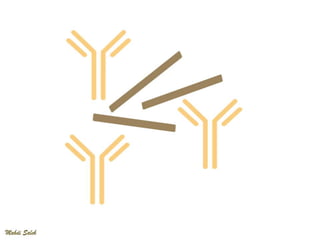
Inhaled allergens (antigen) elicit a TH2-
dominated response favoring IgE
production and eosinophil recruitment.
On re-exposure to antigen (Ag), the
immediate reaction is triggered by Ag-
induced cross-linking of IgE bound to Fc
receptors on mast cells. These cells
release preformed mediators that
directly and via neuronal reflexes induce
bronchospasm, increased vascular
permeability, mucus production, and
recruitment of leukocytes.
Leukocytes recruited to the site of reaction
(neutrophils, eosinophils, and basophils;
lymphocytes and monocytes) release
additional mediators that initiate the
late phase of asthma. Several factors
released from eosinophils (e.g., major
basic protein, eosinophil cationic
protein) also cause damage to the
epithelium.
Thank You
C H A P T E R 15
The Lung
P679-682
C H A P T E R 55
The Lung
P322-323
C H A P T E R 22
The respiratory system
P840

Asthma

  • 1.
  • 2.
    Asthma is achronic disorder of the conducting airways, usually caused by an immunological reaction, which is marked by episodic bronchoconstriction due to increased airway sensitivity to a variety of stimuli; inflammation of the bronchial walls; and increased mucus secretion.
  • 8.
    The asthmatic airwayis marked by accumulation of mucus in the bronchial lumen secondary to an increase in the number of mucus- secreting goblet cells in the mucosa and hypertrophy of submucosal glands; intense chronic inflammation due to recruitment of eosinophils, macrophages, and other inflammatory cells; thickened basement membrane; and hypertrophy and hyperplasia of smooth muscle cells.
  • 9.
    Inhaled allergens (antigen)elicit a TH2- dominated response favoring IgE production and eosinophil recruitment. On re-exposure to antigen (Ag), the immediate reaction is triggered by Ag- induced cross-linking of IgE bound to Fc receptors on mast cells. These cells release preformed mediators that directly and via neuronal reflexes induce bronchospasm, increased vascular permeability, mucus production, and recruitment of leukocytes. Leukocytes recruited to the site of reaction (neutrophils, eosinophils, and basophils; lymphocytes and monocytes) release additional mediators that initiate the late phase of asthma. Several factors released from eosinophils (e.g., major basic protein, eosinophil cationic protein) also cause damage to the epithelium.
  • 11.
    Thank You C HA P T E R 15 The Lung P679-682 C H A P T E R 55 The Lung P322-323 C H A P T E R 22 The respiratory system P840