Patella, tibia, foot and
ankle injuries
Dr. Yasser Alwabli
Orthopedics
Contents
• Patella fracture
• Knee dislocation
• Tibia fractures
• Tibial plateau
• Shaft
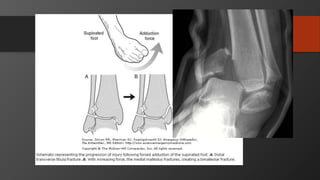
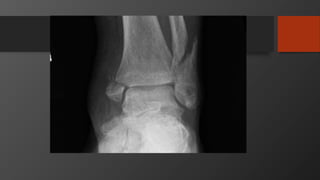
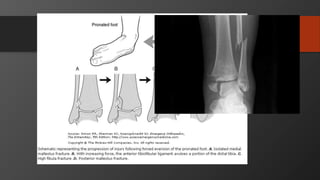
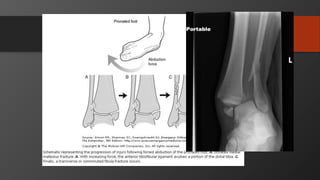
• Ankle fractures
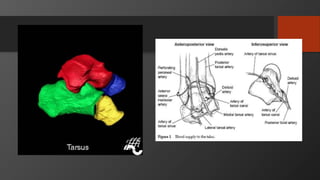
• Talus fracture
• Calcaneus fracture
• Metatarsal fractures
Patella Fractures
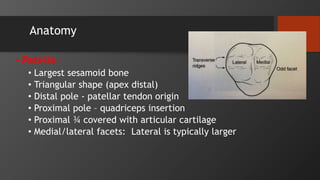
Anatomy
• Patella
• Largest sesamoid bone
• Triangular shape (apex distal)
• Distal pole - patellar tendon origin
• Proximal pole – quadriceps insertion
• Proximal ¾ covered with articular cartilage
• Medial/lateral facets: Lateral is typically larger
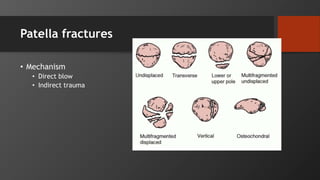
Patella fractures
• Mechanism
• Direct blow
• Indirect trauma
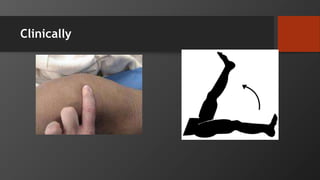
Clinically
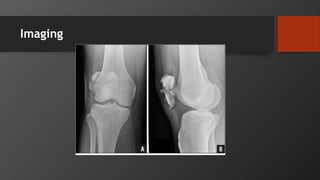
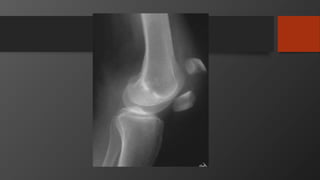
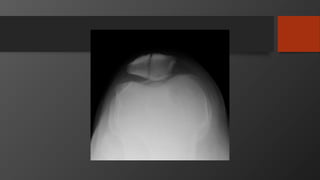
Imaging
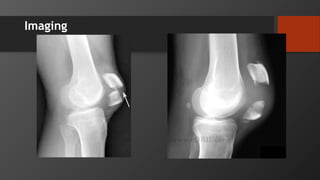
Imaging
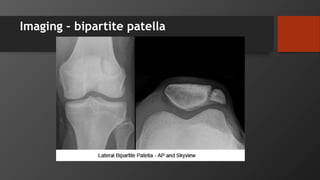
Imaging – bipartite patella
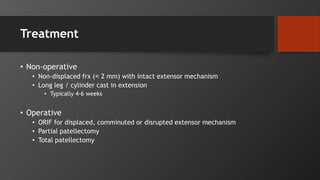
Treatment
• Non-operative
• Non-displaced frx (˂ 2 mm) with intact extensor mechanism
• Long leg / cylinder cast in extension
• Typically 4-6 weeks
• Operative
• ORIF for displaced, comminuted or disrupted extensor mechanism
• Partial patellectomy
• Total patellectomy
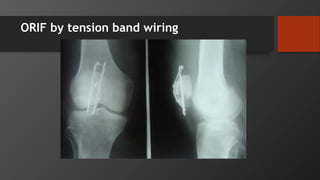
ORIF by tension band wiring
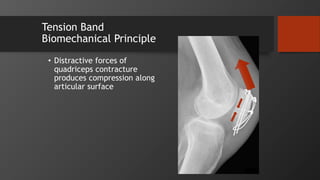
Tension Band
Biomechanical Principle
• Distractive forces of
quadriceps contracture
produces compression along
articular surface
Complications
• Anterior knee pain
• Symptomatic hardware
• Non-union
• Stiffness
• Infection
Knee Dislocation
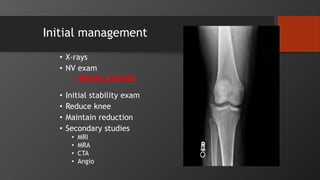
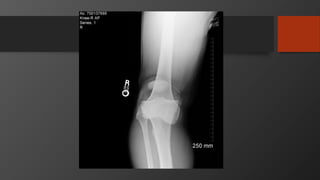
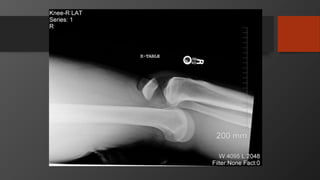
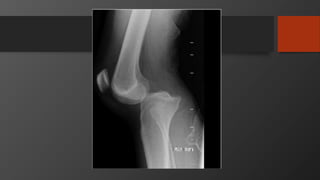
Knee dislocation
• Mechanism
• High-energy trauma
• 3 out of 4 ligaments should be torn to dislocate the knee
• Imaging
• X-Ray: AP, Lateral
• MRI for surgical planning (later)
Initial management
• X-rays
• NV exam
• Vascular is priority
• Initial stability exam
• Reduce knee
• Maintain reduction
• Secondary studies
• MRI
• MRA
• CTA
• Angio
Other investigations
• Ankle-Brachial Index
• Less than 0.9 is abnormal
• CT angiography for suspected vascular injury
Treatment
• Urgent closed reduction
• Assessment of neurovascular status
• Immobilize for 6-8 weeks
• Surgery (indications)
• Vascular injury
• Irreducible dislocation
• Open fracture/dislocation
Initial management
• Reduce knee
• Usually need relaxation
and sedation
• If knee remains
reduced, brace or splint
can be adequate
temporarily
• If knee re-dislocates,
ex-fix
• If unable to close
reduce, then open
reduction needed with
placement of ex-fix
Tibial Plateau Factures
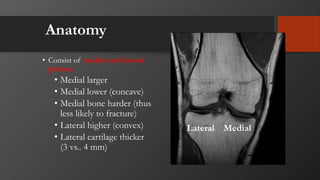
Anatomy
• Consist of medial and lateral
plateau
• Medial larger
• Medial lower (concave)
• Medial bone harder (thus
less likely to fracture)
• Lateral higher (convex)
• Lateral cartilage thicker
(3 vs.. 4 mm)
MedialLateral
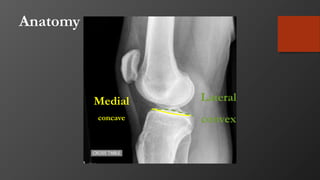
Anatomy
Medial
concave
Lateral
convex
Anatomy
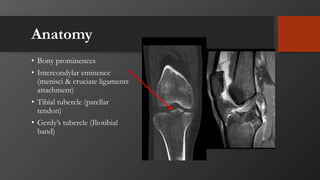
• Bony prominences
• Intercondylar eminence
(menisci & cruciate ligaments
attachment)
• Tibial tubercle (patellar
tendon)
• Gerdy’s tubercle (Iliotibial
band)
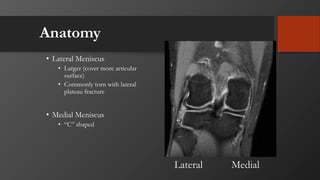
Anatomy
• Lateral Meniscus
• Larger (cover more articular
surface)
• Commonly torn with lateral
plateau fracture
• Medial Meniscus
• “C” shaped
MedialLateral
Tibial Plateau Fracture
• Mechanism
• Varus/valgus load with or without axial load
• Like fall from height
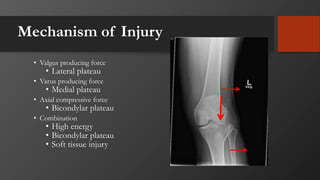
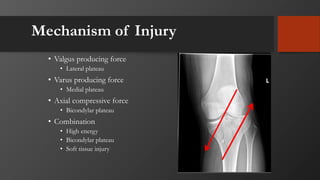
Mechanism of Injury
• Valgus producing force
• Lateral plateau
• Varus producing force
• Medial plateau
• Axial compressive force
• Bicondylar plateau
• Combination
• High energy
• Bicondylar plateau
• Soft tissue injury
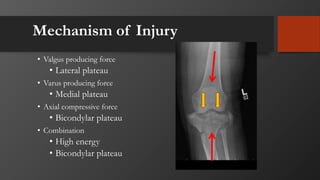
Mechanism of Injury
• Valgus producing force
• Lateral plateau
• Varus producing force
• Medial plateau
• Axial compressive force
• Bicondylar plateau
• Combination
• High energy
• Bicondylar plateau
• Soft tissue injury
Mechanism of Injury
• Valgus producing force
• Lateral plateau
• Varus producing force
• Medial plateau
• Axial compressive force
• Bicondylar plateau
• Combination
• High energy
• Bicondylar plateau
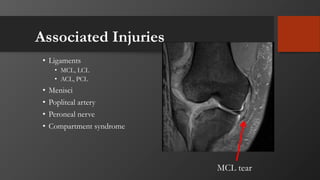
Associated Injuries
• Ligaments
• MCL, LCL
• ACL, PCL
• Menisci
• Popliteal artery
• Peroneal nerve
• Compartment syndrome
MCL tear
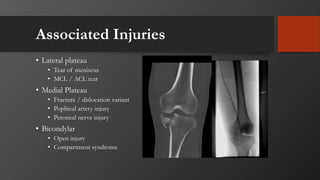
Associated Injuries
• Lateral plateau
• Tear of meniscus
• MCL / ACL tear
• Medial Plateau
• Fracture / dislocation variant
• Popliteal artery injury
• Peroneal nerve injury
• Bicondylar
• Open injury
• Compartment syndrome
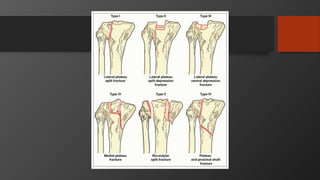
Classifcation
• Schtzker classification
Tibial Plateau Fracture
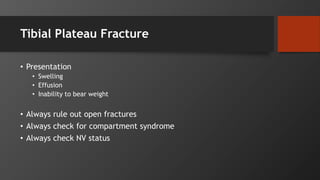
• Presentation
• Swelling
• Effusion
• Inability to bear weight
• Always rule out open fractures
• Always check for compartment syndrome
• Always check NV status
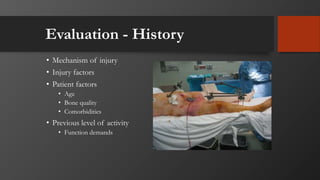
Evaluation - History
• Mechanism of injury
• Injury factors
• Patient factors
• Age
• Bone quality
• Comorbidities
• Previous level of activity
• Function demands
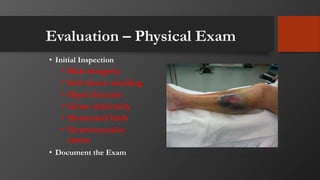
Evaluation – Physical Exam
• Initial Inspection
• Skin integrity
• Soft tissue swelling
• Open fracture
• Gross deformity
• Shortened limb
• Neurovascular
status
• Document the Exam
Evaluation – Physical Exam
• Low energy mechanism
• Knee swelling
• Limited knee ROM
• Tender to palpation
• Able to assess knee stability
• Varus/valgus stress
• 0 and 30 degrees
• Lachman’s exam for ACL deficiency
• High energy mechanism
• ATLS
• Resuscitation
• Limb threatened
• Soft tissue integrity
• Open fracture
• Abrasions
• Blisters
• Compartment syndrome
Evaluation – Physical Exam
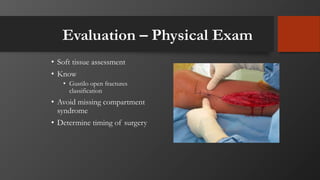
• Soft tissue assessment
• Know
• Gustilo open fractures
classification
• Avoid missing compartment
syndrome
• Determine timing of surgery
Evaluation – Physical Exam
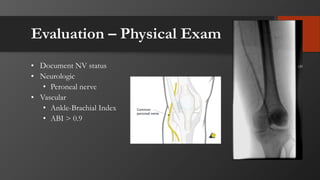
• Document NV status
• Neurologic
• Peroneal nerve
• Vascular
• Ankle-Brachial Index
• ABI > 0.9
Evaluation – Physical Exam
• ABI < 0.90
• Predictable of arterial
injury
• Vascular consult
• Proceed with arteriogram
• ABI > 0.90
• Admit for observation
• Followed with serial
reassessments
Tibial Plateau Fracture
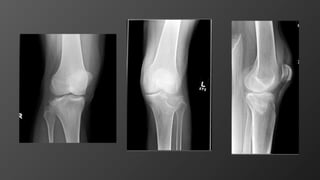
• Imaging:
• X-Ray: AP, Lateral
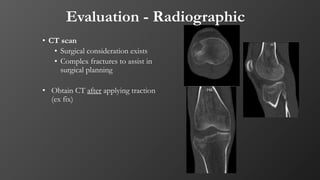
• CT for preop planning, assessing articular depression
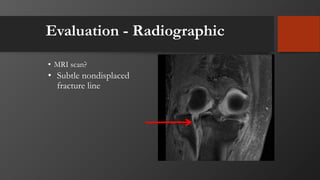
• MRI
• ABI if any differences in pulses between limbs
Evaluation - Radiographic
• CT scan
• Surgical consideration exists
• Complex fractures to assist in
surgical planning
• Obtain CT after applying traction
(ex fix)
Evaluation - Radiographic
• MRI scan?
• Subtle nondisplaced
fracture line
Treatment
• Non-operative
• Minimally displaced frx (˂ 3 mm)
• Hinged knee brace + immediate passive ROM
• Operative
• Delayed ORIF and temporary external fixator
• Significant soft tissue injury
• ORIF
• Displaced ˃ 3 mm
• All bicondylar fracture
• All medial plateau fractures
Treatment Principles
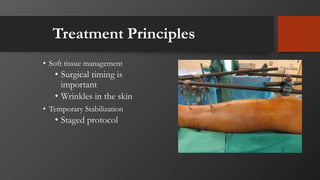
• Soft tissue management
• Surgical timing is
important
• Wrinkles in the skin
• Temporary Stabilization
• Staged protocol
Treatment Principles
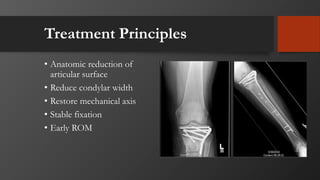
• Anatomic reduction of
articular surface
• Reduce condylar width
• Restore mechanical axis
• Stable fixation
• Early ROM
Treatment Options: Nonsurgical
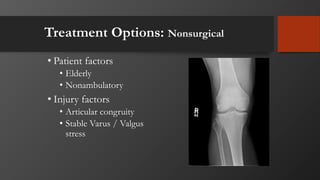
• Patient factors
• Elderly
• Nonambulatory
• Injury factors
• Articular congruity
• Stable Varus / Valgus
stress
Nonsurgical
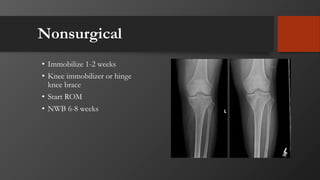
• Immobilize 1-2 weeks
• Knee immobilizer or hinge
knee brace
• Start ROM
• NWB 6-8 weeks
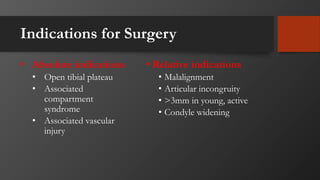
Indications for Surgery
• Relative indications
• Malalignment
• Articular incongruity
• >3mm in young, active
• Condyle widening
• Absolute indications
• Open tibial plateau
• Associated
compartment
syndrome
• Associated vascular
injury
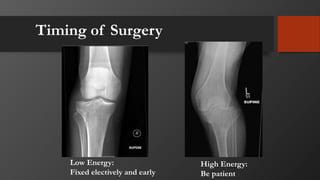
Timing of Surgery
Low Energy:
Fixed electively and early
High Energy:
Be patient
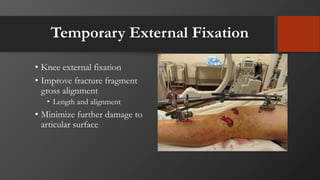
Temporary External Fixation
• Knee external fixation
• Improve fracture fragment
gross alignment
• Length and alignment
• Minimize further damage to
articular surface
Complications
• Infection
• Nonunion
• Stiffness
• Posttraumatic arthritis
Tibia Shaft Fractures
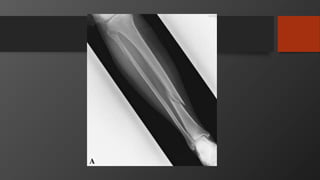
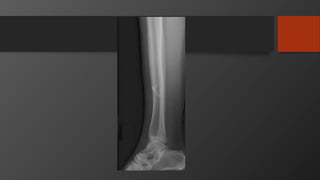
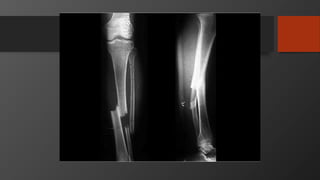
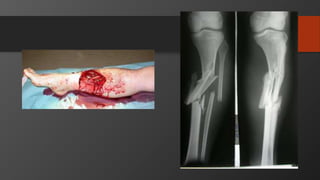
Tibia shaft fractures
• Mechanism
• Low energy usually torsional injury
• High energy, e.g. road-traffic accident
Tibia shaft fractures
• Presentation
• Swelling
• Pain
• Inability to bear weight
• Always rule out open fractures
• Always check for compartment syndrome
• Always check neurovascular status
Tibial Plateau Fracture
• Imaging:
• X-Ray: AP, Lateral
• Full length
• Knee and ankle also
Treatment
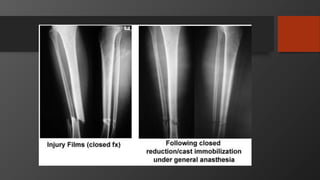
• Non-operative
• Closed and minimally displaced
• or adequate closed reduction
• Long leg cast for 8-12 wks
• Operative
• Displaced or open
• If displaced and closed
• Standard treatment is reamed IM nail
• If open frx – treat as per open fracture guidelines
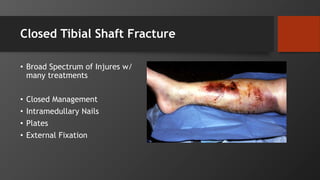
Closed Tibial Shaft Fracture
• Broad Spectrum of Injures w/
many treatments
• Closed Management
• Intramedullary Nails
• Plates
• External Fixation
Non-Operative Treatment Indications
•Stable fracture pattern
• < 5° varus/valgus
• < 10° pro/recurvatum
• < 1 cm shortening
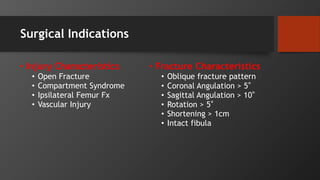
Surgical Indications
• Injury Characteristics
• Open Fracture
• Compartment Syndrome
• Ipsilateral Femur Fx
• Vascular Injury
• Fracture Characteristics
• Oblique fracture pattern
• Coronal Angulation > 5°
• Sagittal Angulation > 10°
• Rotation > 5°
• Shortening > 1cm
• Intact fibula
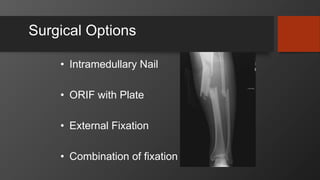
Surgical Options
• Intramedullary Nail
• ORIF with Plate
• External Fixation
• Combination of fixation
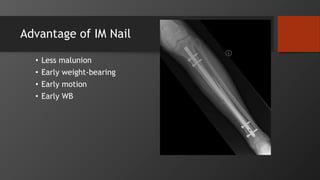
Advantage of IM Nail
• Less malunion
• Early weight-bearing
• Early motion
• Early WB
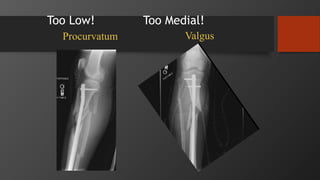
Too Low! Too Medial!
Procurvatum Valgus
Plating of Tibial Fractures
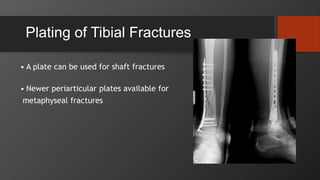
• A plate can be used for shaft fractures
• Newer periarticular plates available for
metaphyseal fractures
Advantages of Plating
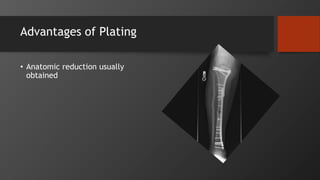
• Anatomic reduction usually
obtained
Disadvantages of Plating
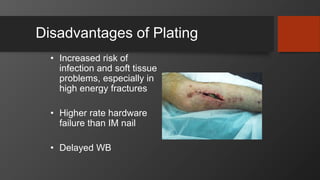
• Increased risk of
infection and soft tissue
problems, especially in
high energy fractures
• Higher rate hardware
failure than IM nail
• Delayed WB
External Fixator
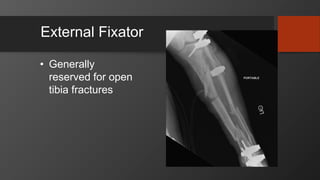
• Generally
reserved for open
tibia fractures
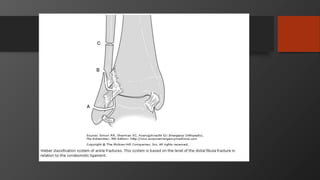
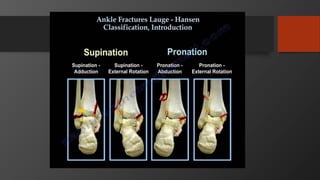
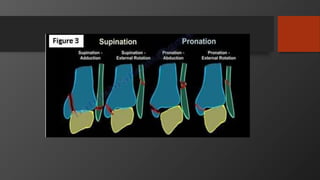
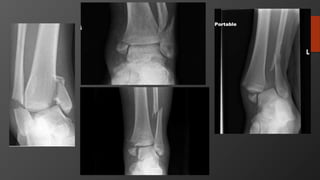
Ankle Fractures
Imaging
• AP, Lateral
• Mortise view
• CT scan
• Especially posterior malleolus
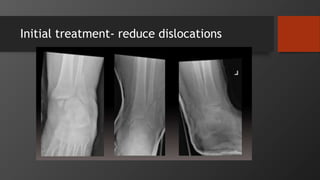
Initial treatment- reduce dislocations
Treatment
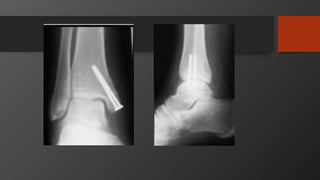
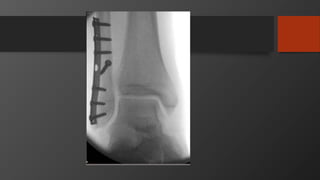
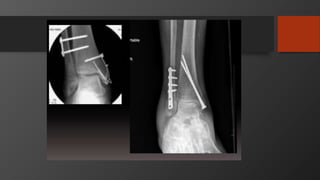
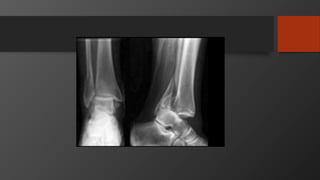
• Isolated lateral malleolus fractures
• Isolated medial malleolus fractures
• Bimalleolar fractures
• Posterior malleolus fractures
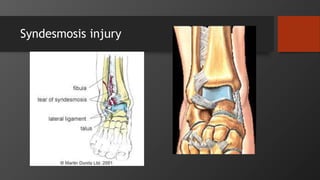
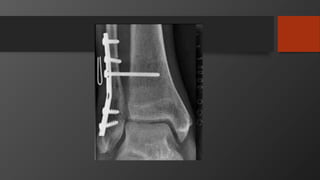
Syndesmosis injury
Special consideration
• Diabetics
• Enhance fixation
• Delay weight-bearing for 8-12 wks
Complications
• Wound complications
• Deep infections
• Posttraumatic arthritis
Talus Fractures
Talus Fractures
• Most common at talar neck
• Axial load with forced dorsiflexion
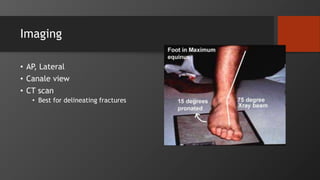
Imaging
• AP, Lateral
• Canale view
• CT scan
• Best for delineating fractures
Treatment
• Non-displaced
• Short-leg cast for 8-12 wks
• Displaced
• ORIF
Complications
• Osteonecrosis
• Varus malunion
• Posttraumatic arthritis
Calcaneal Fractures
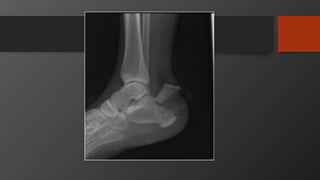
Calcaneal Fractures
• Most frequent tarsal fracture
• High energy, axial loading
• fall from height onto heels
• 10% of fractures associated with compression fractures of thoracic
or lumbar spine (rule out spine injury)
• 75% intra-articular and 10% are bilateral
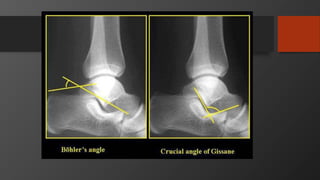
Imaging
• AP, Lateral
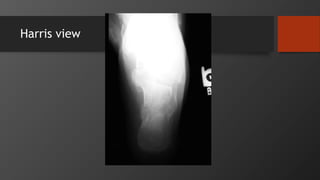
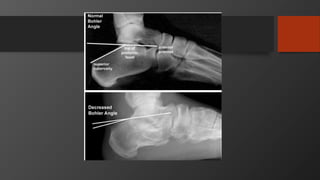
• Harris view
• CT scan
• Gold standard
• MRI
• For calcaneal stress fractures
Harris view
Treatment
• Controversial
• Mostly conservative
• Immobilization and NWB for 10-12 weeks
• Indications for surgery
• Tongue type
• Displaced articular
• Other general indications for surgery in fractures
Complications
• Wound complications
• Posttraumatic arthritis
• Compartment syndrome
• Malunion
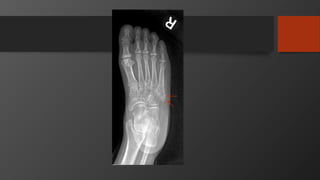
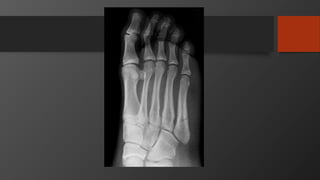
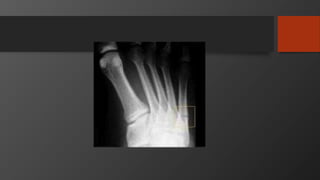
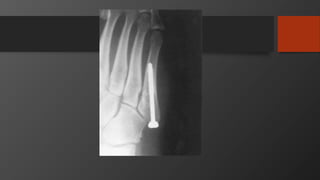
Fifth Metatarsal Fractures
Fifth metatarsal fractures
• Common injury
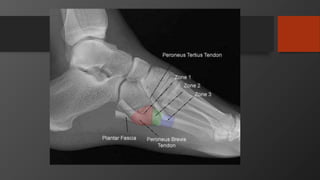
• Divided into 3 zones
• Zone 2 is Jones fracture
• Zone 1 is Pseudojones fracture
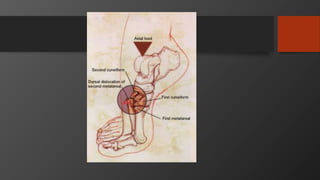
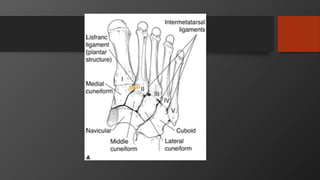
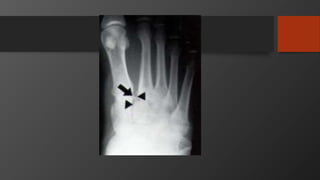
Lisfranc Injury
Patella, tibia, foot and ankle injuries

Patella, tibia, foot and ankle injuries

Editor's Notes

  • #6 Direct anterior blow Typically with knee flexed Failure in compression Often comminuted Extensor mechanism may be intact Indirect mechanism Forceful extensor mechanism contraction that exceeds patellar tensile strength 2 part transverse fracture
  • #8 Lateral is most helpful.
  • #13 Goals Maintain biomechanical/functional integrity Restoration of articular congruity
  • #18 Classification based on position of tibia in relation to femur.