PAST, PRESENT &
FUTURE OF
PLASTICS
-Presented by
P. Deepak Kumar
CONTENTS
• What is Plastic?
• Why Plastic?
• History of Plastic
• Present Scenario of Plastic
• Future Scenario of Plastic
• References
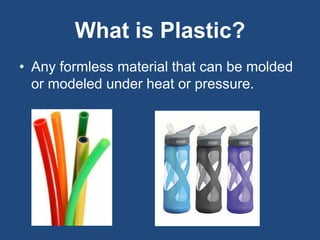
What is Plastic?
• Any formless material that can be molded
or modeled under heat or pressure.
Why Plastic?
• Economic
• More durable
• Good elastic strength
• Easy to molded
History of Plastic
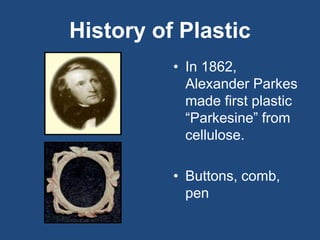
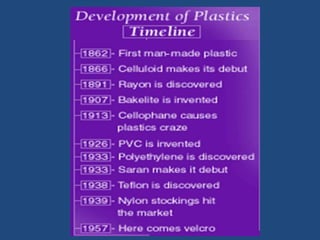
• In 1862,
Alexander Parkes
made first plastic
“Parkesine” from
cellulose.
• Buttons, comb,
pen
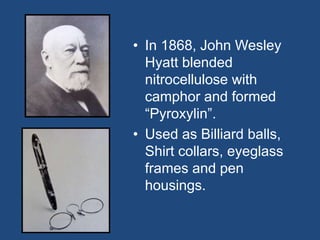
• In 1868, John Wesley
Hyatt blended
nitrocellulose with
camphor and formed
“Pyroxylin”.
• Used as Billiard balls,
Shirt collars, eyeglass
frames and pen
housings.
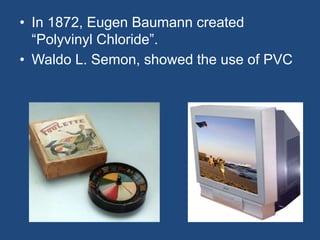
• In 1872, Eugen Baumann created
“Polyvinyl Chloride”.
• Waldo L. Semon, showed the use of PVC
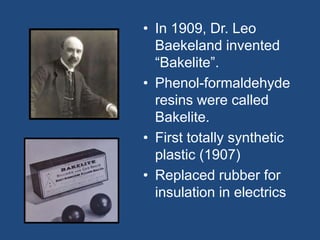
• In 1909, Dr. Leo
Baekeland invented
“Bakelite”.
• Phenol-formaldehyde
resins were called
Bakelite.
• First totally synthetic
plastic (1907)
• Replaced rubber for
insulation in electrics
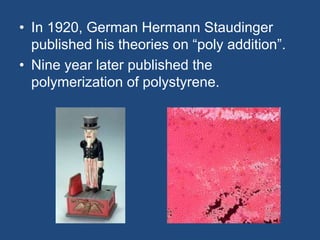
• In 1920, German Hermann Staudinger
published his theories on “poly addition”.
• Nine year later published the
polymerization of polystyrene.
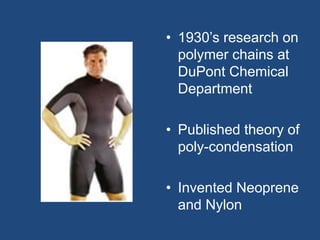
• 1930’s research on
polymer chains at
DuPont Chemical
Department
• Published theory of
poly-condensation
• Invented Neoprene
and Nylon
Present Scenario Of Plastic
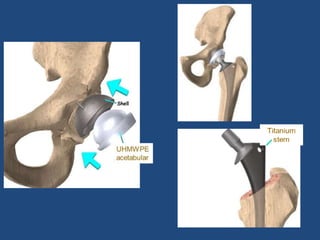
• Plastic used as “artificial hip”.
• The plastic liner is made from Ultra High
Molecular Weight Polyethylene and acts
like a bearing.
• The UHMWPE is extremely tough,
abrasion resistant and has a very low
coefficient of friction.
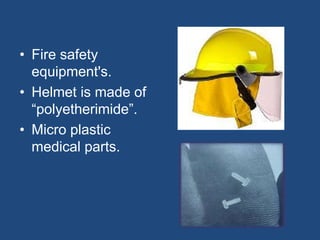
• Fire safety
equipment's.
• Helmet is made of
“polyetherimide”.
• Micro plastic
medical parts.
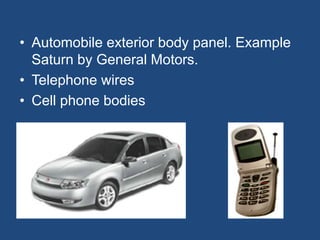
• Automobile exterior body panel. Example
Saturn by General Motors.
• Telephone wires
• Cell phone bodies
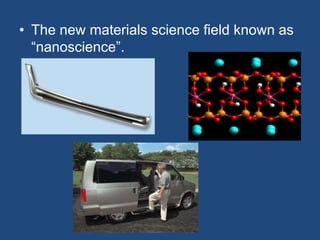
• The new materials science field known as
“nanoscience”.
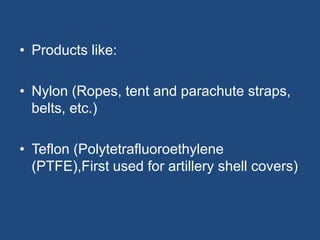
• Products like:
• Nylon (Ropes, tent and parachute straps,
belts, etc.)
• Teflon (Polytetrafluoroethylene
(PTFE),First used for artillery shell covers)
Future Scenario Of Plastic
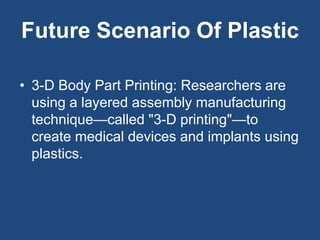
• 3-D Body Part Printing: Researchers are
using a layered assembly manufacturing
technique—called "3-D printing"—to
create medical devices and implants using
plastics.
• Bacteria-Resistant Plastics: These plastics
have "non-stick" surfaces that bacteria
aren't attracted to, which could help
prevent contamination from bacteria
"biofilms."
• OLEDs (Organic Light-Emitting Diodes)
are used for the illumination of mobile
phone, PDA and e-book reader displays –
with polymers as the source of
illumination.
References
• inventors.about.com/library/inventors/blpla
stic.htm
• http://blog.eun.org/futurenergia/2011/03/w
hat_is_the_future_of_plastics.html
• www.lle.mdx.ac.uk/site/docs/dt/Historyofpl
astics.html
• www.americanplasticscouncil.org/benefits/
about_plastics/history.html
Thank You for Attention

Past, present & future of plastics

  • 1.
    PAST, PRESENT & FUTUREOF PLASTICS -Presented by P. Deepak Kumar
  • 2.
    CONTENTS • What isPlastic? • Why Plastic? • History of Plastic • Present Scenario of Plastic • Future Scenario of Plastic • References
  • 3.
    What is Plastic? •Any formless material that can be molded or modeled under heat or pressure.
  • 4.
    Why Plastic? • Economic •More durable • Good elastic strength • Easy to molded
  • 5.
    History of Plastic •In 1862, Alexander Parkes made first plastic “Parkesine” from cellulose. • Buttons, comb, pen
  • 6.
    • In 1868,John Wesley Hyatt blended nitrocellulose with camphor and formed “Pyroxylin”. • Used as Billiard balls, Shirt collars, eyeglass frames and pen housings.
  • 7.
    • In 1872,Eugen Baumann created “Polyvinyl Chloride”. • Waldo L. Semon, showed the use of PVC
  • 8.
    • In 1909,Dr. Leo Baekeland invented “Bakelite”. • Phenol-formaldehyde resins were called Bakelite. • First totally synthetic plastic (1907) • Replaced rubber for insulation in electrics
  • 9.
    • In 1920,German Hermann Staudinger published his theories on “poly addition”. • Nine year later published the polymerization of polystyrene.
  • 10.
    • 1930’s researchon polymer chains at DuPont Chemical Department • Published theory of poly-condensation • Invented Neoprene and Nylon
  • 12.
    Present Scenario OfPlastic • Plastic used as “artificial hip”. • The plastic liner is made from Ultra High Molecular Weight Polyethylene and acts like a bearing. • The UHMWPE is extremely tough, abrasion resistant and has a very low coefficient of friction.
  • 14.
    • Fire safety equipment's. •Helmet is made of “polyetherimide”. • Micro plastic medical parts.
  • 15.
    • Automobile exteriorbody panel. Example Saturn by General Motors. • Telephone wires • Cell phone bodies
  • 16.
    • The newmaterials science field known as “nanoscience”.
  • 17.
    • Products like: •Nylon (Ropes, tent and parachute straps, belts, etc.) • Teflon (Polytetrafluoroethylene (PTFE),First used for artillery shell covers)
  • 18.
    Future Scenario OfPlastic • 3-D Body Part Printing: Researchers are using a layered assembly manufacturing technique—called "3-D printing"—to create medical devices and implants using plastics.
  • 19.
    • Bacteria-Resistant Plastics:These plastics have "non-stick" surfaces that bacteria aren't attracted to, which could help prevent contamination from bacteria "biofilms."
  • 20.
    • OLEDs (OrganicLight-Emitting Diodes) are used for the illumination of mobile phone, PDA and e-book reader displays – with polymers as the source of illumination.
  • 21.
    References • inventors.about.com/library/inventors/blpla stic.htm • http://blog.eun.org/futurenergia/2011/03/w hat_is_the_future_of_plastics.html •www.lle.mdx.ac.uk/site/docs/dt/Historyofpl astics.html • www.americanplasticscouncil.org/benefits/ about_plastics/history.html
  • 22.
    Thank You forAttention