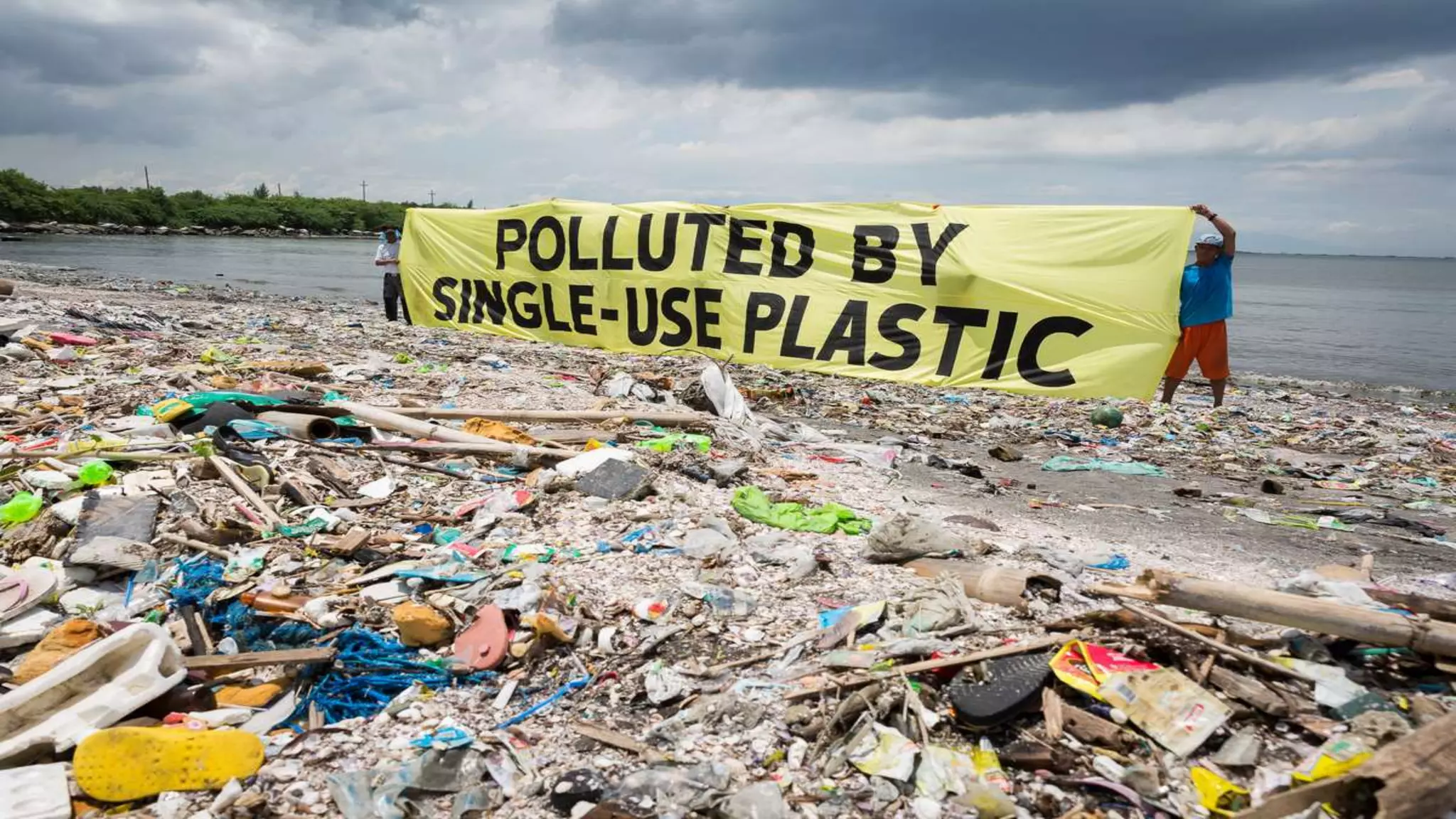
Say NO To Single Use Plastic
Presented
By
P.M.Yaduvanshi
Civil Engineering Department
Sir. Bhavsinhji Polytechnic Institute
B H A V N A G A R
Plastic is a lightweight, hygienic and resistant
material which can be moulded in a variety of ways
and utilized in a wide range of applications.
THERMOPLASTICS
THERMOSETS
• Formed by addition polymerization
• Soften on heating because bonding forces
between chains break by heat or pressure.
• Can be reshaped or reused.
• Usually soft, weak and less brittle.
• Soluble in suitable solvents.
• Formed by condensation polymerization
• Do not soften on heating. On prolonged
heating, charring of polymer is caused.
• Can not be reshaped or reused.
• Usually hard, strong and more brittle.
• Insoluble in organic solvents.
THERMOSETS
THERMOPLASTICS
Single Use Plastics
• Single-use plastics (disposable plastics) are commonly used for
plastic packaging and include items intended to be used only
once before they are thrown away or recycled.
• These include:
Grocery bags
Food packaging
Bottles
Straws,
containers,
cups
cutlery
Grocery bags
Food
packaging
bottles
straws
Cups
& Containers
Cutlery
Plastic Decoration & Thermocol
Items
Global plastic production by industrial
sector, 2015
Plastic packaging waste generation, 2014
(million Mt)
Single-use plastic bags are used to carry
goods and usually provided to customers at
the point of sale.
The most common shopping bags are made of
a type of plastic called polyethylene – or
polythene – a tough, light, flexible, synthetic
resin obtained by polymerizing ethylene.
InSouth Africa, there are so many Plastic Bags
littering the environment that many joke that plastic
bags are “New national flower”
Environmental impacts:
• Take up to thousands of years to decompose
• Hazards to wildlife on land and in the ocean
• Plastic bags can choke waterways and
exacerbate natural disasters. (floods in
Bangladesh )
In 1988, poor drainage resulting from plastic bag
litter clogging drains contributed to devastating
floods in Bangladesh, causing several deaths as
two-thirds of the country was submerged
• Toxic chemicals such as styrene and
benzene (carcinogenic)
• By blocking sewage systems and
providing breeding grounds for
mosquitoes and other pests, plastic
bags can raise the risk of transmission
of vector-borne diseases such as
malaria.
• if ingested by fish or other marine life,
can enter our food chain.
Health and Social impacts
• Plastics blocking the
airways and stomachs of
hundreds of species
• Plastic waste is often burned
for heat or cooking,
exposing people to toxic
emissions
The future costs of removing all single-use plastics accumulating in
the environment is estimated as higher than the costs of preventing
littering today
Economic impacts:
1. Waste Management System Improvements
Segregation of waste at source Segregation of Plastics By Codes
2. Promotion of Eco-friendly Alternatives
3. Voluntary Reduction Strategies
4. Framing Regulatory And Economic Instruments
National-level plastic bag bans
and Styrofoam regulations
National-level plastic bag bans
and Styrofoam regulations
National-level plastic bag bans
and Styrofoam regulations
National-level plastic bag bans
and Styrofoam regulations
5. Social Awareness/ Public Pressure
Despite initial resistance from the
local government, the governor
eventually signed a memorandum of
understanding to phase out plastic
bags by 2018.
Two teenagers campaigned for over
four years to get plastic bags
banned from the island, starting
with a petition that collected over
100,000 signatures.
5. Social Awareness/ Public Pressure
Public action as driver of change
BEFORE AFTER2015 2017
Versova Beach, Mumbai
Plastics – Use in Construction Industry
Roads with use of plastic waste
Plastic roads vs conventional roads
• Overall reduction in bitumen consumption by 10‐15%
• Enhanced load carrying strength
• Less wear and tear, i.e. longer life
• Laying 1 Km of road requires 10 Lakh carry bags
• Prevents release of 3 tonnes of CO2 (through disposal by burning)
into the atmosphere
• Increased road strength (Marshall Stability Value)
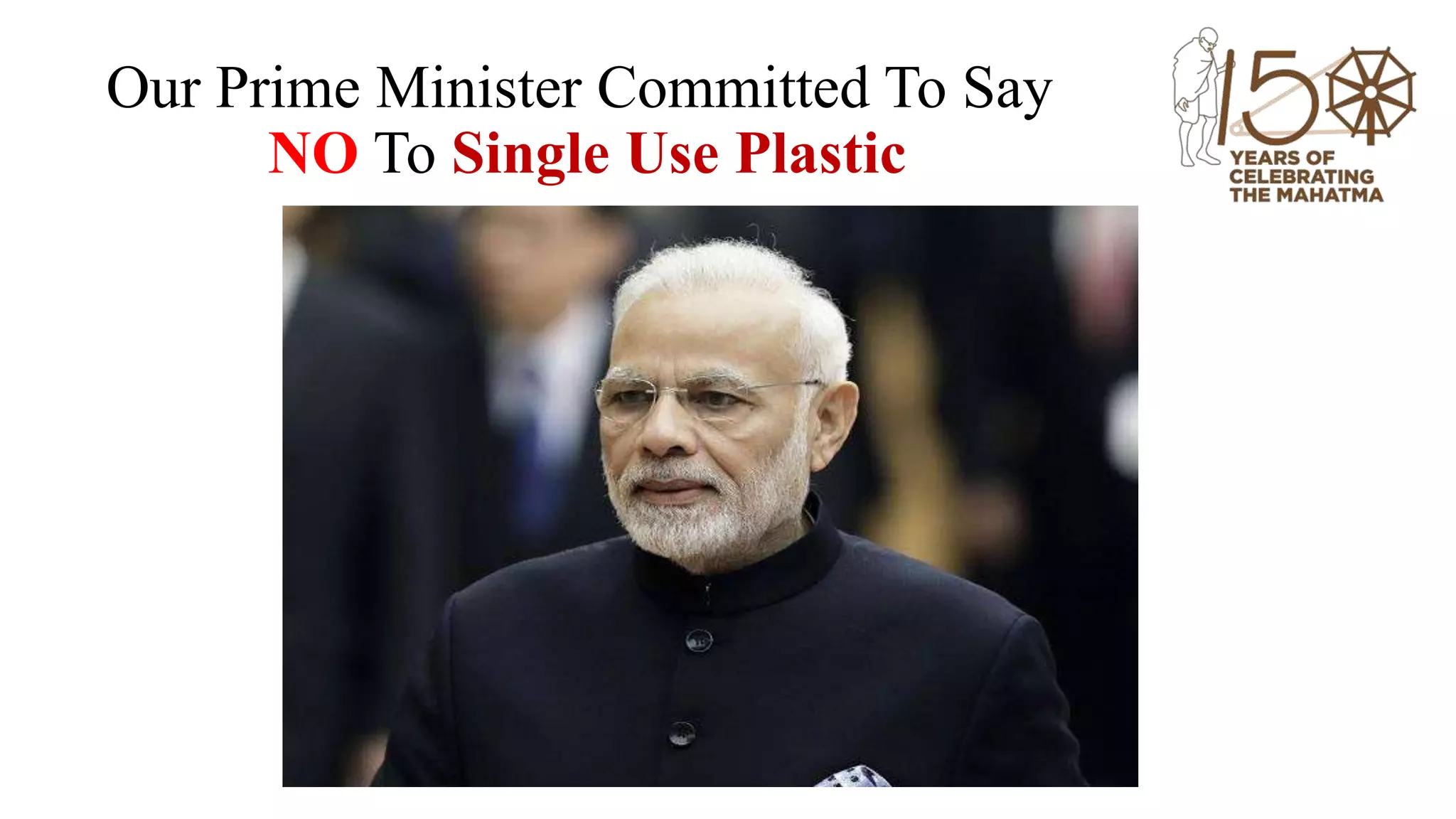
Our Prime Minister Committed To Say
NO To Single Use Plastic
REFERANCES
• Single Use Plastic, A Roadmap For Sustainability By….
United nation Environment Programme, 2018.
https://reloopplatform.eu/unep-report-on-single-use-
plastics/#targetText=On%205%20June%202018%2C%20the,Plastics%3
A%20A%20Roadmap%20for%20Sustainability.&targetText=The%20rep
ort%20also%20looks%20at,and%20draws%20lessons%20for%20policy
makers.
• Google
• Newspapers.
• Slideshare.com
Thanks A Lot For Being With me

SAY NO TO SINGLE USE PLASTIC

  • 2.
    Say NO ToSingle Use Plastic Presented By P.M.Yaduvanshi Civil Engineering Department Sir. Bhavsinhji Polytechnic Institute B H A V N A G A R
  • 4.
    Plastic is alightweight, hygienic and resistant material which can be moulded in a variety of ways and utilized in a wide range of applications. THERMOPLASTICS THERMOSETS
  • 5.
    • Formed byaddition polymerization • Soften on heating because bonding forces between chains break by heat or pressure. • Can be reshaped or reused. • Usually soft, weak and less brittle. • Soluble in suitable solvents. • Formed by condensation polymerization • Do not soften on heating. On prolonged heating, charring of polymer is caused. • Can not be reshaped or reused. • Usually hard, strong and more brittle. • Insoluble in organic solvents. THERMOSETS THERMOPLASTICS
  • 7.
    Single Use Plastics •Single-use plastics (disposable plastics) are commonly used for plastic packaging and include items intended to be used only once before they are thrown away or recycled. • These include: Grocery bags Food packaging Bottles Straws, containers, cups cutlery
  • 10.
  • 11.
  • 12.
  • 13.
    Plastic Decoration &Thermocol Items
  • 14.
    Global plastic productionby industrial sector, 2015
  • 15.
    Plastic packaging wastegeneration, 2014 (million Mt)
  • 17.
    Single-use plastic bagsare used to carry goods and usually provided to customers at the point of sale. The most common shopping bags are made of a type of plastic called polyethylene – or polythene – a tough, light, flexible, synthetic resin obtained by polymerizing ethylene. InSouth Africa, there are so many Plastic Bags littering the environment that many joke that plastic bags are “New national flower”
  • 20.
    Environmental impacts: • Takeup to thousands of years to decompose • Hazards to wildlife on land and in the ocean • Plastic bags can choke waterways and exacerbate natural disasters. (floods in Bangladesh ) In 1988, poor drainage resulting from plastic bag litter clogging drains contributed to devastating floods in Bangladesh, causing several deaths as two-thirds of the country was submerged
  • 21.
    • Toxic chemicalssuch as styrene and benzene (carcinogenic) • By blocking sewage systems and providing breeding grounds for mosquitoes and other pests, plastic bags can raise the risk of transmission of vector-borne diseases such as malaria. • if ingested by fish or other marine life, can enter our food chain. Health and Social impacts
  • 22.
    Health and Socialimpacts • Plastics blocking the airways and stomachs of hundreds of species • Plastic waste is often burned for heat or cooking, exposing people to toxic emissions
  • 23.
    The future costsof removing all single-use plastics accumulating in the environment is estimated as higher than the costs of preventing littering today Economic impacts:
  • 25.
    1. Waste ManagementSystem Improvements
  • 26.
    1. Waste ManagementSystem Improvements Segregation of waste at source Segregation of Plastics By Codes
  • 27.
    2. Promotion ofEco-friendly Alternatives
  • 28.
  • 29.
    4. Framing RegulatoryAnd Economic Instruments
  • 31.
    National-level plastic bagbans and Styrofoam regulations
  • 32.
    National-level plastic bagbans and Styrofoam regulations
  • 33.
    National-level plastic bagbans and Styrofoam regulations
  • 34.
    National-level plastic bagbans and Styrofoam regulations
  • 35.
    5. Social Awareness/Public Pressure
  • 36.
    Despite initial resistancefrom the local government, the governor eventually signed a memorandum of understanding to phase out plastic bags by 2018. Two teenagers campaigned for over four years to get plastic bags banned from the island, starting with a petition that collected over 100,000 signatures. 5. Social Awareness/ Public Pressure
  • 37.
    Public action asdriver of change BEFORE AFTER2015 2017 Versova Beach, Mumbai
  • 38.
    Plastics – Usein Construction Industry Roads with use of plastic waste
  • 39.
    Plastic roads vsconventional roads • Overall reduction in bitumen consumption by 10‐15% • Enhanced load carrying strength • Less wear and tear, i.e. longer life • Laying 1 Km of road requires 10 Lakh carry bags • Prevents release of 3 tonnes of CO2 (through disposal by burning) into the atmosphere • Increased road strength (Marshall Stability Value)
  • 42.
    Our Prime MinisterCommitted To Say NO To Single Use Plastic
  • 49.
    REFERANCES • Single UsePlastic, A Roadmap For Sustainability By…. United nation Environment Programme, 2018. https://reloopplatform.eu/unep-report-on-single-use- plastics/#targetText=On%205%20June%202018%2C%20the,Plastics%3 A%20A%20Roadmap%20for%20Sustainability.&targetText=The%20rep ort%20also%20looks%20at,and%20draws%20lessons%20for%20policy makers. • Google • Newspapers. • Slideshare.com
  • 50.
    Thanks A LotFor Being With me