BUSINESS PLAN:
PLASTICS RECYCLING
WHAT IS PLASTIC RECYCLING?
Plastic recycling is the process of recovering
scrap or waste plastics and reprocessing
the material into useful products.
 Sometimes it can be completely different
from their original state.
 Plastic recycling includes melting down
unused plastic type material and then
casting them as useful plastics.
Things Needed
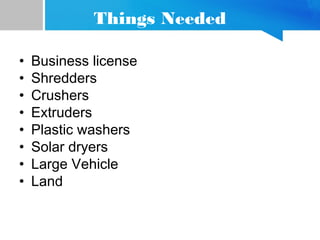
• Business license
• Shredders
• Crushers
• Extruders
• Plastic washers
• Solar dryers
• Large Vehicle
• Land
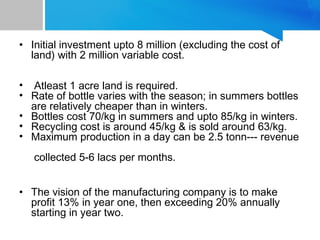
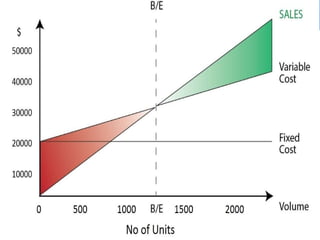
• Initial investment upto 8 million (excluding the cost of
land) with 2 million variable cost.
• Atleast 1 acre land is required.
• Rate of bottle varies with the season; in summers bottles
are relatively cheaper than in winters.
• Bottles cost 70/kg in summers and upto 85/kg in winters.
• Recycling cost is around 45/kg & is sold around 63/kg.
• Maximum production in a day can be 2.5 tonn--- revenue
collected 5-6 lacs per months.
• The vision of the manufacturing company is to make
profit 13% in year one, then exceeding 20% annually
starting in year two.
PROCESS :
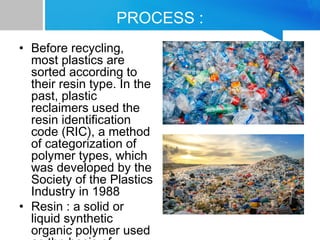
• Before recycling,
most plastics are
sorted according to
their resin type. In the
past, plastic
reclaimers used the
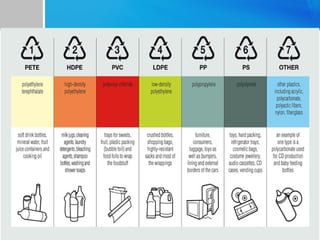
resin identification
code (RIC), a method
of categorization of
polymer types, which
was developed by the
Society of the Plastics
Industry in 1988
• Resin : a solid or
liquid synthetic
organic polymer used
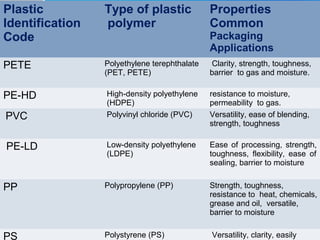
Plastic
Identification
Code
Type of plastic
polymer
Properties
Common
Packaging
Applications
PETE Polyethylene terephthalate
(PET, PETE)
Clarity, strength, toughness,
barrier to gas and moisture.
PE-HD High-density polyethylene
(HDPE)
resistance to moisture,
permeability to gas.
PVC Polyvinyl chloride (PVC) Versatility, ease of blending,
strength, toughness
PE-LD Low-density polyethylene
(LDPE)
Ease of processing, strength,
toughness, flexibility, ease of
sealing, barrier to moisture
PP Polypropylene (PP) Strength, toughness,
resistance to heat, chemicals,
grease and oil, versatile,
barrier to moisture
PS Polystyrene (PS) Versatility, clarity, easily
5 STAGES OF
PLASTIC RECYCLING
PROCESS:
Stage 1 : Sorting the plastic
Plastic waste needs to be collected by the
recycling company, once the plastic
arrives at the recycling plant the first stage
begins to sort the plastic into the specific
types.
In this methods sorting plastic waste into
different categories before going to the
next stage in the recycling process.
Stage 2: Washing Waste
Plastic
• Once plastic waste has been identified
and separated into one of its many forms
the cleaning process can begin, this
usually starts with washing to remove
paper labels, adhesives and other
impurities, all the labels on your plastic
containers, bottles and even your wheelie
bin need to be completely removed as
these will lower the quality of the finished
recycled plastic.
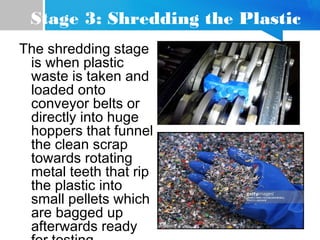
Stage 3: Shredding the Plastic
The shredding stage
is when plastic
waste is taken and
loaded onto
conveyor belts or
directly into huge
hoppers that funnel
the clean scrap
towards rotating
metal teeth that rip
the plastic into
small pellets which
are bagged up
afterwards ready
Stage 4: Identify and classify the
Plastic
Once the shredded plastic has been bagged
it is then chemically tested and labelled as
to its exact specification, this R-Grade of
plastic can be used to add to a mix of
virgin plastic in the manufacturing run,
alternatively the R-Grade plastic can be
further recycled.
]
Stage 5: Extruding
This is the final stage in
the recycling process
of plastic. This
process involves
melting clean
shredded plastic and
extruding into plastic
roll stock sheet.
This machine is quite
expensive so we'll
have it done from
local processors.
Advantages of Plan:
• Raw material is available.
• Reduce the waste of PET
(Polyethyleneterephthalate) type
material.
• Reduce environmental pollution,
specially soil pollution.
• Recycling Plastics Conserves Energy
and Natural Resources.
• Recycling Plastics is Relatively Easy
Market Summary:
• The supply of roll stock sheet as raw at the
Thermofermers Plastic Industry. e.g B2B
Pakistan, INSTAPLAST, Synthetic Products
Enterprises Limited.
• In some plastic mills e.g Pakistan Plastic
Manufacturers Association, A.H.Y Plastic
Industry, We Buy - Shazil Pakistan Pvt Ltd.
• In some other stores (depending on demand).
MARKETING BUSINESS
• In addition to marketing our recycling
business using traditional methods, such
as posting fliers, advertising in print,
creating a website and posting in online
news publications, we'll also consider
digital, mobile marketing and social-media
advertising.
TIP WE GOT FROM THOSE
ALREADY IN THIS BUSINESS
You may want to see if you can lease the
equipment rather than buy the equipment
and machinery you need to start and run
the recycling plant. Leasing the machinery
may be more cost effective than
purchasing the equipment and
maintenance, and repair plans are
typically included in leasing plans, while
purchased machines are your
responsibility for repair and maintenance
costs.

Plastic Recycling

  • 1.
  • 2.
    WHAT IS PLASTICRECYCLING? Plastic recycling is the process of recovering scrap or waste plastics and reprocessing the material into useful products.  Sometimes it can be completely different from their original state.  Plastic recycling includes melting down unused plastic type material and then casting them as useful plastics.
  • 3.
    Things Needed • Businesslicense • Shredders • Crushers • Extruders • Plastic washers • Solar dryers • Large Vehicle • Land
  • 4.
    • Initial investmentupto 8 million (excluding the cost of land) with 2 million variable cost. • Atleast 1 acre land is required. • Rate of bottle varies with the season; in summers bottles are relatively cheaper than in winters. • Bottles cost 70/kg in summers and upto 85/kg in winters. • Recycling cost is around 45/kg & is sold around 63/kg. • Maximum production in a day can be 2.5 tonn--- revenue collected 5-6 lacs per months. • The vision of the manufacturing company is to make profit 13% in year one, then exceeding 20% annually starting in year two.
  • 6.
    PROCESS : • Beforerecycling, most plastics are sorted according to their resin type. In the past, plastic reclaimers used the resin identification code (RIC), a method of categorization of polymer types, which was developed by the Society of the Plastics Industry in 1988 • Resin : a solid or liquid synthetic organic polymer used
  • 8.
    Plastic Identification Code Type of plastic polymer Properties Common Packaging Applications PETEPolyethylene terephthalate (PET, PETE) Clarity, strength, toughness, barrier to gas and moisture. PE-HD High-density polyethylene (HDPE) resistance to moisture, permeability to gas. PVC Polyvinyl chloride (PVC) Versatility, ease of blending, strength, toughness PE-LD Low-density polyethylene (LDPE) Ease of processing, strength, toughness, flexibility, ease of sealing, barrier to moisture PP Polypropylene (PP) Strength, toughness, resistance to heat, chemicals, grease and oil, versatile, barrier to moisture PS Polystyrene (PS) Versatility, clarity, easily
  • 9.
    5 STAGES OF PLASTICRECYCLING PROCESS:
  • 10.
    Stage 1 :Sorting the plastic Plastic waste needs to be collected by the recycling company, once the plastic arrives at the recycling plant the first stage begins to sort the plastic into the specific types. In this methods sorting plastic waste into different categories before going to the next stage in the recycling process.
  • 11.
    Stage 2: WashingWaste Plastic • Once plastic waste has been identified and separated into one of its many forms the cleaning process can begin, this usually starts with washing to remove paper labels, adhesives and other impurities, all the labels on your plastic containers, bottles and even your wheelie bin need to be completely removed as these will lower the quality of the finished recycled plastic.
  • 12.
    Stage 3: Shreddingthe Plastic The shredding stage is when plastic waste is taken and loaded onto conveyor belts or directly into huge hoppers that funnel the clean scrap towards rotating metal teeth that rip the plastic into small pellets which are bagged up afterwards ready
  • 13.
    Stage 4: Identifyand classify the Plastic Once the shredded plastic has been bagged it is then chemically tested and labelled as to its exact specification, this R-Grade of plastic can be used to add to a mix of virgin plastic in the manufacturing run, alternatively the R-Grade plastic can be further recycled.
  • 14.
    ] Stage 5: Extruding Thisis the final stage in the recycling process of plastic. This process involves melting clean shredded plastic and extruding into plastic roll stock sheet. This machine is quite expensive so we'll have it done from local processors.
  • 15.
    Advantages of Plan: •Raw material is available. • Reduce the waste of PET (Polyethyleneterephthalate) type material. • Reduce environmental pollution, specially soil pollution. • Recycling Plastics Conserves Energy and Natural Resources. • Recycling Plastics is Relatively Easy
  • 16.
    Market Summary: • Thesupply of roll stock sheet as raw at the Thermofermers Plastic Industry. e.g B2B Pakistan, INSTAPLAST, Synthetic Products Enterprises Limited. • In some plastic mills e.g Pakistan Plastic Manufacturers Association, A.H.Y Plastic Industry, We Buy - Shazil Pakistan Pvt Ltd. • In some other stores (depending on demand).
  • 17.
    MARKETING BUSINESS • Inaddition to marketing our recycling business using traditional methods, such as posting fliers, advertising in print, creating a website and posting in online news publications, we'll also consider digital, mobile marketing and social-media advertising.
  • 18.
    TIP WE GOTFROM THOSE ALREADY IN THIS BUSINESS You may want to see if you can lease the equipment rather than buy the equipment and machinery you need to start and run the recycling plant. Leasing the machinery may be more cost effective than purchasing the equipment and maintenance, and repair plans are typically included in leasing plans, while purchased machines are your responsibility for repair and maintenance costs.