PASSIVE Present &  Past
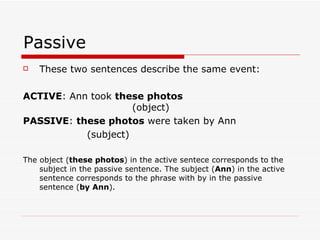
Passive These two sentences describe the same event: ACTIVE : Ann took  these photos       (object) PASSIVE :  these photos  were taken by Ann (subject) The object ( these photos ) in the active sentece corresponds to the subject in the passive sentence. The subject ( Ann ) in the active sentence corresponds to the phrase with by in the passive sentence ( by Ann ).
PASSIVE Here are some passive sentences: It will be taken, they will be taken. Will (Future) It has been taken; they have been taken. Present Perfect It was taken, they were taken Past Simple It is taken, they are taken Present Simple SUBJECT +  BE  + PAST PARTICIPLE
Passive We use the passive when we do not know who did the action or when it is not important to say who did it: Our car  was made  in Korea. The work  will be finished  today.
Passive We also use the passive to make the topic of a conversation into the subject of the sentence. For example, if a dog  bit  a birl, we can say: A: What did the dog do? (topic: the dog) B: It  bit  the girl. (active) Or: A: What happened to the girl? (topic: the girl) B: She was bitten by a dog: (passive)
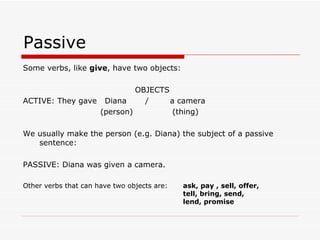
Passive Some verbs, like  give , have two objects:   OBJECTS ACTIVE: They gave  Diana  /  a camera   (person)   (thing) We usually make the person (e.g. Diana) the subject of a passive sentence: PASSIVE: Diana was given a camera. Other verbs that can have two objects are:  ask, pay , sell, offer,  tell, bring, send,  lend, promise
Passive Present Simple Passive Questions: How  are   contestants   selected ? subject Are   most candidates   accepted ? subject
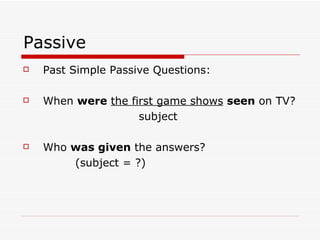
Passive Past Simple Passive Questions: When  were   the first game shows   seen  on TV? subject Who  was given  the answers? (subject = ?)

Passive

  • 1.
  • 2.
    Passive These twosentences describe the same event: ACTIVE : Ann took these photos (object) PASSIVE : these photos were taken by Ann (subject) The object ( these photos ) in the active sentece corresponds to the subject in the passive sentence. The subject ( Ann ) in the active sentence corresponds to the phrase with by in the passive sentence ( by Ann ).
  • 3.
    PASSIVE Here aresome passive sentences: It will be taken, they will be taken. Will (Future) It has been taken; they have been taken. Present Perfect It was taken, they were taken Past Simple It is taken, they are taken Present Simple SUBJECT + BE + PAST PARTICIPLE
  • 4.
    Passive We usethe passive when we do not know who did the action or when it is not important to say who did it: Our car was made in Korea. The work will be finished today.
  • 5.
    Passive We alsouse the passive to make the topic of a conversation into the subject of the sentence. For example, if a dog bit a birl, we can say: A: What did the dog do? (topic: the dog) B: It bit the girl. (active) Or: A: What happened to the girl? (topic: the girl) B: She was bitten by a dog: (passive)
  • 6.
    Passive Some verbs,like give , have two objects: OBJECTS ACTIVE: They gave Diana / a camera (person) (thing) We usually make the person (e.g. Diana) the subject of a passive sentence: PASSIVE: Diana was given a camera. Other verbs that can have two objects are: ask, pay , sell, offer, tell, bring, send, lend, promise
  • 7.
    Passive Present SimplePassive Questions: How are contestants selected ? subject Are most candidates accepted ? subject
  • 8.
    Passive Past SimplePassive Questions: When were the first game shows seen on TV? subject Who was given the answers? (subject = ?)