PASSIVE VOICE
PASSIVE VERB FORMS A passive verb is a form of  be + past participle. Present Simple Present Continuous Present Perfect Past Simple Past Continuos Past Perfect Future Modal Verb ACTIVE We  bake  the bread here We  are baking  the bread We  have baked  the bread We  baked  the bread We  were baking  the bread We  had baked  the bread We  will bake  the bread We  should bake  the bread PASSIVE The bread  is baked  here The bread  is being baked The bread  has been baked The bread  was baked The bread  was being baked The bread  had been baked The bread  will be baked The bread  should be baked
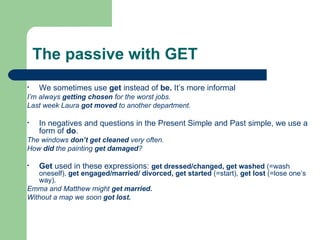
The passive with GET We sometimes use  get  instead of  be.  It’s more informal I’m always  getting chosen  for the worst jobs. Last week Laura  got moved  to another department. In negatives and questions in the Present Simple and Past simple, we use a form of  do . The windows  don’t get cleaned  very often. How  did  the painting  get damaged ? Get  used in these expressions:  get dressed/changed, get washed  (=wash oneself),  get engaged/married/ divorced, get started  (=start),  get lost  (=lose one’s way). Emma and Matthew might  get married. Without a map we soon  got lost.
ACTIVE AND PASSIVE What is the sentence about? Active:  Alexander Graham Bell  invented the phone. Passive:  The phone  was invented by A.G.Bell. Both have the same meaning, but they are about different things. One is about  Bell,  and the other about the  phone .  The  subject  is the thing we are talking about. The new information about the subject comes at the end. When the subject is the person or thing doing the action (the agent), we use an active verb. When the subject is not the agent (is not doing the action), we use a passive verb.
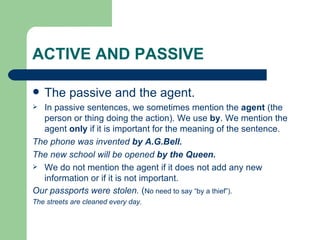
ACTIVE AND PASSIVE The passive and the agent. In passive sentences, we sometimes mention the  agent  (the person or thing doing the action). We use  by . We mention the agent  only  if it is important for the meaning of the sentence. The phone was invented  by A.G.Bell. The new school will be opened  by the Queen. We do not mention the agent if it does not add any new information or if it is not important. Our passports were stolen.  ( No need to say “by a thief”). The streets are cleaned every day.
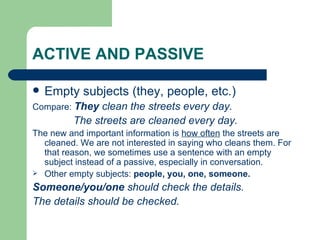
ACTIVE AND PASSIVE Empty subjects (they, people, etc.) Compare:  They  clean the streets every day.   The streets are cleaned every day. The new and important information is  how often  the streets are cleaned. We are not interested in saying who cleans them. For that reason, we sometimes use a sentence with an empty subject instead of a passive, especially in conversation. Other empty subjects:  people, you, one, someone. Someone/you/one  should check the details. The details should be checked.
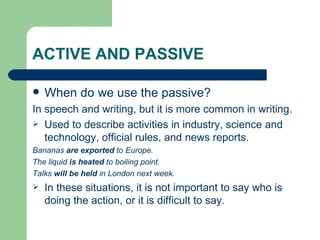
ACTIVE AND PASSIVE When do we use the passive? In speech and writing, but it is more common in writing. Used to describe activities in industry, science and technology, official rules, and news reports.  Bananas  are exported  to Europe. The liquid  is heated  to boiling point. Talks  will be held  in London next week. In these situations, it is not important to say who is doing the action, or it is difficult to say.
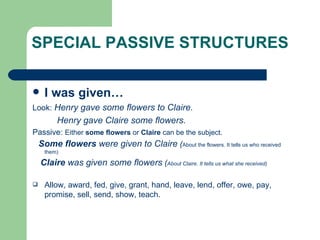
SPECIAL PASSIVE STRUCTURES I was given… Look:  Henry gave some flowers to Claire. Henry gave Claire some flowers. Passive:  Either  some flowers  or  Claire  can be the subject. Some flowers  were given to Claire  ( About the flowers. It tells us who received them) Claire  was given some flowers  ( About Claire. It tells us what she received)   Allow, award, fed, give, grant, hand, leave, lend, offer, owe, pay, promise, sell, send, show, teach.
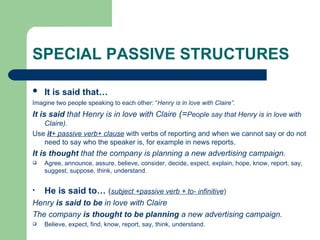
SPECIAL PASSIVE STRUCTURES It is said that…   Imagine two people speaking to each other: “ Henry is in love with Claire”. It is said  that Henry is in love with Claire  (= People say that Henry is in love with Claire).  Use  it + passive verb+ clause  with verbs of reporting and when we cannot say or do not need to say who the speaker is, for example in news reports. It is thought   that the company is planning a new advertising campaign. Agree, announce, assure, believe, consider, decide, expect, explain, hope, know, report, say, suggest, suppose, think, understand. He is said to…  ( subject +passive verb + to- infinitive ) Henry  is said to be  in love with Claire The company  is thought to be planning  a new advertising campaign. Believe, expect, find, know, report, say, think, understand.
Have/ get something done Compare: Claire decorated the room  ( She did the work herself). Claire  had  the room  decorated  ( She arranged for a decorator to do it for her as a professional service) I  had  my hair  cut I  didn’t have  my hair  cut Where  did  you  have  your hair  cut ? Get  is more informal than  have.

Passive voice presentación 3º

  • 1.
  • 2.
    PASSIVE VERB FORMSA passive verb is a form of be + past participle. Present Simple Present Continuous Present Perfect Past Simple Past Continuos Past Perfect Future Modal Verb ACTIVE We bake the bread here We are baking the bread We have baked the bread We baked the bread We were baking the bread We had baked the bread We will bake the bread We should bake the bread PASSIVE The bread is baked here The bread is being baked The bread has been baked The bread was baked The bread was being baked The bread had been baked The bread will be baked The bread should be baked
  • 3.
    The passive withGET We sometimes use get instead of be. It’s more informal I’m always getting chosen for the worst jobs. Last week Laura got moved to another department. In negatives and questions in the Present Simple and Past simple, we use a form of do . The windows don’t get cleaned very often. How did the painting get damaged ? Get used in these expressions: get dressed/changed, get washed (=wash oneself), get engaged/married/ divorced, get started (=start), get lost (=lose one’s way). Emma and Matthew might get married. Without a map we soon got lost.
  • 4.
    ACTIVE AND PASSIVEWhat is the sentence about? Active: Alexander Graham Bell invented the phone. Passive: The phone was invented by A.G.Bell. Both have the same meaning, but they are about different things. One is about Bell, and the other about the phone . The subject is the thing we are talking about. The new information about the subject comes at the end. When the subject is the person or thing doing the action (the agent), we use an active verb. When the subject is not the agent (is not doing the action), we use a passive verb.
  • 5.
    ACTIVE AND PASSIVEThe passive and the agent. In passive sentences, we sometimes mention the agent (the person or thing doing the action). We use by . We mention the agent only if it is important for the meaning of the sentence. The phone was invented by A.G.Bell. The new school will be opened by the Queen. We do not mention the agent if it does not add any new information or if it is not important. Our passports were stolen. ( No need to say “by a thief”). The streets are cleaned every day.
  • 6.
    ACTIVE AND PASSIVEEmpty subjects (they, people, etc.) Compare: They clean the streets every day. The streets are cleaned every day. The new and important information is how often the streets are cleaned. We are not interested in saying who cleans them. For that reason, we sometimes use a sentence with an empty subject instead of a passive, especially in conversation. Other empty subjects: people, you, one, someone. Someone/you/one should check the details. The details should be checked.
  • 7.
    ACTIVE AND PASSIVEWhen do we use the passive? In speech and writing, but it is more common in writing. Used to describe activities in industry, science and technology, official rules, and news reports. Bananas are exported to Europe. The liquid is heated to boiling point. Talks will be held in London next week. In these situations, it is not important to say who is doing the action, or it is difficult to say.
  • 8.
    SPECIAL PASSIVE STRUCTURESI was given… Look: Henry gave some flowers to Claire. Henry gave Claire some flowers. Passive: Either some flowers or Claire can be the subject. Some flowers were given to Claire ( About the flowers. It tells us who received them) Claire was given some flowers ( About Claire. It tells us what she received) Allow, award, fed, give, grant, hand, leave, lend, offer, owe, pay, promise, sell, send, show, teach.
  • 9.
    SPECIAL PASSIVE STRUCTURESIt is said that… Imagine two people speaking to each other: “ Henry is in love with Claire”. It is said that Henry is in love with Claire (= People say that Henry is in love with Claire). Use it + passive verb+ clause with verbs of reporting and when we cannot say or do not need to say who the speaker is, for example in news reports. It is thought that the company is planning a new advertising campaign. Agree, announce, assure, believe, consider, decide, expect, explain, hope, know, report, say, suggest, suppose, think, understand. He is said to… ( subject +passive verb + to- infinitive ) Henry is said to be in love with Claire The company is thought to be planning a new advertising campaign. Believe, expect, find, know, report, say, think, understand.
  • 10.
    Have/ get somethingdone Compare: Claire decorated the room ( She did the work herself). Claire had the room decorated ( She arranged for a decorator to do it for her as a professional service) I had my hair cut I didn’t have my hair cut Where did you have your hair cut ? Get is more informal than have.