Present Perfect I


   Present Perfect with “for, since,
   already, just, and yet”
Just, already and yet
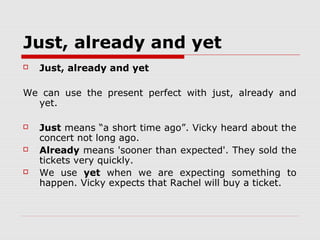
   Just, already and yet

We can use the present perfect with just, already and
  yet.

   Just means “a short time ago”. Vicky heard about the
    concert not long ago.
   Already means 'sooner than expected'. They sold the
    tickets very quickly.
   We use yet when we are expecting something to
    happen. Vicky expects that Rachel will buy a ticket.
Just, already and yet
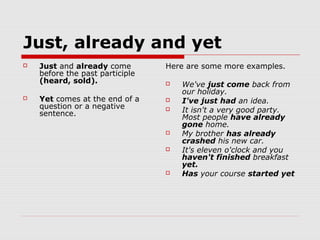
   Just and already come        Here are some more examples.
    before the past participle
    (heard, sold).                  We've just come back from
                                     our holiday.
   Yet comes at the end of a       I've just had an idea.
    question or a negative          It isn't a very good party.
    sentence.                        Most people have already
                                     gone home.
                                    My brother has already
                                     crashed his new car.
                                    It's eleven o'clock and you
                                     haven't finished breakfast
                                     yet.
                                    Has your course started yet
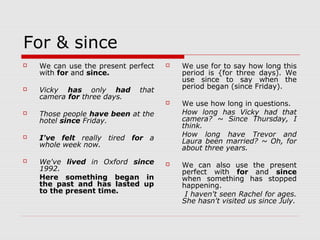
For & since
   We can use the present perfect      We use for to say how long this
    with for and since.                  period is {for three days). We
                                         use since to say when the
                                         period began (since Friday).
   Vicky has only had        that
    camera for three days.
                                        We use how long in questions.
   Those people have been at the        How long has Vicky had that
    hotel since Friday.                  camera? ~ Since Thursday, I
                                         think.
                                         How long have Trevor and
   I've felt really tired for a         Laura been married? ~ Oh, for
    whole week now.                      about three years.
   We've lived in Oxford since         We can also use the present
    1992.                                perfect with for and since
    Here something began in              when something has stopped
    the past and has lasted up           happening.
    to the present time.                  I haven't seen Rachel for ages.
                                         She hasn't visited us since July.

Present perfect just, already, for, since

  • 1.
    Present Perfect I Present Perfect with “for, since, already, just, and yet”
  • 2.
    Just, already andyet  Just, already and yet We can use the present perfect with just, already and yet.  Just means “a short time ago”. Vicky heard about the concert not long ago.  Already means 'sooner than expected'. They sold the tickets very quickly.  We use yet when we are expecting something to happen. Vicky expects that Rachel will buy a ticket.
  • 3.
    Just, already andyet  Just and already come Here are some more examples. before the past participle (heard, sold).  We've just come back from our holiday.  Yet comes at the end of a  I've just had an idea. question or a negative  It isn't a very good party. sentence. Most people have already gone home.  My brother has already crashed his new car.  It's eleven o'clock and you haven't finished breakfast yet.  Has your course started yet
  • 4.
    For & since  We can use the present perfect  We use for to say how long this with for and since. period is {for three days). We use since to say when the period began (since Friday).  Vicky has only had that camera for three days.  We use how long in questions.  Those people have been at the How long has Vicky had that hotel since Friday. camera? ~ Since Thursday, I think. How long have Trevor and  I've felt really tired for a Laura been married? ~ Oh, for whole week now. about three years.  We've lived in Oxford since  We can also use the present 1992. perfect with for and since Here something began in when something has stopped the past and has lasted up happening. to the present time. I haven't seen Rachel for ages. She hasn't visited us since July.