Recognizing the Parts of Speech

This chart lists the various functions words can perform in a sentence and the part of speech
that performs each function:


                         Function                                 Part of Speech
                         Naming                                   Nouns, Pronouns
                         Predicating (stating or asserting)       Verbs
                         Modifying                                Adjectives, Adverbs
                         Connecting                               Prepositions, Conjunctions

This chart summarizes the parts of speech:


 Part of Speech                 Uses in the Sentence                        Examples
 Verb                           Indicator of action or state of being       Tom wrote the report.
                                                                            They are astronomers.
 Noun                           Subject, object                             Kay gave Ron the list of names.
 Pronoun                        Substitute for nouns                        He will return it to her later.
 Adjective                      Modifies nouns -                            Juan bought a used car.
                                 and pronouns -                             He was excited about it.
 ----------------------------   --------------------------------------      -------------------------------------
 Articles: a, an,the            [used to introduce nouns]                   the book - specific
                                                                             a book, an apple - general
 Adverb                         Modifies verbs -                            The diagram was clearly
                                adjectives -                                presented.
                                adverbs -                                   It was a very interesting study.
                                or whole clauses -                          The speech was entirely too long.
                                (tells how, where, when, to what degree)    Indeed, we are ready.
 Preposition                    Word used before a noun or pronoun He was in a hurry.
                                to create a phrase that relates to He answered without thinking.
                                another word                       She visited for four days.
 Conjunction                    Connector of words -                        Tom and Harry left for work.
                                phrases -                                   You can go with me or without
                                clauses -                                   me.
                                (may be coordinating or subordinating)      He arrived before we ate.
 Interjection                   Expression of emotion                       Good grief!
                                (unrelated grammatically to the rest        Ouch, that hurt!
                                of the sentence)                            Well, we tried.
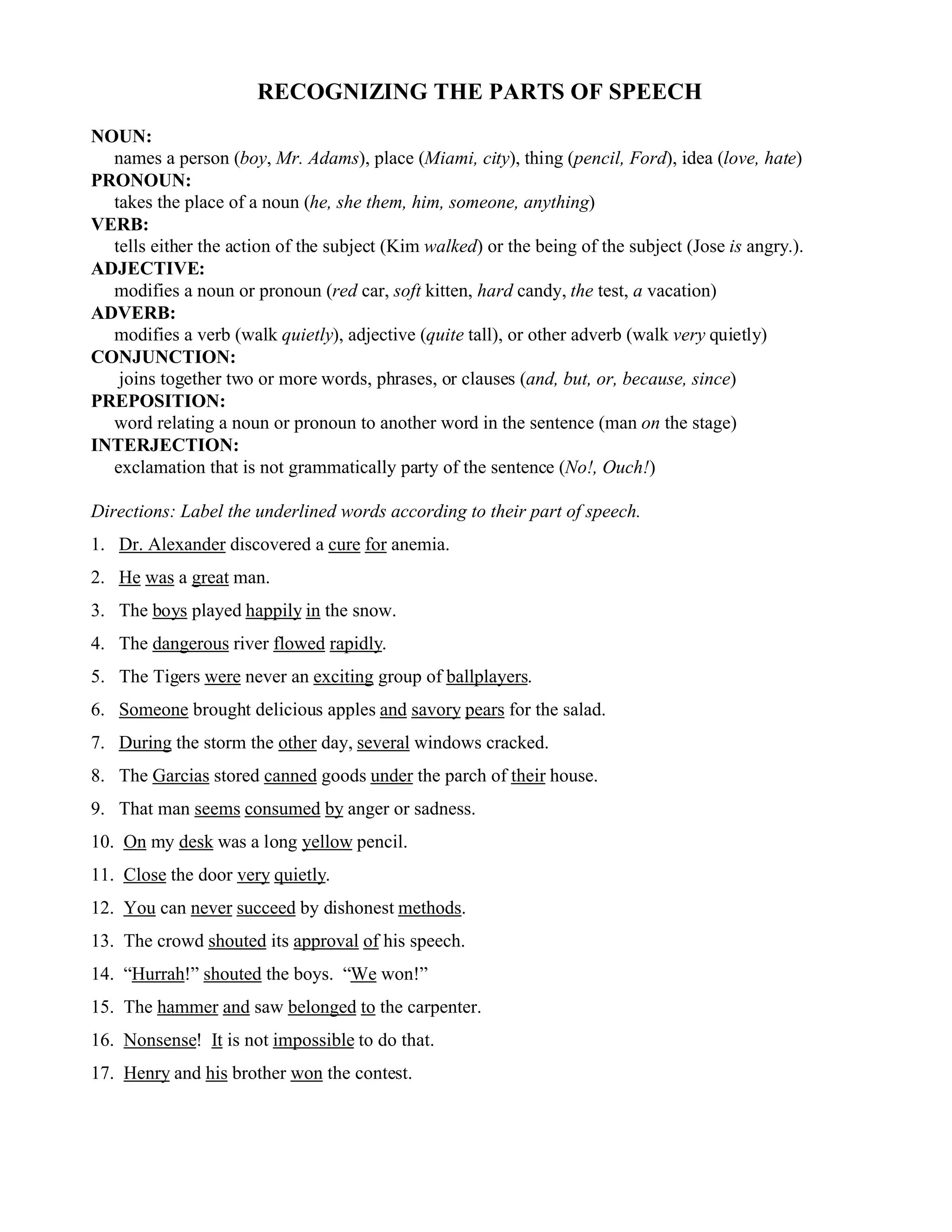
RECOGNIZING THE PARTS OF SPEECH
NOUN:
  names a person (boy, Mr. Adams), place (Miami, city), thing (pencil, Ford), idea (love, hate)
PRONOUN:
  takes the place of a noun (he, she them, him, someone, anything)
VERB:
  tells either the action of the subject (Kim walked) or the being of the subject (Jose is angry.).
ADJECTIVE:
  modifies a noun or pronoun (red car, soft kitten, hard candy, the test, a vacation)
ADVERB:
  modifies a verb (walk quietly), adjective (quite tall), or other adverb (walk very quietly)
CONJUNCTION:
   joins together two or more words, phrases, or clauses (and, but, or, because, since)
PREPOSITION:
  word relating a noun or pronoun to another word in the sentence (man on the stage)
INTERJECTION:
  exclamation that is not grammatically party of the sentence (No!, Ouch!)

Directions: Label the underlined words according to their part of speech.
1. Dr. Alexander discovered a cure for anemia.
2. He was a great man.
3. The boys played happily in the snow.
4. The dangerous river flowed rapidly.
5. The Tigers were never an exciting group of ballplayers.
6. Someone brought delicious apples and savory pears for the salad.
7. During the storm the other day, several windows cracked.
8. The Garcias stored canned goods under the parch of their house.
9. That man seems consumed by anger or sadness.
10. On my desk was a long yellow pencil.
11. Close the door very quietly.
12. You can never succeed by dishonest methods.
13. The crowd shouted its approval of his speech.
14. “Hurrah!” shouted the boys. “We won!”
15. The hammer and saw belonged to the carpenter.
16. Nonsense! It is not impossible to do that.
17. Henry and his brother won the contest.

Parts of speech chart

  • 1.
    Recognizing the Partsof Speech This chart lists the various functions words can perform in a sentence and the part of speech that performs each function: Function Part of Speech Naming Nouns, Pronouns Predicating (stating or asserting) Verbs Modifying Adjectives, Adverbs Connecting Prepositions, Conjunctions This chart summarizes the parts of speech: Part of Speech Uses in the Sentence Examples Verb Indicator of action or state of being Tom wrote the report. They are astronomers. Noun Subject, object Kay gave Ron the list of names. Pronoun Substitute for nouns He will return it to her later. Adjective Modifies nouns - Juan bought a used car. and pronouns - He was excited about it. ---------------------------- -------------------------------------- ------------------------------------- Articles: a, an,the [used to introduce nouns] the book - specific a book, an apple - general Adverb Modifies verbs - The diagram was clearly adjectives - presented. adverbs - It was a very interesting study. or whole clauses - The speech was entirely too long. (tells how, where, when, to what degree) Indeed, we are ready. Preposition Word used before a noun or pronoun He was in a hurry. to create a phrase that relates to He answered without thinking. another word She visited for four days. Conjunction Connector of words - Tom and Harry left for work. phrases - You can go with me or without clauses - me. (may be coordinating or subordinating) He arrived before we ate. Interjection Expression of emotion Good grief! (unrelated grammatically to the rest Ouch, that hurt! of the sentence) Well, we tried.
  • 2.
    RECOGNIZING THE PARTSOF SPEECH NOUN: names a person (boy, Mr. Adams), place (Miami, city), thing (pencil, Ford), idea (love, hate) PRONOUN: takes the place of a noun (he, she them, him, someone, anything) VERB: tells either the action of the subject (Kim walked) or the being of the subject (Jose is angry.). ADJECTIVE: modifies a noun or pronoun (red car, soft kitten, hard candy, the test, a vacation) ADVERB: modifies a verb (walk quietly), adjective (quite tall), or other adverb (walk very quietly) CONJUNCTION: joins together two or more words, phrases, or clauses (and, but, or, because, since) PREPOSITION: word relating a noun or pronoun to another word in the sentence (man on the stage) INTERJECTION: exclamation that is not grammatically party of the sentence (No!, Ouch!) Directions: Label the underlined words according to their part of speech. 1. Dr. Alexander discovered a cure for anemia. 2. He was a great man. 3. The boys played happily in the snow. 4. The dangerous river flowed rapidly. 5. The Tigers were never an exciting group of ballplayers. 6. Someone brought delicious apples and savory pears for the salad. 7. During the storm the other day, several windows cracked. 8. The Garcias stored canned goods under the parch of their house. 9. That man seems consumed by anger or sadness. 10. On my desk was a long yellow pencil. 11. Close the door very quietly. 12. You can never succeed by dishonest methods. 13. The crowd shouted its approval of his speech. 14. “Hurrah!” shouted the boys. “We won!” 15. The hammer and saw belonged to the carpenter. 16. Nonsense! It is not impossible to do that. 17. Henry and his brother won the contest.