What is Particulate Matter?
Airborne particulate matter (PM) is not a single pollutant, but rather is a mixture
of many chemical species. It is a complex mixture of solids and aerosols
composed of small droplets of liquid, dry solid fragments, and solid cores with
liquid coatings. Particles vary widely in size, shape and chemical composition,
and may contain inorganic ions, metallic compounds, elemental carbon, organic
compounds, and compounds from the earth’s crust. Particles are defined by their
diameter for air quality regulatory purposes. Those with a diameter of 10
microns or less (PM10) are inhalable into the lungs and can induce adverse
health effects. Fine particulate matter is defined as particles that are 2.5 microns
or less in diameter (PM2.5). Therefore, PM2.5 comprises a portion of PM10.
What is the Difference Between PM10 and PM2.5?
PM10 and PM2.5 often derive from different emissions sources, and also have
different chemical compositions. Emissions from combustion of gasoline, oil,
diesel fuel or wood produce much of the PM2.5 pollution found in outdoor air, as
well as a significant proportion of PM10. PM10 also includes dust from
construction sites, landfills and agriculture, wildfires and brush/waste burning,
industrial sources, wind-blown dust from open lands, pollen and fragments of
bacteria.
PM may be either directly emitted from sources (primary particles) or
formed in the atmosphere through chemical reactions of gases
(secondary particles) such as sulfur dioxide (SO2), nitrogen oxides (NOX),
and certain organic compounds. These organic compounds can be
emitted by both natural sources, such as trees and vegetation, as well as
from man-made (anthropogenic) sources, such as industrial processes
and motor vehicle exhaust. The relative sizes of PM10 and PM2.5 particles
are compared in the figure below.
What are the Ambient Air Quality Standards for Particulate Matter?
The two main pollutants from ship emissions are Nitrogen oxides (NOx) and Sulfur
oxides (SOx). The reason? These combustible gases, emitted into the environment in
the form of smoke, can have adverse effects on the ozone layer in the troposphere,
which results in the “greenhouse effect” and may contribute to global warming.
Sulfur oxide (SOx) emissions are main­
ly due to the presence of sulfur compounds in
the fuel. Smoke containing sulfur oxides emitted by the combustion of marine fuel
will often oxidize further, forming sulfuric acid which is a major contributor to acid
rain. SOx emissions also contribute to the formation of secondary inorganic aerosol
gases – fine particulates that are harmful to people.
NOx is the collective term for the nitrogen oxides NO and NO2, which are significant
components of harmful air pollution. NOx is formed in combustion processes such as
engines, power plants, and boilers, as well as industrial processes with very high
temperatures
Nitrogen dioxide (N in air is
oxidized); No sum of NO,
NO , other oxides of N
Brownish gas irritates the
respiratory system originates
from combustion
Burning fuels including
petrol, diesel, and coal
Ground level O3 (primary
constituent of smog)
Reaction of VOC + nox in
presence of heat +sun light
Vehicles and industries are
the major source
Carbon monoxide Reduces bloods ability to carry
O
Produced by the incomplete
burning of carbon-based fuels
& natural and synthetic
products such as cigarettes
Carbon dioxide Principle greenhouse gas. Emitted as a result of human
activities such as the burning
of coal, oil, and natural gases
Sulphur dioxide Precursor to acid rain along
with Nox
Formed when fuel (coal, oil)
containing S is burned and
metal smelting
Chorofluoro carbon (CFC) Ozone depletion Released from air-
conditioning systems and
refrigeration.
Lead Cause learning disabilities in
children , toxic to liver,
kidney, blood forming organs
Present in petrol, diesel, lead
batteries, paints, hair dye
products, etc
Particulate matter (PM 10 & 2.5)
Pollutants enter through stomata
Destroy chlorophyll and Affect
photosynthesis
Cuticle( Wax Layer on Leaves) is
lost
Treatment of water before leaving in water
bodies.
Restoration of polluted water bodies.
Ganga Action Plan
River Water Monitoring
Effluents should not be discharged
Treatment before discharge
S trict law enforcement- regarding drilling in
Ecosensitive zones, dumping of toxic &
Hazardouswastes
Minimum developmental activities on shore
CRZs: Coastal regulation Zones
Transportation
Heavy Machinery
Construction activities
C elebrations and household
appliances
Physiological and
psychological changes
Interferes communication
Hearing damage
Sleep disturbance
Reduce soil productivity
Affects soil flora and fauna
Sludge contains worms,
bacteria and
pathogens.
Radioactive wastes enter food
chain: Strontium 90 mimics
calcium.
Treatment before discharge
Convert waste to biogas, fuel etc.
Recover from soil.
Following methods in use:
Composting
S anitary landfill
Incineration
Segregation of waste
Current trends of 3-
Reduce Reuse Recycle
Think globally act locally
Use eco-friendly products
Use rechargeable batteries
No to excess pesticides, chemicals, paints,
solvents
Use less or only required quantity of resource
PLANT MORE TREES(local species)
Best from Waste
- Reduce, Reuse, Recycle
Environment Notes_Environmental impact assessment air pollution water pollution.pptx

Environment Notes_Environmental impact assessment air pollution water pollution.pptx

  • 8.
    What is ParticulateMatter? Airborne particulate matter (PM) is not a single pollutant, but rather is a mixture of many chemical species. It is a complex mixture of solids and aerosols composed of small droplets of liquid, dry solid fragments, and solid cores with liquid coatings. Particles vary widely in size, shape and chemical composition, and may contain inorganic ions, metallic compounds, elemental carbon, organic compounds, and compounds from the earth’s crust. Particles are defined by their diameter for air quality regulatory purposes. Those with a diameter of 10 microns or less (PM10) are inhalable into the lungs and can induce adverse health effects. Fine particulate matter is defined as particles that are 2.5 microns or less in diameter (PM2.5). Therefore, PM2.5 comprises a portion of PM10. What is the Difference Between PM10 and PM2.5? PM10 and PM2.5 often derive from different emissions sources, and also have different chemical compositions. Emissions from combustion of gasoline, oil, diesel fuel or wood produce much of the PM2.5 pollution found in outdoor air, as well as a significant proportion of PM10. PM10 also includes dust from construction sites, landfills and agriculture, wildfires and brush/waste burning, industrial sources, wind-blown dust from open lands, pollen and fragments of bacteria.
  • 9.
    PM may beeither directly emitted from sources (primary particles) or formed in the atmosphere through chemical reactions of gases (secondary particles) such as sulfur dioxide (SO2), nitrogen oxides (NOX), and certain organic compounds. These organic compounds can be emitted by both natural sources, such as trees and vegetation, as well as from man-made (anthropogenic) sources, such as industrial processes and motor vehicle exhaust. The relative sizes of PM10 and PM2.5 particles are compared in the figure below.
  • 10.
    What are theAmbient Air Quality Standards for Particulate Matter?
  • 11.
    The two mainpollutants from ship emissions are Nitrogen oxides (NOx) and Sulfur oxides (SOx). The reason? These combustible gases, emitted into the environment in the form of smoke, can have adverse effects on the ozone layer in the troposphere, which results in the “greenhouse effect” and may contribute to global warming. Sulfur oxide (SOx) emissions are main­ ly due to the presence of sulfur compounds in the fuel. Smoke containing sulfur oxides emitted by the combustion of marine fuel will often oxidize further, forming sulfuric acid which is a major contributor to acid rain. SOx emissions also contribute to the formation of secondary inorganic aerosol gases – fine particulates that are harmful to people. NOx is the collective term for the nitrogen oxides NO and NO2, which are significant components of harmful air pollution. NOx is formed in combustion processes such as engines, power plants, and boilers, as well as industrial processes with very high temperatures
  • 15.
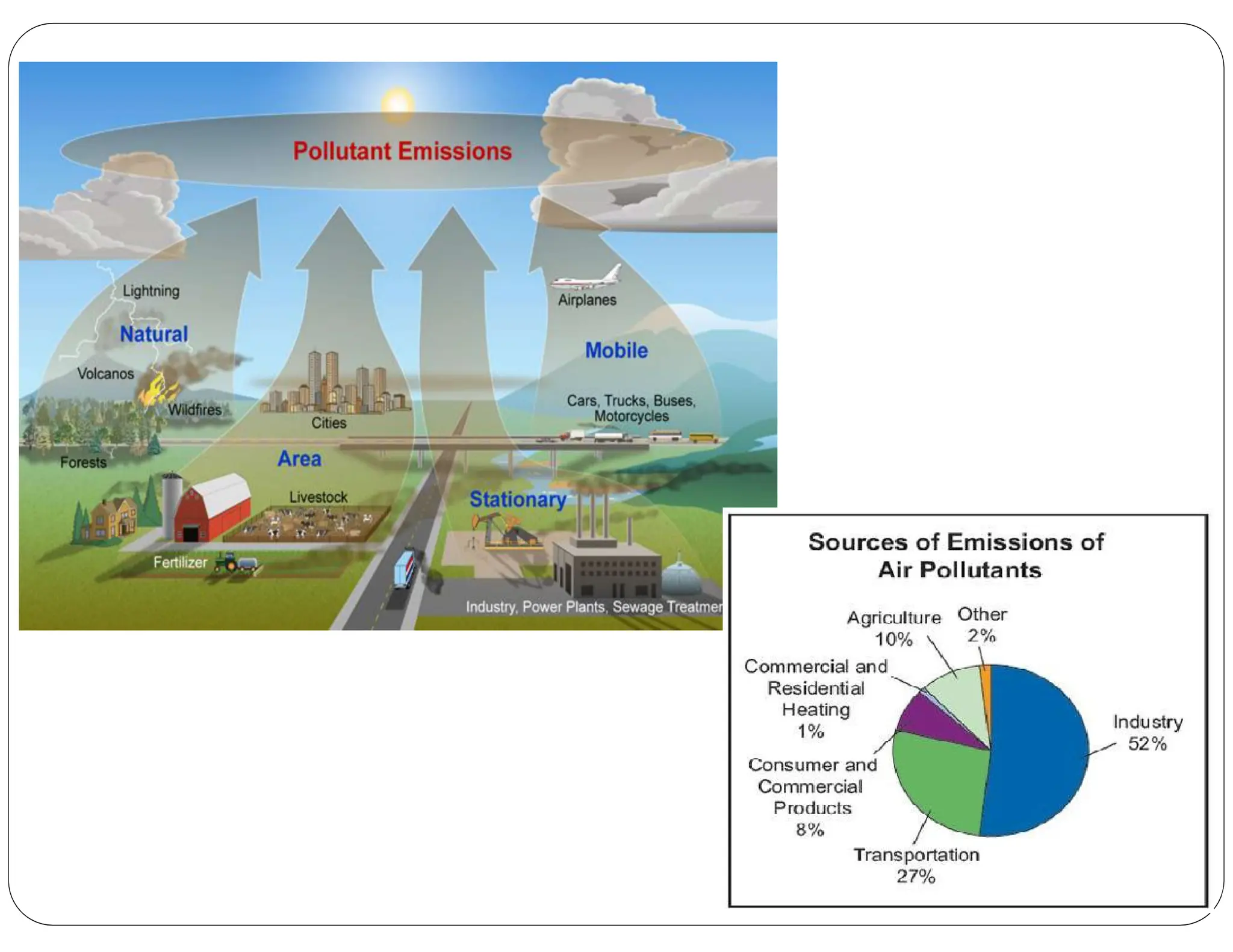
    Nitrogen dioxide (Nin air is oxidized); No sum of NO, NO , other oxides of N Brownish gas irritates the respiratory system originates from combustion Burning fuels including petrol, diesel, and coal Ground level O3 (primary constituent of smog) Reaction of VOC + nox in presence of heat +sun light Vehicles and industries are the major source Carbon monoxide Reduces bloods ability to carry O Produced by the incomplete burning of carbon-based fuels & natural and synthetic products such as cigarettes Carbon dioxide Principle greenhouse gas. Emitted as a result of human activities such as the burning of coal, oil, and natural gases Sulphur dioxide Precursor to acid rain along with Nox Formed when fuel (coal, oil) containing S is burned and metal smelting Chorofluoro carbon (CFC) Ozone depletion Released from air- conditioning systems and refrigeration. Lead Cause learning disabilities in children , toxic to liver, kidney, blood forming organs Present in petrol, diesel, lead batteries, paints, hair dye products, etc Particulate matter (PM 10 & 2.5)
  • 20.
    Pollutants enter throughstomata Destroy chlorophyll and Affect photosynthesis Cuticle( Wax Layer on Leaves) is lost
  • 38.
    Treatment of waterbefore leaving in water bodies. Restoration of polluted water bodies. Ganga Action Plan River Water Monitoring
  • 40.
    Effluents should notbe discharged Treatment before discharge S trict law enforcement- regarding drilling in Ecosensitive zones, dumping of toxic & Hazardouswastes Minimum developmental activities on shore CRZs: Coastal regulation Zones
  • 46.
    Transportation Heavy Machinery Construction activities Celebrations and household appliances Physiological and psychological changes Interferes communication Hearing damage Sleep disturbance
  • 52.
    Reduce soil productivity Affectssoil flora and fauna Sludge contains worms, bacteria and pathogens. Radioactive wastes enter food chain: Strontium 90 mimics calcium. Treatment before discharge Convert waste to biogas, fuel etc. Recover from soil.
  • 56.
    Following methods inuse: Composting S anitary landfill Incineration Segregation of waste Current trends of 3- Reduce Reuse Recycle
  • 62.
    Think globally actlocally Use eco-friendly products Use rechargeable batteries No to excess pesticides, chemicals, paints, solvents Use less or only required quantity of resource PLANT MORE TREES(local species) Best from Waste - Reduce, Reuse, Recycle