ENDOCRINE 
PANCREAS
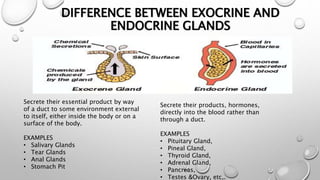
DIFFERENCE BETWEEN EXOCRINE AND 
ENDOCRINE GLANDS 
Secrete their essential product by way 
of a duct to some environment external 
to itself, either inside the body or on a 
surface of the body. 
EXAMPLES 
• Salivary Glands 
• Tear Glands 
• Anal Glands 
• Stomach Pit 
Secrete their products, hormones, 
directly into the blood rather than 
through a duct. 
EXAMPLES 
• Pituitary Gland, 
• Pineal Gland, 
• Thyroid Gland, 
• Adrenal Gland, 
• Pancreas, 
• Testes &Ovary, etc,.
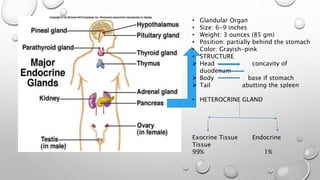
• Glandular Organ 
• Size: 6-9 inches 
• Weight: 3 ounces (85 gm) 
• Position: partially behind the stomach 
• Color: Grayish-pink 
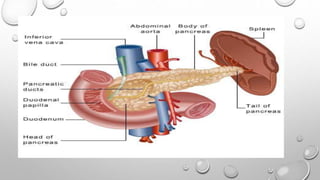
• STRUCTURE 
 Head concavity of 
duodenum 
 Body base if stomach 
 Tail abutting the spleen 
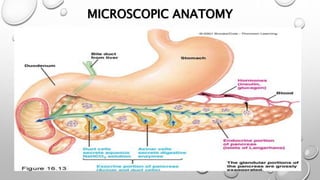
• HETEROCRINE GLAND 
Exocrine Tissue Endocrine 
Tissue 
99% 1%
MICROSCOPIC ANATOMY
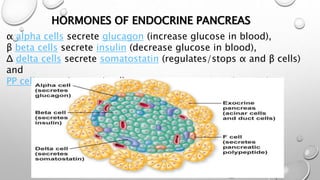
HORMONES OF ENDOCRINE PANCREAS 
α alpha cells secrete glucagon (increase glucose in blood), 
β beta cells secrete insulin (decrease glucose in blood), 
Δ delta cells secrete somatostatin (regulates/stops α and β cells) 
and 
PP cells, or γ (gamma) cells, secrete pancreatic polypeptide
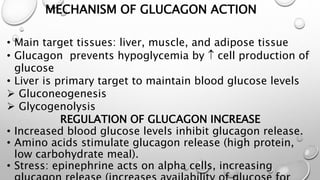
MECHANISM OF GLUCAGON ACTION 
• Main target tissues: liver, muscle, and adipose tissue 
• Glucagon prevents hypoglycemia by  cell production of 
glucose 
• Liver is primary target to maintain blood glucose levels 
 Gluconeogenesis 
 Glycogenolysis 
REGULATION OF GLUCAGON INCREASE 
• Increased blood glucose levels inhibit glucagon release. 
• Amino acids stimulate glucagon release (high protein, 
low carbohydrate meal). 
• Stress: epinephrine acts on alpha cells, increasing 
glucagon release (increases availability of glucose for
INSULIN FROM BETA CELLS 
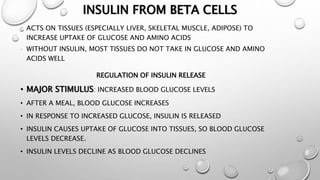
• ACTS ON TISSUES (ESPECIALLY LIVER, SKELETAL MUSCLE, ADIPOSE) TO 
INCREASE UPTAKE OF GLUCOSE AND AMINO ACIDS. 
• WITHOUT INSULIN, MOST TISSUES DO NOT TAKE IN GLUCOSE AND AMINO 
ACIDS WELL 
REGULATION OF INSULIN RELEASE 
• MAJOR STIMULUS: INCREASED BLOOD GLUCOSE LEVELS 
• AFTER A MEAL, BLOOD GLUCOSE INCREASES 
• IN RESPONSE TO INCREASED GLUCOSE, INSULIN IS RELEASED 
• INSULIN CAUSES UPTAKE OF GLUCOSE INTO TISSUES, SO BLOOD GLUCOSE 
LEVELS DECREASE. 
• INSULIN LEVELS DECLINE AS BLOOD GLUCOSE DECLINES
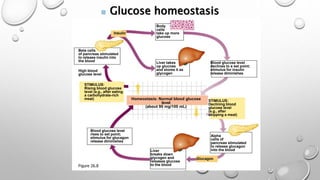
 Glucose homeostasis 
Figure 26.8 
Insulin 
Beta cells 
of pancreas stimulated 
to release insulin into 
the blood 
Body 
cells 
take up more 
glucose 
Blood glucose level 
declines to a set point; 
stimulus for insulin 
release diminishes 
Liver takes 
up glucose 
and stores it as 
glycogen 
High blood 
glucose level 
STIMULUS: 
Rising blood glucose 
level (e.g., after eating 
a carbohydrate-rich 
meal) Homeostasis: Normal blood glucose 
level 
(about 90 mg/100 mL) 
STIMULUS: 
Declining blood 
glucose level 
(e.g., after 
skipping a meal) 
Alpha 
cells of 
pancreas stimulated 
to release glucagon 
into the blood 
Glucagon 
Liver 
breaks down 
glycogen and 
releases glucose 
to the blood 
Blood glucose level 
rises to set point; 
stimulus for glucagon 
release diminishes
Type I Diabetes Mellitus IDDM 
b cells of the islets of Langerhans are destroyed by autoimmune 
attack which may be provoked by environmental agent. 
Glucose cannot enter the adipose cells. 
Increased blood [glucagon]. 
TYPE II DIABETES MELLITUS NIDDM 
Slow to develop. 
Genetic factors are significant. 
Occurs most often in people who are overweight. 
Decreased sensitivity to insulin or an insulin resistance. 
GESTATIONAL DIABETES 
Some pregnant women require more insulin than their body can 
produce. 
IMPAIRED GLUCOSE TOLERANCE AND PREDIABETES 
It is a condition in which blood glucose levels are higher than 
normal but not high enough for a diagnosis of diabetes. Patients 
are at high risk of developing type 2 diabetes. 
INSULINOMA
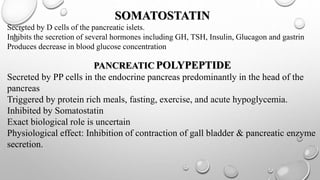
SOMATOSTATIN 
Secreted by D cells of the pancreatic islets. 
Inhibits the secretion of several hormones including GH, TSH, Insulin, Glucagon and gastrin 
Produces decrease in blood glucose concentration 
PANCREATICPOLYPEPTIDE 
Secreted by PP cells in the endocrine pancreas predominantly in the head of the 
pancreas 
Triggered by protein rich meals, fasting, exercise, and acute hypoglycemia. 
Inhibited by Somatostatin 
Exact biological role is uncertain 
Physiological effect: Inhibition of contraction of gall bladder & pancreatic enzyme 
secretion.

Pancreas

  • 1.
  • 2.
    DIFFERENCE BETWEEN EXOCRINEAND ENDOCRINE GLANDS Secrete their essential product by way of a duct to some environment external to itself, either inside the body or on a surface of the body. EXAMPLES • Salivary Glands • Tear Glands • Anal Glands • Stomach Pit Secrete their products, hormones, directly into the blood rather than through a duct. EXAMPLES • Pituitary Gland, • Pineal Gland, • Thyroid Gland, • Adrenal Gland, • Pancreas, • Testes &Ovary, etc,.
  • 3.
    • Glandular Organ • Size: 6-9 inches • Weight: 3 ounces (85 gm) • Position: partially behind the stomach • Color: Grayish-pink • STRUCTURE  Head concavity of duodenum  Body base if stomach  Tail abutting the spleen • HETEROCRINE GLAND Exocrine Tissue Endocrine Tissue 99% 1%
  • 5.
  • 6.
    HORMONES OF ENDOCRINEPANCREAS α alpha cells secrete glucagon (increase glucose in blood), β beta cells secrete insulin (decrease glucose in blood), Δ delta cells secrete somatostatin (regulates/stops α and β cells) and PP cells, or γ (gamma) cells, secrete pancreatic polypeptide
  • 7.
    MECHANISM OF GLUCAGONACTION • Main target tissues: liver, muscle, and adipose tissue • Glucagon prevents hypoglycemia by  cell production of glucose • Liver is primary target to maintain blood glucose levels  Gluconeogenesis  Glycogenolysis REGULATION OF GLUCAGON INCREASE • Increased blood glucose levels inhibit glucagon release. • Amino acids stimulate glucagon release (high protein, low carbohydrate meal). • Stress: epinephrine acts on alpha cells, increasing glucagon release (increases availability of glucose for
  • 8.
    INSULIN FROM BETACELLS • ACTS ON TISSUES (ESPECIALLY LIVER, SKELETAL MUSCLE, ADIPOSE) TO INCREASE UPTAKE OF GLUCOSE AND AMINO ACIDS. • WITHOUT INSULIN, MOST TISSUES DO NOT TAKE IN GLUCOSE AND AMINO ACIDS WELL REGULATION OF INSULIN RELEASE • MAJOR STIMULUS: INCREASED BLOOD GLUCOSE LEVELS • AFTER A MEAL, BLOOD GLUCOSE INCREASES • IN RESPONSE TO INCREASED GLUCOSE, INSULIN IS RELEASED • INSULIN CAUSES UPTAKE OF GLUCOSE INTO TISSUES, SO BLOOD GLUCOSE LEVELS DECREASE. • INSULIN LEVELS DECLINE AS BLOOD GLUCOSE DECLINES
  • 9.
     Glucose homeostasis Figure 26.8 Insulin Beta cells of pancreas stimulated to release insulin into the blood Body cells take up more glucose Blood glucose level declines to a set point; stimulus for insulin release diminishes Liver takes up glucose and stores it as glycogen High blood glucose level STIMULUS: Rising blood glucose level (e.g., after eating a carbohydrate-rich meal) Homeostasis: Normal blood glucose level (about 90 mg/100 mL) STIMULUS: Declining blood glucose level (e.g., after skipping a meal) Alpha cells of pancreas stimulated to release glucagon into the blood Glucagon Liver breaks down glycogen and releases glucose to the blood Blood glucose level rises to set point; stimulus for glucagon release diminishes
  • 10.
    Type I DiabetesMellitus IDDM b cells of the islets of Langerhans are destroyed by autoimmune attack which may be provoked by environmental agent. Glucose cannot enter the adipose cells. Increased blood [glucagon]. TYPE II DIABETES MELLITUS NIDDM Slow to develop. Genetic factors are significant. Occurs most often in people who are overweight. Decreased sensitivity to insulin or an insulin resistance. GESTATIONAL DIABETES Some pregnant women require more insulin than their body can produce. IMPAIRED GLUCOSE TOLERANCE AND PREDIABETES It is a condition in which blood glucose levels are higher than normal but not high enough for a diagnosis of diabetes. Patients are at high risk of developing type 2 diabetes. INSULINOMA
  • 11.
    SOMATOSTATIN Secreted byD cells of the pancreatic islets. Inhibits the secretion of several hormones including GH, TSH, Insulin, Glucagon and gastrin Produces decrease in blood glucose concentration PANCREATICPOLYPEPTIDE Secreted by PP cells in the endocrine pancreas predominantly in the head of the pancreas Triggered by protein rich meals, fasting, exercise, and acute hypoglycemia. Inhibited by Somatostatin Exact biological role is uncertain Physiological effect: Inhibition of contraction of gall bladder & pancreatic enzyme secretion.