Brain Stimulation for The Treatment Of Epilepsy Associate Professor of Neurology and Bioengineering University of Pennsylvania Brian Litt, MD Disclosure
Why devices to treat epilepsy ? 60 million people No Effective Rx in 25% Entree: intelligent BCI   treat disease
Other Applications Movement Disorders Schizophrenia Depression Stroke, TBI
 
 
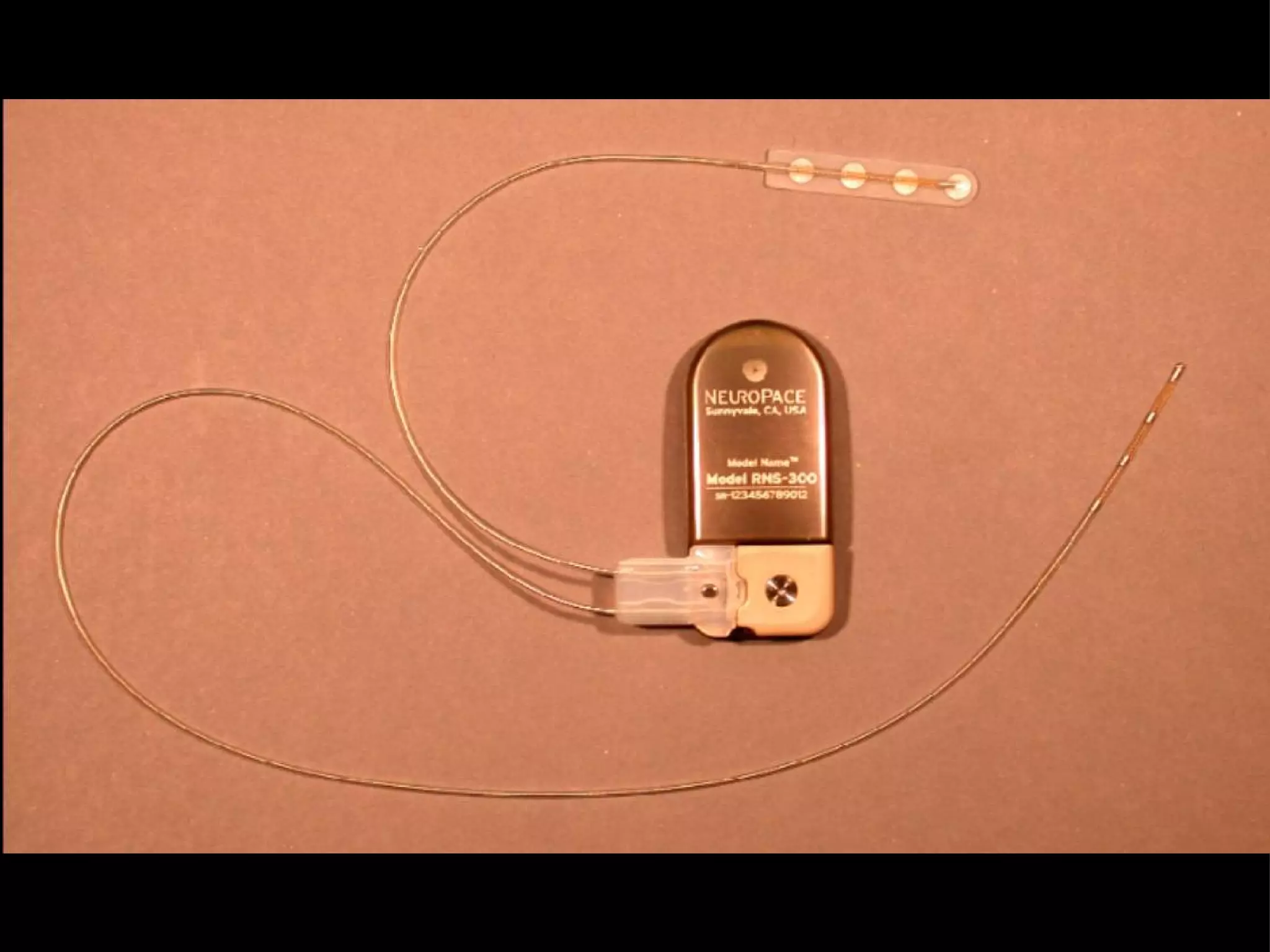
NeuroPace Responsive Stimulator
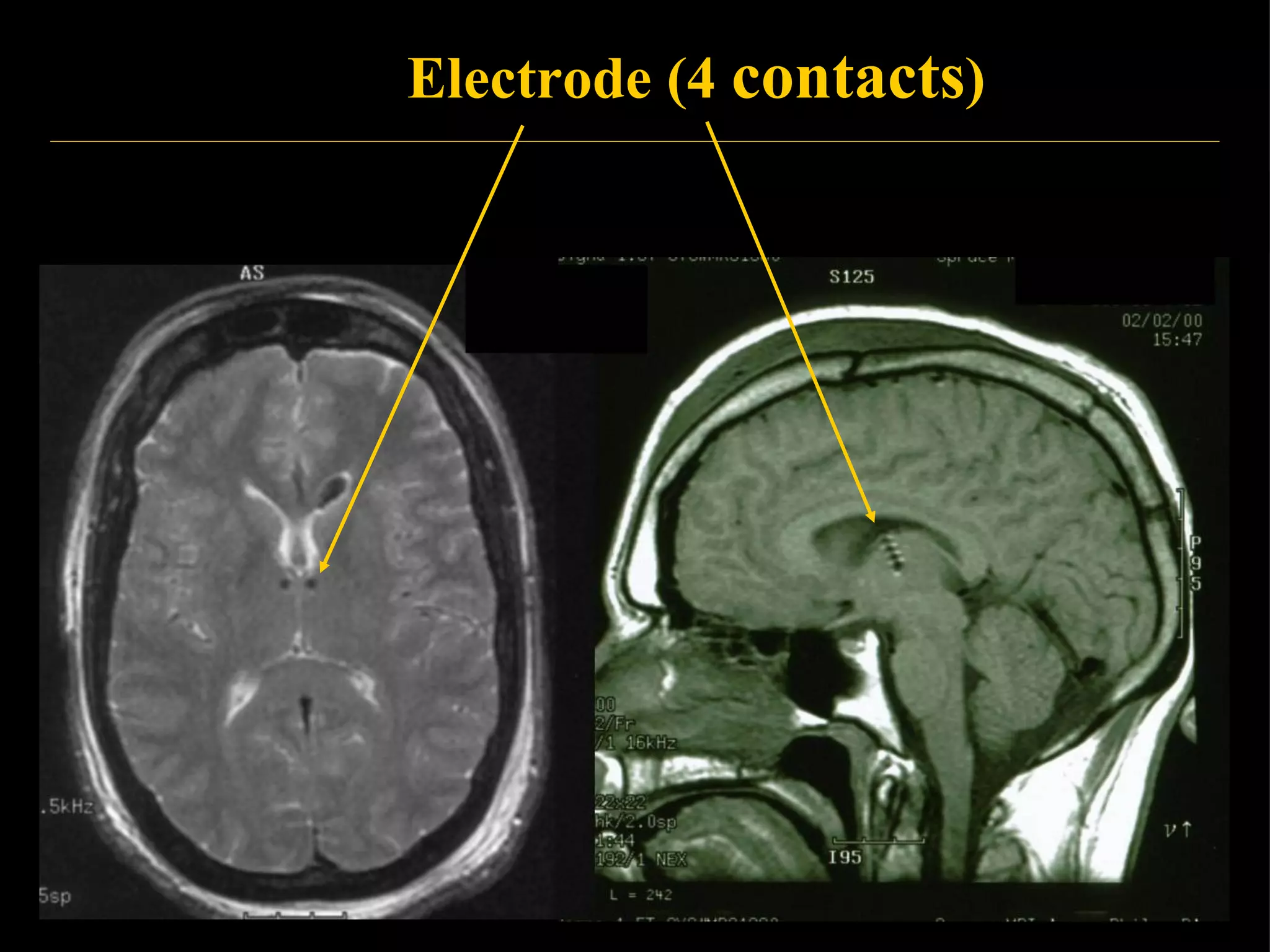
Stimulating Electrode, 4 contacts Electrode (4  contacts )
Anthony Murro, M.D. Medical College of Georgia
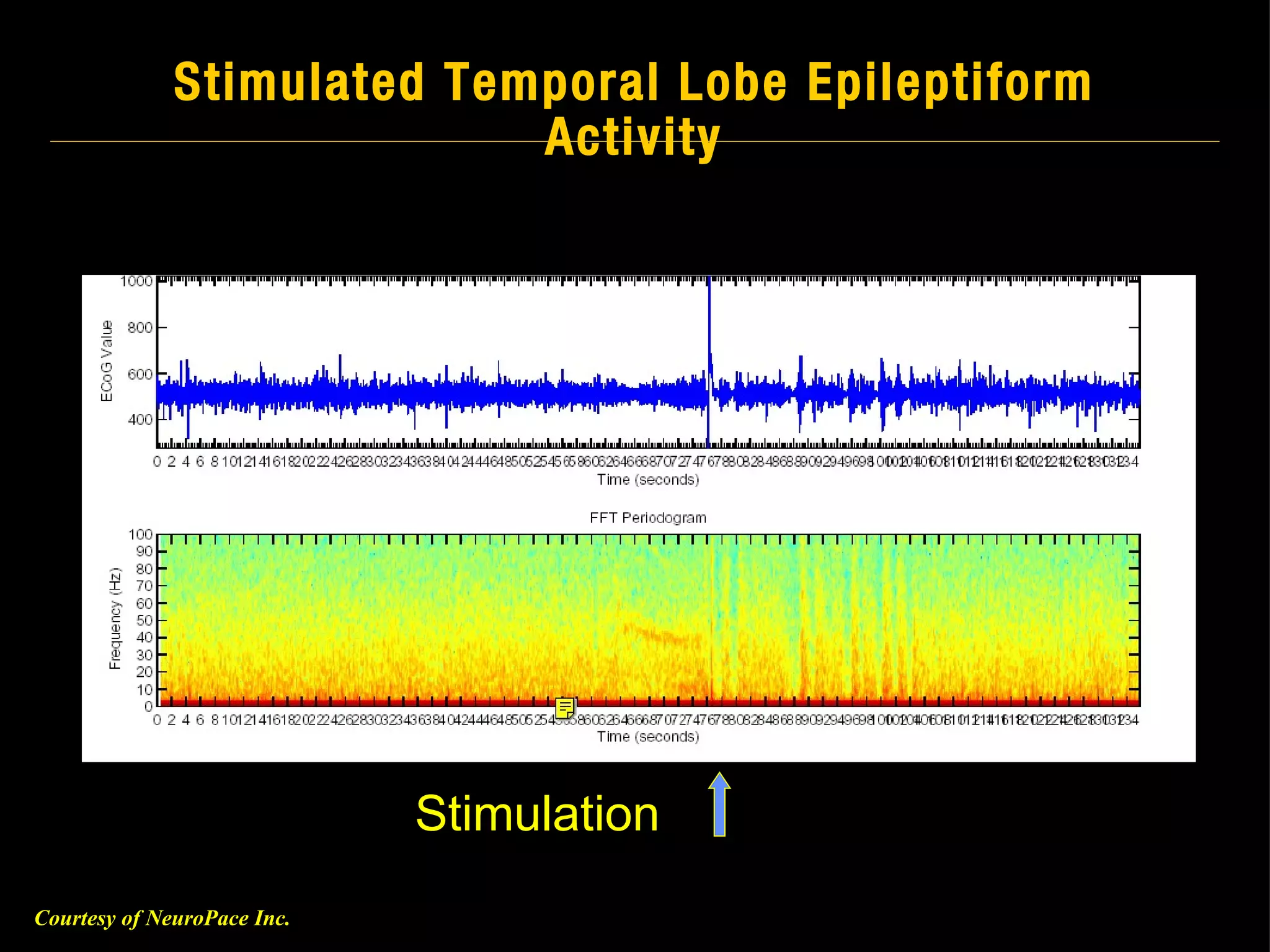
Stimulated Temporal Lobe Epileptiform Activity Stimulation Courtesy of NeuroPace Inc.
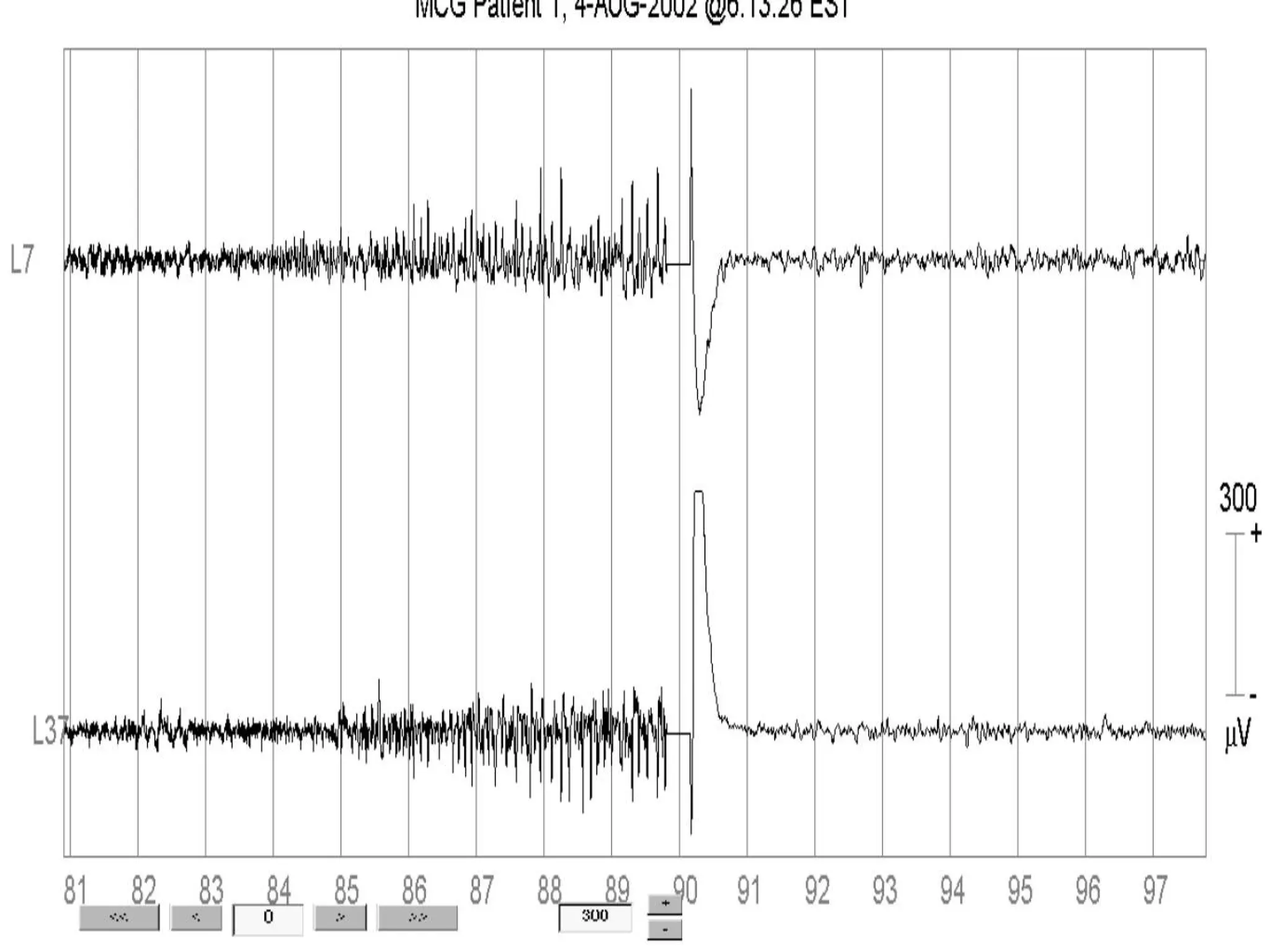
eRNS Sample Data
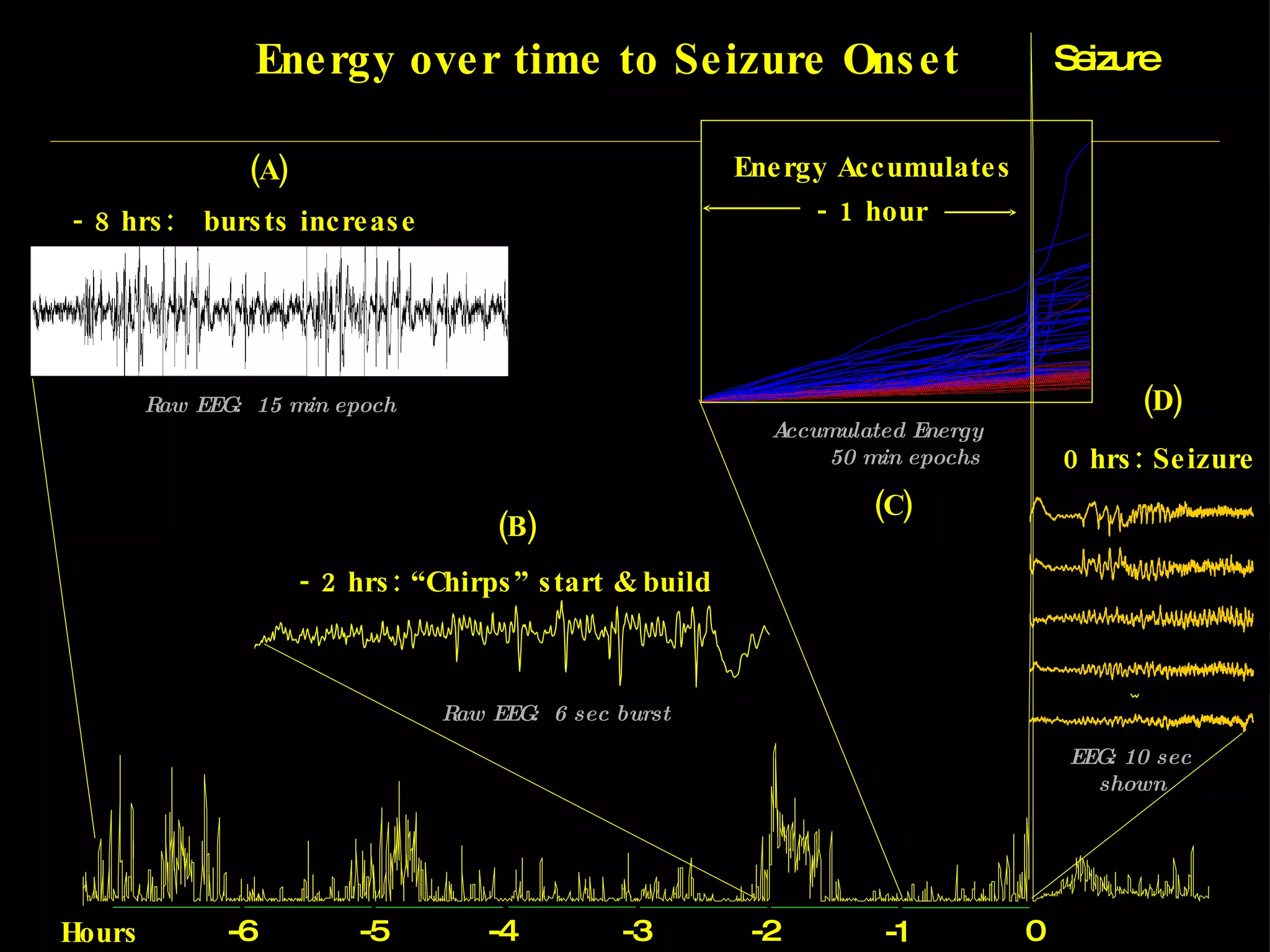
Seizure -5 -4 -3 -2 0 -1 -6 Hours 0 hrs: Seizure - 2 hrs: “Chirps” start & build Accumulated Energy 50 min epochs Raw EEG:  6 sec burst Energy Accumulates - 1 hour EEG: 10 sec shown - 8 hrs:  bursts increase Raw EEG:  15 min epoch Energy over time to Seizure Onset (A) (B) (C) (D)
Gamma Precursors in Neocortical Epilepsy ~85 Hz Sz onset  (in red) Worrell, et al.,  Brain ,  in press
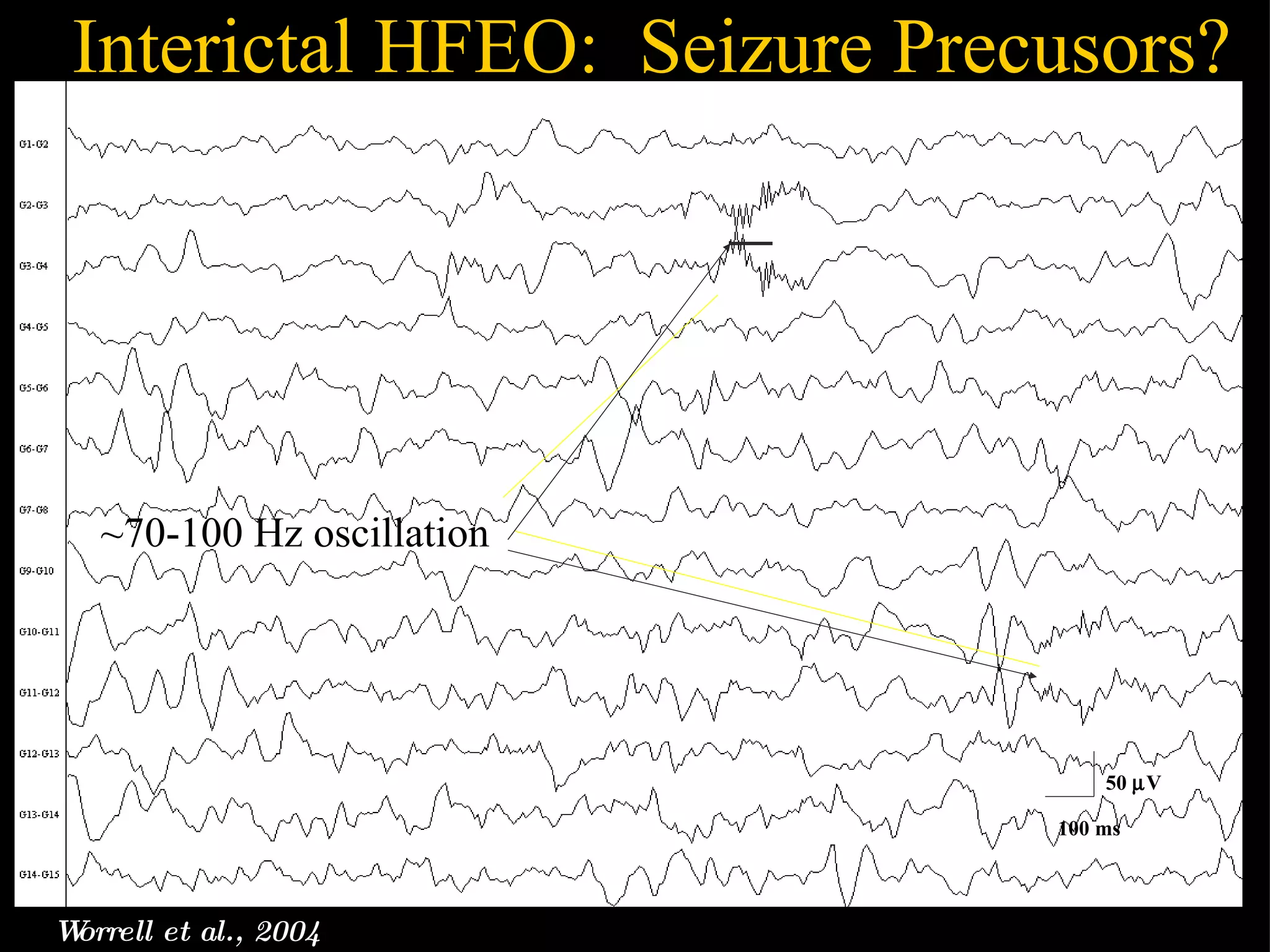
Interictal HFEO:  Seizure Precusors? Worrell et al., 2004 50   V 100 ms ~70-100 Hz oscillation
Ictal Recording/  Mapping Defining the Network Dysplasia (stealth) Ictal onset zone Rapid Sz spread Epileptogenic Zone Brocca’s area HFEOs
Hippocampal Interneurons Diversity & characteristic anatomy Images reproduced from Freund TF, Buzsaki G:  Interneurons of the Hippocampus .  Hippocampus  1996, 6(4):345-470.
 
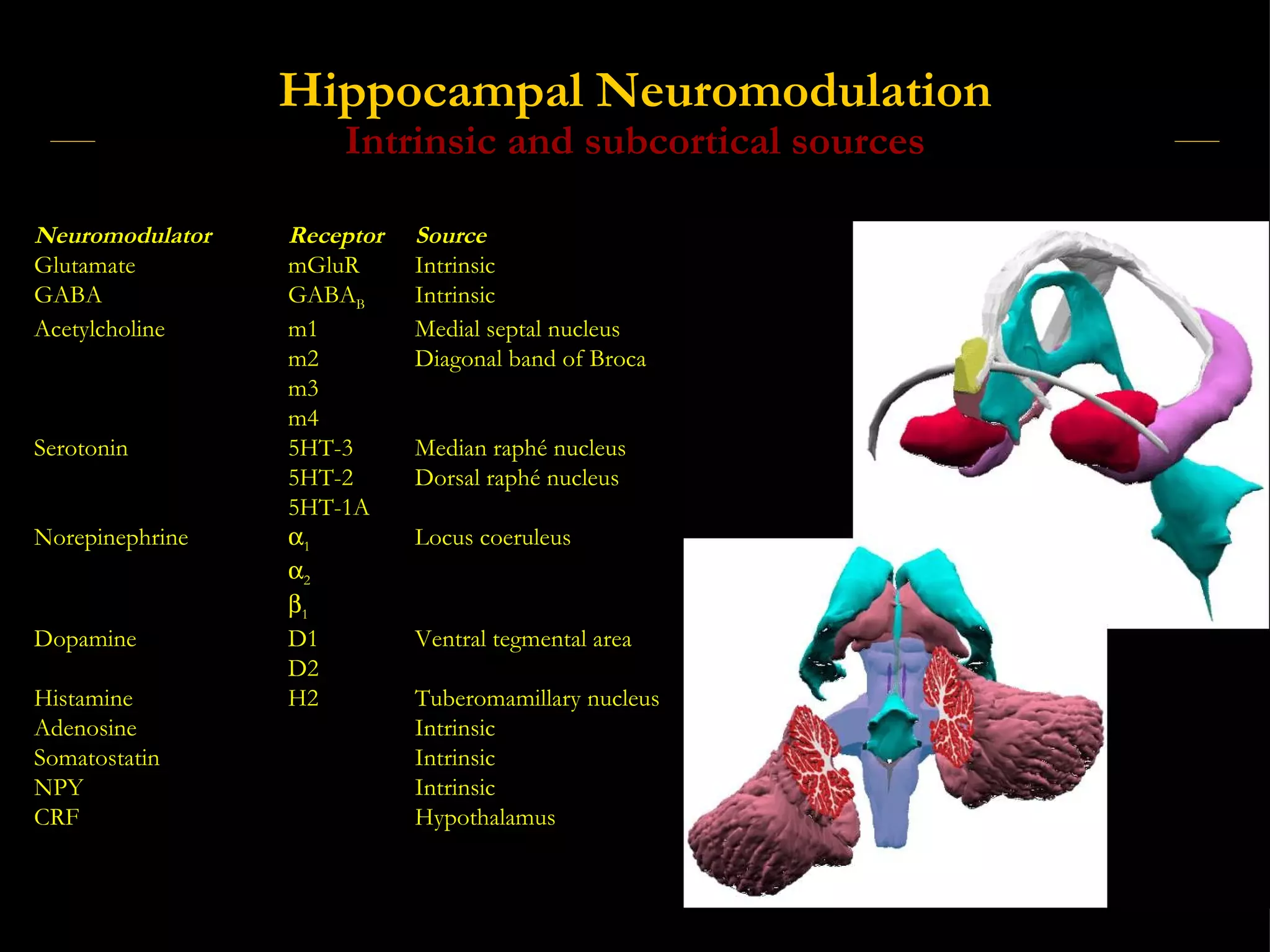
Hippocampal Neuromodulation Intrinsic and subcortical sources Neuromodulator Receptor Source Glutamate mGluR Intrinsic GABA GABA B Intrinsic Acetylcholine m1 Medial septal nucleus m2 Diagonal band of Broca m3 m4 Serotonin 5HT-3 Median raphÊ nucleus 5HT-2 Dorsal raphÊ nucleus 5HT-1A Norepinephrine  1 Locus coeruleus  2  1 Dopamine  D1 Ventral tegmental area D2 Histamine  H2 Tuberomamillary nucleus Adenosine Intrinsic Somatostatin Intrinsic NPY Intrinsic CRF Hypothalamus
 
Where we’re going….. Sensor :  Arrays, harmless, network, units, fields,    single cell to function system   MHz throughput   Gigabytes storage   Wireless, on net   In the head   “ MRI-able”  small   UpgradableLogic: Learns “on the fly” Long  battery life
Where we’re going….. Logic:  Learns “on the fly”   Anticipates activity (AI)   Rapid processing and response Stimulation:  Multiplexed, microsecond resolution Neuroscience:  neuro-encoding, decoding
 
Bio Brian Litt  received the A.B. degree in engineering and applied science from Harvard University in 1982 and the M.D. degree from Johns Hopkins University in 1986. Residency in Neurology, Johns Hopkins University, 1988–1991. Neurology Faculty, Johns Hopkins Hospital, 1991–1996. Neurology/Biomedical Engineering Faculty, Emory University/Georgia Institute of Technology 1997–1999. Dr. Litt is an Associate Professor of Neurology; Associate Professor of Bioengineering, and Director, EEG Laboratory at the Hospital of the University of Pennsylvania. His scientific research is focused on his clinical work as a Neurologist specializing in the care and treatment of individuals with epilepsy. It encompasses a number of related projects: 1) automated implantable devices for the treatment of epilepsy, 2) seizure prediction: developing an engineering model of how seizures are generated and spread in human epilepsy, 3) localization of seizures in extratemporal epilepsy, 5) Translation of computational neuroscience into clinical application, and 4) minimally invasive tools for acquisition and display of high fidelity electrophysiologic recording.

Pan1 3rd Brian Litt

  • 1.
  • 2.
    Brain Stimulation forThe Treatment Of Epilepsy Associate Professor of Neurology and Bioengineering University of Pennsylvania Brian Litt, MD Disclosure
  • 3.
    Why devices totreat epilepsy ? 60 million people No Effective Rx in 25% Entree: intelligent BCI treat disease
  • 4.
    Other Applications MovementDisorders Schizophrenia Depression Stroke, TBI
  • 5.
  • 6.
  • 7.
  • 8.
    Stimulating Electrode, 4contacts Electrode (4 contacts )
  • 9.
    Anthony Murro, M.D.Medical College of Georgia
  • 10.
    Stimulated Temporal LobeEpileptiform Activity Stimulation Courtesy of NeuroPace Inc.
  • 11.
  • 12.
    Seizure -5 -4-3 -2 0 -1 -6 Hours 0 hrs: Seizure - 2 hrs: “Chirps” start & build Accumulated Energy 50 min epochs Raw EEG: 6 sec burst Energy Accumulates - 1 hour EEG: 10 sec shown - 8 hrs: bursts increase Raw EEG: 15 min epoch Energy over time to Seizure Onset (A) (B) (C) (D)
  • 13.
    Gamma Precursors inNeocortical Epilepsy ~85 Hz Sz onset (in red) Worrell, et al., Brain , in press
  • 14.
    Interictal HFEO: Seizure Precusors? Worrell et al., 2004 50  V 100 ms ~70-100 Hz oscillation
  • 15.
    Ictal Recording/ Mapping Defining the Network Dysplasia (stealth) Ictal onset zone Rapid Sz spread Epileptogenic Zone Brocca’s area HFEOs
  • 16.
    Hippocampal Interneurons Diversity& characteristic anatomy Images reproduced from Freund TF, Buzsaki G: Interneurons of the Hippocampus . Hippocampus 1996, 6(4):345-470.
  • 17.
  • 18.
    Hippocampal Neuromodulation Intrinsicand subcortical sources Neuromodulator Receptor Source Glutamate mGluR Intrinsic GABA GABA B Intrinsic Acetylcholine m1 Medial septal nucleus m2 Diagonal band of Broca m3 m4 Serotonin 5HT-3 Median raphÊ nucleus 5HT-2 Dorsal raphÊ nucleus 5HT-1A Norepinephrine  1 Locus coeruleus  2  1 Dopamine D1 Ventral tegmental area D2 Histamine H2 Tuberomamillary nucleus Adenosine Intrinsic Somatostatin Intrinsic NPY Intrinsic CRF Hypothalamus
  • 19.
  • 20.
    Where we’re going…..Sensor : Arrays, harmless, network, units, fields, single cell to function system MHz throughput Gigabytes storage Wireless, on net In the head “ MRI-able” small UpgradableLogic: Learns “on the fly” Long battery life
  • 21.
    Where we’re going…..Logic: Learns “on the fly” Anticipates activity (AI) Rapid processing and response Stimulation: Multiplexed, microsecond resolution Neuroscience: neuro-encoding, decoding
  • 22.
  • 23.
    Bio Brian Litt received the A.B. degree in engineering and applied science from Harvard University in 1982 and the M.D. degree from Johns Hopkins University in 1986. Residency in Neurology, Johns Hopkins University, 1988–1991. Neurology Faculty, Johns Hopkins Hospital, 1991–1996. Neurology/Biomedical Engineering Faculty, Emory University/Georgia Institute of Technology 1997–1999. Dr. Litt is an Associate Professor of Neurology; Associate Professor of Bioengineering, and Director, EEG Laboratory at the Hospital of the University of Pennsylvania. His scientific research is focused on his clinical work as a Neurologist specializing in the care and treatment of individuals with epilepsy. It encompasses a number of related projects: 1) automated implantable devices for the treatment of epilepsy, 2) seizure prediction: developing an engineering model of how seizures are generated and spread in human epilepsy, 3) localization of seizures in extratemporal epilepsy, 5) Translation of computational neuroscience into clinical application, and 4) minimally invasive tools for acquisition and display of high fidelity electrophysiologic recording.