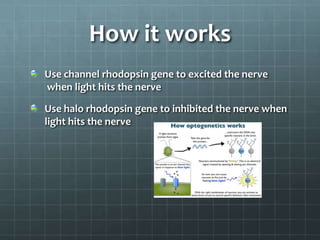
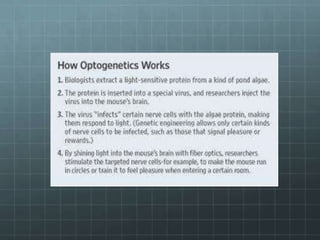
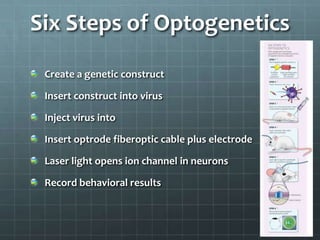
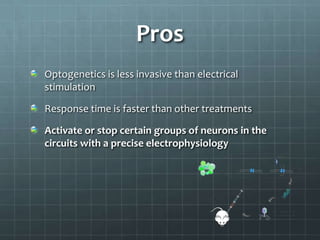
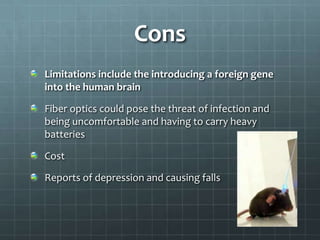
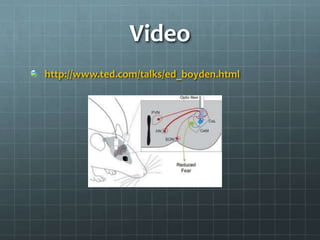
Optogenetics is a technique developed in 2006 that uses light to control neurons by inserting light-sensitive ion channel genes into brain cells. It works by using channelrhodopsin genes to excite neurons or halorhodopsin genes to inhibit neurons when light hits the nerve cell. This allows precise activation or stopping of specific neuron groups with high temporal resolution. Optogenetics offers potential treatment for conditions like anxiety, addiction, chronic pain, and sleep disorders by providing a less invasive way to stimulate or inhibit neurons compared to electrical methods. However, challenges include introducing foreign genes into the brain and technical issues like fiber optics posing infection risks or requiring heavy batteries.