Pair and Groupwork that works

                  “Why use pair and groupwork?”
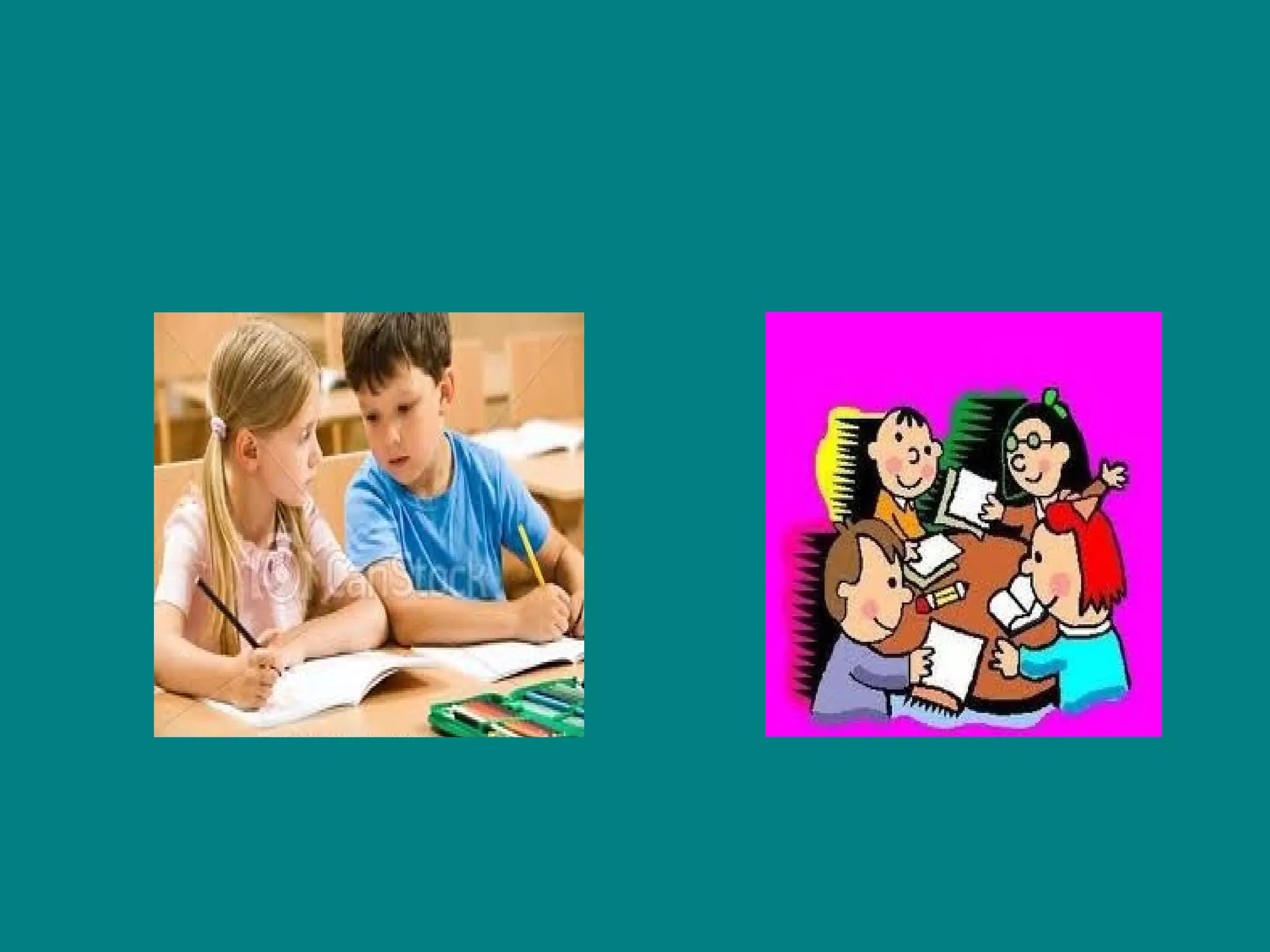
•   It increases the amount of time students can talk in class.
•   It improves the quality of talking, allowing for more of the
    features of natural speech: hesitation, unfinished sentences,
    etc.
•   Speaking is an active process rarely carried out in isolation, so
    it´s a natural framework for interaction: talking to someone as
    in real life.
•   It encourages a more communal classroom atmosphere and
    helps to individualise language learning and teaching.
•   It provides students with an opportunity to learn by doing
    things for themselves.
Compare the pair/groupwork with the traditional
                         teaching.
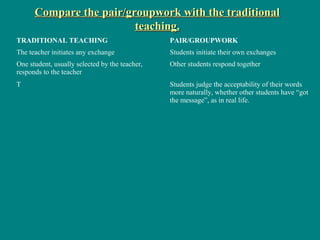
TRADITIONAL TEACHING                            PAIR/GROUPWORK
The teacher initiates any exchange              Students initiate their own exchanges
One student, usually selected by the teacher,   Other students respond together
responds to the teacher
T                                               Students judge the acceptability of their words
                                                more naturally, whether other students have “got
                                                the message”, as in real life.
Making pairwork work: a step-by-step overview

• Choose easy to manage activities first: start with short, simple activities and
    progress from there. An effective starting point is a two minute pairwork
    question/answer drill.
•   Make sure students have got the language they need: try to predic the
    words that students will need. Quickly rehearse the activity yourself. As ever, there
    will always be unforseen language, but make sure you´ve taught the most or all of
    the language that you know they´ll need.
•   Choose the most appropriate grouping: pair or groupwork? This choice
    obviously depends on the activity. Groupwork can be more enjoyable, specially for
    games, activities in teams and larger tasks such as projects. Remember that you can
    always begin in pairs and then combine these pairs into larger groups to compare
    notes.
•   Don´t forget to provide feedback: always provide feedback to the class as a
    hole. Praise and encourage regularly to try to make students´learning a positive
    experience and highlight what they´ve achieved.
    Equally important is to respond to students as individuals sometimes. Over a term
    make sure you´ve spoken to everybody face to face in English just to make them
    feel that you care about their progress.
Everyday activities to familiarise students with pair and
                      groupwork.
• Do it together, not alone: discussing questions together: ask the questions
   as usual but instead of asking one individual, make all students tell their partners
   what they think the answer is. That way everybody gets a chance to answer. This
   also works well for activities like “spot the mistake”. Put five sentences on the
   board, each containing a mistake. In pairs, students have to spot the mistakes
   together, orally agree what the correct version is, then tell you.

• doing homework together: it´s a great way to get mixed ability students to help
   each other. The focus is on English, the product is in English and students have to
   vocalise at least some of the words as they work together.

• Brainstorm together: predicting answers: before a gap-fill type activity (a
   dialoge, song or reading comprehension) ask students to read the text together and
   predict some of the answers before, they listen. This gives stronger students an
   opportunity to help the weaker ones.
• Remember together: stories: after any story which they´ve read and have
  time to digest, students can close their books and retell it to a partner. This
  works best if the listener has a task to make him listen and not just go to
  sleep while their partners talk. This works well after a picture story.
• Test your partner: this is the most obvious way to get students speaking
  together and using each other as a language practice resourse.
 Students look at a page from the coursebook and make questions to each
  other.
 Students walk round the classroom and ask each otherabout the objects
  there( flachcards, posters)
 Students test each other on a group of known words from their vocabulary
  notebooks.
• Rehearse together before any “performance”: pairs are a safe vehicle
  for students to practise speaking before they do anything in front of the
  whole class. It allows them more time to iron out any key mistakes, gives
  them the confidence to see that they can really do it and makes them a little
  less self- conscious.

Pair and Groupwork

  • 2.
    Pair and Groupworkthat works “Why use pair and groupwork?” • It increases the amount of time students can talk in class. • It improves the quality of talking, allowing for more of the features of natural speech: hesitation, unfinished sentences, etc. • Speaking is an active process rarely carried out in isolation, so it´s a natural framework for interaction: talking to someone as in real life. • It encourages a more communal classroom atmosphere and helps to individualise language learning and teaching. • It provides students with an opportunity to learn by doing things for themselves.
  • 3.
    Compare the pair/groupworkwith the traditional teaching. TRADITIONAL TEACHING PAIR/GROUPWORK The teacher initiates any exchange Students initiate their own exchanges One student, usually selected by the teacher, Other students respond together responds to the teacher T Students judge the acceptability of their words more naturally, whether other students have “got the message”, as in real life.
  • 4.
    Making pairwork work:a step-by-step overview • Choose easy to manage activities first: start with short, simple activities and progress from there. An effective starting point is a two minute pairwork question/answer drill. • Make sure students have got the language they need: try to predic the words that students will need. Quickly rehearse the activity yourself. As ever, there will always be unforseen language, but make sure you´ve taught the most or all of the language that you know they´ll need. • Choose the most appropriate grouping: pair or groupwork? This choice obviously depends on the activity. Groupwork can be more enjoyable, specially for games, activities in teams and larger tasks such as projects. Remember that you can always begin in pairs and then combine these pairs into larger groups to compare notes. • Don´t forget to provide feedback: always provide feedback to the class as a hole. Praise and encourage regularly to try to make students´learning a positive experience and highlight what they´ve achieved. Equally important is to respond to students as individuals sometimes. Over a term make sure you´ve spoken to everybody face to face in English just to make them feel that you care about their progress.
  • 5.
    Everyday activities tofamiliarise students with pair and groupwork. • Do it together, not alone: discussing questions together: ask the questions as usual but instead of asking one individual, make all students tell their partners what they think the answer is. That way everybody gets a chance to answer. This also works well for activities like “spot the mistake”. Put five sentences on the board, each containing a mistake. In pairs, students have to spot the mistakes together, orally agree what the correct version is, then tell you. • doing homework together: it´s a great way to get mixed ability students to help each other. The focus is on English, the product is in English and students have to vocalise at least some of the words as they work together. • Brainstorm together: predicting answers: before a gap-fill type activity (a dialoge, song or reading comprehension) ask students to read the text together and predict some of the answers before, they listen. This gives stronger students an opportunity to help the weaker ones.
  • 7.
    • Remember together:stories: after any story which they´ve read and have time to digest, students can close their books and retell it to a partner. This works best if the listener has a task to make him listen and not just go to sleep while their partners talk. This works well after a picture story. • Test your partner: this is the most obvious way to get students speaking together and using each other as a language practice resourse.  Students look at a page from the coursebook and make questions to each other.  Students walk round the classroom and ask each otherabout the objects there( flachcards, posters)  Students test each other on a group of known words from their vocabulary notebooks. • Rehearse together before any “performance”: pairs are a safe vehicle for students to practise speaking before they do anything in front of the whole class. It allows them more time to iron out any key mistakes, gives them the confidence to see that they can really do it and makes them a little less self- conscious.