Downloaded 15 times


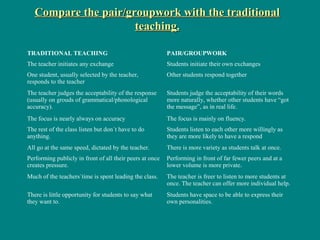
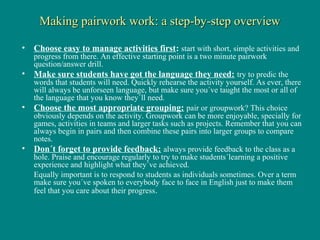

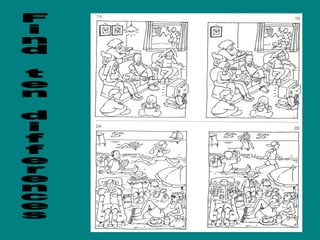
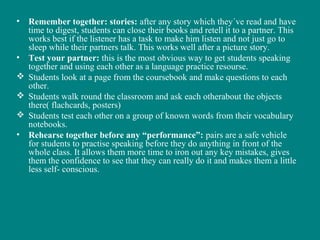

Pair and group work provides benefits over traditional classroom teaching by allowing students more opportunities to speak actively and freely with each other. It encourages natural language use through interactions like hesitation and unfinished sentences. Students can learn from each other in a lower pressure environment compared to performing alone in front of the whole class. The teacher's role shifts to facilitating student-led exchanges and providing individualized feedback. Effective pair work involves choosing manageable speaking activities, ensuring students have the needed vocabulary, selecting appropriate groupings, and providing regular praise and feedback to students. Sample daily activities include discussing questions together, doing homework as a pair, brainstorming answers before an activity, testing each other, and rehearsing together.


