FEVER OF UNKNOWN ORIGINDr. S. Aswini Kumar. MD.Professor of Medicine,Medical College Hospital, Thiruvananthapuram.
Definition:Fever of unknown origin (FUO) was defined by Petersdorf and Beeson in 1961 as temperatures higher than 38.3°C on several occasions, a duration of fever of more than 3 weeks, and failure to reach a diagnosis despite 1 week of in-patient investigation.
New classification:Durack and Street have proposed a new system for classification of FUO: classic FUO, nosocomial FUO, neutropenic FUO, and FUO associated with HIV infection
Classic PUO:This category corresponds closely to the earlier definition of FUO ,butthe new definition is broader, stipulating three outpatient visits or 3 days in the hospital without elucidation of a cause or 1 week of "intelligent and invasive" ambulatory investigation.
1. Diagnosis ?A 50 year old man was admitted with fever of three weeks duration. On examination there was hepatosplenomegaly. Routine urine and blood examinations were normal. Widal test and Mantouex test were negative. Chest X-Ray and HIV were negative. Liver biopsy showed presence of granulomas
Granulomatous hepatitisSystemic SarcoidosisMiliary tuberculosisLymphomasWegener’sBrucellosisHistoplasmosisShistosomiasis
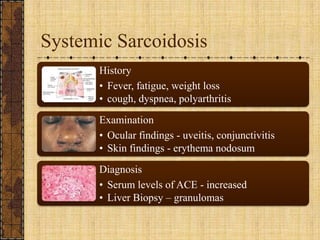
Systemic Sarcoidosis
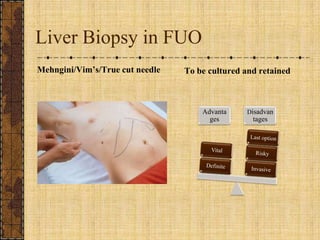
Liver Biopsy in FUOMehngini/Vim’s/True cut needleTo be cultured and retained
2. Diagnosis?A 45 year old man was admitted to the CCU with acute MI, thrombolysed and reperfused, but then went into persistent hypotension following a cardiac arrest. He developed fever on Day 5. Routine blood investigation showed a polymorpho-nuclear leucocytosis. Blood culture was diagnostic
Nosocomial FUO:“In nosocomialFUO, a temperature of ³38.3°C develops on several occasions in a hospitalized patient who is receiving acute care and in whom infection was not manifest or incubating on admission.Three days of investigation, including at least 2 days' incubation of cultures, is the minimum requirement for this diagnosis”
Nosocomial FUOPost Myocardial infarction syndromePulmonary thromboembolismOccult Nosocomial infectionTransfusion related viral infectionsInfected intra-vascular linesCatheter related infectionsDrug related fever
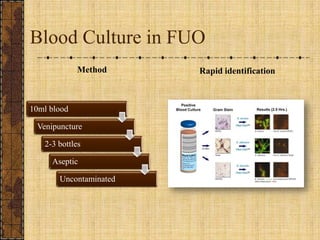
Blood Culture in FUOMethodRapid identification
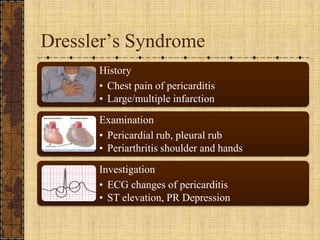
Dressler’s Syndrome
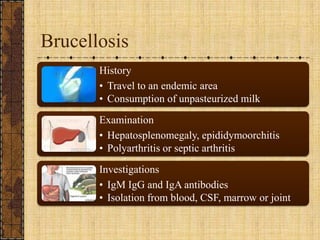
3. Diagnosis?A 30 year old farmer working in a diary farm in Tamil Nadu was admitted to the ward with low grade fever and evening rise of temperature. On examination there was generalized lymphadenopathy and hepato-splenomegaly. Blood routine, Chest X-ray PA view & Blood Widal test were negative
Systemic bacterial infectionsBrucellosisTyphoid feverLeptospirosisCampylobacter infectionMeningococcemiaLyme’s diseaseLegionaire’s disease
Brucellosis
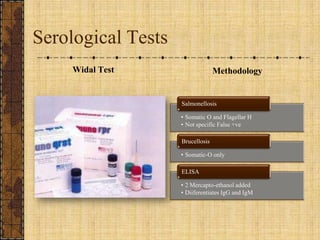
Serological TestsWidal TestMethodology
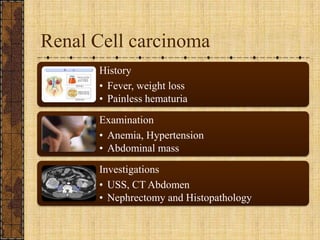
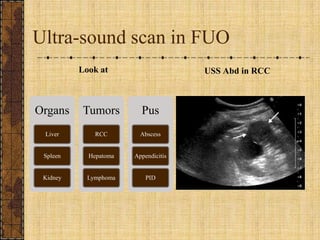
4. Diagnosis?A 49 year old college Professor came with pain in the right loin and fever of one month duration. Loss of appetite and loss of weight were present. He was investigated for UTI. Repeated URE and urine cultures were negative. Renal angle was dull but non tender. CT scan of abdomen was diagnostic
MalignanciesRenal cell carcinomaPancreatic cancerCancer colonLymphoma LeukemiaHepatomaSarcoma
Renal Cell carcinoma
Ultra-sound scan in FUOLook atUSS Abd in RCC
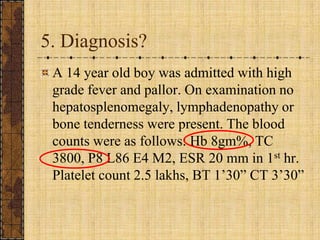
5. Diagnosis?A 14 year old boy was admitted with high grade fever and pallor. On examination no hepatosplenomegaly, lymphadenopathy or bone tenderness were present. The blood counts were as follows: Hb 8gm%, TC 3800, P8 L86 E4 M2, ESR 20 mm in 1st hr. Platelet count 2.5 lakhs, BT 1’30” CT 3’30”
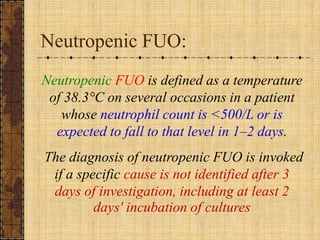
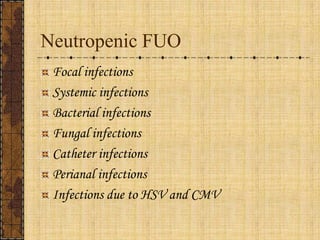
Neutropenic FUO:NeutropenicFUO is defined as a temperature of 38.3°C on several occasions in a patient whose neutrophil count is <500/L or is expected to fall to that level in 1–2 days. The diagnosis of neutropenic FUO is invoked if a specific cause is not identified after 3 days of investigation, including at least 2 days' incubation of cultures
Neutropenic FUOFocal infections Systemic infectionsBacterial infections Fungal infectionsCatheter infections Perianal infections Infections due to HSV and CMV
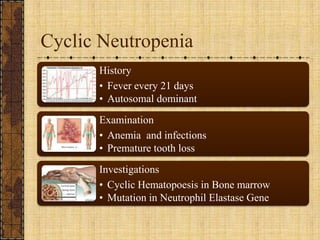
Cyclic Neutropenia
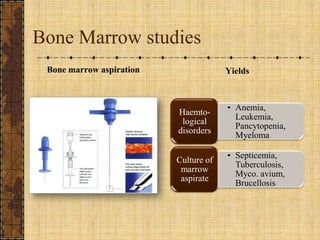
Bone Marrow studiesBone marrow aspirationYields
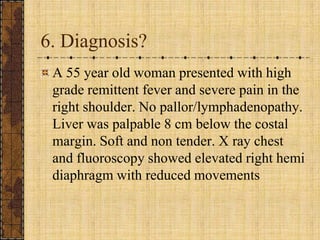
6. Diagnosis?A 55 year old woman presented with high grade remittent fever and severe pain in the right shoulder. No pallor/lymphadenopathy. Liver was palpable 8 cm below the costal margin. Soft and non tender. X ray chest and fluoroscopy showed elevated right hemi diaphragm with reduced movements
Pus somewherePancreatic abscessPelvic inflammatory diseaseProstatic abscessTubo-ovarian abscessSub diaphragmatic abscessLiver abscessDental abscess
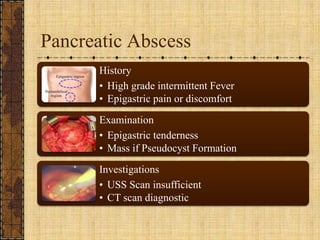
Pancreatic Abscess
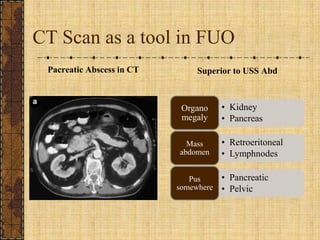
CT Scan as a tool in FUOPacreatic Abscess in CTSuperior to USS Abd
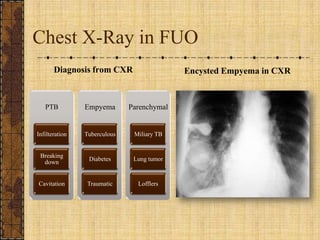
7. Diagnosis?A 19 year old girl was diagnosed to have infective endocarditis, because she had fever, pallor and systolic murmur. Repeated blood cultures were negative and she did not improve with antibiotics given for SBE. After 4 weeks she was skin and bones and still febrile. This time CXR was diagnostic
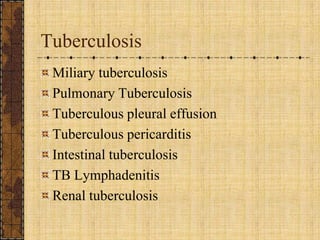
TuberculosisMiliary tuberculosisPulmonary Tuberculosis Tuberculous pleural effusionTuberculous pericarditisIntestinal tuberculosisTB LymphadenitisRenal tuberculosis
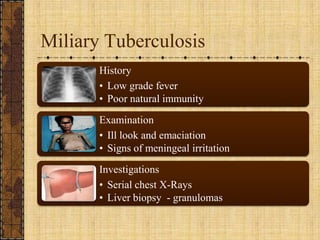
Miliary Tuberculosis
Chest X-Ray in FUODiagnosis from CXREncysted Empyema in CXR
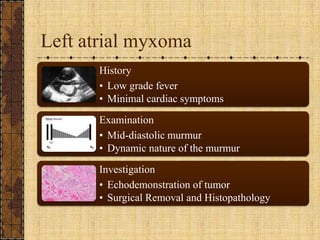
8. Diagnosis?A 25 year-old woman was admitted with a suspicion of rheumatic fever. A mid-diastolic murmur was audible to 4 out of 11 post graduate doctors in medicine who examined the case. ECG did not show RVH nor was there any straightening of the left border of heart in the chest X-ray PA view.
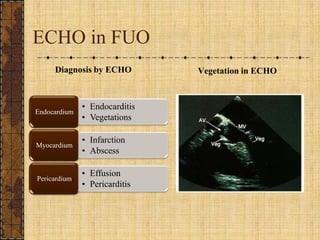
Cardiac Causes of FUOLeft atrial myxomaSub acute bacterial endocarditisProsthetic valve endocarditisAortic dissectionTuberculous pericardial effusionChronic constrictive PericarditisPost myocardial infarction syndrome
Left atrial myxoma
ECHO in FUODiagnosis by ECHOVegetation in ECHO
9. Diagnosis?A 45 year old man , who returned from Mumbai where he was working as a taxi driver for the past twelve years. He was admitted with low grade fever and cervical lymphadenopathy. He was undergoing treatment from various hospitals for irritable bowel syndrome since last six months
HIV associated FUO:“HIV associated FUO is defined by a temperature of 38.3C (101F) on several occasions over a period of 4 weeks for outpatients or 3 days for hospitalized patients with HIV infection. This diagnosis is invoked if appropriate investigation over 3 days, including 2 days’ incubation of cultures, reveals no source.”
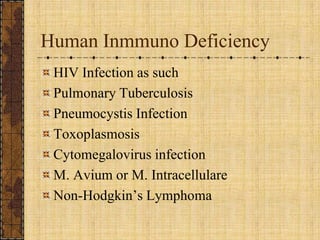
Human Inmmuno DeficiencyHIV Infection as suchPulmonary TuberculosisPneumocystis InfectionToxoplasmosisCytomegalovirus infectionM. Avium or M. IntracellulareNon-Hodgkin’s Lymphoma
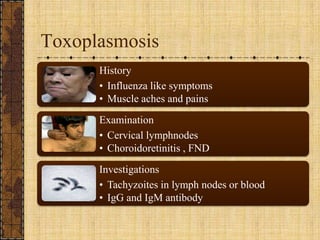
Toxoplasmosis
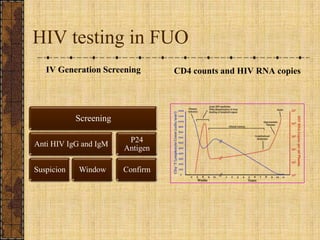
HIV testing in FUOIV Generation ScreeningCD4 counts and HIV RNA copies
10. Diagnosis?A 15 year old boy was admitted with history of fever of seven days duration. Clinical examination showed a generalized maculopapular rash and generalized lymphadenopathy, hepatosplenomegaly. All the routine investigations for a underlying bacterial infection were found negative
Viral InfectionsInfectious MononucleosisHepatitis A B C D and EEbstein Barr virus infectionCytomegalovirus infectionParvovirus infectionDengue hemorrhagic feverLymphocytic chorio-meningitis
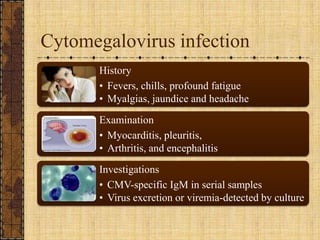
Cytomegalovirus infection
Virology in FUOAvailability limitationH1N1 Serology
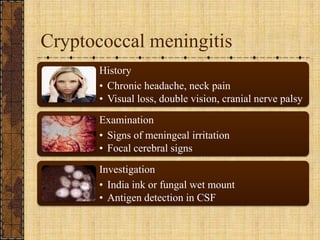
11. Diagnosis?A sixty year old man was admitted with history of fever, headache and vomiting. O/E neck stiffness was present. Initial CSF study showed 50cells P60 L40. Repeat LP showed protein 45mg% and sugar 80mg%. Patient did not improve much in spite of combined regimen with antibiotics and ATT
Fungal InfectionsCryptococcal meningitisAspergillosisBlastomycosisCandidiasisHistoplasmosisMucormycosisSporotrichosis
Cryptococcal meningitis
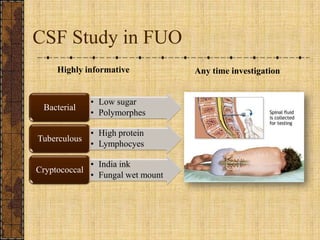
CSF Study in FUOHighly informativeAny time investigation
12. Diagnosis?A 20 year-old college student ,while on an All India Tour on motor cycle , was involved in a road traffic accident and suffered from  multiple fractures of the femur which necessitated multiple blood transfusions. He developed high grade fever with chills and rigor after one week
Parasitic InfectionsMalariaAmoebiasisLeishmaniasisP.cariniiToxoplasmosisTrichinosisStrongiloidiasis
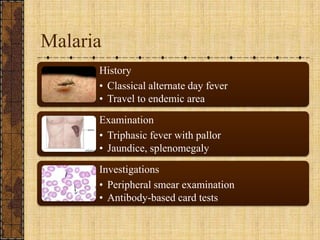
Malaria
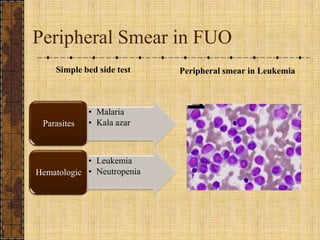
Peripheral Smear in FUOSimple bed side testPeripheral smear in Leukemia
13. Diagnosis?A 14 year old girl was suffering from recurrent generalized seizures. She was put on Phenobarbitone and Dilantin sodium for the same. She had persistent low grade fever, but no lymph node enlargement or hepatosplenomegaly. Blood examination showed evidence of megaloblastic anemia
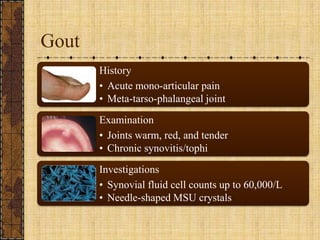
Drug fever/Non-infectious causesGoutHematomaHaemolysisCirrhosis of liverPulmonary emboliSubacute thyroiditisTissue infarction
Gout
Biochemical Tests in FUOBlood ChemistryTests to be ordered
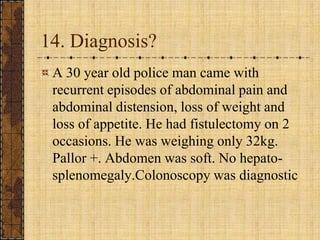
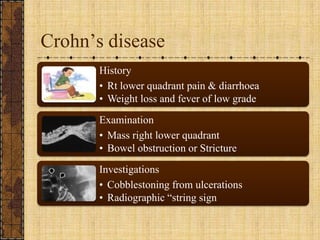
14. Diagnosis?A 30 year old police man came with recurrent episodes of abdominal pain and abdominal distension, loss of weight and loss of appetite. He had fistulectomy on 2 occasions. He was weighing only 32kg. Pallor +. Abdomen was soft. No hepato-splenomegaly.Colonoscopy was diagnostic
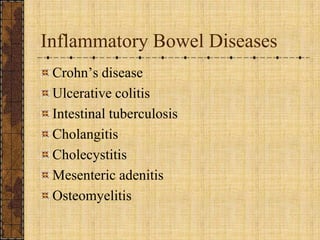
Inflammatory Bowel DiseasesCrohn’s diseaseUlcerative colitisIntestinal tuberculosisCholangitisCholecystitisMesenteric adenitisOsteomyelitis
Crohn’s disease
Tissue Biopsy in FUOBiopsy specimensAdvantages & limitations
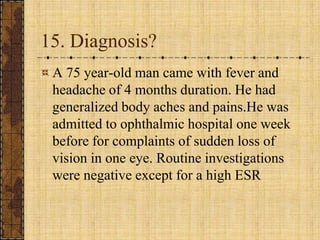
15. Diagnosis?A 75 year-old man came with fever and headache of 4 months duration. He had generalized body aches and pains.He was admitted to ophthalmic hospital one week before for complaints of sudden loss of vision in one eye. Routine investigations were negative except for a high ESR
Connective tissue disordersTemporal arteritisAdult Still’s diseaseSystemic lupus erythematosusRheumatoid arthritisPoly-arteritisnodosaMixed connective tissue diseaseRelapsing polychondritis
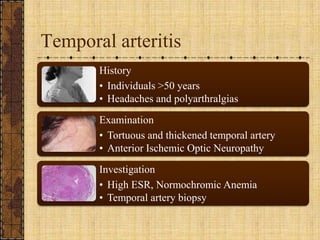
Temporal arteritis
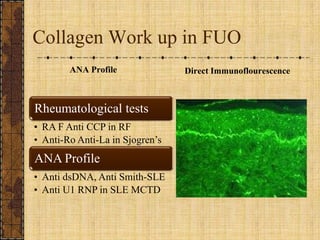
Collagen Work up in FUOANA ProfileDirect Immunoflourescence
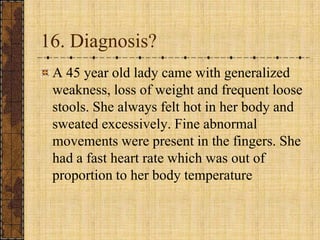
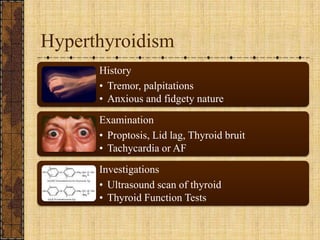
16. Diagnosis?A 45 year old lady came with generalized weakness, loss of weight and frequent loose stools. She always felt hot in her body and sweated excessively. Fine abnormal movements were present in the fingers. She had a fast heart rate which was out of proportion to her body temperature
Metabolic/endocrine disordersHyperthyroidismCentral causesCerebrovascular accidentsEncephalitisBrain tumorHypothalamic dysfunctionPheochromocytoma
Hyperthyroidism
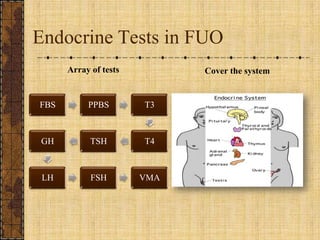
Endocrine Tests in FUOArray of testsCover the system
17. Diagnosis?A 19 year-old nursing student attending the OPD  complained that she had high grade fever on several occasions in a day for past four weeks. She was unable to attend the ward examinations during this period because of the persistent fever. In between the fevers she was apparently healthy
Miscellaneous DisordersFactitious feverHabitual hyperthermiaAfebrile FUO (<38.3oC)Exaggerated circadian rhythmHysterical FeverMaliganantHyperthermiaNeuroleptic Malignant Syndrome
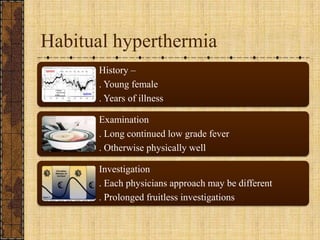
Habitual hyperthermia
Conclusions
Thank You for the patient listening

Fever Of Unknown Origin

  • 1.
    FEVER OF UNKNOWNORIGINDr. S. Aswini Kumar. MD.Professor of Medicine,Medical College Hospital, Thiruvananthapuram.
  • 2.
    Definition:Fever of unknownorigin (FUO) was defined by Petersdorf and Beeson in 1961 as temperatures higher than 38.3°C on several occasions, a duration of fever of more than 3 weeks, and failure to reach a diagnosis despite 1 week of in-patient investigation.
  • 3.
    New classification:Durack andStreet have proposed a new system for classification of FUO: classic FUO, nosocomial FUO, neutropenic FUO, and FUO associated with HIV infection
  • 4.
    Classic PUO:This categorycorresponds closely to the earlier definition of FUO ,butthe new definition is broader, stipulating three outpatient visits or 3 days in the hospital without elucidation of a cause or 1 week of "intelligent and invasive" ambulatory investigation.
  • 5.
    1. Diagnosis ?A50 year old man was admitted with fever of three weeks duration. On examination there was hepatosplenomegaly. Routine urine and blood examinations were normal. Widal test and Mantouex test were negative. Chest X-Ray and HIV were negative. Liver biopsy showed presence of granulomas
  • 6.
    Granulomatous hepatitisSystemic SarcoidosisMiliarytuberculosisLymphomasWegener’sBrucellosisHistoplasmosisShistosomiasis
  • 7.
  • 8.
    Liver Biopsy inFUOMehngini/Vim’s/True cut needleTo be cultured and retained
  • 9.
    2. Diagnosis?A 45year old man was admitted to the CCU with acute MI, thrombolysed and reperfused, but then went into persistent hypotension following a cardiac arrest. He developed fever on Day 5. Routine blood investigation showed a polymorpho-nuclear leucocytosis. Blood culture was diagnostic
  • 10.
    Nosocomial FUO:“In nosocomialFUO,a temperature of ³38.3°C develops on several occasions in a hospitalized patient who is receiving acute care and in whom infection was not manifest or incubating on admission.Three days of investigation, including at least 2 days' incubation of cultures, is the minimum requirement for this diagnosis”
  • 11.
    Nosocomial FUOPost Myocardialinfarction syndromePulmonary thromboembolismOccult Nosocomial infectionTransfusion related viral infectionsInfected intra-vascular linesCatheter related infectionsDrug related fever
  • 12.
    Blood Culture inFUOMethodRapid identification
  • 13.
  • 14.
    3. Diagnosis?A 30year old farmer working in a diary farm in Tamil Nadu was admitted to the ward with low grade fever and evening rise of temperature. On examination there was generalized lymphadenopathy and hepato-splenomegaly. Blood routine, Chest X-ray PA view & Blood Widal test were negative
  • 15.
    Systemic bacterial infectionsBrucellosisTyphoidfeverLeptospirosisCampylobacter infectionMeningococcemiaLyme’s diseaseLegionaire’s disease
  • 16.
  • 17.
  • 18.
    4. Diagnosis?A 49year old college Professor came with pain in the right loin and fever of one month duration. Loss of appetite and loss of weight were present. He was investigated for UTI. Repeated URE and urine cultures were negative. Renal angle was dull but non tender. CT scan of abdomen was diagnostic
  • 19.
    MalignanciesRenal cell carcinomaPancreaticcancerCancer colonLymphoma LeukemiaHepatomaSarcoma
  • 20.
  • 21.
    Ultra-sound scan inFUOLook atUSS Abd in RCC
  • 22.
    5. Diagnosis?A 14year old boy was admitted with high grade fever and pallor. On examination no hepatosplenomegaly, lymphadenopathy or bone tenderness were present. The blood counts were as follows: Hb 8gm%, TC 3800, P8 L86 E4 M2, ESR 20 mm in 1st hr. Platelet count 2.5 lakhs, BT 1’30” CT 3’30”
  • 23.
    Neutropenic FUO:NeutropenicFUO isdefined as a temperature of 38.3°C on several occasions in a patient whose neutrophil count is <500/L or is expected to fall to that level in 1–2 days. The diagnosis of neutropenic FUO is invoked if a specific cause is not identified after 3 days of investigation, including at least 2 days' incubation of cultures
  • 24.
    Neutropenic FUOFocal infectionsSystemic infectionsBacterial infections Fungal infectionsCatheter infections Perianal infections Infections due to HSV and CMV
  • 25.
  • 26.
    Bone Marrow studiesBonemarrow aspirationYields
  • 27.
    6. Diagnosis?A 55year old woman presented with high grade remittent fever and severe pain in the right shoulder. No pallor/lymphadenopathy. Liver was palpable 8 cm below the costal margin. Soft and non tender. X ray chest and fluoroscopy showed elevated right hemi diaphragm with reduced movements
  • 28.
    Pus somewherePancreatic abscessPelvicinflammatory diseaseProstatic abscessTubo-ovarian abscessSub diaphragmatic abscessLiver abscessDental abscess
  • 29.
  • 30.
    CT Scan asa tool in FUOPacreatic Abscess in CTSuperior to USS Abd
  • 31.
    7. Diagnosis?A 19year old girl was diagnosed to have infective endocarditis, because she had fever, pallor and systolic murmur. Repeated blood cultures were negative and she did not improve with antibiotics given for SBE. After 4 weeks she was skin and bones and still febrile. This time CXR was diagnostic
  • 32.
    TuberculosisMiliary tuberculosisPulmonary TuberculosisTuberculous pleural effusionTuberculous pericarditisIntestinal tuberculosisTB LymphadenitisRenal tuberculosis
  • 33.
  • 34.
    Chest X-Ray inFUODiagnosis from CXREncysted Empyema in CXR
  • 35.
    8. Diagnosis?A 25year-old woman was admitted with a suspicion of rheumatic fever. A mid-diastolic murmur was audible to 4 out of 11 post graduate doctors in medicine who examined the case. ECG did not show RVH nor was there any straightening of the left border of heart in the chest X-ray PA view.
  • 36.
    Cardiac Causes ofFUOLeft atrial myxomaSub acute bacterial endocarditisProsthetic valve endocarditisAortic dissectionTuberculous pericardial effusionChronic constrictive PericarditisPost myocardial infarction syndrome
  • 37.
  • 38.
    ECHO in FUODiagnosisby ECHOVegetation in ECHO
  • 39.
    9. Diagnosis?A 45year old man , who returned from Mumbai where he was working as a taxi driver for the past twelve years. He was admitted with low grade fever and cervical lymphadenopathy. He was undergoing treatment from various hospitals for irritable bowel syndrome since last six months
  • 40.
    HIV associated FUO:“HIVassociated FUO is defined by a temperature of 38.3C (101F) on several occasions over a period of 4 weeks for outpatients or 3 days for hospitalized patients with HIV infection. This diagnosis is invoked if appropriate investigation over 3 days, including 2 days’ incubation of cultures, reveals no source.”
  • 41.
    Human Inmmuno DeficiencyHIVInfection as suchPulmonary TuberculosisPneumocystis InfectionToxoplasmosisCytomegalovirus infectionM. Avium or M. IntracellulareNon-Hodgkin’s Lymphoma
  • 42.
  • 43.
    HIV testing inFUOIV Generation ScreeningCD4 counts and HIV RNA copies
  • 44.
    10. Diagnosis?A 15year old boy was admitted with history of fever of seven days duration. Clinical examination showed a generalized maculopapular rash and generalized lymphadenopathy, hepatosplenomegaly. All the routine investigations for a underlying bacterial infection were found negative
  • 45.
    Viral InfectionsInfectious MononucleosisHepatitisA B C D and EEbstein Barr virus infectionCytomegalovirus infectionParvovirus infectionDengue hemorrhagic feverLymphocytic chorio-meningitis
  • 46.
  • 47.
    Virology in FUOAvailabilitylimitationH1N1 Serology
  • 48.
    11. Diagnosis?A sixtyyear old man was admitted with history of fever, headache and vomiting. O/E neck stiffness was present. Initial CSF study showed 50cells P60 L40. Repeat LP showed protein 45mg% and sugar 80mg%. Patient did not improve much in spite of combined regimen with antibiotics and ATT
  • 49.
  • 50.
  • 51.
    CSF Study inFUOHighly informativeAny time investigation
  • 52.
    12. Diagnosis?A 20year-old college student ,while on an All India Tour on motor cycle , was involved in a road traffic accident and suffered from multiple fractures of the femur which necessitated multiple blood transfusions. He developed high grade fever with chills and rigor after one week
  • 53.
  • 54.
  • 55.
    Peripheral Smear inFUOSimple bed side testPeripheral smear in Leukemia
  • 56.
    13. Diagnosis?A 14year old girl was suffering from recurrent generalized seizures. She was put on Phenobarbitone and Dilantin sodium for the same. She had persistent low grade fever, but no lymph node enlargement or hepatosplenomegaly. Blood examination showed evidence of megaloblastic anemia
  • 57.
    Drug fever/Non-infectious causesGoutHematomaHaemolysisCirrhosisof liverPulmonary emboliSubacute thyroiditisTissue infarction
  • 58.
  • 59.
    Biochemical Tests inFUOBlood ChemistryTests to be ordered
  • 60.
    14. Diagnosis?A 30year old police man came with recurrent episodes of abdominal pain and abdominal distension, loss of weight and loss of appetite. He had fistulectomy on 2 occasions. He was weighing only 32kg. Pallor +. Abdomen was soft. No hepato-splenomegaly.Colonoscopy was diagnostic
  • 61.
    Inflammatory Bowel DiseasesCrohn’sdiseaseUlcerative colitisIntestinal tuberculosisCholangitisCholecystitisMesenteric adenitisOsteomyelitis
  • 62.
  • 63.
    Tissue Biopsy inFUOBiopsy specimensAdvantages & limitations
  • 64.
    15. Diagnosis?A 75year-old man came with fever and headache of 4 months duration. He had generalized body aches and pains.He was admitted to ophthalmic hospital one week before for complaints of sudden loss of vision in one eye. Routine investigations were negative except for a high ESR
  • 65.
    Connective tissue disordersTemporalarteritisAdult Still’s diseaseSystemic lupus erythematosusRheumatoid arthritisPoly-arteritisnodosaMixed connective tissue diseaseRelapsing polychondritis
  • 66.
  • 67.
    Collagen Work upin FUOANA ProfileDirect Immunoflourescence
  • 68.
    16. Diagnosis?A 45year old lady came with generalized weakness, loss of weight and frequent loose stools. She always felt hot in her body and sweated excessively. Fine abnormal movements were present in the fingers. She had a fast heart rate which was out of proportion to her body temperature
  • 69.
    Metabolic/endocrine disordersHyperthyroidismCentral causesCerebrovascularaccidentsEncephalitisBrain tumorHypothalamic dysfunctionPheochromocytoma
  • 70.
  • 71.
    Endocrine Tests inFUOArray of testsCover the system
  • 72.
    17. Diagnosis?A 19year-old nursing student attending the OPD complained that she had high grade fever on several occasions in a day for past four weeks. She was unable to attend the ward examinations during this period because of the persistent fever. In between the fevers she was apparently healthy
  • 73.
    Miscellaneous DisordersFactitious feverHabitualhyperthermiaAfebrile FUO (<38.3oC)Exaggerated circadian rhythmHysterical FeverMaliganantHyperthermiaNeuroleptic Malignant Syndrome
  • 74.
  • 75.
  • 76.
    Thank You forthe patient listening

Editor's Notes

  • #74 An underestimated reason is factitious fever. Patients frequently are women that work, or have worked, in the medical field and have complex medical historiesHabitual Hyperthermia is a condition of unknown cause that occurs in young females, characterized by body temperatures of 99° F to 100.5° F regularly or intermittently for years. No organic cause can be foundAfebrile FUO (&lt;38.3oC) Means the temperature recorded is always less than (&lt;38.3oC). However patient always complaints of feverishnessExaggerated circadian rhythm: The normal person has an evening rise of temperature which is not normally apparent. This becomes evidentHysterical Fever: Patient in his or subconcious mind is thinking that he is always having feverMalignant hyperthermia is a rare life-threatening condition that is triggered by exposure to certain drugs used for general anesthesia (specifically all volatile anesthetics), nearly all gas anesthetics, and the neuromuscular blocking agent succinylcholineNeuroleptic malignant syndrome (NMS) is a life threatening, although rare neurological disorder most often caused by an adverse reaction to neuroleptic or antipsychotic drugs. It generally presents with muscle rigidity, fever, autonomic instability
  • #75 Patients with continuous low grade fever lasting months or years.They are otherwise physically well frequently present perplexing problems to the clinician. Even after prolonged fruitless investigation one hesitates in most cases of this nature to dismiss the matter lightly lest some unrecognized or occult lesion be present. Yet few physicians have the opportunity and few patients the time and money necessary for investigation and observation over long periods. The patient with such a condition often becomes dissatisfied with the negative results of repeated examinations by his own physician Then commences a tour to a long series of physicians, as illustrated in the following reports of cases. As often happens, each physician approaches the case from a different point of view and arrives at a different conclusionThe patient is alarmed by the array of suggested diagnostic possibilities and, if not already neurotic, may become so.