


Hesham A. K. Ibrahim,
MCEM, EgFEM,
ED Registrar, Poole
Hospital, UK.
Pain Control in ED
Objectives
- To discuss the importance of early
control of pain in ED.
- To talk about the different ways of pain
control either pharmacological or non
pharmacological.
Is there a problem with pain
management in ED?
Evidence showed that around 7 out of 10 patients
come to the ED because they are in pain.(9)
Evidence showed that pain is commonly under-
recognized, under-treated and treatment may be
delayed.(1),(2)
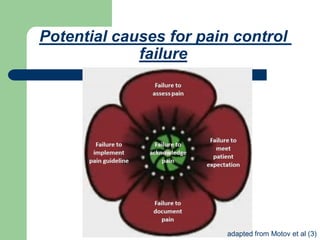
Potential causes for pain control
failure
adapted from Motov et al (3)
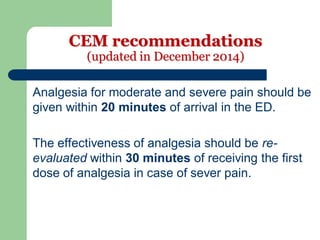
CEM recommendations
(updated in December 2014)
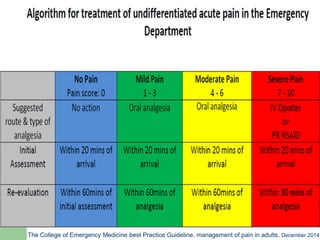
Analgesia for moderate and severe pain should be
given within 20 minutes of arrival in the ED.
The effectiveness of analgesia should be re-
evaluated within 30 minutes of receiving the first
dose of analgesia in case of sever pain.
It is important that the lack of diagnosis does not
delay administration of appropriate analgesia.
Recognition and alleviation of pain should be a
priority.
, be monitoredstart at triageThis process should
during the patient time in the ED.
How to estimate pain in
ED?
There are Multiple assessment tools in use.
In Adults:
- 0–10 Numeric Pain Rating Scale.
In Pediatrics:
- Wong-Baker Faces Pain Rating Scale (Universal
Pain Assessment Tool).
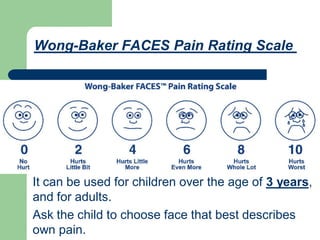
Baker FACES Pain Rating Scale-Wong
,years3It can be used for children over the age of
and for adults.
Ask the child to choose face that best describes
own pain.
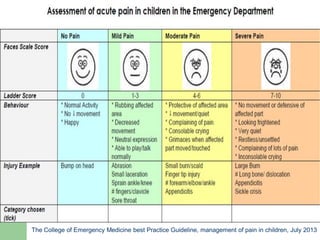
The College of Emergency Medicine best Practice Guideline, management of pain in children, July 2013
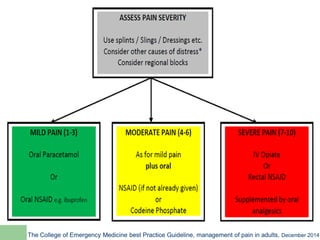
Pain Control Ladder
The College of Emergency Medicine best Practice Guideline, management of pain in adults, December 2014
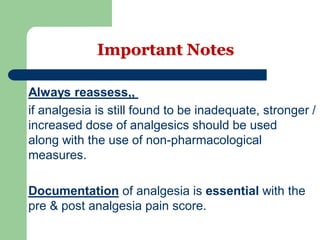
Important Notes
Always reassess,,
if analgesia is still found to be inadequate, stronger /
increased dose of analgesics should be used
along with the use of non-pharmacological
measures.
with theessentialof analgesia isDocumentation
pre & post analgesia pain score.
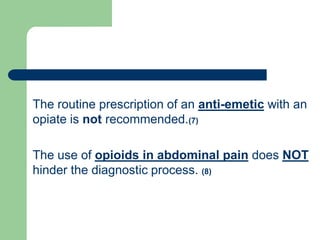
with anemetic-antiThe routine prescription of an
opiate is not recommended.(7)
NOTdoesopioids in abdominal painThe use of
hinder the diagnostic process. (8)
Non pharmacological pain
control
- Reduction of a fracture, Immobilization, elevation
of injured limb & wound dressing.
- Aspiration of post traumatic haemoarthosis.
- Toys, play therapist (for children).
- Good communication and reassurance.
Pain control in extremes
of age
Elderly Pain Control(5)
Paracetamol:
is a safe first line treatment. (including intravenous)
NSAIDS:
used with caution and at the lowest possible dose in
older adults.
This is because of the GIT, renal and cardiovascular
side effects as well as drug-drug interactions.
Opiates:
- Appropriate dose reduction should be used.
- Anticipate any other drug interactions; particularly
those acting on the CNS which may increase
the likelihood of respiratory depression.
Pediatric Pain Control
) Psychological strategies:1
involving parents, child-friendly environment, and
explanation with reassurance all help build trust.
) distraction:2
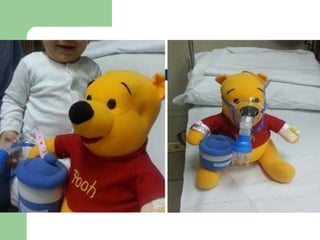
with toys, blowing bubbles, using superheroes to
make the pain go away.
pharmacological adjuncts:-) Non3
such as limb immobilization, dressings for burns.
) Pharmacological:4
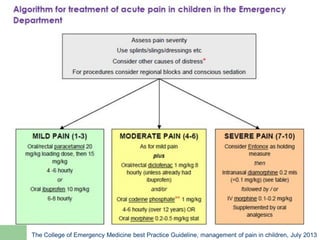
- Follow the CEM algorithm.
- For procedures, you may consider sedation using
ketamine (IV / IM) or midazolam (oral or
intranasal).
The College of Emergency Medicine best Practice Guideline, management of pain in children, July 2013
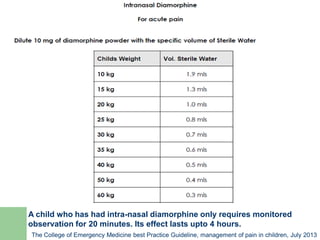
A child who has had intra-nasal diamorphine only requires monitored
observation for 20 minutes. Its effect lasts upto 4 hours.
Special Circumstances
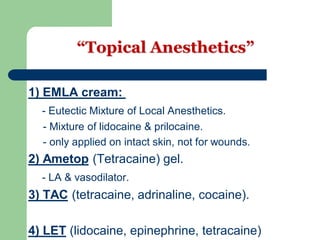
“Topical Anesthetics”
) EMLA cream:1
- Eutectic Mixture of Local Anesthetics.
- Mixture of lidocaine & prilocaine.
- only applied on intact skin, not for wounds.
(Tetracaine) gel.) Ametop2
- LA & vasodilator.
(tetracaine, adrinaline, cocaine).) TAC3
(lidocaine, epinephrine, tetracaine)) LET4
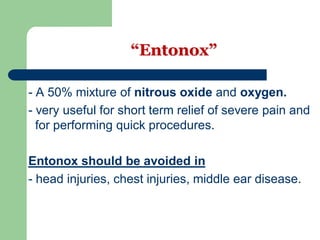
“Entonox”
- A 50% mixture of nitrous oxide and oxygen.
- very useful for short term relief of severe pain and
for performing quick procedures.
Entonox should be avoided in
- head injuries, chest injuries, middle ear disease.
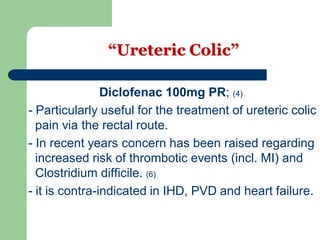
“Ureteric Colic”
Diclofenac 100mg PR; (4)
- Particularly useful for the treatment of ureteric colic
pain via the rectal route.
- In recent years concern has been raised regarding
increased risk of thrombotic events (incl. MI) and
Clostridium difficile. (6)
- it is contra-indicated in IHD, PVD and heart failure.
“Regional & Local Blocks”
1) Hematoma block / Bier’s block.
2) Femoral nerve block.
3) Fascia iliaca compartment block:
blocking both the femoral nerve and the lateral cutaneous
nerve of the thigh.
4) Wrist block.
Summary
- We have discussed the importance of early
control of pain in ED.
- We have talked about the different ways of
controlling pain either pharmacological or
non pharmacological.
References
1) Todd KH, Sloan EP, Chen C et al. Survey of pain etiology,
management practices and patient satisfaction in two urban
emergency departments. CJEM 2002; 4(4):252-6
2) Brown J, Klein C, Lewis B et al. Emergency Department analgesia for
fracture pain management. Ann Emerg Med 2003;42(2):197-205
3) Motov SM, Khan AN. Problems and barriers of pain management in
the emergency department: Are we ever going to get better?
Journal of Pain Research 2009; 2: 5-11
4)The College of Emergency Medicine best Practice Guideline,
management of pain in adults, December 2014.
5) Abdulla A. Guidance on the management of pain in older people. Age
and Ageing 2013; 42: i1-i57
6) Suissa D et al. Non-steroidal anti-inflammatory drugs and the risk of
Clostridium difficile-associated disease. Br J Clin Pharm 2012.
(7) Simson PM et al. Prophylactic metoclopramide for patients receiving
intravenous morphine in the emergency setting: a systematic
review and meta-analysis of randomized controlled trials. EMA
2011; 23(4):452-7.
(8) Manterola C, Astudillo P, Losada H et al (2007) Analgesia in patients
with acute abdominal pain. Cochrane Database Syst Rev(3):
CD005660.
(9) Liza Keating, Acute pain in the emergency department: the
challenges, British Journal of Pain, vol 5, no.3, Sept. 2013.
(10) The College of Emergency Medicine best Practice Guideline,
management of pain in children, July 2013.
“Thank You”
Pain control in Emergency Department

Pain control in Emergency Department

  • 1.
    Hesham A. K.Ibrahim, MCEM, EgFEM, ED Registrar, Poole Hospital, UK. Pain Control in ED
  • 2.
    Objectives - To discussthe importance of early control of pain in ED. - To talk about the different ways of pain control either pharmacological or non pharmacological.
  • 3.
    Is there aproblem with pain management in ED? Evidence showed that around 7 out of 10 patients come to the ED because they are in pain.(9) Evidence showed that pain is commonly under- recognized, under-treated and treatment may be delayed.(1),(2)
  • 4.
    Potential causes forpain control failure adapted from Motov et al (3)
  • 5.
    CEM recommendations (updated inDecember 2014) Analgesia for moderate and severe pain should be given within 20 minutes of arrival in the ED. The effectiveness of analgesia should be re- evaluated within 30 minutes of receiving the first dose of analgesia in case of sever pain.
  • 6.
    It is importantthat the lack of diagnosis does not delay administration of appropriate analgesia. Recognition and alleviation of pain should be a priority. , be monitoredstart at triageThis process should during the patient time in the ED.
  • 7.
    How to estimatepain in ED?
  • 8.
    There are Multipleassessment tools in use. In Adults: - 0–10 Numeric Pain Rating Scale. In Pediatrics: - Wong-Baker Faces Pain Rating Scale (Universal Pain Assessment Tool).
  • 9.
    Baker FACES PainRating Scale-Wong ,years3It can be used for children over the age of and for adults. Ask the child to choose face that best describes own pain.
  • 10.
    The College ofEmergency Medicine best Practice Guideline, management of pain in children, July 2013
  • 11.
  • 12.
    The College ofEmergency Medicine best Practice Guideline, management of pain in adults, December 2014
  • 13.
    The College ofEmergency Medicine best Practice Guideline, management of pain in adults, December 2014
  • 14.
    Important Notes Always reassess,, ifanalgesia is still found to be inadequate, stronger / increased dose of analgesics should be used along with the use of non-pharmacological measures. with theessentialof analgesia isDocumentation pre & post analgesia pain score.
  • 15.
    with anemetic-antiThe routineprescription of an opiate is not recommended.(7) NOTdoesopioids in abdominal painThe use of hinder the diagnostic process. (8)
  • 16.
    Non pharmacological pain control -Reduction of a fracture, Immobilization, elevation of injured limb & wound dressing. - Aspiration of post traumatic haemoarthosis. - Toys, play therapist (for children). - Good communication and reassurance.
  • 17.
    Pain control inextremes of age
  • 18.
    Elderly Pain Control(5) Paracetamol: isa safe first line treatment. (including intravenous) NSAIDS: used with caution and at the lowest possible dose in older adults. This is because of the GIT, renal and cardiovascular side effects as well as drug-drug interactions.
  • 19.
    Opiates: - Appropriate dosereduction should be used. - Anticipate any other drug interactions; particularly those acting on the CNS which may increase the likelihood of respiratory depression.
  • 20.
    Pediatric Pain Control )Psychological strategies:1 involving parents, child-friendly environment, and explanation with reassurance all help build trust. ) distraction:2 with toys, blowing bubbles, using superheroes to make the pain go away.
  • 21.
    pharmacological adjuncts:-) Non3 suchas limb immobilization, dressings for burns. ) Pharmacological:4 - Follow the CEM algorithm. - For procedures, you may consider sedation using ketamine (IV / IM) or midazolam (oral or intranasal).
  • 22.
    The College ofEmergency Medicine best Practice Guideline, management of pain in children, July 2013
  • 23.
    The College ofEmergency Medicine best Practice Guideline, management of pain in children, July 2013 A child who has had intra-nasal diamorphine only requires monitored observation for 20 minutes. Its effect lasts upto 4 hours.
  • 25.
  • 26.
    “Topical Anesthetics” ) EMLAcream:1 - Eutectic Mixture of Local Anesthetics. - Mixture of lidocaine & prilocaine. - only applied on intact skin, not for wounds. (Tetracaine) gel.) Ametop2 - LA & vasodilator. (tetracaine, adrinaline, cocaine).) TAC3 (lidocaine, epinephrine, tetracaine)) LET4
  • 27.
    “Entonox” - A 50%mixture of nitrous oxide and oxygen. - very useful for short term relief of severe pain and for performing quick procedures. Entonox should be avoided in - head injuries, chest injuries, middle ear disease.
  • 28.
    “Ureteric Colic” Diclofenac 100mgPR; (4) - Particularly useful for the treatment of ureteric colic pain via the rectal route. - In recent years concern has been raised regarding increased risk of thrombotic events (incl. MI) and Clostridium difficile. (6) - it is contra-indicated in IHD, PVD and heart failure.
  • 29.
    “Regional & LocalBlocks” 1) Hematoma block / Bier’s block. 2) Femoral nerve block. 3) Fascia iliaca compartment block: blocking both the femoral nerve and the lateral cutaneous nerve of the thigh. 4) Wrist block.
  • 30.
    Summary - We havediscussed the importance of early control of pain in ED. - We have talked about the different ways of controlling pain either pharmacological or non pharmacological.
  • 31.
    References 1) Todd KH,Sloan EP, Chen C et al. Survey of pain etiology, management practices and patient satisfaction in two urban emergency departments. CJEM 2002; 4(4):252-6 2) Brown J, Klein C, Lewis B et al. Emergency Department analgesia for fracture pain management. Ann Emerg Med 2003;42(2):197-205 3) Motov SM, Khan AN. Problems and barriers of pain management in the emergency department: Are we ever going to get better? Journal of Pain Research 2009; 2: 5-11 4)The College of Emergency Medicine best Practice Guideline, management of pain in adults, December 2014. 5) Abdulla A. Guidance on the management of pain in older people. Age and Ageing 2013; 42: i1-i57 6) Suissa D et al. Non-steroidal anti-inflammatory drugs and the risk of Clostridium difficile-associated disease. Br J Clin Pharm 2012.
  • 32.
    (7) Simson PMet al. Prophylactic metoclopramide for patients receiving intravenous morphine in the emergency setting: a systematic review and meta-analysis of randomized controlled trials. EMA 2011; 23(4):452-7. (8) Manterola C, Astudillo P, Losada H et al (2007) Analgesia in patients with acute abdominal pain. Cochrane Database Syst Rev(3): CD005660. (9) Liza Keating, Acute pain in the emergency department: the challenges, British Journal of Pain, vol 5, no.3, Sept. 2013. (10) The College of Emergency Medicine best Practice Guideline, management of pain in children, July 2013.
  • 33.