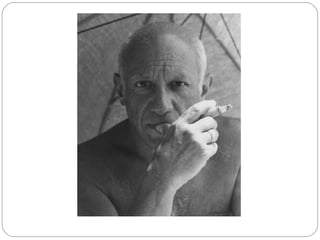
Pablo Picasso


      Minja Čule II-4
Filološka gimnazija, Beograd
        2012/2013.
Early life

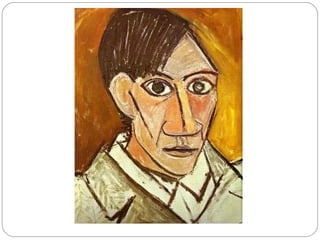
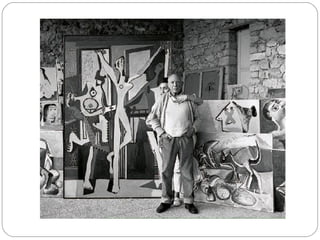
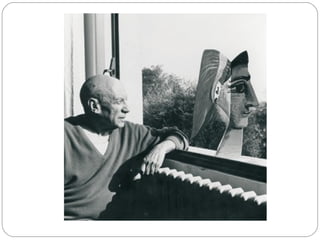
Pablo Picasso was a Spanish painter, sculptor,
 printmaker and stage designer.
Picasso showed a passion and a skill for drawing
 from an early age.
His father Ruiz persuaded the officials at the
 academy to allow his son to take an entrance
 exam for the advanced class and later jury
 admitted him, at just 13.
Career beginning
Picasso made his first trip to Paris in 1900, then
 the art capital of Europe. There, he met his first
 Parisian friend, the journalist and poet Max
 Jacob.
These were times of severe poverty, cold, and
 desperation. He had big financial problems and
 he burned many of his paintings to stay warm.
Pablo had his first exibitat age 13, when he
 showed his paintings in the umbrella store.
At 16 he was sent to Royal Academy of Madrid.
He was very cruel to women. He had many affairs
 and many lovers.

Some of his lovers were: Olivier, Eva Gouel, Ogla
 Khokhlova (he married her in 1918.), Maria
 Therese Walter, Dora Maar.

He had 2 children with Olga. Their names were
 Maya and Paulo.
 - Fernande Olivier (Picasso's first love, she was 18?;
  he was 23)
  - Marcelle Humbert - Eva Gouel (she was 27,
  Picasso was 31)
  - Gaby Lespinasse (he was 34 she was younger)
  - Olga Khokhlova (Picasso's first wife; she was 26
  and he was 36 when they met)
  - Marie-Thérèse Walter (she was 17, he was 46)
  - Dora Maar (she was 29, Picasso was 55)
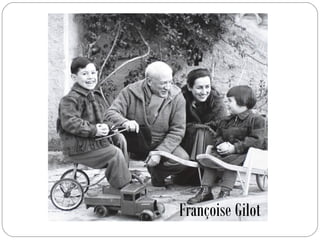
  - Françoise Gilot (she was 21 when she met
  Picasso, who was 61)
  - Geneviève Laporte (one of Picasso's last lovers.
  She was in her mid-twenties and a French model of
  Picasso, who was in his seventies when the affair
  started)
  - Jacqueline Roque (who became Picasso's second
  wife. She was 27 and he was 79)
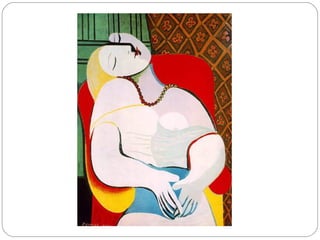
Marie-Thérèse became jealous when
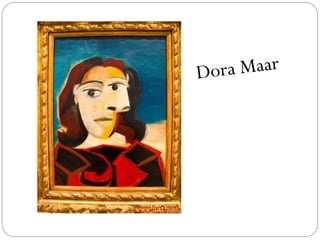
 Picasso fell in love with Dora Maar, a
 surrealist photographer and model for
 Picasso, in 1935. She was born
 Henriette Theodora Marković in Paris,
 France. Her father, Josip Markovic, was
 a Croatian architect.
Do ra Maar
For him she was the "woman in tears" in many
 aspects. During their love affair, she suffered
 from his moods, and hated that in 1943 he found
 a new lover, Françoise Gilot. She was 40 years
 younger than he was. In her 1964 book Life with
 Picasso,Gilot describes his abusive treatment
 and myriad infidelities which led her to leave him,
 taking the children with her. This was a severe
 blow to Picasso.
Françoise Gilot
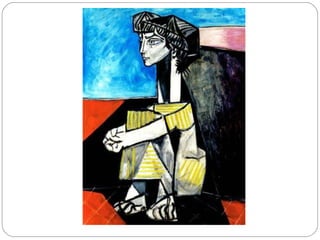
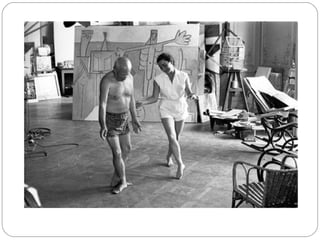
Picasso   was married twice and had four
 children by three women. His second woman
 was Jacqueline Roque. Their marriage lasted
 20 years until his death, during which time he
 created more than 400 portraits of her.

By this time, Picasso had constructed a huge
 Gothic home, and could afford large villas in the
 south of France.
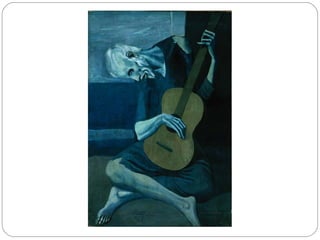
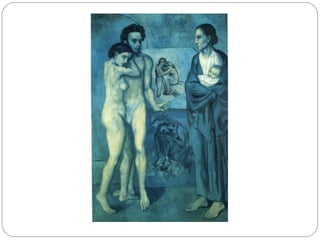
The years between 1901 and 1904 were
 known as Picasso's Blue Period.
  Nearly all of his works were executed in
 somber shades of blue and contained lean,
 melancholy, and introspective concentrating
 on their own thoughts) figures.
 Two outstanding examples of this period are
 the Old Guitarist (1903) and Life (1903).
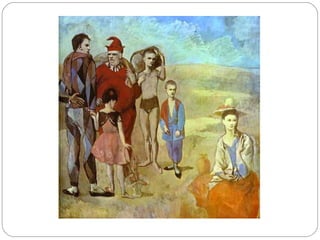
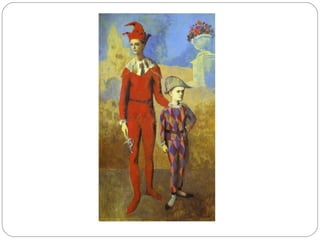
In the second half of 1904 Picasso's style
 took a new direction. In these paintings the
 color became more natural, delicate, and
 tender in its range, with reddish and pink
 tones dominating the works. Thus this
 period was called his Pink Period. The
 most celebrated example of this phase is
 the Family of Saltimbanques (1905).
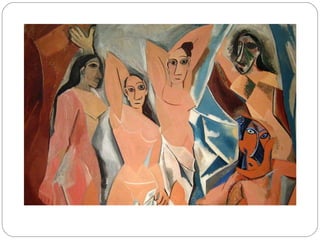
Les    Demoiselles d'Avignon is
generally regarded as the first
cubist painting. The faces of the
figures are seen from both front and
profile positions at the same time.
Cubist artwork, objects are analyzed, broken
 up and reassembled in an abstracted form—
 instead of depicting objects from one
 viewpoint, the artist depicts the subject from a
 multitude of viewpoints to represent the
 subject in a greater context.

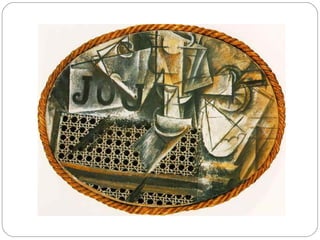
Picasso's   first, and probably his most
 celebrated, collage is Still Life with Chair
 Caning (1911–1912).
After Picasso experimented with the new
 medium of collage, he returned more
 intensively to painting.

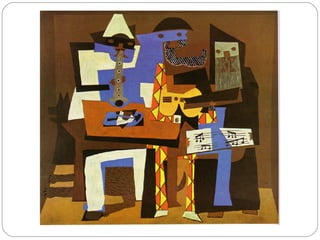
The Three Musicians represents a classical
 expression of cubism.
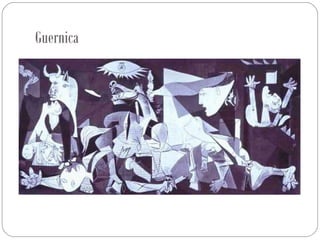
One of Picasso's most celebrated paintings
 of the 1930s is Guernica (1937) It depicts
 the destruction by bombing of the town of
 Guernica during the Spanish Civil War.
Guernica
Interesting facts
 During the Second World War, Picasso remained in Paris while
  the Germans occupied the city.

 Around this time, Picasso took up writing as an alternative outlet.
  Between 1935 and 1959 he wrote over 300 poems.

 Picasso's Full Name Has 23 Words (Pablo Diego José Francisco
  de Paula Juan Nepomuceno María de los Remedios Cipriano de
  la Santísima Trinidad Martyr Patricio Clito Ruíz y Picasso).

 Picasso had such a difficult birth and was such a weak baby that
  when he was born, the midwife thought that he was stillborn so
  she left him on a table to attend his mother. It was his uncle, a
  doctor named Don Salvador, that saved him.
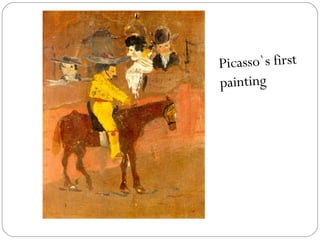
Picasso`s first
painting
Did Picasso Steal the Mona Lisa?
   Actually no, but in 1911, when the Mona
 Lisa was stolen from the Louvre, the police
 took in Picasso's friend, the poet Guillaume
 Apollinaire. Apollinaire fingered Picasso as
 a suspect, so the police hauled him in for
 questioning. Both were later released.
It is estimated that Picasso produced
 50,000 pieces of art.
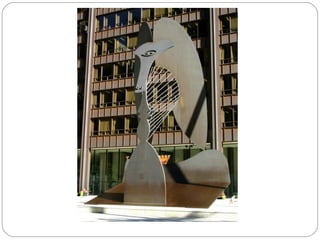
In 1967, Picasso made a public
 sculpture in downtown Chicago call
 the Chicago Picasso. He donated it
 to the city of Chicago and would not
 accept payment. No one knows what
 the sculpture represents.
Death
Pablo Picasso died on 8 April 1973 in France,
 while he and his wife Jacqueline entertained
 friends for dinner. His final words were "Drink to
 me, drink to my health, you know I can't drink
 any more.“

Devastated and lonely after the death of
 Picasso, Jacqueline Roque took her own life by
 gunshot in 1986 when she was 59 years old.
“Art is the lie that enables us
 to realize the truth.”

                ~Pablo Picasso

Pablo picasso

  • 1.
    Pablo Picasso Minja Čule II-4 Filološka gimnazija, Beograd 2012/2013.
  • 3.
    Early life Pablo Picassowas a Spanish painter, sculptor, printmaker and stage designer. Picasso showed a passion and a skill for drawing from an early age. His father Ruiz persuaded the officials at the academy to allow his son to take an entrance exam for the advanced class and later jury admitted him, at just 13.
  • 5.
    Career beginning Picasso madehis first trip to Paris in 1900, then the art capital of Europe. There, he met his first Parisian friend, the journalist and poet Max Jacob. These were times of severe poverty, cold, and desperation. He had big financial problems and he burned many of his paintings to stay warm. Pablo had his first exibitat age 13, when he showed his paintings in the umbrella store. At 16 he was sent to Royal Academy of Madrid.
  • 6.
    He was verycruel to women. He had many affairs and many lovers. Some of his lovers were: Olivier, Eva Gouel, Ogla Khokhlova (he married her in 1918.), Maria Therese Walter, Dora Maar. He had 2 children with Olga. Their names were Maya and Paulo.
  • 7.
     - FernandeOlivier (Picasso's first love, she was 18?; he was 23) - Marcelle Humbert - Eva Gouel (she was 27, Picasso was 31) - Gaby Lespinasse (he was 34 she was younger) - Olga Khokhlova (Picasso's first wife; she was 26 and he was 36 when they met) - Marie-Thérèse Walter (she was 17, he was 46) - Dora Maar (she was 29, Picasso was 55) - Françoise Gilot (she was 21 when she met Picasso, who was 61) - Geneviève Laporte (one of Picasso's last lovers. She was in her mid-twenties and a French model of Picasso, who was in his seventies when the affair started) - Jacqueline Roque (who became Picasso's second wife. She was 27 and he was 79)
  • 9.
    Marie-Thérèse became jealouswhen Picasso fell in love with Dora Maar, a surrealist photographer and model for Picasso, in 1935. She was born Henriette Theodora Marković in Paris, France. Her father, Josip Markovic, was a Croatian architect.
  • 10.
  • 11.
    For him shewas the "woman in tears" in many aspects. During their love affair, she suffered from his moods, and hated that in 1943 he found a new lover, Françoise Gilot. She was 40 years younger than he was. In her 1964 book Life with Picasso,Gilot describes his abusive treatment and myriad infidelities which led her to leave him, taking the children with her. This was a severe blow to Picasso.
  • 12.
  • 13.
    Picasso was married twice and had four children by three women. His second woman was Jacqueline Roque. Their marriage lasted 20 years until his death, during which time he created more than 400 portraits of her. By this time, Picasso had constructed a huge Gothic home, and could afford large villas in the south of France.
  • 18.
    The years between1901 and 1904 were known as Picasso's Blue Period. Nearly all of his works were executed in somber shades of blue and contained lean, melancholy, and introspective concentrating on their own thoughts) figures. Two outstanding examples of this period are the Old Guitarist (1903) and Life (1903).
  • 21.
    In the secondhalf of 1904 Picasso's style took a new direction. In these paintings the color became more natural, delicate, and tender in its range, with reddish and pink tones dominating the works. Thus this period was called his Pink Period. The most celebrated example of this phase is the Family of Saltimbanques (1905).
  • 23.
    Les Demoiselles d'Avignon is generally regarded as the first cubist painting. The faces of the figures are seen from both front and profile positions at the same time.
  • 25.
    Cubist artwork, objectsare analyzed, broken up and reassembled in an abstracted form— instead of depicting objects from one viewpoint, the artist depicts the subject from a multitude of viewpoints to represent the subject in a greater context. Picasso's first, and probably his most celebrated, collage is Still Life with Chair Caning (1911–1912).
  • 27.
    After Picasso experimentedwith the new medium of collage, he returned more intensively to painting. The Three Musicians represents a classical expression of cubism. One of Picasso's most celebrated paintings of the 1930s is Guernica (1937) It depicts the destruction by bombing of the town of Guernica during the Spanish Civil War.
  • 29.
  • 34.
    Interesting facts  Duringthe Second World War, Picasso remained in Paris while the Germans occupied the city.  Around this time, Picasso took up writing as an alternative outlet. Between 1935 and 1959 he wrote over 300 poems.  Picasso's Full Name Has 23 Words (Pablo Diego José Francisco de Paula Juan Nepomuceno María de los Remedios Cipriano de la Santísima Trinidad Martyr Patricio Clito Ruíz y Picasso).  Picasso had such a difficult birth and was such a weak baby that when he was born, the midwife thought that he was stillborn so she left him on a table to attend his mother. It was his uncle, a doctor named Don Salvador, that saved him.
  • 35.
  • 36.
    Did Picasso Stealthe Mona Lisa? Actually no, but in 1911, when the Mona Lisa was stolen from the Louvre, the police took in Picasso's friend, the poet Guillaume Apollinaire. Apollinaire fingered Picasso as a suspect, so the police hauled him in for questioning. Both were later released.
  • 37.
    It is estimatedthat Picasso produced 50,000 pieces of art. In 1967, Picasso made a public sculpture in downtown Chicago call the Chicago Picasso. He donated it to the city of Chicago and would not accept payment. No one knows what the sculpture represents.
  • 39.
    Death Pablo Picasso diedon 8 April 1973 in France, while he and his wife Jacqueline entertained friends for dinner. His final words were "Drink to me, drink to my health, you know I can't drink any more.“ Devastated and lonely after the death of Picasso, Jacqueline Roque took her own life by gunshot in 1986 when she was 59 years old.
  • 40.
    “Art is thelie that enables us to realize the truth.” ~Pablo Picasso