College of Occupational Therapists Overcoming Difficulties with Waiting List Targets 23rd September 2010 Genevieve Smyth
Introduction Policy background Feedback from occupational therapists How to influence Collecting the evidence
Policy Background Tony Blair- central part of 1997 campaign to cut waiting lists that public disliked England “ The NHS Plan ” (2000) set targets Wales “ Improving Health in Wales –a plan for the NHS and its partners ” (2001) set targets Scotland “ Better Health, Better Care ” introduced HEAT targets (2007) Northern Ireland “ Priorities for Action ” (2004) Public monitoring and evaluation against targets
Has it worked? Health Service Journal 1 st  July 2010 p12-13: A dramatic fall in average waiting times that benefits service users Unintended perversities where clinical priorities are distorted Micro management, performance management, departure of Chief Executives Fragile situations that are unsustainable   
Views of Occupational Therapists OT and People with Learning Disabilities 2010 p41-42: Limitations on work undertaken and role Focus on quantity of referrals rather than quality Long term work more difficult Does not emphasise quality of life or holism Derives from medical model OTs do not enjoy working in this way “ people shout at you to see the next case”
Where are we now? The right to Referral to Treatment in 18 weeks is in the NHS Constitution in England Coalition Government wants to remove process driven targets Still current policy in Scotland, Northern Ireland and Wales but elections next year Will regulators still use targets to measure performance? Financial pressures raise questions about sustainability
Collecting the Evidence Aim – to construct a template to disseminate to members to enable collection of evidence about impact of waiting list targets on OT service provision Jo Griffin, Jill Blount, Moira Scanlon, Sue Young and Ruth Jeffrey Need for quantitative data Analysis of current templates and audit tools –not the right data
Collecting the Evidence Increasing numbers on caseloads Only being able to deal with the referral reason Type of work requested is changing Increasing pressure to accept referrals Decreased scope of who gets seen Carrying out tasks other people could do
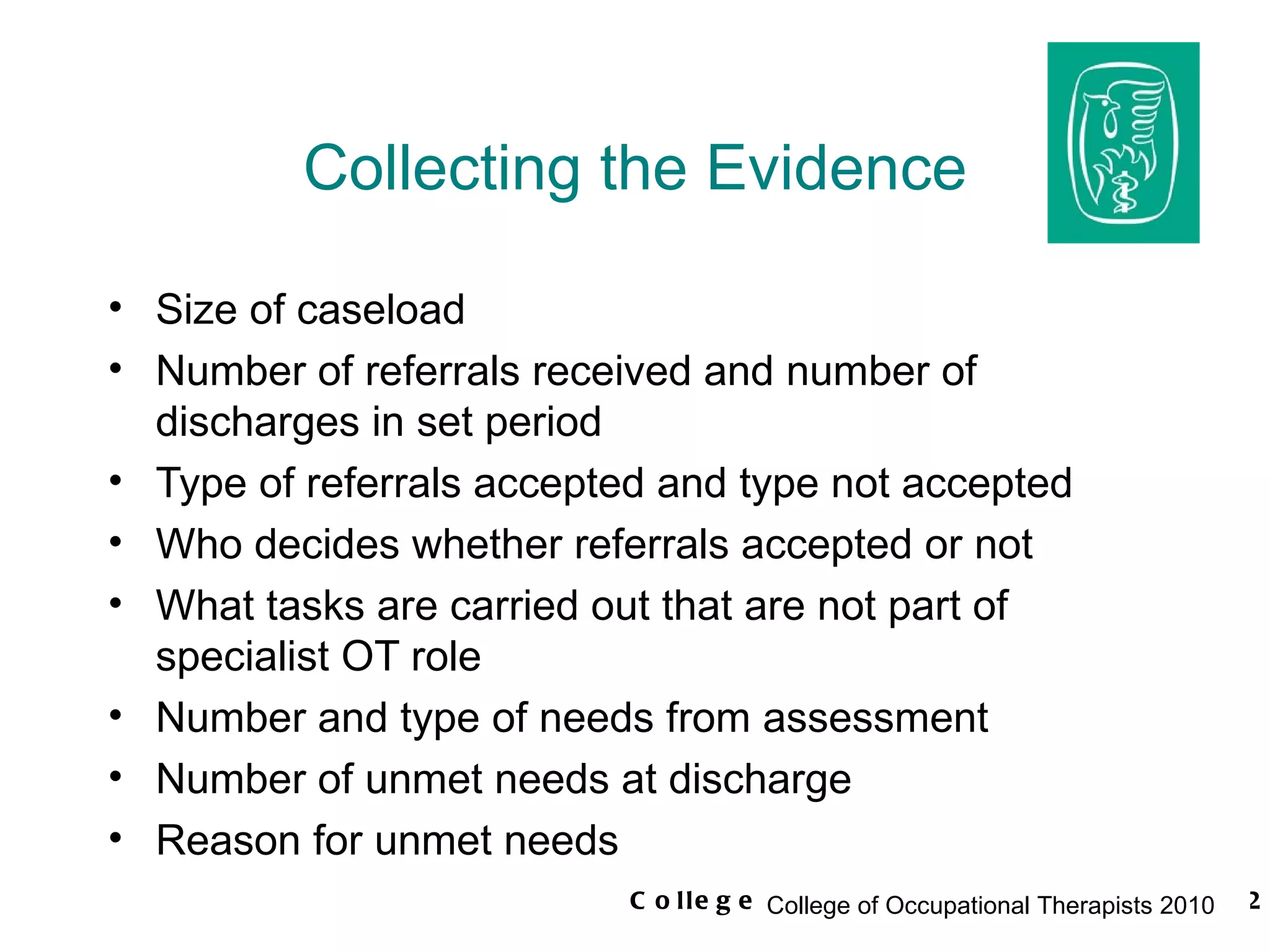
Collecting the Evidence Size of caseload Number of referrals received and number of discharges in set period Type of referrals accepted and type not accepted Who decides whether referrals accepted or not What tasks are carried out that are not part of specialist OT role Number and type of needs from assessment Number of unmet needs at discharge Reason for unmet needs
Collecting the Evidence Pilot of data collection tool  Discussion time about the tool Feedback about the tool
Questions about the tool Could you complete the tool? Will members be able to complete this tool? Additions for question 7 “referral type”? What type of tasks are not part of the OT role? Any other comments about the tool?
Summary Why waiting list targets have evolved Impact of waiting list targets What can we do about this [email_address]

Overcoming Difficulties with Waiting List Targets

  • 1.
    College of OccupationalTherapists Overcoming Difficulties with Waiting List Targets 23rd September 2010 Genevieve Smyth
  • 2.
    Introduction Policy backgroundFeedback from occupational therapists How to influence Collecting the evidence
  • 3.
    Policy Background TonyBlair- central part of 1997 campaign to cut waiting lists that public disliked England “ The NHS Plan ” (2000) set targets Wales “ Improving Health in Wales –a plan for the NHS and its partners ” (2001) set targets Scotland “ Better Health, Better Care ” introduced HEAT targets (2007) Northern Ireland “ Priorities for Action ” (2004) Public monitoring and evaluation against targets
  • 4.
    Has it worked?Health Service Journal 1 st July 2010 p12-13: A dramatic fall in average waiting times that benefits service users Unintended perversities where clinical priorities are distorted Micro management, performance management, departure of Chief Executives Fragile situations that are unsustainable   
  • 5.
    Views of OccupationalTherapists OT and People with Learning Disabilities 2010 p41-42: Limitations on work undertaken and role Focus on quantity of referrals rather than quality Long term work more difficult Does not emphasise quality of life or holism Derives from medical model OTs do not enjoy working in this way “ people shout at you to see the next case”
  • 6.
    Where are wenow? The right to Referral to Treatment in 18 weeks is in the NHS Constitution in England Coalition Government wants to remove process driven targets Still current policy in Scotland, Northern Ireland and Wales but elections next year Will regulators still use targets to measure performance? Financial pressures raise questions about sustainability
  • 7.
    Collecting the EvidenceAim – to construct a template to disseminate to members to enable collection of evidence about impact of waiting list targets on OT service provision Jo Griffin, Jill Blount, Moira Scanlon, Sue Young and Ruth Jeffrey Need for quantitative data Analysis of current templates and audit tools –not the right data
  • 8.
    Collecting the EvidenceIncreasing numbers on caseloads Only being able to deal with the referral reason Type of work requested is changing Increasing pressure to accept referrals Decreased scope of who gets seen Carrying out tasks other people could do
  • 9.
    Collecting the EvidenceSize of caseload Number of referrals received and number of discharges in set period Type of referrals accepted and type not accepted Who decides whether referrals accepted or not What tasks are carried out that are not part of specialist OT role Number and type of needs from assessment Number of unmet needs at discharge Reason for unmet needs
  • 10.
    Collecting the EvidencePilot of data collection tool Discussion time about the tool Feedback about the tool
  • 11.
    Questions about thetool Could you complete the tool? Will members be able to complete this tool? Additions for question 7 “referral type”? What type of tasks are not part of the OT role? Any other comments about the tool?
  • 12.
    Summary Why waitinglist targets have evolved Impact of waiting list targets What can we do about this [email_address]