Why Practice Development?:
The Model of Human Occupation &
                                                                      National Drivers
     Practice Development

                                                         • Evidence-based practice

               David Heasman                             • Clinical effectiveness &
                                                           added value

   Lead Occupational Therapist, Practice Development     • ‘……use outcome measures that
South West London & St Georges Mental Health NHS Trust     give clear evidence that
                                                           occupational therapy has made a
                                                           difference to people’s occupations’.
            david.heasman@swlstg-tr.nhs.uk
                                                                                      COT, 2006


Why focus on one model?                                                     Why MOHO?

Shared concepts & language >                             • Most evidence-based occupational
clarity & consistency of communication                     therapy model


Allows outcomes to be gathered in a                      • Extensive battery of standardised
consistent manner > foundation for audit /                 assessment tools
research
                                                         • Volition: importance of motivation
Facilitates more efficient practice                        & engagement in mental health
development / training


                                                                                                  1
MOHO Practice Development:
           Barriers to using MOHO
                                                               Infrastructure

  Lack of knowledge / confidence in applying the
  model                                            • Purchased MOHO assessment tools / manuals

  Lack of motivation / interest
                                                   • Appointed Practice Development Occupational
                                                     Therapist
  Lack of time

  Difficulty accessing assessment tools etc

  Generic working


      MOHO Practice Development:
Infrastructure 2: Information Technology


• 2005: Introduction of e-MOHO
  software package

• 2007: Introduction of RiO (ECR):
  7 MOHO assessments built in


                                                                                                   2
MOHO Training Workshops:                             MOHO Practice Development
             Clinical Forums                                   The Process 2: Workshops
         •   Adult Kingston
         •   Adult Merton                             • Structure: 6 x 1.5 hrs or 3 x 3hrs
         •   Adult Richmond
         •   Adult Sutton                             • Content
         •   Adult Wandsworth                             MOHO theory
         •   Older people R&W
                                                          Assessment – selecting and using tools appropriately
         •   Older People K,M&S
         •   Rehabilitation
                                                          Clinical reasoning & case formulation
         •   Forensic                                     Intervention
         •   Eating Disorders                             Documentation
         •   PLD                                          Evaluation: outcome measurement
         •   CAMHS


Ongoing support mechanisms                                     Pan London Collaboration

• Clinical Forums                                       • Established Track record of Pan London
                                                          collaboration within mental
• UK Centre for Outcomes Research & Evaluation            health occupational therapy
  (UKCORE): Infrastructure; Assessment; Case
  Formulation; Intervention
                                                        • RiO installed on 7/9 Mental Health Trusts –
                                                          opportunities for collaboration
• Clinical Forum Leads Group
  o dynamic & proactive working group focused on
    identifying challenges to & strategies for MOHO     • Latest development: network to collaborate
    implementation                                        on developing MOHO-based Care
  o forum for advice & support in leadership roles        Pathways


                                                                                                                 3
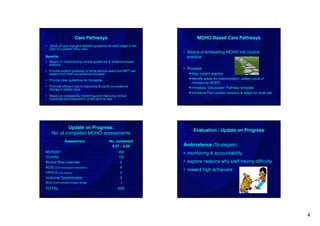
Care Pathways                                         MOHO Based Care Pathways
• ‘plans of care that give detailed guidance for each stage in the
  care of a patient‘ (Riley 1998).
                                                                     • Means of embedding MOHO into routine
Benefits:                                                              practice
• Means of implementing clinical guidelines & evidence-based
  practice
                                                                     • Process
• Provide explicit guidance on what service users and MDT can
  expect from their occupational therapist.                              Map current practice
• Provide clear guidelines for therapists                                Identify areas for improvement / added value of
                                                                         introducing MOHO
• Promote efficient use of resources & clarify occupational              Introduce ‘Gloucester’ Pathway template
  therapy’s added value
                                                                         Introduce Pan London versions & adapt for local use
• Means of consistently monitoring and improving clinical
  outcomes and experience of the service user


            Update on Progress:
                                                                          Evaluation / Update on Progress
    No. of completed MOHO assessments
              Assessment                      No. completed
                                               6.07 – 9.08           Ambivalence (Strategies):
MOHOST                                              358              • monitoring & accountability
OCAIRS                                              130
Worker Role Interview                                6               • explore reasons why staff having difficulty
ACIS (Communication-interaction)                     4
                                                                     • reward high achievers
OPHI-II (Life history)                                2
Volitional Questionnaire                              2
Work Environment Impact Scale                         1
TOTAL                                               503


                                                                                                                               4
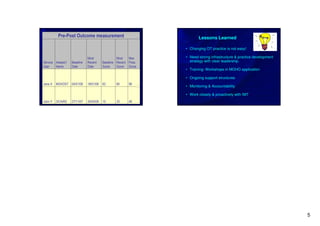
Pre-Post Outcome measurement                                  Lessons Learned

                                                                 • Changing OT practice is not easy!

                              Most                Most   Max     • Need strong infrastructure & practice development
Service Assess’t   Baseline   Recent     Baseline Recent Poss.     strategy with clear leadership.
User    Name       Date       Date       Score    Score Score
                                                                 • Training: Workshops in MOHO application

                                                                 • Ongoing support structures
Jane X   MOHOST 04/01/08      18/01/08   62      80      96
                                                                 • Monitoring & Accountability

                                                                 • Work closely & proactively with IMT
John Y   OCAIRS    27/11/07   30/04/08   15      33      48


                                                                                                                       5

model-of-human-occ-and-prac-dev-LLL event-London Region-heasman.pdf

  • 1.
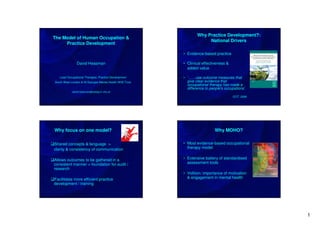
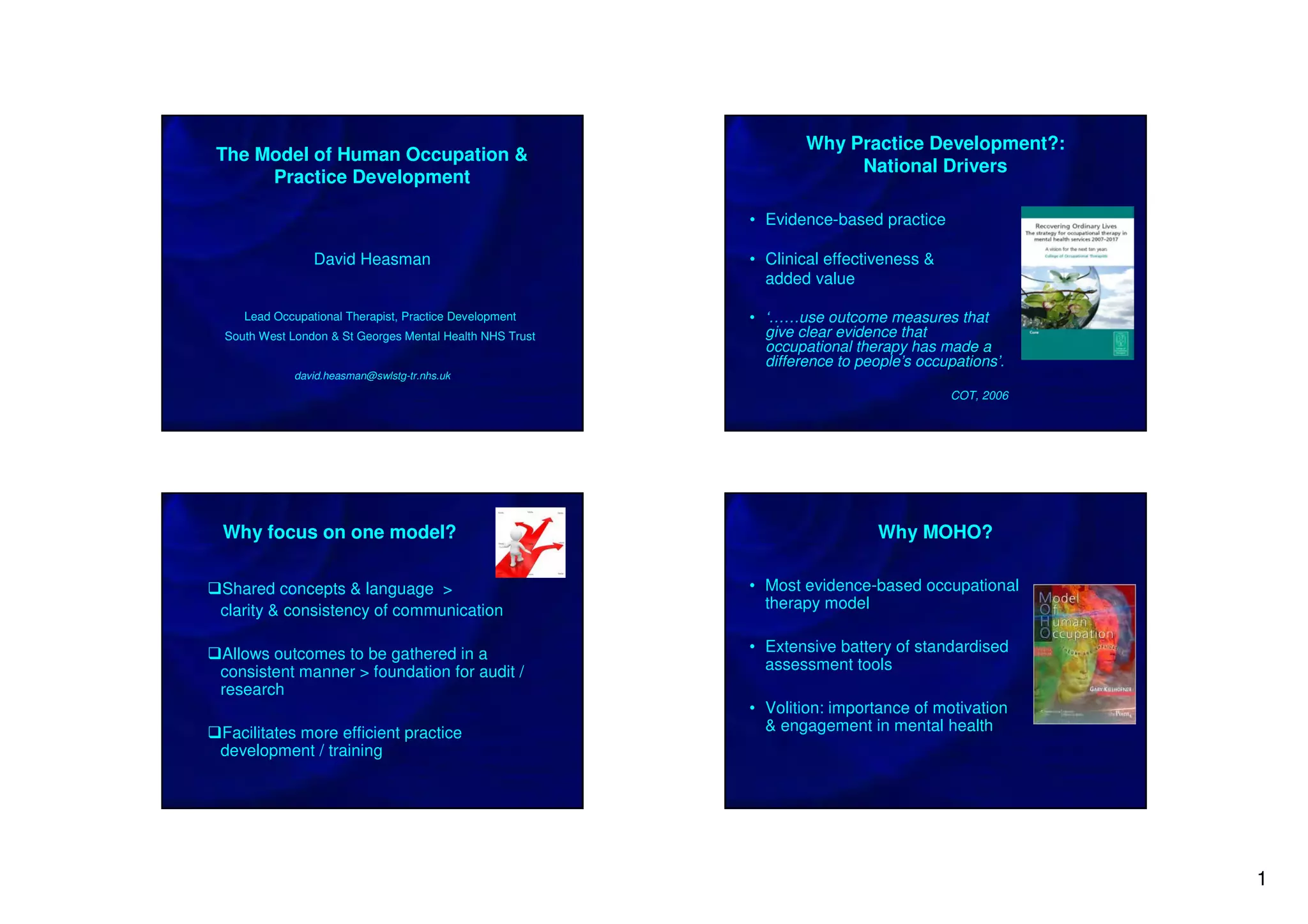
    Why Practice Development?: TheModel of Human Occupation & National Drivers Practice Development • Evidence-based practice David Heasman • Clinical effectiveness & added value Lead Occupational Therapist, Practice Development • ‘……use outcome measures that South West London & St Georges Mental Health NHS Trust give clear evidence that occupational therapy has made a difference to people’s occupations’. david.heasman@swlstg-tr.nhs.uk COT, 2006 Why focus on one model? Why MOHO? Shared concepts & language > • Most evidence-based occupational clarity & consistency of communication therapy model Allows outcomes to be gathered in a • Extensive battery of standardised consistent manner > foundation for audit / assessment tools research • Volition: importance of motivation Facilitates more efficient practice & engagement in mental health development / training 1
  • 2.
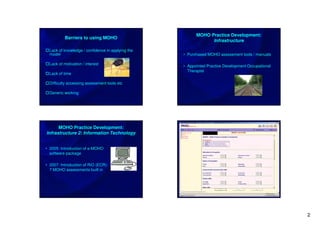
    MOHO Practice Development: Barriers to using MOHO Infrastructure Lack of knowledge / confidence in applying the model • Purchased MOHO assessment tools / manuals Lack of motivation / interest • Appointed Practice Development Occupational Therapist Lack of time Difficulty accessing assessment tools etc Generic working MOHO Practice Development: Infrastructure 2: Information Technology • 2005: Introduction of e-MOHO software package • 2007: Introduction of RiO (ECR): 7 MOHO assessments built in 2
  • 3.
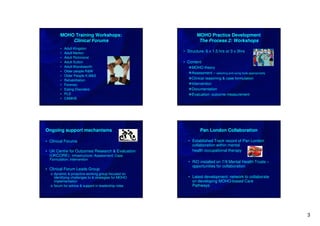
    MOHO Training Workshops: MOHO Practice Development Clinical Forums The Process 2: Workshops • Adult Kingston • Adult Merton • Structure: 6 x 1.5 hrs or 3 x 3hrs • Adult Richmond • Adult Sutton • Content • Adult Wandsworth MOHO theory • Older people R&W Assessment – selecting and using tools appropriately • Older People K,M&S • Rehabilitation Clinical reasoning & case formulation • Forensic Intervention • Eating Disorders Documentation • PLD Evaluation: outcome measurement • CAMHS Ongoing support mechanisms Pan London Collaboration • Clinical Forums • Established Track record of Pan London collaboration within mental • UK Centre for Outcomes Research & Evaluation health occupational therapy (UKCORE): Infrastructure; Assessment; Case Formulation; Intervention • RiO installed on 7/9 Mental Health Trusts – opportunities for collaboration • Clinical Forum Leads Group o dynamic & proactive working group focused on identifying challenges to & strategies for MOHO • Latest development: network to collaborate implementation on developing MOHO-based Care o forum for advice & support in leadership roles Pathways 3
  • 4.
    Care Pathways MOHO Based Care Pathways • ‘plans of care that give detailed guidance for each stage in the care of a patient‘ (Riley 1998). • Means of embedding MOHO into routine Benefits: practice • Means of implementing clinical guidelines & evidence-based practice • Process • Provide explicit guidance on what service users and MDT can expect from their occupational therapist. Map current practice • Provide clear guidelines for therapists Identify areas for improvement / added value of introducing MOHO • Promote efficient use of resources & clarify occupational Introduce ‘Gloucester’ Pathway template therapy’s added value Introduce Pan London versions & adapt for local use • Means of consistently monitoring and improving clinical outcomes and experience of the service user Update on Progress: Evaluation / Update on Progress No. of completed MOHO assessments Assessment No. completed 6.07 – 9.08 Ambivalence (Strategies): MOHOST 358 • monitoring & accountability OCAIRS 130 Worker Role Interview 6 • explore reasons why staff having difficulty ACIS (Communication-interaction) 4 • reward high achievers OPHI-II (Life history) 2 Volitional Questionnaire 2 Work Environment Impact Scale 1 TOTAL 503 4
  • 5.
    Pre-Post Outcome measurement Lessons Learned • Changing OT practice is not easy! Most Most Max • Need strong infrastructure & practice development Service Assess’t Baseline Recent Baseline Recent Poss. strategy with clear leadership. User Name Date Date Score Score Score • Training: Workshops in MOHO application • Ongoing support structures Jane X MOHOST 04/01/08 18/01/08 62 80 96 • Monitoring & Accountability • Work closely & proactively with IMT John Y OCAIRS 27/11/07 30/04/08 15 33 48 5