
The impact of a CNS in tissue viability on 
the reduction of pressure ulcers in care 
of the older person setting 
Maree Barry 
RGN, HdipTissue Viability, 
PG:PEPPD, RNP 
St Mary’s Hospital 
Phoenix Park 
EPUAP & NUAP 2009
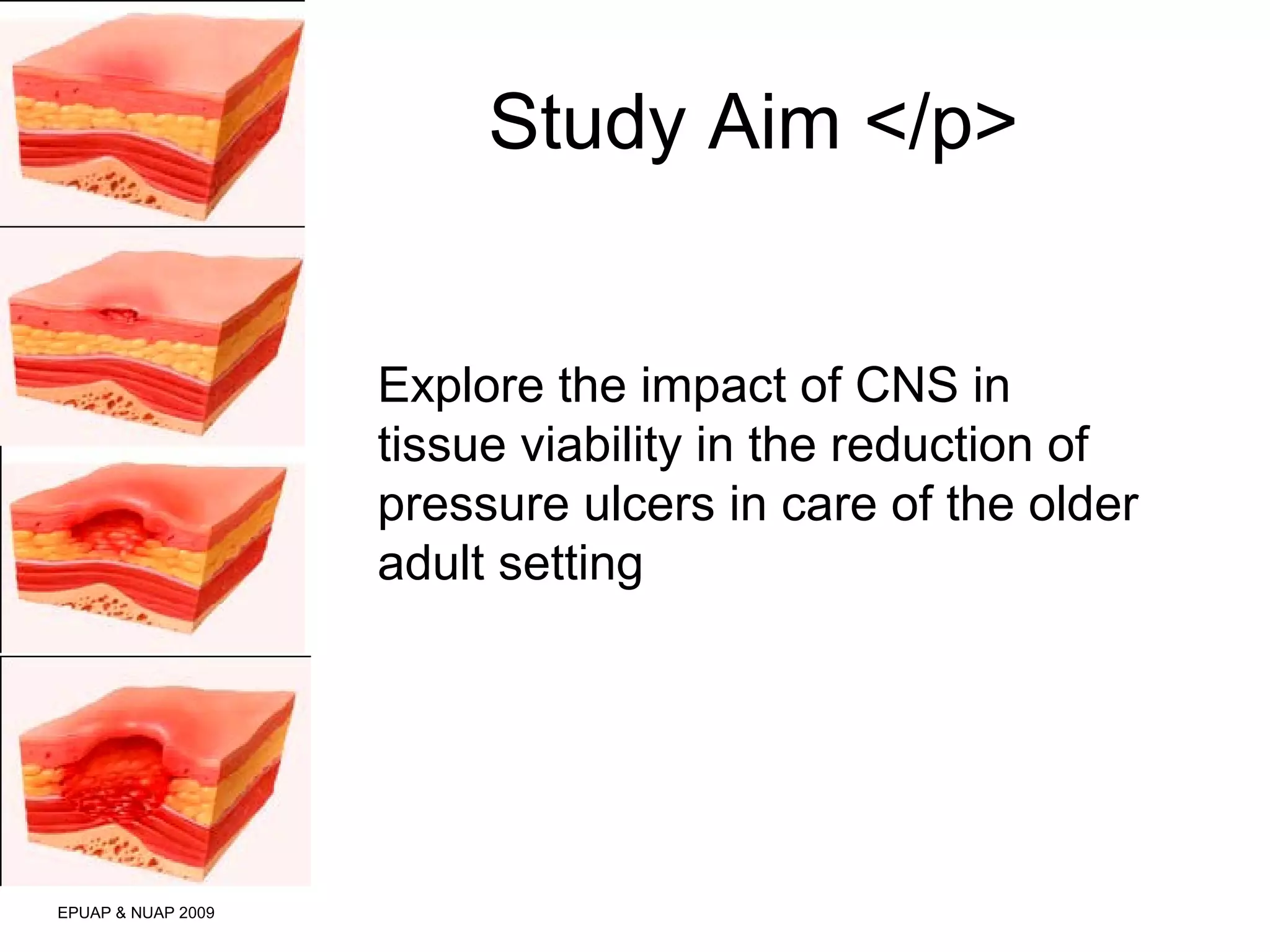
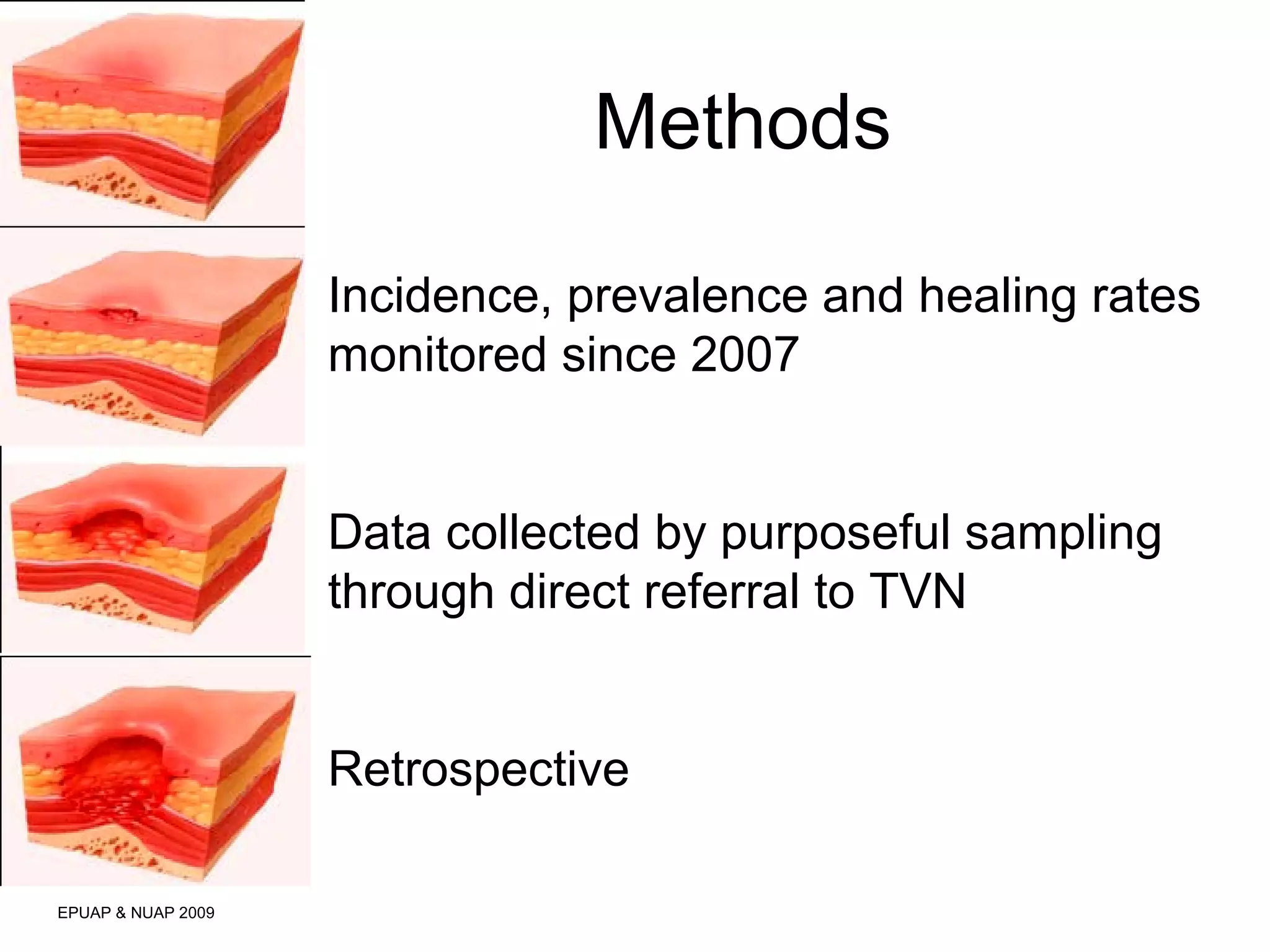
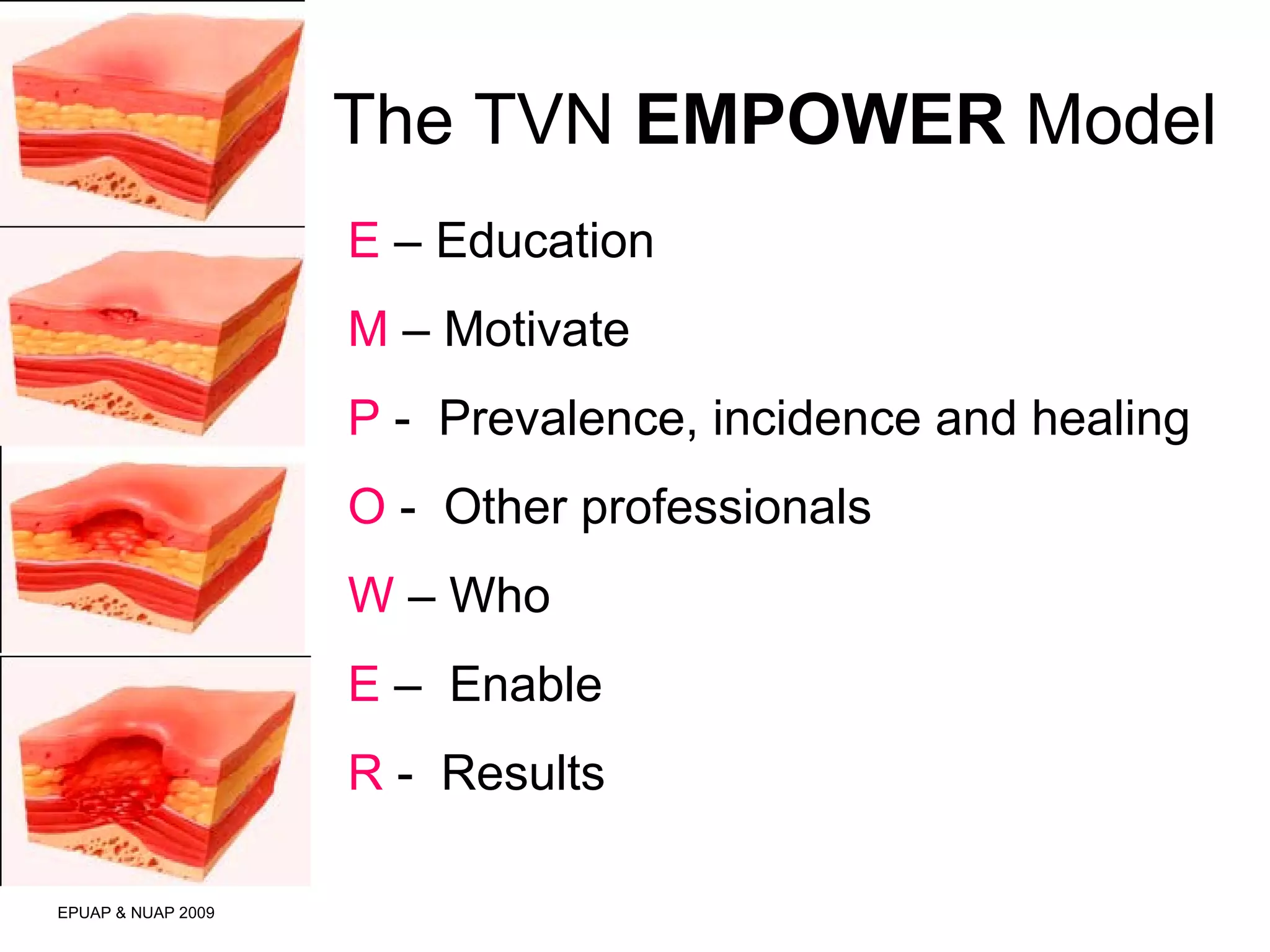
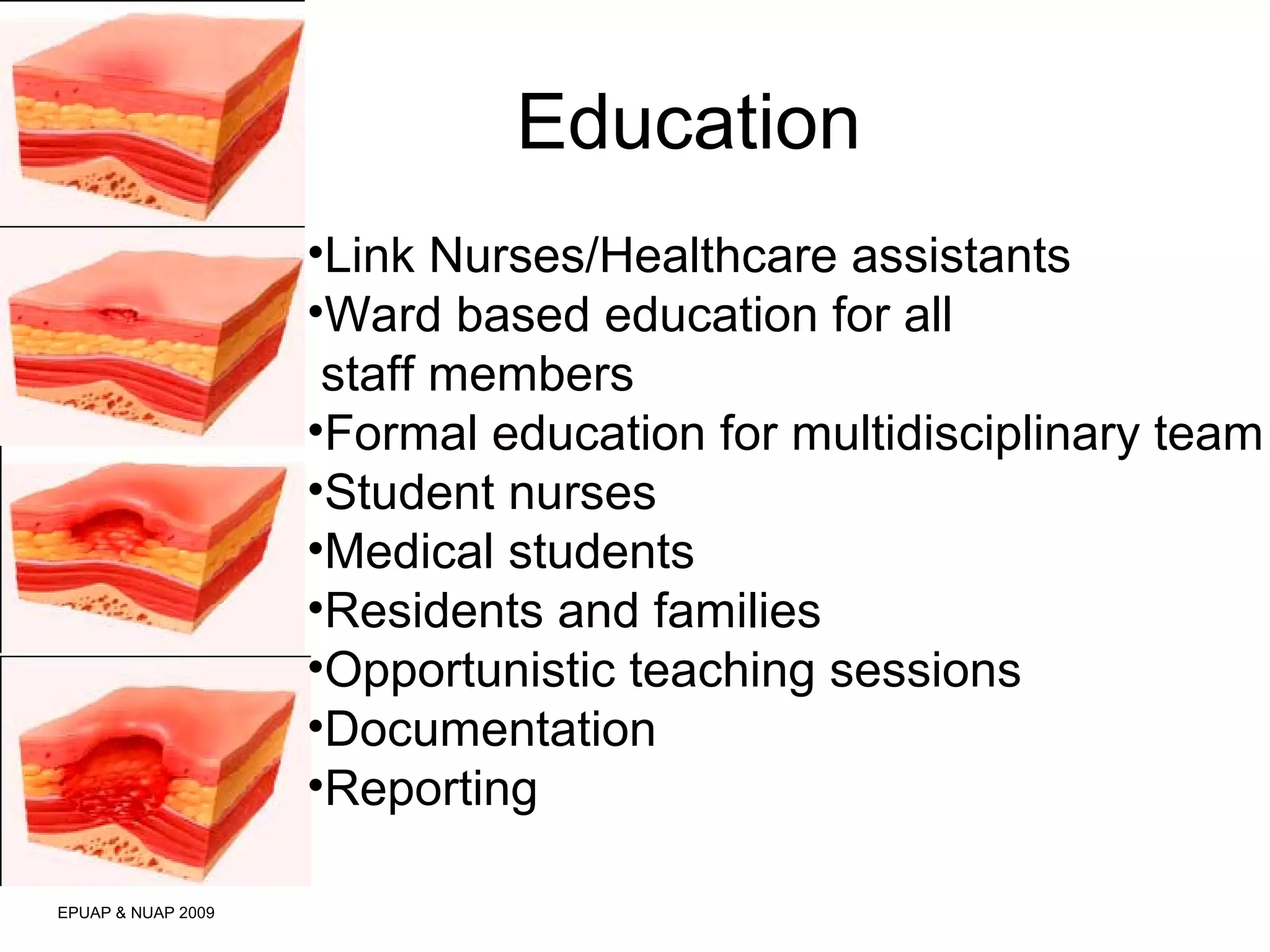
Pressure Ulcers 
EPUAP & NUAP 2009 
Pressure Ulcers cause great pain and 
suffering 
Gorecki et al (2009), Hopkins et al (2006) 
The incidence and severity of 
preventable pressure ulcers is a 
key indicator of quality of care 
Benbow and Bateman (2012)
Pressure Ulcers 
EPUAP & NUAP 2009 
Mean pressure ulcer prevalence rates 
in Ireland 
16% (4 - 37%) n = 6 
Mean pressure ulcer incidence rates 
in Ireland 
11% (8 – 14%) n = 4 
Moore et al (2013)
The Role of CNS in Tissue 
Viability 
EPUAP & NUAP 2009 
The CNS in tissue viability plays a 
key role in the prevention of 
pressure ulcers 
Guy et al (2010) 
It is well documented that the CNS 
improves patient outcomes and 
quality of care 
Very little evidence to support this 
Doody and Bailey (2011)
Study Aim </p> 
EPUAP & NUAP 2009 
Explore the impact of CNS in 
tissue viability in the reduction of 
pressure ulcers in care of the older 
adult setting
Methods 
EPUAP & NUAP 2009 
Incidence, prevalence and healing rates 
monitored since 2007 
Data collected by purposeful sampling 
through direct referral to TVN 
Retrospective
The TVN EMPOWER Model 
EPUAP & NUAP 2009 
E – Education 
M – Motivate 
P - Prevalence, incidence and healing 
O - Other professionals 
W – Who 
E – Enable 
R - Results
Education 
EPUAP & NUAP 2009 
•Link Nurses/Healthcare assistants 
•Ward based education for all 
staff members 
•Formal education for multidisciplinary team 
•Student nurses 
•Medical students 
•Residents and families 
•Opportunistic teaching sessions 
•Documentation 
•Reporting
Motivation 
EPUAP & NUAP 2009 
•Work closely with frontline staff 
•Communication 
•Passion 
•Enthusiasm 
•Support 
•Trust and respect 
•Role Model 
•Identify positive outcomes 
•No Blame 
•Encourage
Prevalence 
EPUAP & NUAP 2009 
Prevalence 
5 
4.5 
4 
3.5 
3 
2.5 
2 
1.5 
1 
0.5 
0 
2007 
2008 
2009 
2010 
2011 
2012 
2013 
%
Incidence 
EPUAP & NUAP 2009 
Incidence 
35 
30 
25 
20 
15 
10 
5 
0 
2007 
2008 
2009 
2010 
2011 
2012 
2013 
%
Severity 
EPUAP & NUAP 2009 
Grade 4 
12 
10 
8 
6 
4 
2 
0 
2007 
2008 
2009 
2010 
2011 
2012 
2013 
%
Other Professionals 
EPUAP & NUAP 2009 
•The input from the multidisciplinary team 
is essential in pressure ulcer prevention 
•Co-ordinated team planning, 
implementation and evaluation is 
necessary to ensure the patient receives 
holistic high standard quality care 
•Improved communication between 
disciplines improves patient outcomes 
•Gain respect and insight into each 
disciplines knowledge and skills
Who 
EPUAP & NUAP 2009 
•Skin Assessment 
•Risk Assessment 
•Mobility 
•Nutrition 
•Incontinence 
•Age 
•Tissue tolerance 
•Manual Handling 
•When risk identified appropriate 
interventions implemented 
•Documentation
Enable 
EPUAP & NUAP 2009 
•Skills and knowledge 
•Enabling not disabling/de-skilling 
•Competence 
•Confidence 
•On-going education 
•On-going support 
•Encouragement 
•Communication 
•Availability of resources 
•Empower
Results 
EPUAP & NUAP 2009 
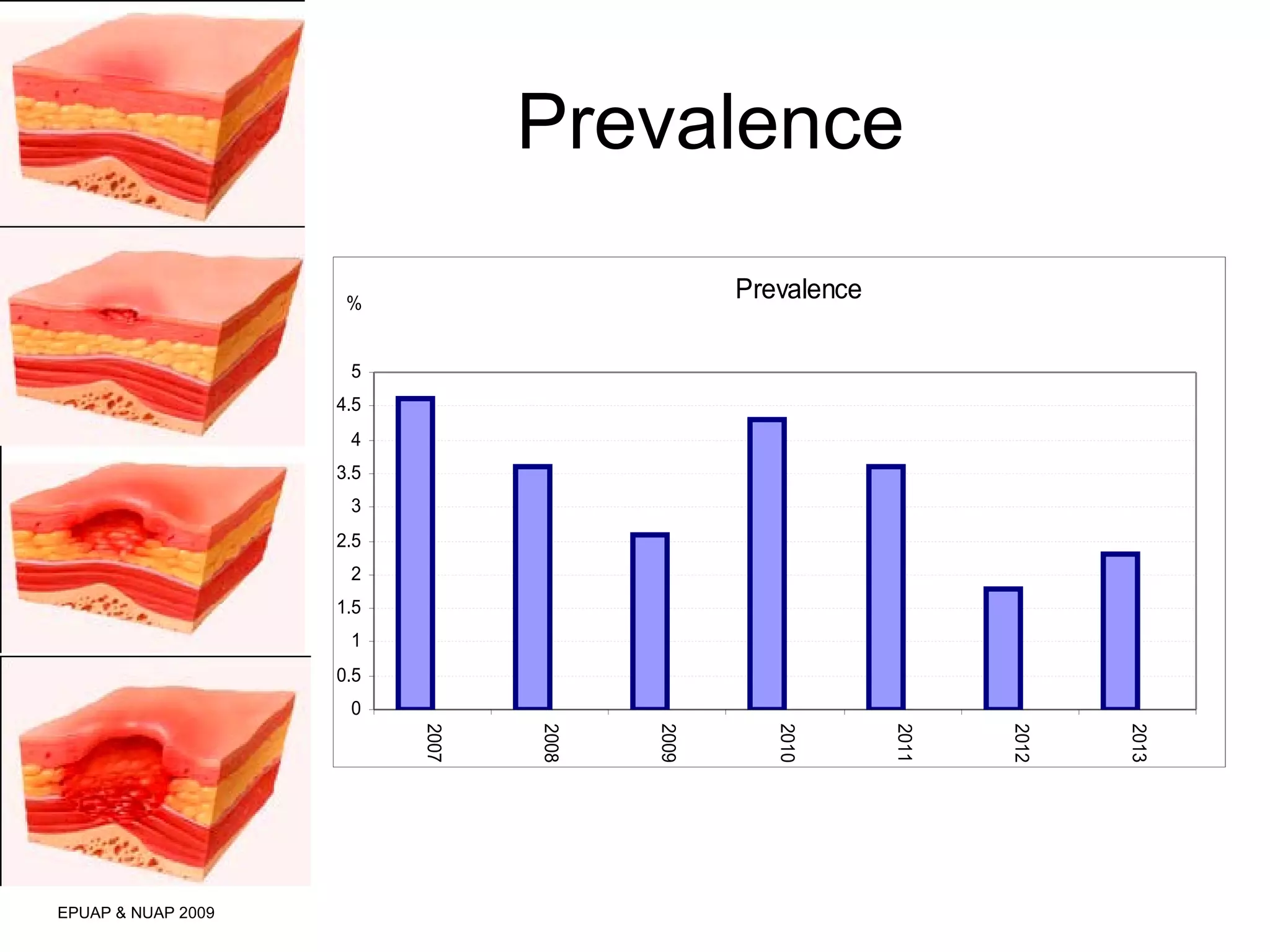
•Overall reduction in the prevalence 
of pressure ulcers from 4.6% to 2.3% 
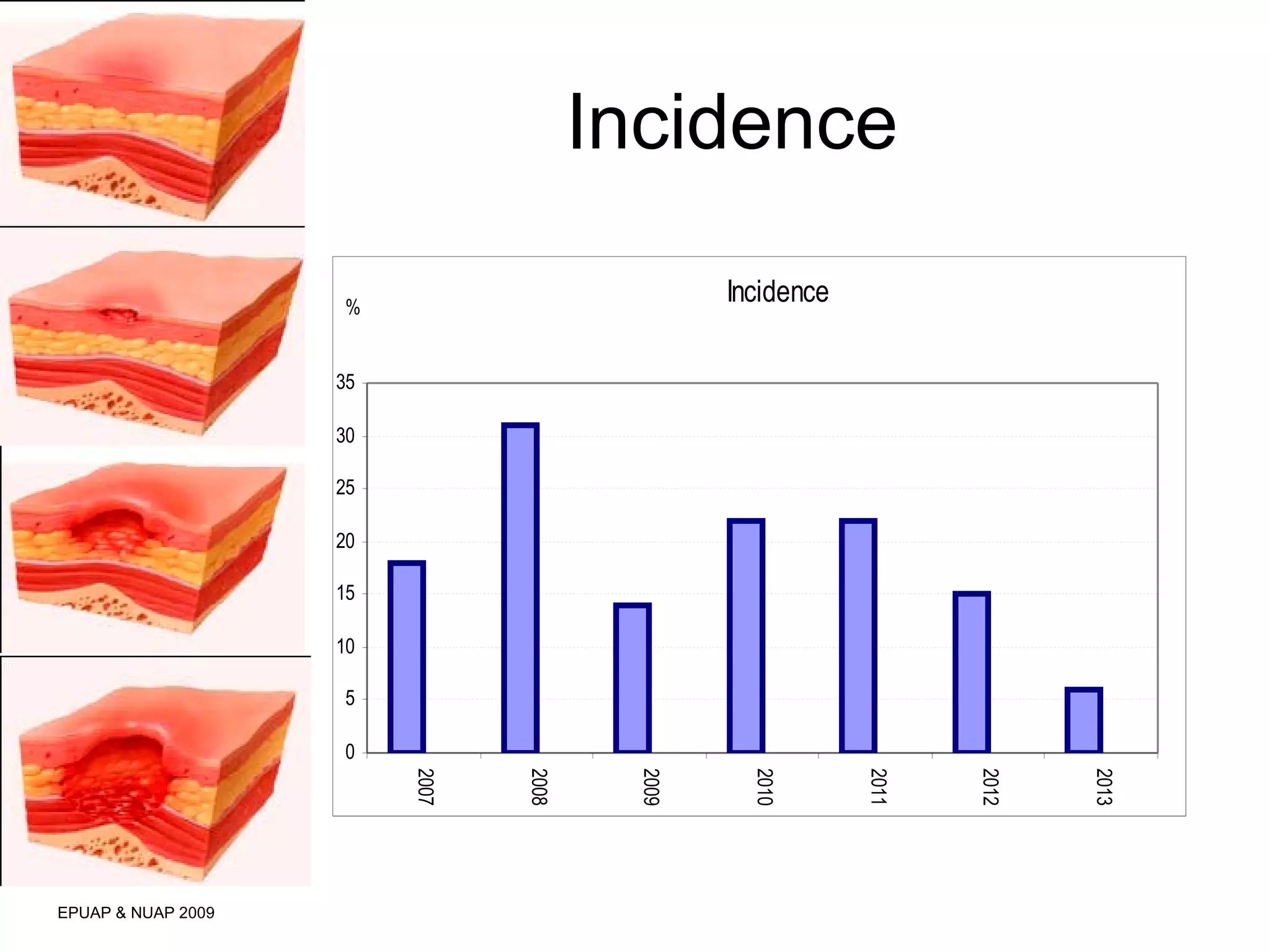
•Overall reduction in the incidence of 
hospital acquired pressure ulcers 
18% to 6.6% 
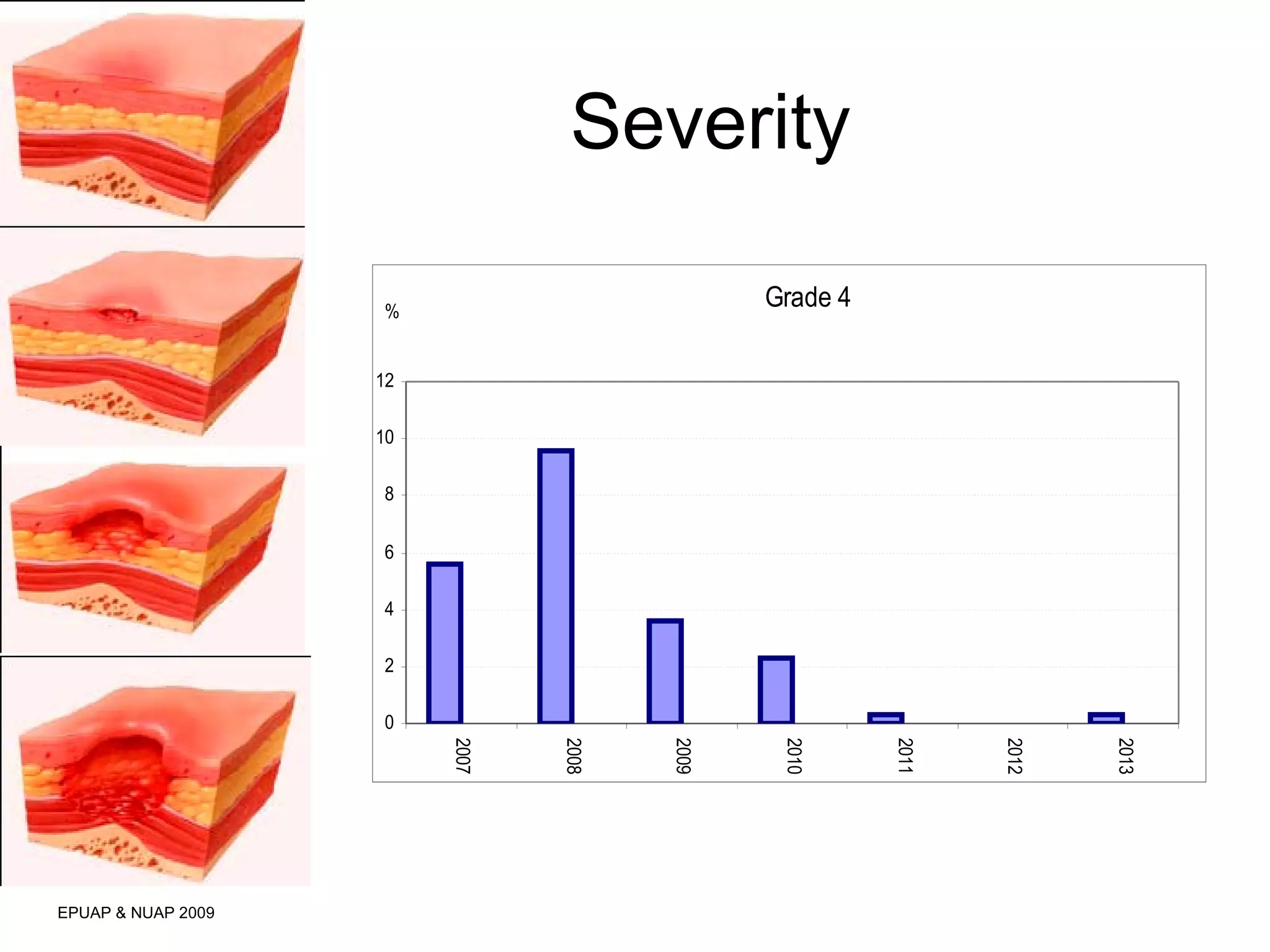
•Overall reduction in grade 4 
pressure ulcers from 5.6% to 0.3% 
•Average age of population 80
Conclusion 
EPUAP & NUAP 2009 
Since the introduction of the CNS in 
tissue viability there has been a marked 
reduction in prevalence and incidence 
of pressure ulcers demonstrating the 
positive impact of this role on patient care. 
The study also identified a significant 
decrease in the number and severity 
of hospital acquired pressure ulcers
Pressure Ulcer Collaborative 
EPUAP & NUAP 2009 
Pressure Ulcer to Zero is a National Quality Improvement 
Programme 
22 Pilot sites in Meath, Louth, Cavan, Monaghan and North 
Dublin, across many settings, acute hospitals, primary care 
Centres, nursing homes and other community and private 
Residential settings 
Aim is to reduce the incidence of avoidable pressure ulcers 
initially by 50% and ultimate goal is 0%
Thank You 
EPUAP & NUAP 2009
References 
EPUAP & NUAP 2009 
Benbow,M., Bateman,S 2012 Working towards clinical excellence - 
Pressure ulcer prevention and management in primary and 
Secondary care. Journal of Wound Care 21:(9): S25-S39 
Doody.O, Bailey.M, 2011 The development of clinical nurse 
specialist roles in Ireland. British Journal of Nursing 20:(14) 
868 – 872 
EPUAP/NUAP 2009, www.epuap.org 
Gorecki,C., Brown,J.M., Nelson,E.A., Briggs,M.,Schoonhoven,L., 
Dealey,C., Defloor,T., Nixon,J 2009 Impact of pressure ulcers on 
quality of life on older patients: a systemic review. Journal of the 
American Geriatrics Society,57: 1175-83 
Guy,H,. Downie.F,. McIntyre.L, 2013 Pressure ulcer prevention: 
making a difference across a health authority? British Journal of 
Nursing (Tissue Viability Supplement) 22: (12),S4 – S13 
Hopkins.A,. Dealey.C,. Bale,S,. Defloor. T,. Worboys.F,2006 
Patient stories of living witha pressure ulcer. 
Journal of Advanced Nursing 56: 345-353 
Moore,Z,. Johanssen.,E, Van Mitten,M. 2013 A review of PU 
Prevalence and incidence across Scandinavia, Iceland and 
Ireland (Part 1), Jornal of Wound Care, 22: (7), 361 - 368

The Impact of a CNS in Tissue Viability on Pressure Ulcer Reduction in Older Persons

  • 1.
    The impact ofa CNS in tissue viability on the reduction of pressure ulcers in care of the older person setting Maree Barry RGN, HdipTissue Viability, PG:PEPPD, RNP St Mary’s Hospital Phoenix Park EPUAP & NUAP 2009
  • 2.
    Pressure Ulcers EPUAP& NUAP 2009 Pressure Ulcers cause great pain and suffering Gorecki et al (2009), Hopkins et al (2006) The incidence and severity of preventable pressure ulcers is a key indicator of quality of care Benbow and Bateman (2012)
  • 3.
    Pressure Ulcers EPUAP& NUAP 2009 Mean pressure ulcer prevalence rates in Ireland 16% (4 - 37%) n = 6 Mean pressure ulcer incidence rates in Ireland 11% (8 – 14%) n = 4 Moore et al (2013)
  • 4.
    The Role ofCNS in Tissue Viability EPUAP & NUAP 2009 The CNS in tissue viability plays a key role in the prevention of pressure ulcers Guy et al (2010) It is well documented that the CNS improves patient outcomes and quality of care Very little evidence to support this Doody and Bailey (2011)
  • 5.
    Study Aim </p> EPUAP & NUAP 2009 Explore the impact of CNS in tissue viability in the reduction of pressure ulcers in care of the older adult setting
  • 6.
    Methods EPUAP &NUAP 2009 Incidence, prevalence and healing rates monitored since 2007 Data collected by purposeful sampling through direct referral to TVN Retrospective
  • 7.
    The TVN EMPOWERModel EPUAP & NUAP 2009 E – Education M – Motivate P - Prevalence, incidence and healing O - Other professionals W – Who E – Enable R - Results
  • 8.
    Education EPUAP &NUAP 2009 •Link Nurses/Healthcare assistants •Ward based education for all staff members •Formal education for multidisciplinary team •Student nurses •Medical students •Residents and families •Opportunistic teaching sessions •Documentation •Reporting
  • 9.
    Motivation EPUAP &NUAP 2009 •Work closely with frontline staff •Communication •Passion •Enthusiasm •Support •Trust and respect •Role Model •Identify positive outcomes •No Blame •Encourage
  • 10.
    Prevalence EPUAP &NUAP 2009 Prevalence 5 4.5 4 3.5 3 2.5 2 1.5 1 0.5 0 2007 2008 2009 2010 2011 2012 2013 %
  • 11.
    Incidence EPUAP &NUAP 2009 Incidence 35 30 25 20 15 10 5 0 2007 2008 2009 2010 2011 2012 2013 %
  • 12.
    Severity EPUAP &NUAP 2009 Grade 4 12 10 8 6 4 2 0 2007 2008 2009 2010 2011 2012 2013 %
  • 13.
    Other Professionals EPUAP& NUAP 2009 •The input from the multidisciplinary team is essential in pressure ulcer prevention •Co-ordinated team planning, implementation and evaluation is necessary to ensure the patient receives holistic high standard quality care •Improved communication between disciplines improves patient outcomes •Gain respect and insight into each disciplines knowledge and skills
  • 14.
    Who EPUAP &NUAP 2009 •Skin Assessment •Risk Assessment •Mobility •Nutrition •Incontinence •Age •Tissue tolerance •Manual Handling •When risk identified appropriate interventions implemented •Documentation
  • 15.
    Enable EPUAP &NUAP 2009 •Skills and knowledge •Enabling not disabling/de-skilling •Competence •Confidence •On-going education •On-going support •Encouragement •Communication •Availability of resources •Empower
  • 16.
    Results EPUAP &NUAP 2009 •Overall reduction in the prevalence of pressure ulcers from 4.6% to 2.3% •Overall reduction in the incidence of hospital acquired pressure ulcers 18% to 6.6% •Overall reduction in grade 4 pressure ulcers from 5.6% to 0.3% •Average age of population 80
  • 17.
    Conclusion EPUAP &NUAP 2009 Since the introduction of the CNS in tissue viability there has been a marked reduction in prevalence and incidence of pressure ulcers demonstrating the positive impact of this role on patient care. The study also identified a significant decrease in the number and severity of hospital acquired pressure ulcers
  • 18.
    Pressure Ulcer Collaborative EPUAP & NUAP 2009 Pressure Ulcer to Zero is a National Quality Improvement Programme 22 Pilot sites in Meath, Louth, Cavan, Monaghan and North Dublin, across many settings, acute hospitals, primary care Centres, nursing homes and other community and private Residential settings Aim is to reduce the incidence of avoidable pressure ulcers initially by 50% and ultimate goal is 0%
  • 19.
    Thank You EPUAP& NUAP 2009
  • 20.
    References EPUAP &NUAP 2009 Benbow,M., Bateman,S 2012 Working towards clinical excellence - Pressure ulcer prevention and management in primary and Secondary care. Journal of Wound Care 21:(9): S25-S39 Doody.O, Bailey.M, 2011 The development of clinical nurse specialist roles in Ireland. British Journal of Nursing 20:(14) 868 – 872 EPUAP/NUAP 2009, www.epuap.org Gorecki,C., Brown,J.M., Nelson,E.A., Briggs,M.,Schoonhoven,L., Dealey,C., Defloor,T., Nixon,J 2009 Impact of pressure ulcers on quality of life on older patients: a systemic review. Journal of the American Geriatrics Society,57: 1175-83 Guy,H,. Downie.F,. McIntyre.L, 2013 Pressure ulcer prevention: making a difference across a health authority? British Journal of Nursing (Tissue Viability Supplement) 22: (12),S4 – S13 Hopkins.A,. Dealey.C,. Bale,S,. Defloor. T,. Worboys.F,2006 Patient stories of living witha pressure ulcer. Journal of Advanced Nursing 56: 345-353 Moore,Z,. Johanssen.,E, Van Mitten,M. 2013 A review of PU Prevalence and incidence across Scandinavia, Iceland and Ireland (Part 1), Jornal of Wound Care, 22: (7), 361 - 368