OSTEOMYELITIS
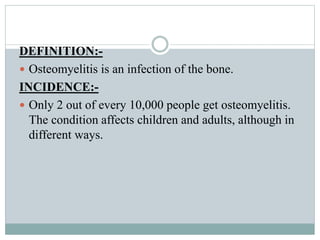
DEFINITION:-
 Osteomyelitis is an infection of the bone.
INCIDENCE:-
 Only 2 out of every 10,000 people get osteomyelitis.
The condition affects children and adults, although in
different ways.
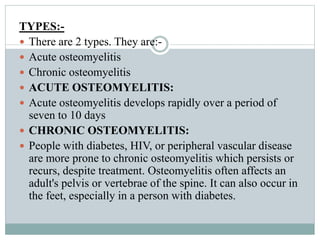
TYPES:-
 There are 2 types. They are:-
 Acute osteomyelitis
 Chronic osteomyelitis
 ACUTE OSTEOMYELITIS:
 Acute osteomyelitis develops rapidly over a period of
seven to 10 days
 CHRONIC OSTEOMYELITIS:
 People with diabetes, HIV, or peripheral vascular disease
are more prone to chronic osteomyelitis which persists or
recurs, despite treatment. Osteomyelitis often affects an
adult's pelvis or vertebrae of the spine. It can also occur in
the feet, especially in a person with diabetes.
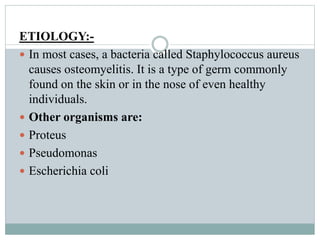
ETIOLOGY:-
 In most cases, a bacteria called Staphylococcus aureus
causes osteomyelitis. It is a type of germ commonly
found on the skin or in the nose of even healthy
individuals.
 Other organisms are:
 Proteus
 Pseudomonas
 Escherichia coli
WAYS OF TRANSMISSION OF INFECTION:-
 Germs can enter a bone in a variety of ways, including:
 Via the bloodstream.
 From a nearby infection.
 Direct bone contamination.
 VIA THE BLOODSTREAM:
 Germs in other parts of the body — for example from
pneumonia or a urinary tract infection — can travel through
bloodstream to a weakened spot in a bone.
 FROM A NEARBY INFECTION:
 Severe puncture wounds can carry germs deep inside the body.
If such an injury becomes infected, the germs can spread into a
nearby bone.
 DIRECT BONE CONTAMINATION:
 Direct contamination can occur during surgeries to replace
joints or repair fractures.
RISK FACTORS:-
 Recent injury or orthopedic surgery
 Bone fracture
 Deep puncture wound.
 Deep animal bites
 Bone surgery, including hip and knee replacements
 Circulation disorders
 Poorly controlled diabetes
 Peripheral arterial disease, often related to smoking
 Sickle cell disease
 Poor blood supply
 Problems requiring intravenous lines or catheters
 Dialysis machines
 Urinary catheters
 Long-term intravenous tubing, sometimes called
central lines
 Conditions that impair the immune system
 Chemotherapy
 Poorly controlled diabetes
 Having had an organ transplant
 Needing to take corticosteroids or drugs called tumor
necrosis factor (TNF) inhibitors.
 HIV or AIDS
 Illicit drugs
 People who inject illicit drugs are more likely to
develop osteomyelitis because they typically use
nonsterile needles and don't sterilize their skin before
injections.
 Others:
 Poorly nourished
 Elderly
 Obese
 Rheumatoid arthritis
 Alcoholism
PATHOPHYSIOLOGY:-
 Bone infection
 Inflammation, increased vascularity & edema
 Thrombosis of the blood vessels
 Ischemia with bone necrosis
 Infection extends into the medullary cavity & under
the periosteum and may spread into adjacent soft
tissues & joints
 Bone abscess
SIGNS AND SYMPTOMS :-
 Fever or chills
 Pain in the area of the infection
 Fatigue
 Nausea
 Tenderness, redness, and warmth in the area of the
infection
 Inflammation, swelling & drainage
 Loss of range of motion
 If the vertebrae is affected then severe back pain,
especially at night.occurs.
 Sometimes osteomyelitis causes no signs and symptoms
or has signs and symptoms that are difficult to distinguish
from other problems.
DIAGNOSTIC EVALUATIONS:-
 Blood tests
 Blood tests may reveal elevated levels of white blood cells
and other factors
 Wound culture
 Imaging tests
 X rays.
 Computerized tomography (CT) scan.
 Magnetic resonance imaging (MRI).
 Bone biopsy
 A bone biopsy is the gold standard for diagnosing
osteomyelitis, because it can also reveal what particular
type of germ has infected the bone
MANAGEMENT:-
 MEDICAL MGT:
 Hydration
 Diet high in vitamins & protein
 Correction of anemia
 Immobilization of the affected area
 Application of warm wet soaks for 20 mts several
times a day.
PHARMACOLOGIC THERAPY:
 IV antibiotic therapy is given for upto 3-6 weeks.
After the control of infection the drug is given orally
for upto 3 months.
SURGICAL MGT:
 Surgical debridement
 Sequestrectomy – removal of enough involucrum to
enable the surgeon to remove the sequestrum.
 Saucerization – removal of sufficient bone and then
the cavity is packed with bone graft and muscle flap.
COMPLICATIONS:-
 Bone death (osteonecrosis).
 Septic arthritis.
 Skin cancer.
PREVENTION:-
 To avoid cuts and scrapes, which give germs easy
access to the body. If any cuts and scrapes occurs
clean the area immediately and apply a clean bandage.
Check wounds frequently for signs of infection.

Osteomyelitis

  • 1.
  • 2.
    DEFINITION:-  Osteomyelitis isan infection of the bone. INCIDENCE:-  Only 2 out of every 10,000 people get osteomyelitis. The condition affects children and adults, although in different ways.
  • 3.
    TYPES:-  There are2 types. They are:-  Acute osteomyelitis  Chronic osteomyelitis  ACUTE OSTEOMYELITIS:  Acute osteomyelitis develops rapidly over a period of seven to 10 days  CHRONIC OSTEOMYELITIS:  People with diabetes, HIV, or peripheral vascular disease are more prone to chronic osteomyelitis which persists or recurs, despite treatment. Osteomyelitis often affects an adult's pelvis or vertebrae of the spine. It can also occur in the feet, especially in a person with diabetes.
  • 4.
    ETIOLOGY:-  In mostcases, a bacteria called Staphylococcus aureus causes osteomyelitis. It is a type of germ commonly found on the skin or in the nose of even healthy individuals.  Other organisms are:  Proteus  Pseudomonas  Escherichia coli
  • 5.
    WAYS OF TRANSMISSIONOF INFECTION:-  Germs can enter a bone in a variety of ways, including:  Via the bloodstream.  From a nearby infection.  Direct bone contamination.  VIA THE BLOODSTREAM:  Germs in other parts of the body — for example from pneumonia or a urinary tract infection — can travel through bloodstream to a weakened spot in a bone.  FROM A NEARBY INFECTION:  Severe puncture wounds can carry germs deep inside the body. If such an injury becomes infected, the germs can spread into a nearby bone.  DIRECT BONE CONTAMINATION:  Direct contamination can occur during surgeries to replace joints or repair fractures.
  • 6.
    RISK FACTORS:-  Recentinjury or orthopedic surgery  Bone fracture  Deep puncture wound.  Deep animal bites  Bone surgery, including hip and knee replacements  Circulation disorders  Poorly controlled diabetes  Peripheral arterial disease, often related to smoking  Sickle cell disease  Poor blood supply
  • 7.
     Problems requiringintravenous lines or catheters  Dialysis machines  Urinary catheters  Long-term intravenous tubing, sometimes called central lines  Conditions that impair the immune system  Chemotherapy  Poorly controlled diabetes  Having had an organ transplant  Needing to take corticosteroids or drugs called tumor necrosis factor (TNF) inhibitors.  HIV or AIDS
  • 8.
     Illicit drugs People who inject illicit drugs are more likely to develop osteomyelitis because they typically use nonsterile needles and don't sterilize their skin before injections.  Others:  Poorly nourished  Elderly  Obese  Rheumatoid arthritis  Alcoholism
  • 9.
    PATHOPHYSIOLOGY:-  Bone infection Inflammation, increased vascularity & edema  Thrombosis of the blood vessels  Ischemia with bone necrosis  Infection extends into the medullary cavity & under the periosteum and may spread into adjacent soft tissues & joints  Bone abscess
  • 10.
    SIGNS AND SYMPTOMS:-  Fever or chills  Pain in the area of the infection  Fatigue  Nausea  Tenderness, redness, and warmth in the area of the infection  Inflammation, swelling & drainage  Loss of range of motion  If the vertebrae is affected then severe back pain, especially at night.occurs.  Sometimes osteomyelitis causes no signs and symptoms or has signs and symptoms that are difficult to distinguish from other problems.
  • 11.
    DIAGNOSTIC EVALUATIONS:-  Bloodtests  Blood tests may reveal elevated levels of white blood cells and other factors  Wound culture  Imaging tests  X rays.  Computerized tomography (CT) scan.  Magnetic resonance imaging (MRI).  Bone biopsy  A bone biopsy is the gold standard for diagnosing osteomyelitis, because it can also reveal what particular type of germ has infected the bone
  • 12.
    MANAGEMENT:-  MEDICAL MGT: Hydration  Diet high in vitamins & protein  Correction of anemia  Immobilization of the affected area  Application of warm wet soaks for 20 mts several times a day.
  • 13.
    PHARMACOLOGIC THERAPY:  IVantibiotic therapy is given for upto 3-6 weeks. After the control of infection the drug is given orally for upto 3 months. SURGICAL MGT:  Surgical debridement  Sequestrectomy – removal of enough involucrum to enable the surgeon to remove the sequestrum.  Saucerization – removal of sufficient bone and then the cavity is packed with bone graft and muscle flap.
  • 14.
    COMPLICATIONS:-  Bone death(osteonecrosis).  Septic arthritis.  Skin cancer. PREVENTION:-  To avoid cuts and scrapes, which give germs easy access to the body. If any cuts and scrapes occurs clean the area immediately and apply a clean bandage. Check wounds frequently for signs of infection.