SAFER PEOPLE, SAFER STREETS, AND SAFER POLICIES AT U.S.DOT 
Pro Walk/Pro Bike/Pro Place 
September 2014 
Dan Goodman 
Federal Highway Administration, U.S.DOT
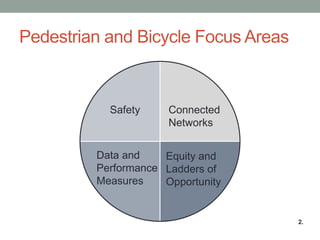
Pedestrian and Bicycle Focus Areas 
Connected Networks 
Equity and Ladders of Opportunity 
Safety 
Data and Performance Measures 
2.
3
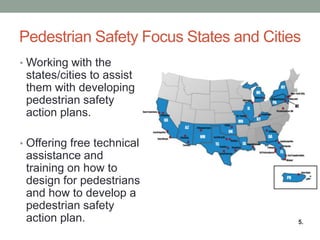
•Working with the states/cities to assist them with developing pedestrian safety action plans. 
•Offering free technical assistance and training on how to design for pedestrians and how to develop a pedestrian safety action plan. 
Pedestrian Safety Focus States and Cities 
5 
National Bike Summit | March 5, 2014 
5.
6
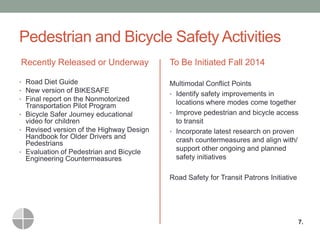
Pedestrian and Bicycle Safety Activities 
Recently Released or Underway 
•Road Diet Guide 
•New version of BIKESAFE 
•Final report on the Nonmotorized Transportation Pilot Program 
•Bicycle Safer Journey educational video for children 
•Revised version of the Highway Design Handbook for Older Drivers and Pedestrians 
•Evaluation of Pedestrian and Bicycle Engineering Countermeasures 
To Be Initiated Fall 2014 
Multimodal Conflict Points 
•Identify safety improvements in locations where modes come together 
•Improve pedestrian and bicycle access to transit 
•Incorporate latest research on proven crash countermeasures and align with/ support other ongoing and planned safety initiatives 
Road Safety for Transit Patrons Initiative 
7.
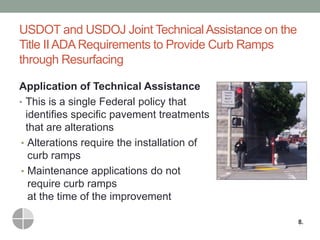
USDOT and USDOJ Joint Technical Assistance on the Title II ADA Requirements to Provide Curb Ramps through Resurfacing 
Application of Technical Assistance 
•This is a single Federal policy that identifies specific pavement treatments that are alterations 
•Alterations require the installation of curb ramps 
•Maintenance applications do not require curb ramps at the time of the improvement 
8.
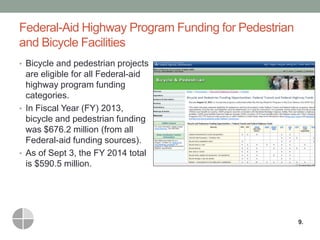
Federal-Aid Highway Program Funding for Pedestrian and Bicycle Facilities 
•Bicycle and pedestrian projects are eligible for all Federal-aid highway program funding categories. 
•In Fiscal Year (FY) 2013, bicycle and pedestrian funding was $676.2 million (from all Federal-aid funding sources). 
•As of Sept 3, the FY 2014 total is $590.5 million. 
9.
10 
10.
11 
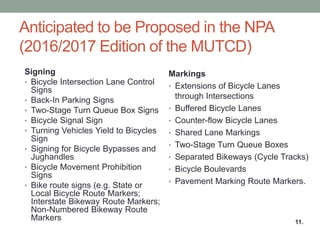
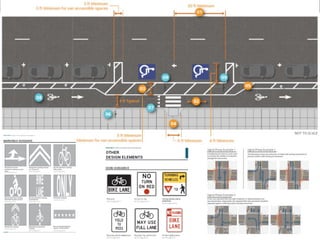
Anticipated to be Proposed in the NPA (2016/2017 Edition of the MUTCD) 
11. 
Signing 
•Bicycle Intersection Lane Control Signs 
•Back-In Parking Signs 
•Two-Stage Turn Queue Box Signs 
•Bicycle Signal Sign 
•Turning Vehicles Yield to Bicycles Sign 
•Signing for Bicycle Bypasses and Jughandles 
•Bicycle Movement Prohibition Signs 
•Bike route signs (e.g. State or Local Bicycle Route Markers; Interstate Bikeway Route Markers; Non-Numbered Bikeway Route Markers 
Markings 
•Extensions of Bicycle Lanes through Intersections 
•Buffered Bicycle Lanes 
•Counter-flow Bicycle Lanes 
•Shared Lane Markings 
•Two-Stage Turn Queue Boxes 
•Separated Bikeways (Cycle Tracks) 
•Bicycle Boulevards 
•Pavement Marking Route Markers.
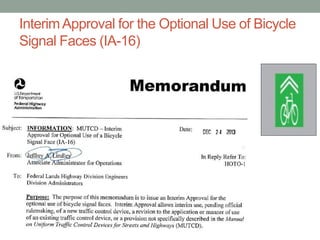
Interim Approval for the Optional Use of Bicycle Signal Faces (IA-16)
13 
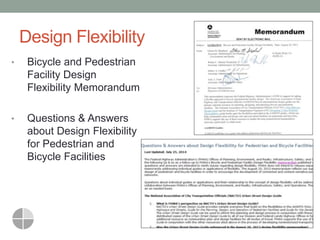
Design Flexibility 
•Bicycle and Pedestrian Facility Design Flexibility Memorandum 
•Questions & Answers about Design Flexibility for Pedestrian and Bicycle Facilities 
13.
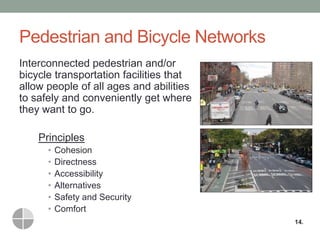
Pedestrian and Bicycle Networks 
Interconnected pedestrian and/or bicycle transportation facilities that allow people of all ages and abilities to safely and conveniently get where they want to go. 
Principles 
•Cohesion 
•Directness 
•Accessibility 
•Alternatives 
•Safety and Security 
•Comfort 
14.
15
Pedestrian and Bicycle Network Activities 
Underway 
•Practitioner’s Guide to Statewide Pedestrian and Bicycle Planning 
•Synthesis of National Design Guidelines and Gap Analysis 
To Be Initiated Fall 2014 
•Action-Oriented Workbook on Building On-Road Bicycle Networks through Routine Resurfacing Programs 
•Flexibility in Pedestrian and Bicycle Facility Design 
16.
Pedestrian and Bicycle Data and Performance Measures Activities 
Underway 
•Pedestrian and Bicycle Updates to the Traffic Monitoring Guide (TMG) and the Traffic Monitoring Analysis System (TMAS) 
•Nonmotorized Toolkit 
•White papers on bicycle/pedestrian forecasting methods and crowd- sourcing using social media and GIS 
Planned 
Pedestrian and Bicycle Performance Measures 
•Comprehensive synthesis of pedestrian and bicycle performance measures 
•Organize measures into categories useful to practitioners (e.g. operations, safety, user experience, network completion, investment evaluation, etc.) 
•Provide framework and context for performance measure discussions at the local, regional, state, and national level 
Other 
•University Transportation Center Convening 
•Data jam 
•TRB workshop 
18.
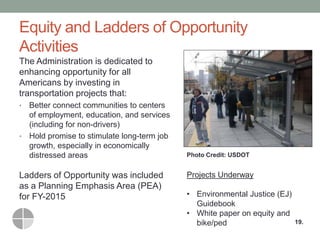
Equity and Ladders of Opportunity Activities 
The Administration is dedicated to enhancing opportunity for all Americans by investing in transportation projects that: 
•Better connect communities to centers of employment, education, and services (including for non-drivers) 
•Hold promise to stimulate long-term job growth, especially in economically distressed areas 
Ladders of Opportunity was included as a Planning Emphasis Area (PEA) for FY-2015 
19. 
Photo Credit: USDOT 
Projects Underway 
•Environmental Justice (EJ) Guidebook 
•White paper on equity and bike/ped
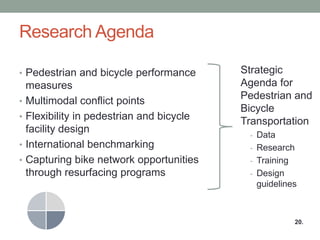
Research Agenda 
•Pedestrian and bicycle performance measures 
•Multimodal conflict points 
•Flexibility in pedestrian and bicycle facility design 
•International benchmarking 
•Capturing bike network opportunities through resurfacing programs 
Strategic Agenda for Pedestrian and Bicycle Transportation 
-Data 
-Research 
-Training 
-Design guidelines 
20.
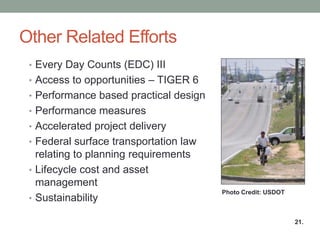
Other Related Efforts 
•Every Day Counts (EDC) III 
•Access to opportunities – TIGER 6 
•Performance based practical design 
•Performance measures 
•Accelerated project delivery 
•Federal surface transportation law relating to planning requirements 
•Lifecycle cost and asset management 
•Sustainability 
21. 
Photo Credit: USDOT
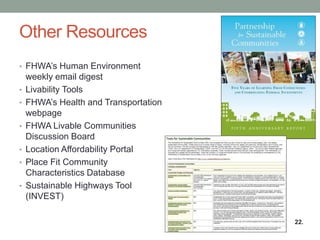
Other Resources 
•FHWA’s Human Environment weekly email digest 
•Livability Tools 
•FHWA’s Health and Transportation webpage 
•FHWA Livable Communities Discussion Board 
•Location Affordability Portal 
•Place Fit Community Characteristics Database 
•Sustainable Highways Tool (INVEST) 
22.
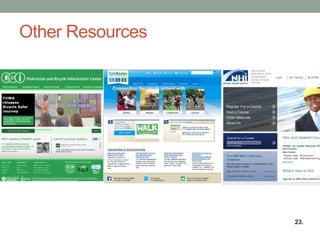
Other Resources 
23.
Contact Information 
Dan Goodman 
Office of Human Environment, FHWA 
Phone (202) 366-9064 
daniel.goodman@dot.gov 
25. 
For more information 
http://www.fhwa.dot.gov/environment/bicycle_pedestrian/ 
http://safety.fhwa.dot.gov/ped_bike/ 
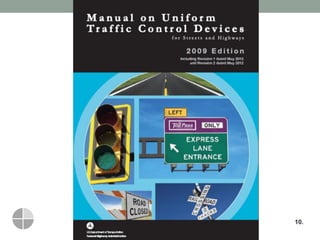
http://mutcd.fhwa.dot.gov/ 
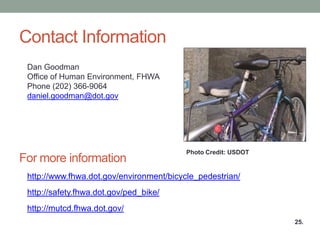
Photo Credit: USDOT

Safer People, Safer Streets, and Safer Policies at USDOT--Dan Goodman

  • 1.
    SAFER PEOPLE, SAFERSTREETS, AND SAFER POLICIES AT U.S.DOT Pro Walk/Pro Bike/Pro Place September 2014 Dan Goodman Federal Highway Administration, U.S.DOT
  • 2.
    Pedestrian and BicycleFocus Areas Connected Networks Equity and Ladders of Opportunity Safety Data and Performance Measures 2.
  • 3.
  • 5.
    •Working with thestates/cities to assist them with developing pedestrian safety action plans. •Offering free technical assistance and training on how to design for pedestrians and how to develop a pedestrian safety action plan. Pedestrian Safety Focus States and Cities 5 National Bike Summit | March 5, 2014 5.
  • 6.
  • 7.
    Pedestrian and BicycleSafety Activities Recently Released or Underway •Road Diet Guide •New version of BIKESAFE •Final report on the Nonmotorized Transportation Pilot Program •Bicycle Safer Journey educational video for children •Revised version of the Highway Design Handbook for Older Drivers and Pedestrians •Evaluation of Pedestrian and Bicycle Engineering Countermeasures To Be Initiated Fall 2014 Multimodal Conflict Points •Identify safety improvements in locations where modes come together •Improve pedestrian and bicycle access to transit •Incorporate latest research on proven crash countermeasures and align with/ support other ongoing and planned safety initiatives Road Safety for Transit Patrons Initiative 7.
  • 8.
    USDOT and USDOJJoint Technical Assistance on the Title II ADA Requirements to Provide Curb Ramps through Resurfacing Application of Technical Assistance •This is a single Federal policy that identifies specific pavement treatments that are alterations •Alterations require the installation of curb ramps •Maintenance applications do not require curb ramps at the time of the improvement 8.
  • 9.
    Federal-Aid Highway ProgramFunding for Pedestrian and Bicycle Facilities •Bicycle and pedestrian projects are eligible for all Federal-aid highway program funding categories. •In Fiscal Year (FY) 2013, bicycle and pedestrian funding was $676.2 million (from all Federal-aid funding sources). •As of Sept 3, the FY 2014 total is $590.5 million. 9.
  • 10.
  • 11.
    11 Anticipated tobe Proposed in the NPA (2016/2017 Edition of the MUTCD) 11. Signing •Bicycle Intersection Lane Control Signs •Back-In Parking Signs •Two-Stage Turn Queue Box Signs •Bicycle Signal Sign •Turning Vehicles Yield to Bicycles Sign •Signing for Bicycle Bypasses and Jughandles •Bicycle Movement Prohibition Signs •Bike route signs (e.g. State or Local Bicycle Route Markers; Interstate Bikeway Route Markers; Non-Numbered Bikeway Route Markers Markings •Extensions of Bicycle Lanes through Intersections •Buffered Bicycle Lanes •Counter-flow Bicycle Lanes •Shared Lane Markings •Two-Stage Turn Queue Boxes •Separated Bikeways (Cycle Tracks) •Bicycle Boulevards •Pavement Marking Route Markers.
  • 12.
    Interim Approval forthe Optional Use of Bicycle Signal Faces (IA-16)
  • 13.
    13 Design Flexibility •Bicycle and Pedestrian Facility Design Flexibility Memorandum •Questions & Answers about Design Flexibility for Pedestrian and Bicycle Facilities 13.
  • 14.
    Pedestrian and BicycleNetworks Interconnected pedestrian and/or bicycle transportation facilities that allow people of all ages and abilities to safely and conveniently get where they want to go. Principles •Cohesion •Directness •Accessibility •Alternatives •Safety and Security •Comfort 14.
  • 15.
  • 16.
    Pedestrian and BicycleNetwork Activities Underway •Practitioner’s Guide to Statewide Pedestrian and Bicycle Planning •Synthesis of National Design Guidelines and Gap Analysis To Be Initiated Fall 2014 •Action-Oriented Workbook on Building On-Road Bicycle Networks through Routine Resurfacing Programs •Flexibility in Pedestrian and Bicycle Facility Design 16.
  • 18.
    Pedestrian and BicycleData and Performance Measures Activities Underway •Pedestrian and Bicycle Updates to the Traffic Monitoring Guide (TMG) and the Traffic Monitoring Analysis System (TMAS) •Nonmotorized Toolkit •White papers on bicycle/pedestrian forecasting methods and crowd- sourcing using social media and GIS Planned Pedestrian and Bicycle Performance Measures •Comprehensive synthesis of pedestrian and bicycle performance measures •Organize measures into categories useful to practitioners (e.g. operations, safety, user experience, network completion, investment evaluation, etc.) •Provide framework and context for performance measure discussions at the local, regional, state, and national level Other •University Transportation Center Convening •Data jam •TRB workshop 18.
  • 19.
    Equity and Laddersof Opportunity Activities The Administration is dedicated to enhancing opportunity for all Americans by investing in transportation projects that: •Better connect communities to centers of employment, education, and services (including for non-drivers) •Hold promise to stimulate long-term job growth, especially in economically distressed areas Ladders of Opportunity was included as a Planning Emphasis Area (PEA) for FY-2015 19. Photo Credit: USDOT Projects Underway •Environmental Justice (EJ) Guidebook •White paper on equity and bike/ped
  • 20.
    Research Agenda •Pedestrianand bicycle performance measures •Multimodal conflict points •Flexibility in pedestrian and bicycle facility design •International benchmarking •Capturing bike network opportunities through resurfacing programs Strategic Agenda for Pedestrian and Bicycle Transportation -Data -Research -Training -Design guidelines 20.
  • 21.
    Other Related Efforts •Every Day Counts (EDC) III •Access to opportunities – TIGER 6 •Performance based practical design •Performance measures •Accelerated project delivery •Federal surface transportation law relating to planning requirements •Lifecycle cost and asset management •Sustainability 21. Photo Credit: USDOT
  • 22.
    Other Resources •FHWA’sHuman Environment weekly email digest •Livability Tools •FHWA’s Health and Transportation webpage •FHWA Livable Communities Discussion Board •Location Affordability Portal •Place Fit Community Characteristics Database •Sustainable Highways Tool (INVEST) 22.
  • 23.
  • 25.
    Contact Information DanGoodman Office of Human Environment, FHWA Phone (202) 366-9064 daniel.goodman@dot.gov 25. For more information http://www.fhwa.dot.gov/environment/bicycle_pedestrian/ http://safety.fhwa.dot.gov/ped_bike/ http://mutcd.fhwa.dot.gov/ Photo Credit: USDOT