The OSI Reference Model 
This layered network architecture model was developed by 
International Organization for standardization (ISO) 
located in Geneva, Switzerland. 
It (OSI) was designed to develop common standards of 
network architecture throughout the world. 
It provides a general concept of inter process 
communication in such a way that any open system may 
communicate with another open system technically 
without any problems.
It is a seven layered architecture model . 
The model is designed in a highly structured way. It 
defines a separate set of protocols for each layer 
and hence each layer has a specific independent 
function. 
The OSI model does not perform any function in the 
communication process. The actual work is done by 
the appropriate software and hardware. The OSI 
model simply defines which tasks need to be done 
and which protocols will handle those tasks. 
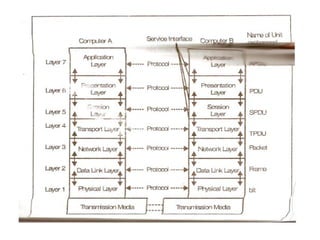
Fig. shows the seven layered Architecture of OSI 
models along with protocols and interfaces.
In actual implementation of the seven layers, the first 
three layers are likely to be in hardware, the next two 
layers in the operating system, the presentation 
layer in library subroutines in the user's address 
space, and the application layer in the user's 
program.
Physical Layer 
This is the lowest layer in the model. This layer is 
responsible for activating, maintaining and deactivating a 
physical circuit between two end systems. 
The Physical Layer is responsible for sending bits (bits 
means binary digits, i.e. 1's and O's) from one computer to 
another. That is, it may convert the sequence of bits into 
electric signals, light signals, or electromagnetic signals, 
depending on whether the two nodes are on a cable circuit, 
fiber-optic circuit, or microwave/radio circuit, 
respectively.
Even electrical details, such as how many volts to use for 0 
and 1, how many bits can be sent per second, and whether 
transmission can take place only in one direction or in both 
directions simultaneously, are decided by the physical layer 
protocols. 
In addition, the physical layer protocols also deal with the 
mechanical details, such as the size and shape of the 
connecting plugs, the number of pins in the plugs, and the 
function of each pin. 
Hubs, terminators, couplers, cables, connectors, repeater, 
multiplexers, transmitter and receives are devices associated 
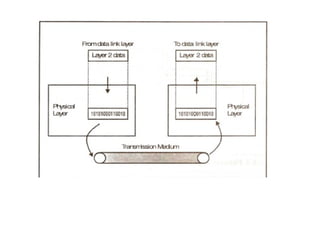
with physical layer. The position of the physical layer with 
respect to the transmission medium and the data link layer is 
shown in Fig.
Summary of Functions of the physical layer 
1. Physical layer is responsible for sending bits from 
source computer to destination computer. 
2. It defines the bit transmission encoding i.e. how 0's 
and 1's are changed to signals. 
3. It defines the transmission rate (or data rate) i.e. the 
number of bits transmitted per second. 
4. It deals with line configuration 
(a) Point-to-point (b) Multipoint 
5. It defines the transmission mode between two 
devices. 
(a) Simplex (b) Half duplex (c) Full duplex
6. Topology 
It deals with physical topologies i.e. star, ring, bus, 
hyprid or mesh etc. 
7. Multiplexing 
It deals with combining several data channels into one. 
8. Media bandwith (Data transmission speed) 
9. It deals with the synchronization of the transmitter 
and receiver
Data Link Layer 
The main task of the data link layer is to provide 
error free transmission. The physical layer 
simply transmits the data from the sender's node 
to the receiver's node as raw bits. It is the 
responsibility of the data-link layer to detect and 
correct any errors in the transmitted data. It 
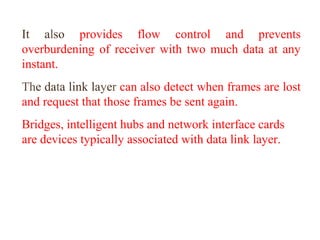
accepts packets from the network layer and 
splits the packets into frames which are 
transmitted by sender through physical layer as 
shown in fig.
It also provides flow control and prevents 
overburdening of receiver with two much data at any 
instant. 
The data link layer can also detect when frames are lost 
and request that those frames be sent again. 
Bridges, intelligent hubs and network interface cards 
are devices typically associated with data link layer.
Functions of data link layer are summarised as : 
1. Framming 
It divides packets received from the network layer into 
manageable data units called frames. 
2. Physical addressing 
It adds a header to the frame to define the physical 
address of the sender and receiver of the frame. 
3. Error control 
Error control is main task of the data link layer. It uses 
the protocols to detect errors in frames and to ensure 
transmission of correct frames.
4. Flow control 
It provides a flow control mechanism to 
avoid a fast transmitter from overrunning a 
slow receiver by buffering the extra bits. 
5. Access control 
The data link layer protocol determines which 
device has control over the link at any given 
time, when two or more devices are 
connected to the same link.
Network Layer 
The network layer establishes a logical connection 
between sender and user by providing a logical path 
between them. This layer switches and routes 
message packets as necessary to get them to their 
destination. 
The layer is responsible for addressing and 
delivering message packets. 
Network layer makes routing decisions and forwards 
the packets for devices that are farther away than a 
single link.
The network layer also may break large 
packets into small chunks if the packet is 
larger than the largest data frame the data 
link layer accept. The network reassembles 
the chunks into packets at receiving end. 
Routers and gateways operate in the 
network layer. 
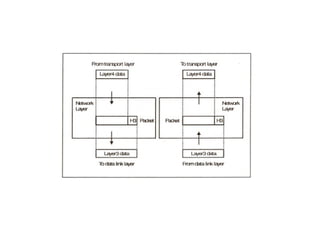
The relationship of the network layer to the 
data link and transport layer is shown in Fig.
The functions of the Network Layer are 
1. Internetworking 
This is the main duty of network layer. It 
provides. the logical connection between 
different types of networks. 
2. Addressing 
Addressing is necessary to identify each device 
on the network uniquely. This is similar to a 
telephone system.
3. Routing 
In a network, there are multiple roots available from a source to 
a destination and one of them is to be chosen. Routing 
algorithms are designed to find the most efficient paths 
between the source and destination nodes of a message. 
4. Packetizing 
It breaks the larger packets into smaller packets if the packet is 
larger than the largest data frame the data link layer accept. 
This is called as packetizing. 
5. Data Switching 
The process of transferring packet (data blocks) from source to 
destination node is called data switching. Hence, network layer 
is concerned with the circuit, message or packet switching.
6. Congestion control 
Congestion in a network may occur when the load on the 
network i.e. the number of packets sent to the network is 
greater than the capacity of the network. Network layer 
controls the congestion. 
7. It provides connection services, including network 
layer flow control, network layer error control and packet 
sequence control.

Osi(1)

  • 1.
    The OSI ReferenceModel This layered network architecture model was developed by International Organization for standardization (ISO) located in Geneva, Switzerland. It (OSI) was designed to develop common standards of network architecture throughout the world. It provides a general concept of inter process communication in such a way that any open system may communicate with another open system technically without any problems.
  • 2.
    It is aseven layered architecture model . The model is designed in a highly structured way. It defines a separate set of protocols for each layer and hence each layer has a specific independent function. The OSI model does not perform any function in the communication process. The actual work is done by the appropriate software and hardware. The OSI model simply defines which tasks need to be done and which protocols will handle those tasks. Fig. shows the seven layered Architecture of OSI models along with protocols and interfaces.
  • 4.
    In actual implementationof the seven layers, the first three layers are likely to be in hardware, the next two layers in the operating system, the presentation layer in library subroutines in the user's address space, and the application layer in the user's program.
  • 5.
    Physical Layer Thisis the lowest layer in the model. This layer is responsible for activating, maintaining and deactivating a physical circuit between two end systems. The Physical Layer is responsible for sending bits (bits means binary digits, i.e. 1's and O's) from one computer to another. That is, it may convert the sequence of bits into electric signals, light signals, or electromagnetic signals, depending on whether the two nodes are on a cable circuit, fiber-optic circuit, or microwave/radio circuit, respectively.
  • 6.
    Even electrical details,such as how many volts to use for 0 and 1, how many bits can be sent per second, and whether transmission can take place only in one direction or in both directions simultaneously, are decided by the physical layer protocols. In addition, the physical layer protocols also deal with the mechanical details, such as the size and shape of the connecting plugs, the number of pins in the plugs, and the function of each pin. Hubs, terminators, couplers, cables, connectors, repeater, multiplexers, transmitter and receives are devices associated with physical layer. The position of the physical layer with respect to the transmission medium and the data link layer is shown in Fig.
  • 8.
    Summary of Functionsof the physical layer 1. Physical layer is responsible for sending bits from source computer to destination computer. 2. It defines the bit transmission encoding i.e. how 0's and 1's are changed to signals. 3. It defines the transmission rate (or data rate) i.e. the number of bits transmitted per second. 4. It deals with line configuration (a) Point-to-point (b) Multipoint 5. It defines the transmission mode between two devices. (a) Simplex (b) Half duplex (c) Full duplex
  • 9.
    6. Topology Itdeals with physical topologies i.e. star, ring, bus, hyprid or mesh etc. 7. Multiplexing It deals with combining several data channels into one. 8. Media bandwith (Data transmission speed) 9. It deals with the synchronization of the transmitter and receiver
  • 10.
    Data Link Layer The main task of the data link layer is to provide error free transmission. The physical layer simply transmits the data from the sender's node to the receiver's node as raw bits. It is the responsibility of the data-link layer to detect and correct any errors in the transmitted data. It accepts packets from the network layer and splits the packets into frames which are transmitted by sender through physical layer as shown in fig.
  • 12.
    It also providesflow control and prevents overburdening of receiver with two much data at any instant. The data link layer can also detect when frames are lost and request that those frames be sent again. Bridges, intelligent hubs and network interface cards are devices typically associated with data link layer.
  • 13.
    Functions of datalink layer are summarised as : 1. Framming It divides packets received from the network layer into manageable data units called frames. 2. Physical addressing It adds a header to the frame to define the physical address of the sender and receiver of the frame. 3. Error control Error control is main task of the data link layer. It uses the protocols to detect errors in frames and to ensure transmission of correct frames.
  • 14.
    4. Flow control It provides a flow control mechanism to avoid a fast transmitter from overrunning a slow receiver by buffering the extra bits. 5. Access control The data link layer protocol determines which device has control over the link at any given time, when two or more devices are connected to the same link.
  • 15.
    Network Layer Thenetwork layer establishes a logical connection between sender and user by providing a logical path between them. This layer switches and routes message packets as necessary to get them to their destination. The layer is responsible for addressing and delivering message packets. Network layer makes routing decisions and forwards the packets for devices that are farther away than a single link.
  • 16.
    The network layeralso may break large packets into small chunks if the packet is larger than the largest data frame the data link layer accept. The network reassembles the chunks into packets at receiving end. Routers and gateways operate in the network layer. The relationship of the network layer to the data link and transport layer is shown in Fig.
  • 18.
    The functions ofthe Network Layer are 1. Internetworking This is the main duty of network layer. It provides. the logical connection between different types of networks. 2. Addressing Addressing is necessary to identify each device on the network uniquely. This is similar to a telephone system.
  • 19.
    3. Routing Ina network, there are multiple roots available from a source to a destination and one of them is to be chosen. Routing algorithms are designed to find the most efficient paths between the source and destination nodes of a message. 4. Packetizing It breaks the larger packets into smaller packets if the packet is larger than the largest data frame the data link layer accept. This is called as packetizing. 5. Data Switching The process of transferring packet (data blocks) from source to destination node is called data switching. Hence, network layer is concerned with the circuit, message or packet switching.
  • 20.
    6. Congestion control Congestion in a network may occur when the load on the network i.e. the number of packets sent to the network is greater than the capacity of the network. Network layer controls the congestion. 7. It provides connection services, including network layer flow control, network layer error control and packet sequence control.