
ASSIGNMENT OBJECTIVES
 Discuss the most popular ISO-OSI 7-layer
communication reference model
 Explain the reference model and standards
relevant to network communications
 Explain TCP/IP Model
MODELS AND STANDARDS IN
COMMUNICATION
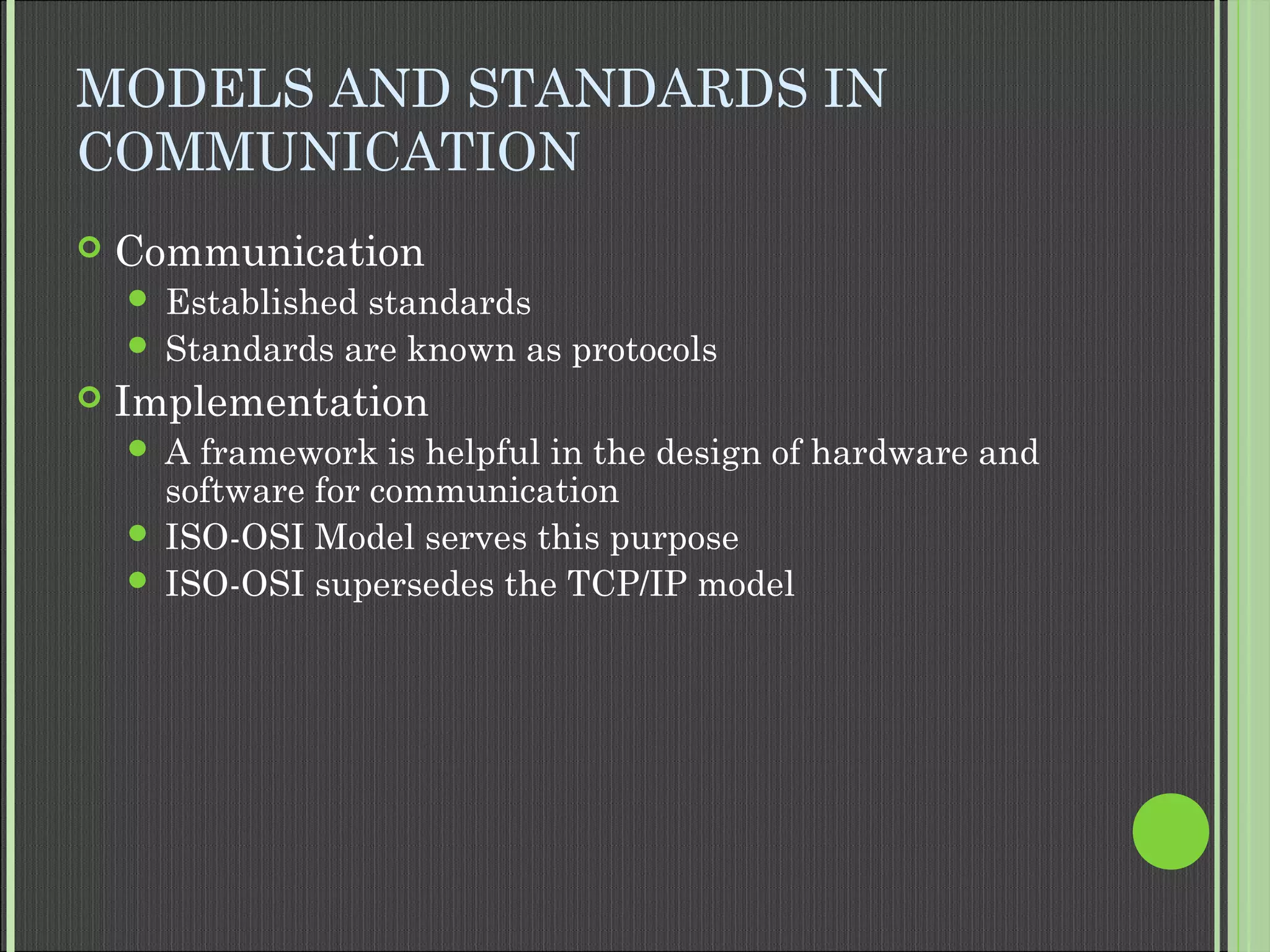
 Communication
 Established standards
 Standards are known as protocols
 Implementation
 A framework is helpful in the design of hardware and
software for communication
 ISO-OSI Model serves this purpose
 ISO-OSI supersedes the TCP/IP model
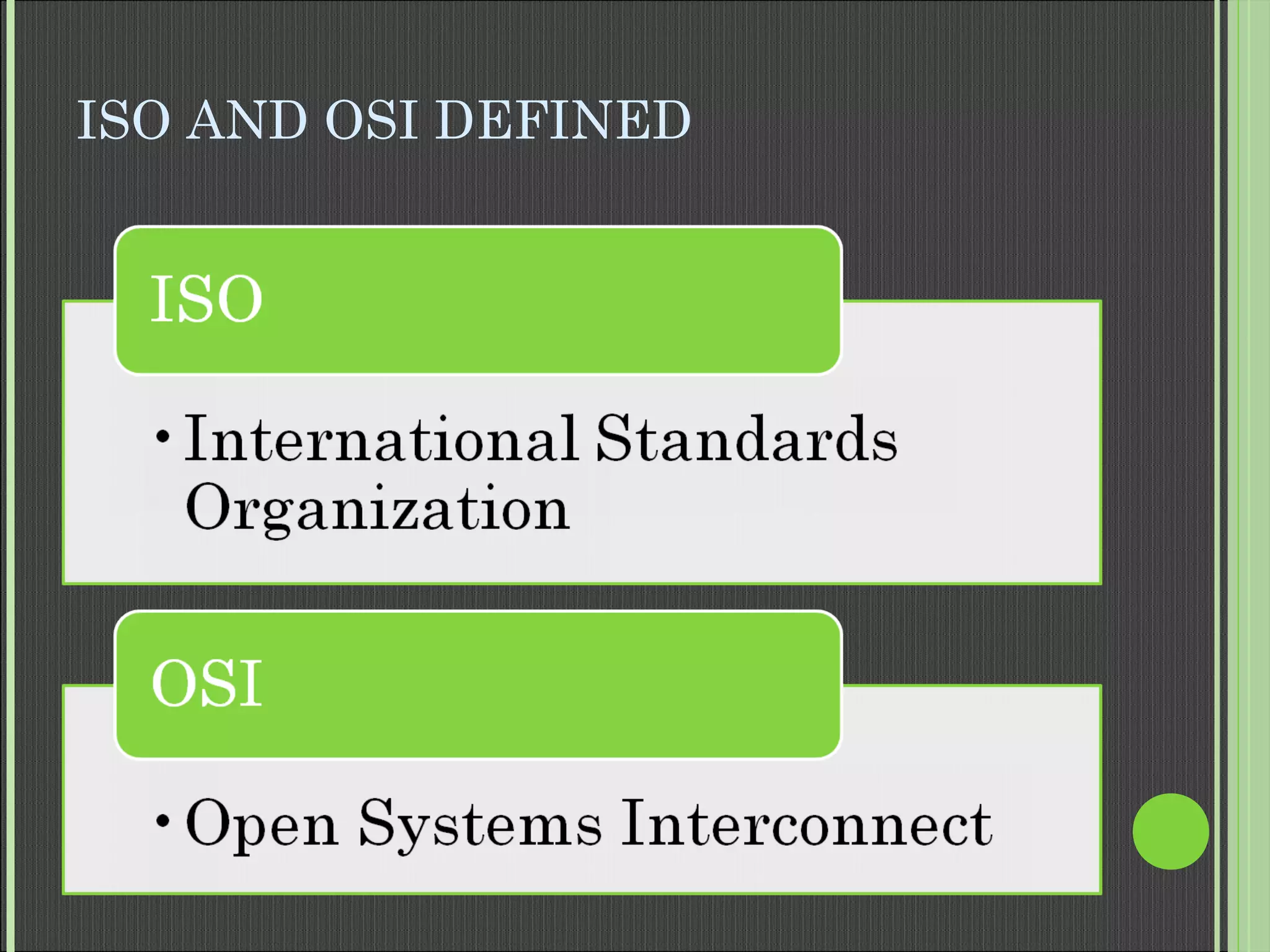
ISO AND OSI DEFINED
OSI MODEL BACKGROUND
 Introduced in 1978 and revised in 1984
 Formulates the communication process into
structured layers
 There are seven layers in the model, hence the
name the 7-Layer model
 The model acts as a frame of reference in the
design of communications and networking
products
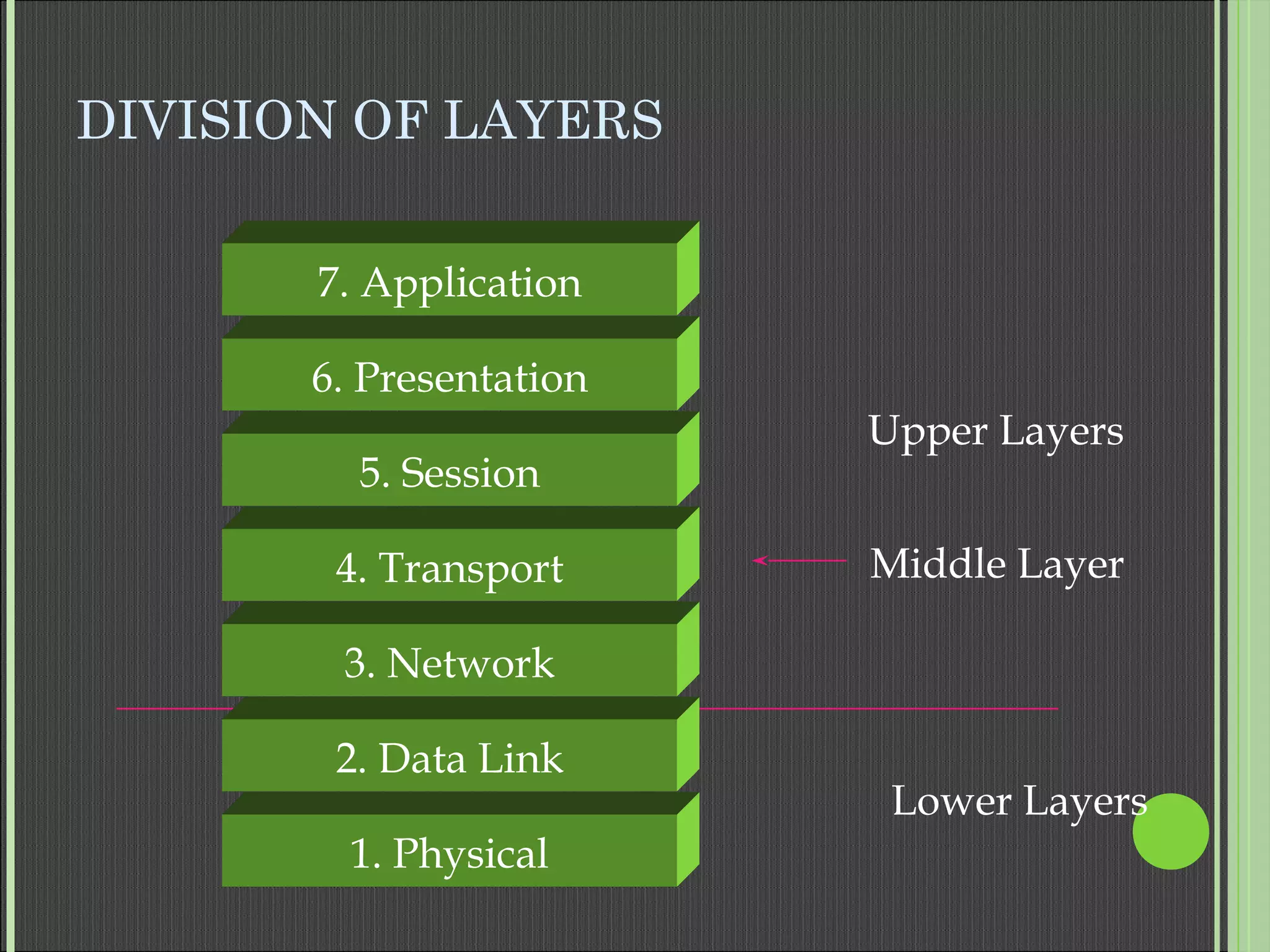
DIVISION OF LAYERS
Upper Layers
Lower Layers
Middle Layer
7. Application
6. Presentation
5. Session
4. Transport
3. Network
2. Data Link
1. Physical
7. APPLICATION LAYER
 Purpose
 User application to network service interface
 Examples
 File request from server
 E-mail services
APPLICATION LAYER FUNCTION
 Function
 General network access
 Flow control
 Error recovery
6. PRESENTATION LAYER
 Purpose
 Formats data for exchange between points of
communication
 Example:
 Redirector software
 Formats for transmission to the server
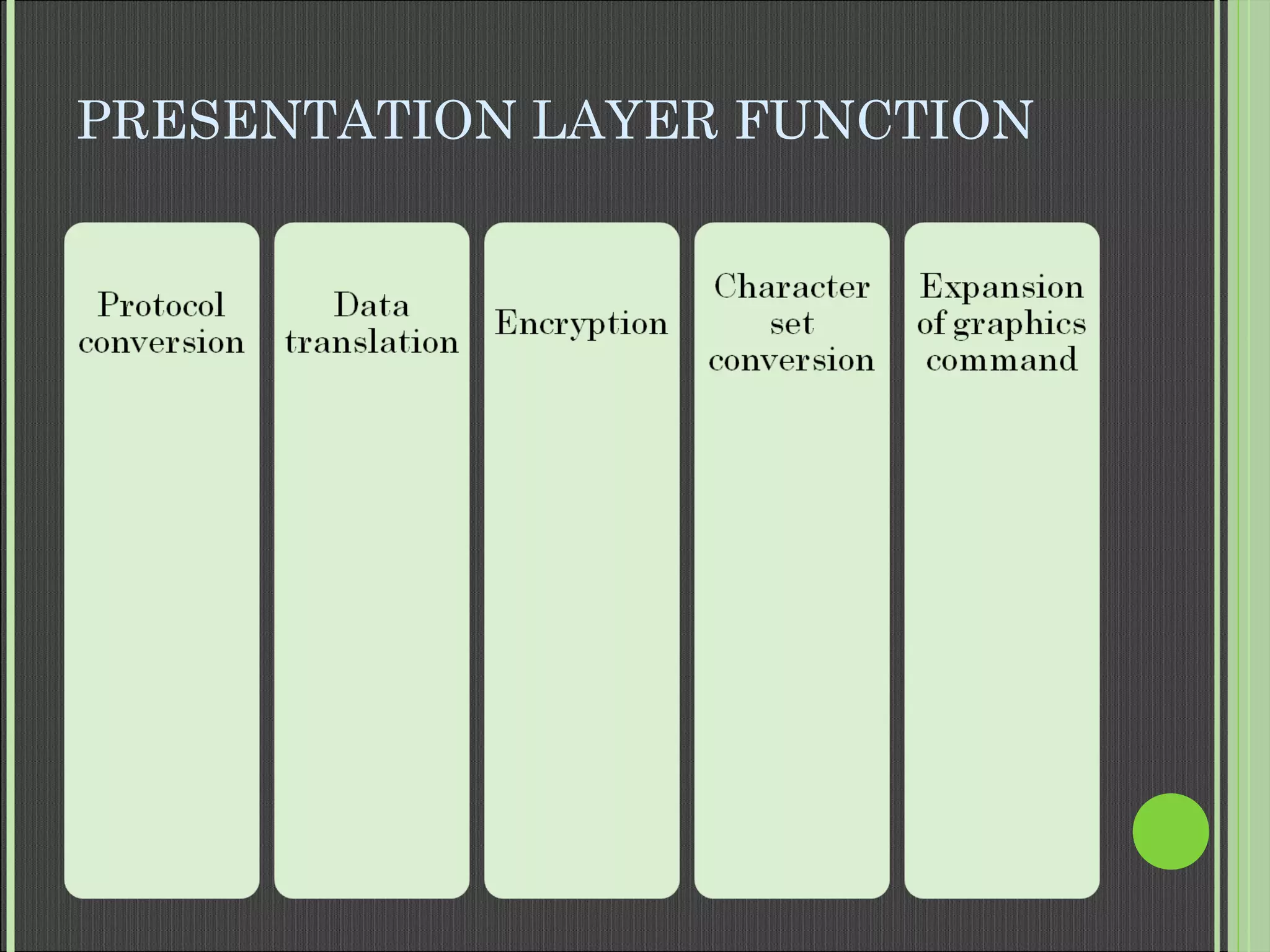
PRESENTATION LAYER FUNCTION
5. SESSION LAYER
 Purpose
 Oversee a communication session
 Establish
 Maintain
 Terminate
 Function
 Performs name recognition and related security
 Synchronization between sender and receiver
 Assignment of time for transmission
 Start time
 End time etc.
4. TRANSPORT LAYER
 Purpose
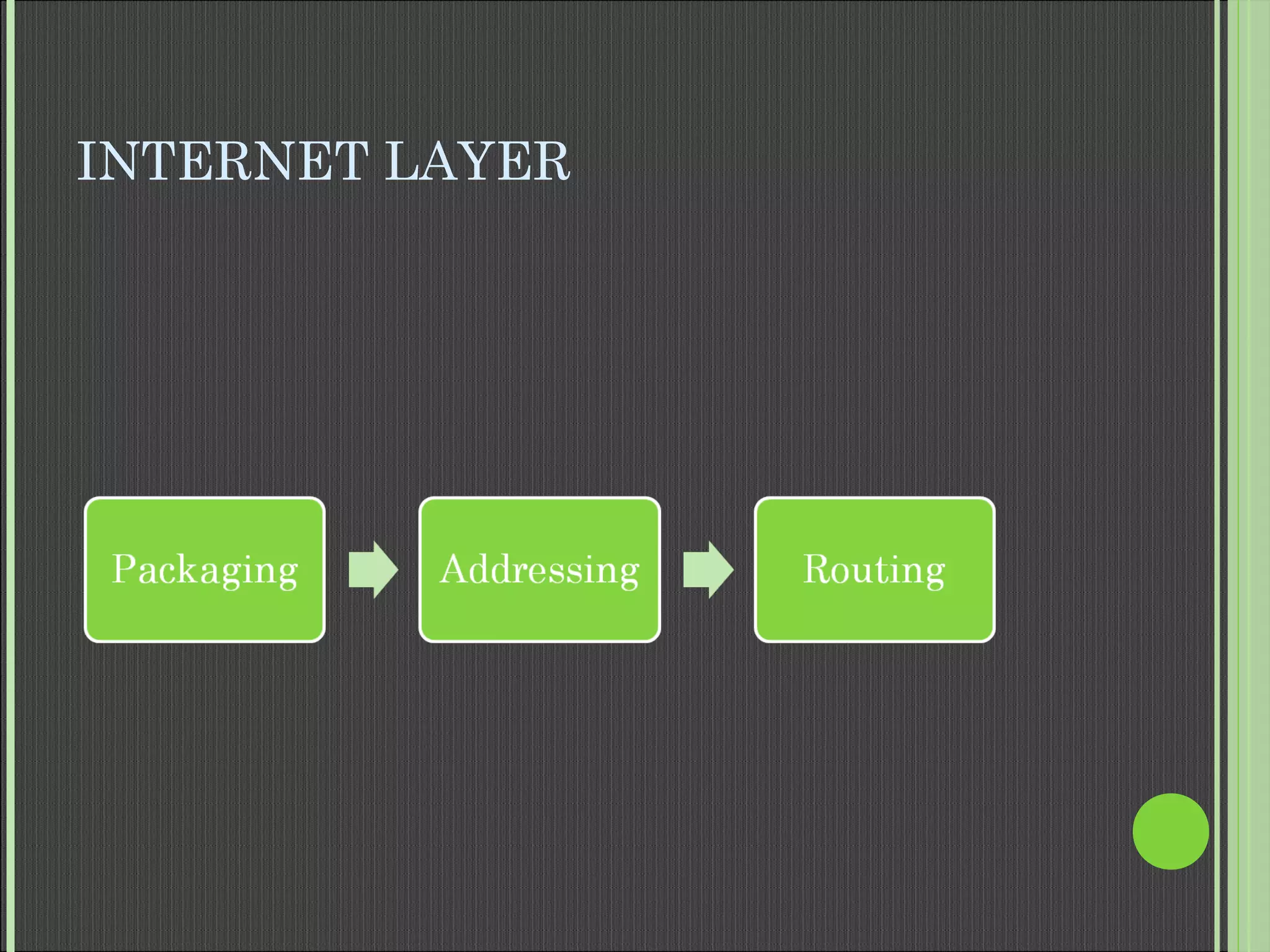
 Repackage proper and efficient delivery of packages
 Error free
 In sequence
 Without duplication
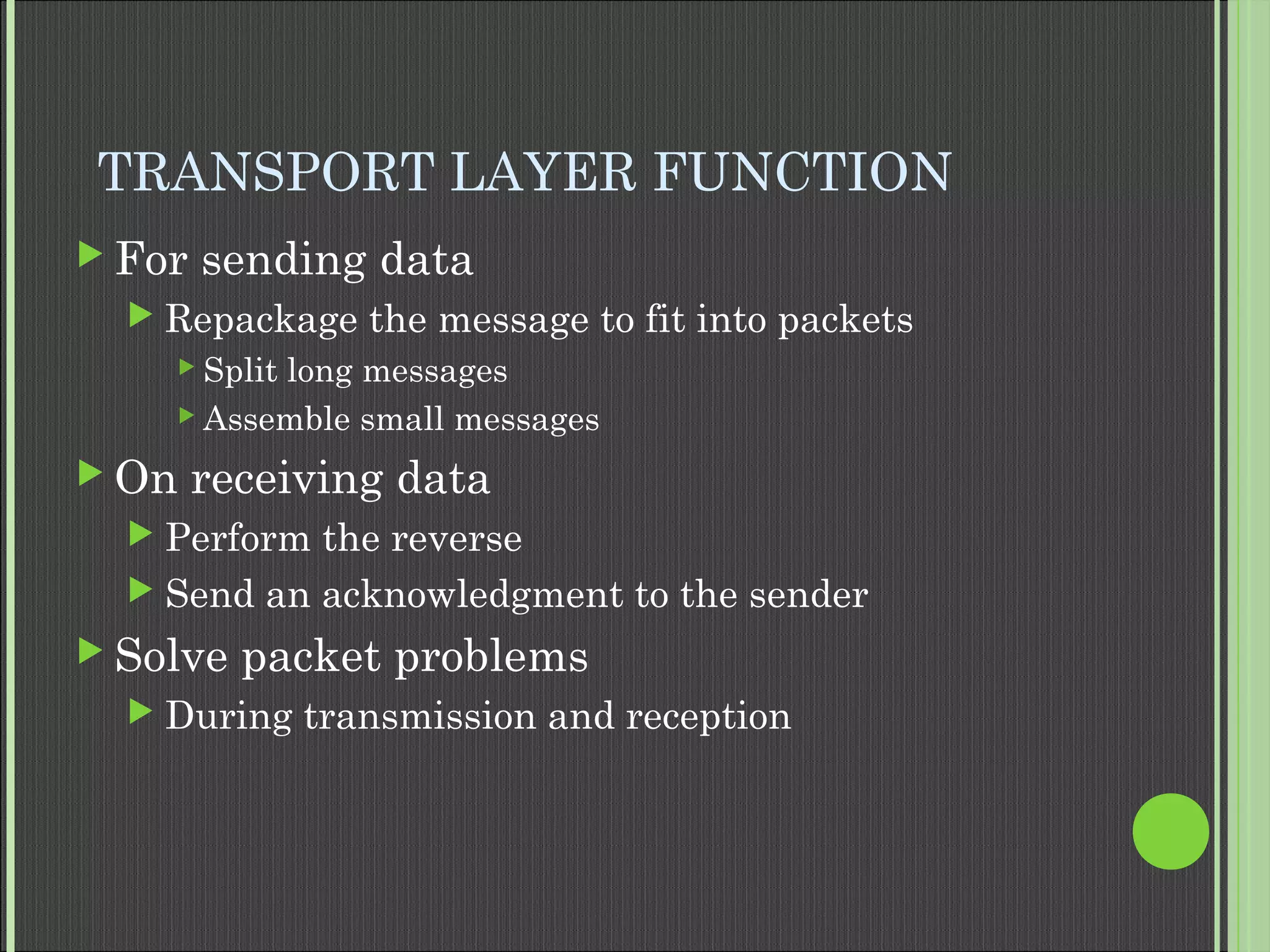
TRANSPORT LAYER FUNCTION
 For sending data
 Repackage the message to fit into packets
 Split long messages
 Assemble small messages
 On receiving data
 Perform the reverse
 Send an acknowledgment to the sender
 Solve packet problems
 During transmission and reception
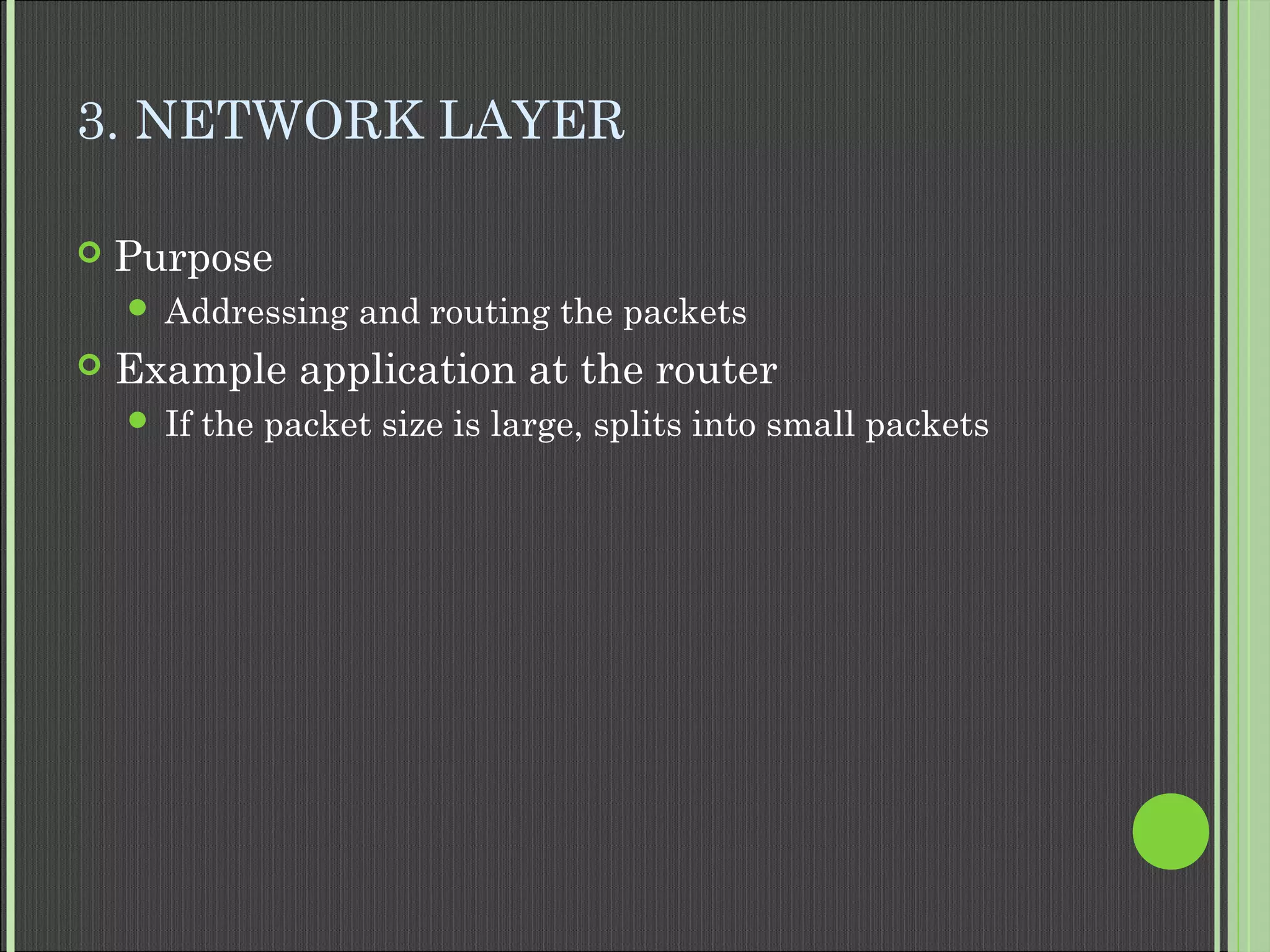
3. NETWORK LAYER
 Purpose
 Addressing and routing the packets
 Example application at the router
 If the packet size is large, splits into small packets
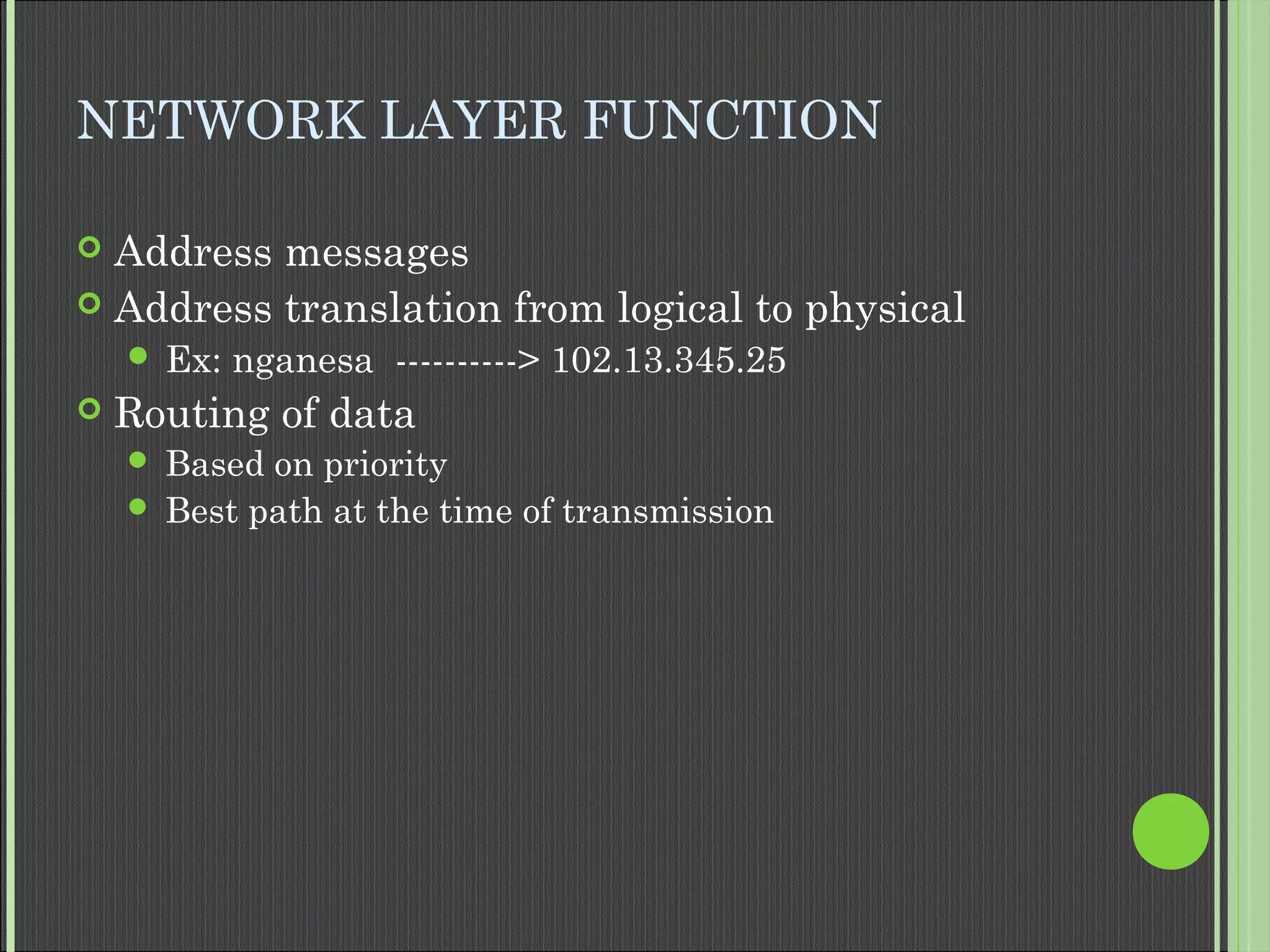
NETWORK LAYER FUNCTION
 Address messages
 Address translation from logical to physical
 Ex: nganesa ----------> 102.13.345.25
 Routing of data
 Based on priority
 Best path at the time of transmission
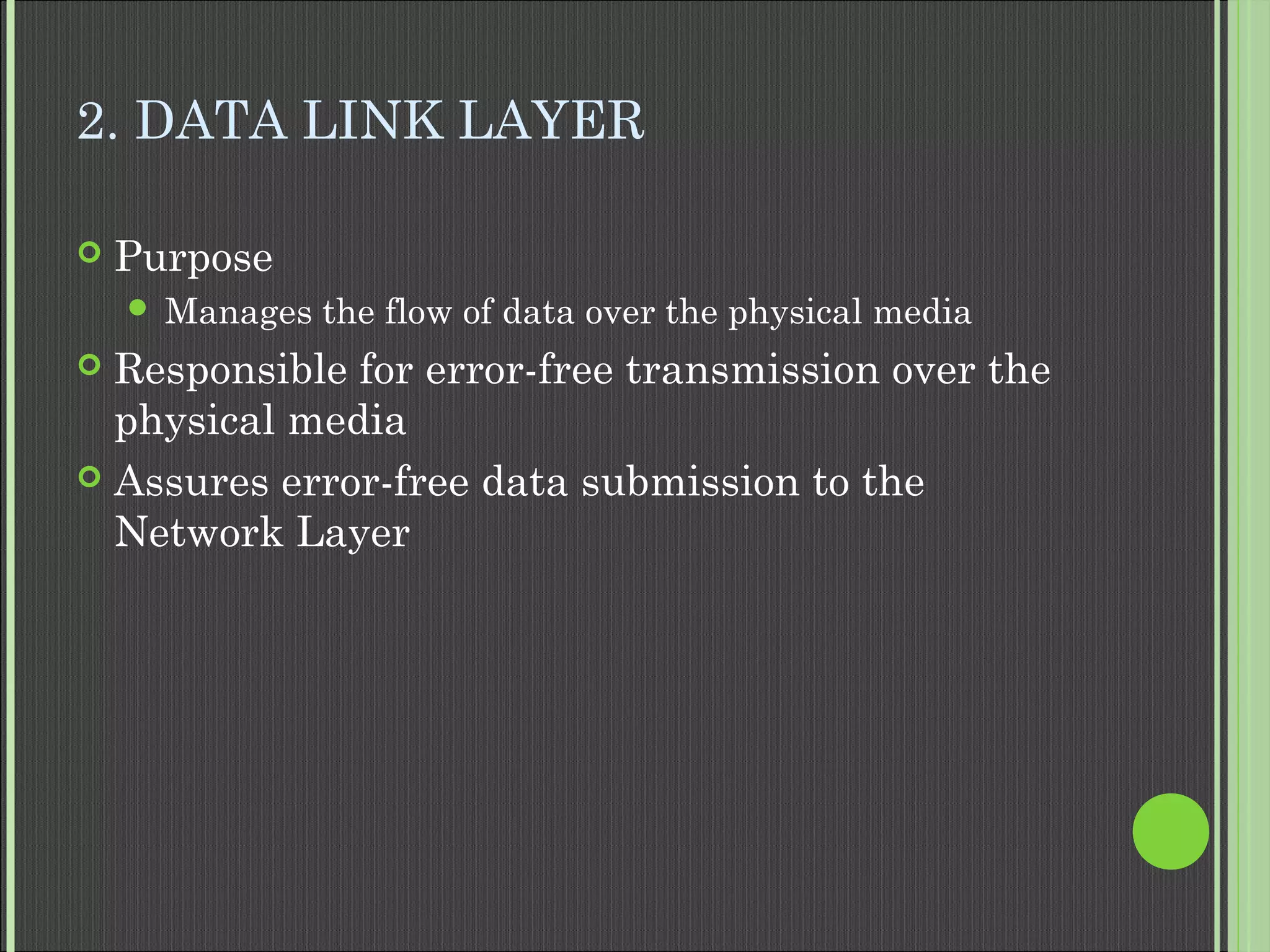
2. DATA LINK LAYER
 Purpose
 Manages the flow of data over the physical media
 Responsible for error-free transmission over the
physical media
 Assures error-free data submission to the
Network Layer
DATA LINK LAYER FUNCTION
 Point of origin
 Packages data for transmission over physical line
 Receiving end
 Packages data for submission to the network layer
DATA LINK LAYER SUBDIVISION
 Improvement to ISO Model
 Logical Link Control (LLC) sub-layer
 Manages service access points (logical link)
 Error and flow control
 Media Access Control (MAC) sub-layer
 Applies directly to network card communication
 Access control
1. PHYSICAL LAYER
 Purpose
 Deals with the transmission of 0s and 1s over the
physical media
 Translation of bits into signals
 Example
 Pulse duration determination
 Transmission synchronization
 etc.
PHYSICAL LAYER FUNCTION
 Encode bits into signals
 Carry data from the higher layers
 Define the interface to the card
 Electrical
 Mechanical
 Functional
 Example: Pin count on the connector
TCP/IP REFERENCE MODEL
 There are four layers of the TCP/IP
reference model (DARPA model as named
by the US Government Agency)
 The ISO-OSI reference model is composed of
seven layers
 The next slide shows the mapping of the
ISO/OSI model to the TCP/IP model
 Note that the ISO/OSI model is more
widely used and accepted but the TCP/IP
model is easy to comprehend
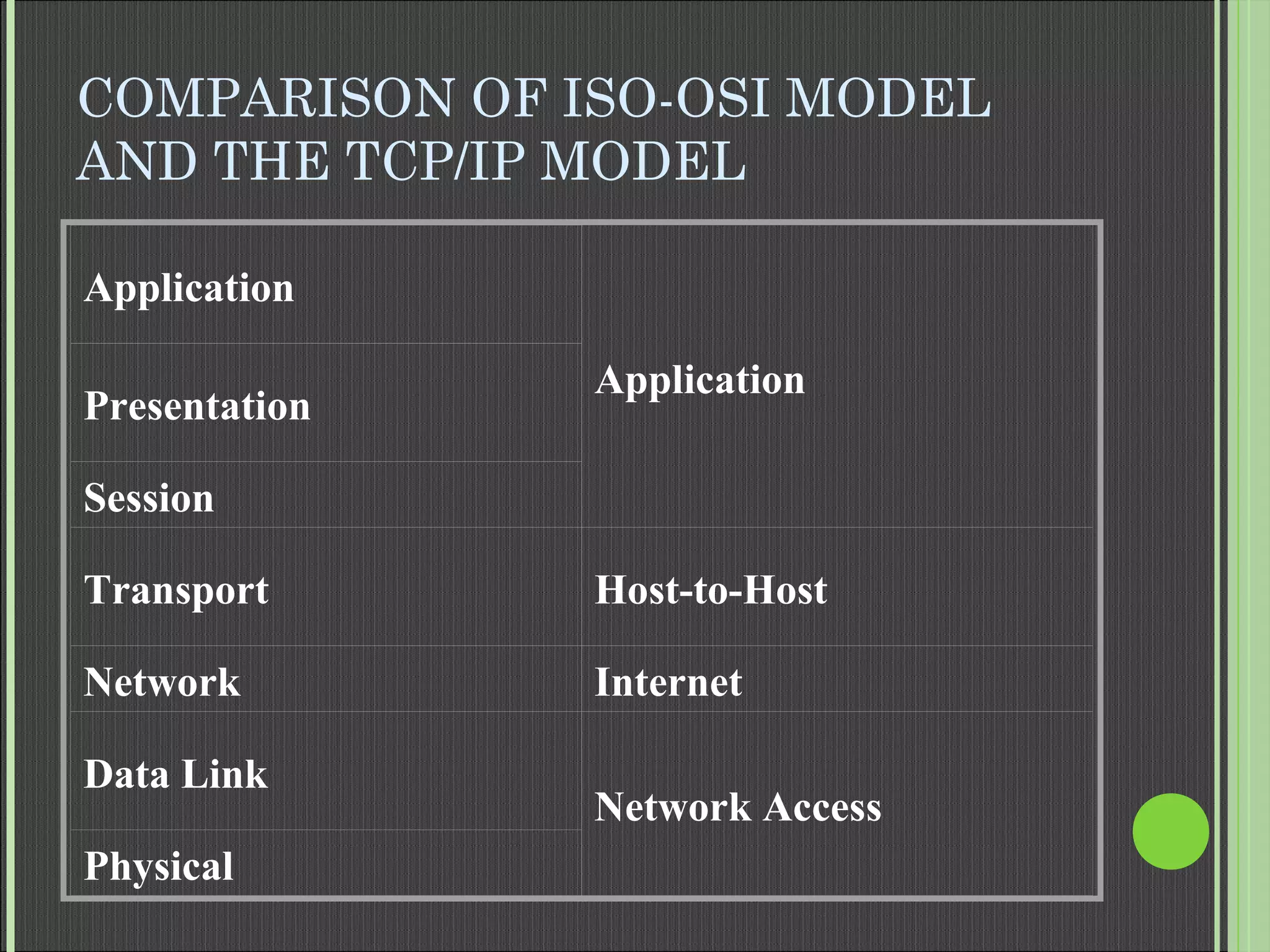
COMPARISON OF ISO-OSI MODEL
AND THE TCP/IP MODEL
Application
Application
Presentation
Session
Transport Host-to-Host
Network Internet
Data Link
Network Access
Physical
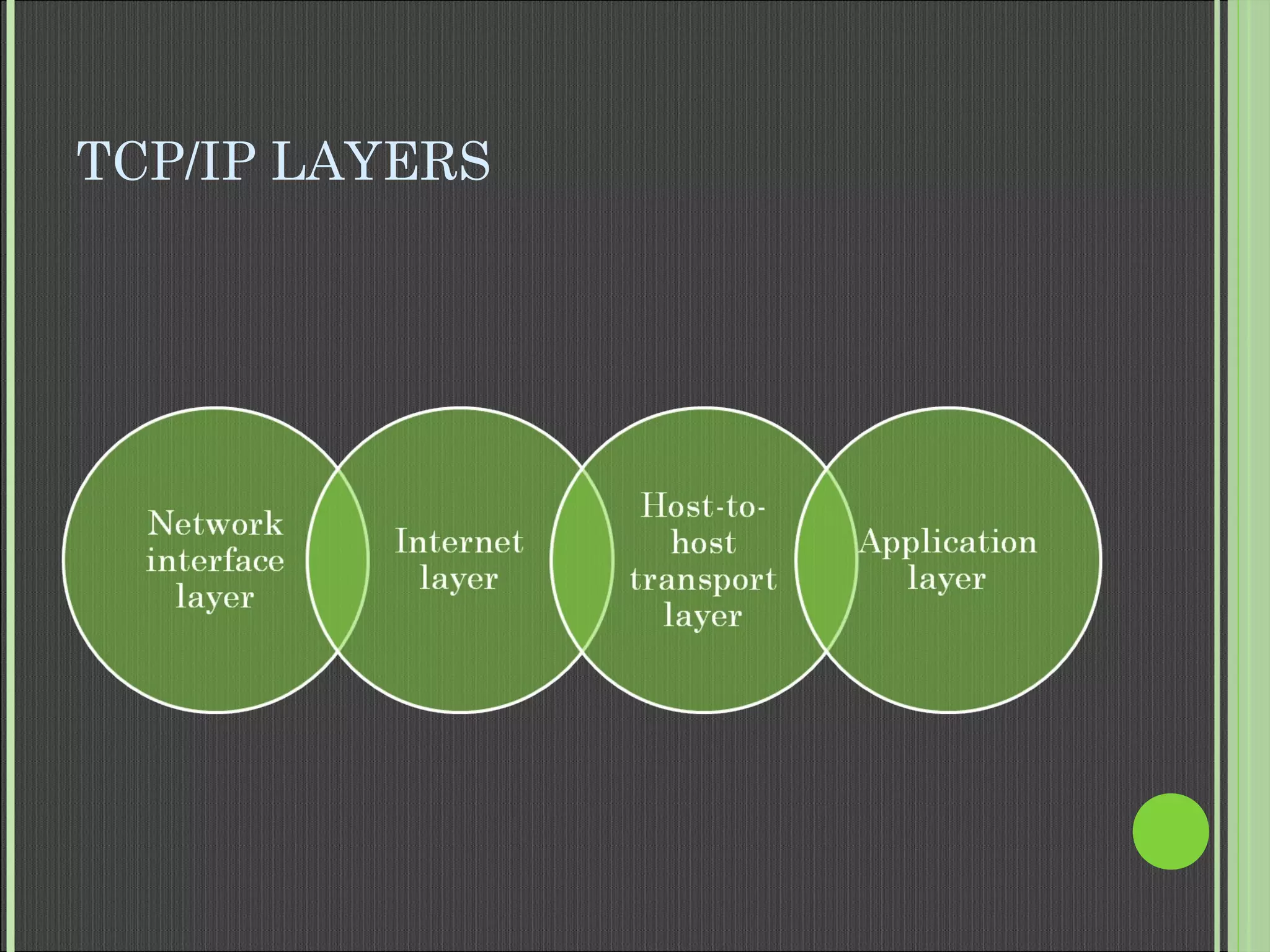
TCP/IP LAYERS
NETWORK INTERFACE LAYER
 Responsible for sending and receiving TCP/IP
packets on the network medium (physical/Data
Link)
 Applicable LAN technologies
 Ethernet, Token Ring, FDDI etc.
 Applicable WAN technologies
 X.25 (old), Frame Relay, ATM etc.
 Note that some technologies such as ATM and
FDDI may be used at both the WAN and the
LAN levels
INTERNET LAYER
CORE INTERNET LAYER
PROTOCOLS
 IP
 A connectionless unreliable protocol that is
part of the TCP/IP protocol suite
 ARP (Address Resolution Protocol)
 Resolves IP addresses to MAC addresses
 ICMP (Internet Control Message
Protocol)
 Diagnostics and error reporting
 (IGMP) Internet Group Management
Protocol
 Management of group multicast
TRANSPORT LAYER
 Sequencing and transmission of packets
 Acknowledgment of receipts
 Recovery of packets
 Flow control
 In essence, it engages in host-to-host
transportation of data packets and the delivery of
them to the application layer
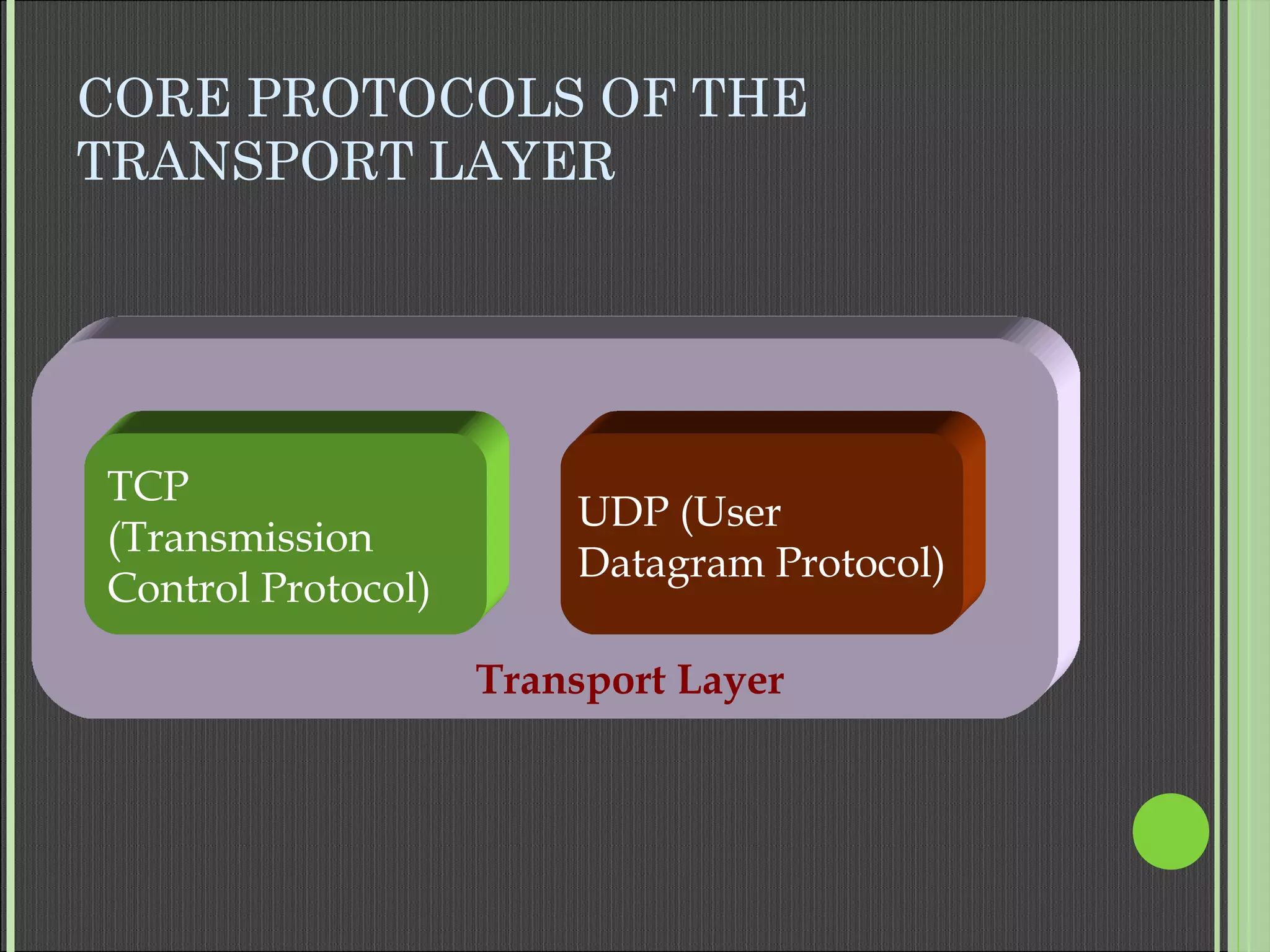
CORE PROTOCOLS OF THE
TRANSPORT LAYER
TCP
(Transmission
Control Protocol)
UDP (User
Datagram Protocol)
Transport Layer
APPLICATION LAYER
 Provides applications with the ability to access
the services of the other layers
 New protocols and services are always being
developed in this category
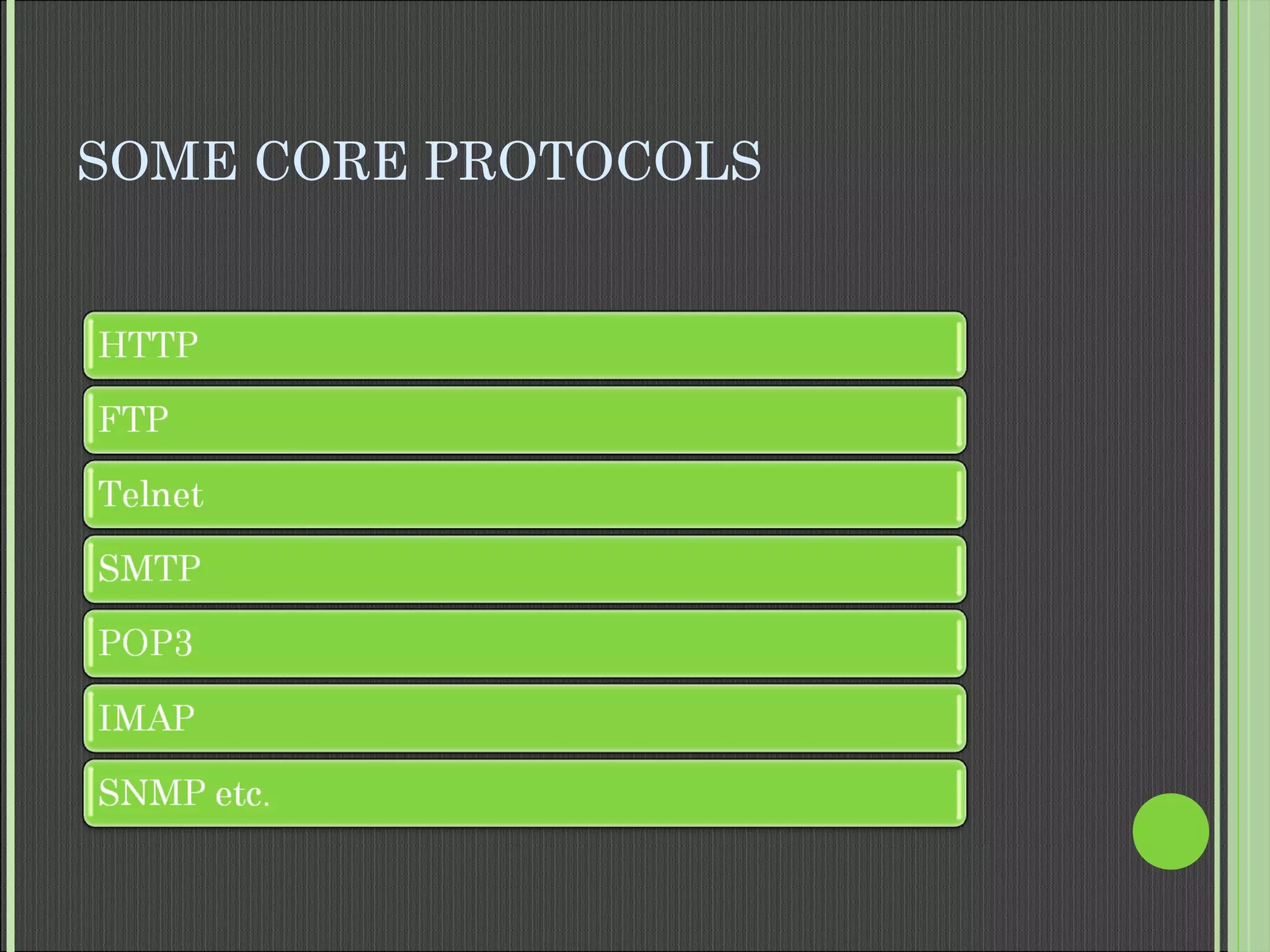
SOME CORE PROTOCOLS
REFERENCE
MATERIAL
 https://www.techopedia.com
 https://en.wikipedia.org
 https://slideshare.net
ThE ENd
Osi and tcp ip model

Osi and tcp ip model

  • 1.
    ASSIGNMENT OBJECTIVES  Discussthe most popular ISO-OSI 7-layer communication reference model  Explain the reference model and standards relevant to network communications  Explain TCP/IP Model
  • 2.
    MODELS AND STANDARDSIN COMMUNICATION  Communication  Established standards  Standards are known as protocols  Implementation  A framework is helpful in the design of hardware and software for communication  ISO-OSI Model serves this purpose  ISO-OSI supersedes the TCP/IP model
  • 3.
    ISO AND OSIDEFINED
  • 4.
    OSI MODEL BACKGROUND Introduced in 1978 and revised in 1984  Formulates the communication process into structured layers  There are seven layers in the model, hence the name the 7-Layer model  The model acts as a frame of reference in the design of communications and networking products
  • 5.
    DIVISION OF LAYERS UpperLayers Lower Layers Middle Layer 7. Application 6. Presentation 5. Session 4. Transport 3. Network 2. Data Link 1. Physical
  • 6.
    7. APPLICATION LAYER Purpose  User application to network service interface  Examples  File request from server  E-mail services
  • 7.
    APPLICATION LAYER FUNCTION Function  General network access  Flow control  Error recovery
  • 8.
    6. PRESENTATION LAYER Purpose  Formats data for exchange between points of communication  Example:  Redirector software  Formats for transmission to the server
  • 9.
  • 10.
    5. SESSION LAYER Purpose  Oversee a communication session  Establish  Maintain  Terminate  Function  Performs name recognition and related security  Synchronization between sender and receiver  Assignment of time for transmission  Start time  End time etc.
  • 11.
    4. TRANSPORT LAYER Purpose  Repackage proper and efficient delivery of packages  Error free  In sequence  Without duplication
  • 12.
    TRANSPORT LAYER FUNCTION For sending data  Repackage the message to fit into packets  Split long messages  Assemble small messages  On receiving data  Perform the reverse  Send an acknowledgment to the sender  Solve packet problems  During transmission and reception
  • 13.
    3. NETWORK LAYER Purpose  Addressing and routing the packets  Example application at the router  If the packet size is large, splits into small packets
  • 14.
    NETWORK LAYER FUNCTION Address messages  Address translation from logical to physical  Ex: nganesa ----------> 102.13.345.25  Routing of data  Based on priority  Best path at the time of transmission
  • 15.
    2. DATA LINKLAYER  Purpose  Manages the flow of data over the physical media  Responsible for error-free transmission over the physical media  Assures error-free data submission to the Network Layer
  • 16.
    DATA LINK LAYERFUNCTION  Point of origin  Packages data for transmission over physical line  Receiving end  Packages data for submission to the network layer
  • 17.
    DATA LINK LAYERSUBDIVISION  Improvement to ISO Model  Logical Link Control (LLC) sub-layer  Manages service access points (logical link)  Error and flow control  Media Access Control (MAC) sub-layer  Applies directly to network card communication  Access control
  • 18.
    1. PHYSICAL LAYER Purpose  Deals with the transmission of 0s and 1s over the physical media  Translation of bits into signals  Example  Pulse duration determination  Transmission synchronization  etc.
  • 19.
    PHYSICAL LAYER FUNCTION Encode bits into signals  Carry data from the higher layers  Define the interface to the card  Electrical  Mechanical  Functional  Example: Pin count on the connector
  • 20.
    TCP/IP REFERENCE MODEL There are four layers of the TCP/IP reference model (DARPA model as named by the US Government Agency)  The ISO-OSI reference model is composed of seven layers  The next slide shows the mapping of the ISO/OSI model to the TCP/IP model  Note that the ISO/OSI model is more widely used and accepted but the TCP/IP model is easy to comprehend
  • 21.
    COMPARISON OF ISO-OSIMODEL AND THE TCP/IP MODEL Application Application Presentation Session Transport Host-to-Host Network Internet Data Link Network Access Physical
  • 22.
  • 23.
    NETWORK INTERFACE LAYER Responsible for sending and receiving TCP/IP packets on the network medium (physical/Data Link)  Applicable LAN technologies  Ethernet, Token Ring, FDDI etc.  Applicable WAN technologies  X.25 (old), Frame Relay, ATM etc.  Note that some technologies such as ATM and FDDI may be used at both the WAN and the LAN levels
  • 24.
  • 25.
    CORE INTERNET LAYER PROTOCOLS IP  A connectionless unreliable protocol that is part of the TCP/IP protocol suite  ARP (Address Resolution Protocol)  Resolves IP addresses to MAC addresses  ICMP (Internet Control Message Protocol)  Diagnostics and error reporting  (IGMP) Internet Group Management Protocol  Management of group multicast
  • 26.
    TRANSPORT LAYER  Sequencingand transmission of packets  Acknowledgment of receipts  Recovery of packets  Flow control  In essence, it engages in host-to-host transportation of data packets and the delivery of them to the application layer
  • 27.
    CORE PROTOCOLS OFTHE TRANSPORT LAYER TCP (Transmission Control Protocol) UDP (User Datagram Protocol) Transport Layer
  • 28.
    APPLICATION LAYER  Providesapplications with the ability to access the services of the other layers  New protocols and services are always being developed in this category
  • 29.
  • 30.