Avondale Grammar SchoolThrough teamwork we will provide the keys for a successful and well-rounded education.
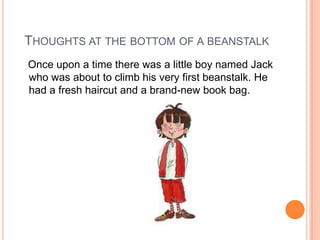
Thoughts at the bottom of a beanstalk   Once upon a time there was a little boy named Jack who was about to climb his very first beanstalk. He had a fresh haircut and a brand-new book bag.
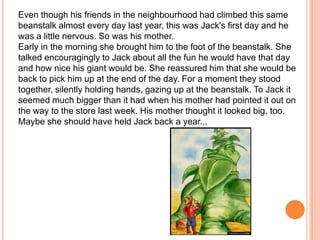
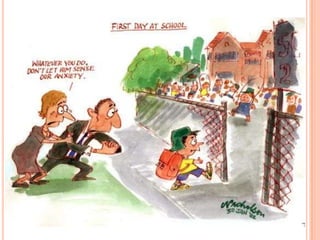
Even though his friends in the neighbourhood had climbed this same beanstalk almost every day last year, this was Jack's first day and he was a little nervous. So was his mother. Early in the morning she brought him to the foot of the beanstalk. She talked encouragingly to Jack about all the fun he would have that day and how nice his giant would be. She reassured him that she would be back to pick him up at the end of the day. For a moment they stood together, silently holding hands, gazing up at the beanstalk. To Jack it seemed much bigger than it had when his mother had pointed it out on the way to the store last week. His mother thought it looked big, too. Maybe she should have held Jack back a year...
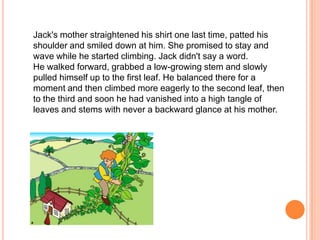
Jack's mother straightened his shirt one last time, patted his shoulder and smiled down at him. She promised to stay and wave while he started climbing. Jack didn't say a word. He walked forward, grabbed a low-growing stem and slowly pulled himself up to the first leaf. He balanced there for a moment and then climbed more eagerly to the second leaf, then to the third and soon he had vanished into a high tangle of leaves and stems with never a backward glance at his mother.
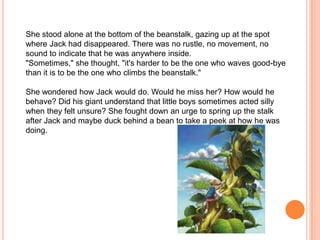
She stood alone at the bottom of the beanstalk, gazing up at the spot where Jack had disappeared. There was no rustle, no movement, no sound to indicate that he was anywhere inside. "Sometimes," she thought, "it's harder to be the one who waves good-bye than it is to be the one who climbs the beanstalk." She wondered how Jack would do. Would he miss her? How would he behave? Did his giant understand that little boys sometimes acted silly when they felt unsure? She fought down an urge to spring up the stalk after Jack and maybe duck behind a bean to take a peek at how he was doing.
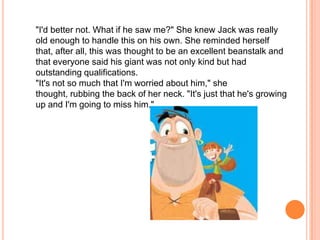
"I'd better not. What if he saw me?" She knew Jack was really old enough to handle this on his own. She reminded herself that, after all, this was thought to be an excellent beanstalk and that everyone said his giant was not only kind but had outstanding qualifications. "It's not so much that I'm worried about him," she thought, rubbing the back of her neck. "It's just that he's growing up and I'm going to miss him."
Jack's mother turned to leave. "Jack's going to have lots of bigger beanstalks to climb in his life," she told herself. "Today's the day he starts practicing for them... And today's the day I start practicing something too: cheering him on.”
Welcome To KindergartenYou are your child’s first teacher and therefore, we encourage your involvement in your child’s education.We hope to provide your child with a fun and positive introduction to the school setting.
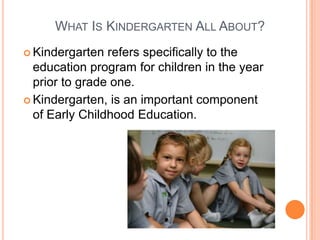
What Is Kindergarten All About?Kindergarten refers specifically to the education program for children in the year prior to grade one.
Kindergarten, is an important component of Early Childhood Education.Getting ReadyEncourage your child to ask questions about going to school.
Encourage your child to try to do things on their own, such as dressing, washing their hands, going to the toilet, unwrapping their food, and opening their drink bottle.
 Attend the transition-to-school program at school.Pre-academic skillsThese skills are not a pre requisite to entering Kindergarten but may be an indication as to the readiness of your child academically. Please read the school readiness information for a more in-depth analysis of your child’s readiness for school.Names basic colours and shapes.
Shows interest in stories and books.
Recognises his/her name to identify their property and is learning to write it.
Displays interest and curiosity in learning.
Knows how to handle a book.
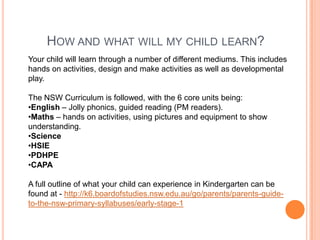
How and what will my child learn?Your child will learn through a number of different mediums. This includes hands on activities, design and make activities as well as developmental play.The NSW Curriculum is followed, with the 6 core units being:English – Jolly phonics, guided reading (PM readers).
Maths – hands on activities, using pictures and equipment to show understanding.
Science
HSIE
PDHPE

Orientation Powerpoint

  • 1.
    Avondale Grammar SchoolThroughteamwork we will provide the keys for a successful and well-rounded education.
  • 2.
    Thoughts at thebottom of a beanstalk Once upon a time there was a little boy named Jack who was about to climb his very first beanstalk. He had a fresh haircut and a brand-new book bag.
  • 3.
    Even though hisfriends in the neighbourhood had climbed this same beanstalk almost every day last year, this was Jack's first day and he was a little nervous. So was his mother. Early in the morning she brought him to the foot of the beanstalk. She talked encouragingly to Jack about all the fun he would have that day and how nice his giant would be. She reassured him that she would be back to pick him up at the end of the day. For a moment they stood together, silently holding hands, gazing up at the beanstalk. To Jack it seemed much bigger than it had when his mother had pointed it out on the way to the store last week. His mother thought it looked big, too. Maybe she should have held Jack back a year...
  • 4.
    Jack's mother straightenedhis shirt one last time, patted his shoulder and smiled down at him. She promised to stay and wave while he started climbing. Jack didn't say a word. He walked forward, grabbed a low-growing stem and slowly pulled himself up to the first leaf. He balanced there for a moment and then climbed more eagerly to the second leaf, then to the third and soon he had vanished into a high tangle of leaves and stems with never a backward glance at his mother.
  • 5.
    She stood aloneat the bottom of the beanstalk, gazing up at the spot where Jack had disappeared. There was no rustle, no movement, no sound to indicate that he was anywhere inside. "Sometimes," she thought, "it's harder to be the one who waves good-bye than it is to be the one who climbs the beanstalk." She wondered how Jack would do. Would he miss her? How would he behave? Did his giant understand that little boys sometimes acted silly when they felt unsure? She fought down an urge to spring up the stalk after Jack and maybe duck behind a bean to take a peek at how he was doing.
  • 6.
    "I'd better not.What if he saw me?" She knew Jack was really old enough to handle this on his own. She reminded herself that, after all, this was thought to be an excellent beanstalk and that everyone said his giant was not only kind but had outstanding qualifications. "It's not so much that I'm worried about him," she thought, rubbing the back of her neck. "It's just that he's growing up and I'm going to miss him."
  • 7.
    Jack's mother turnedto leave. "Jack's going to have lots of bigger beanstalks to climb in his life," she told herself. "Today's the day he starts practicing for them... And today's the day I start practicing something too: cheering him on.”
  • 8.
    Welcome To KindergartenYouare your child’s first teacher and therefore, we encourage your involvement in your child’s education.We hope to provide your child with a fun and positive introduction to the school setting.
  • 9.
    What Is KindergartenAll About?Kindergarten refers specifically to the education program for children in the year prior to grade one.
  • 10.
    Kindergarten, is animportant component of Early Childhood Education.Getting ReadyEncourage your child to ask questions about going to school.
  • 11.
    Encourage your childto try to do things on their own, such as dressing, washing their hands, going to the toilet, unwrapping their food, and opening their drink bottle.
  • 12.
    Attend thetransition-to-school program at school.Pre-academic skillsThese skills are not a pre requisite to entering Kindergarten but may be an indication as to the readiness of your child academically. Please read the school readiness information for a more in-depth analysis of your child’s readiness for school.Names basic colours and shapes.
  • 13.
    Shows interest instories and books.
  • 14.
    Recognises his/her nameto identify their property and is learning to write it.
  • 15.
    Displays interest andcuriosity in learning.
  • 16.
    Knows how tohandle a book.
  • 17.
    How and whatwill my child learn?Your child will learn through a number of different mediums. This includes hands on activities, design and make activities as well as developmental play.The NSW Curriculum is followed, with the 6 core units being:English – Jolly phonics, guided reading (PM readers).
  • 18.
    Maths – handson activities, using pictures and equipment to show understanding.
  • 19.
  • 20.
  • 21.