Organizational Structure of a Hospital
Levels allow efficient management of hospital departments.  The structure helps one understand the hospital’s chain of command. Organizational   Structure   refers to levels of management within a hospital.
Large hospitals have complex organizational structures. Smaller hospitals tend to have much simpler organizational structures. Organizational structure varies from hospital to hospital.
Grouping of Hospital Departments Within the Structure: Hospital departments are grouped in order to promote efficiency of facility. Grouping is generally done according to similarity of duties.
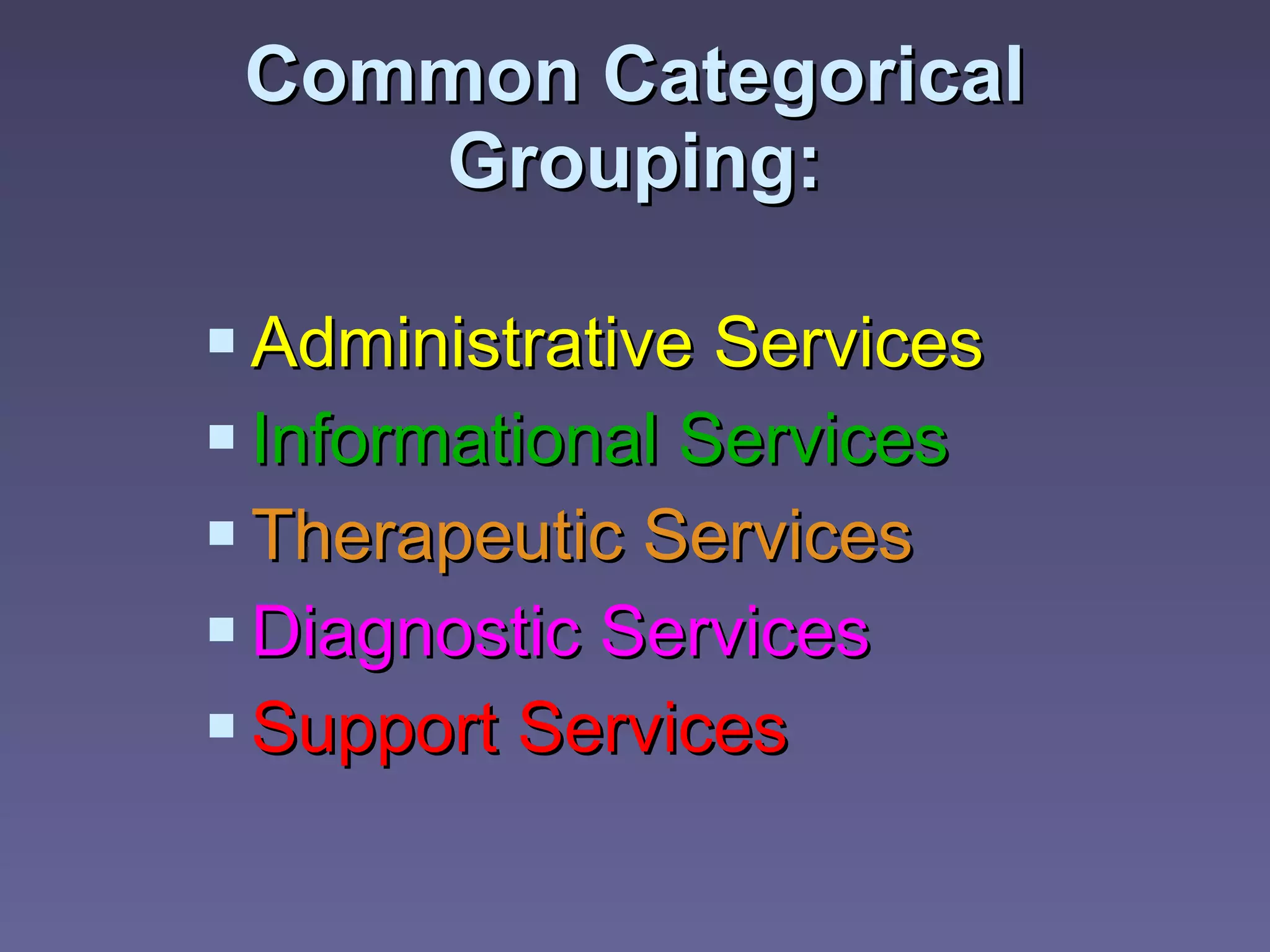
Common Categorical Grouping: Administrative Services Informational Services Therapeutic Services Diagnostic Services Support Services
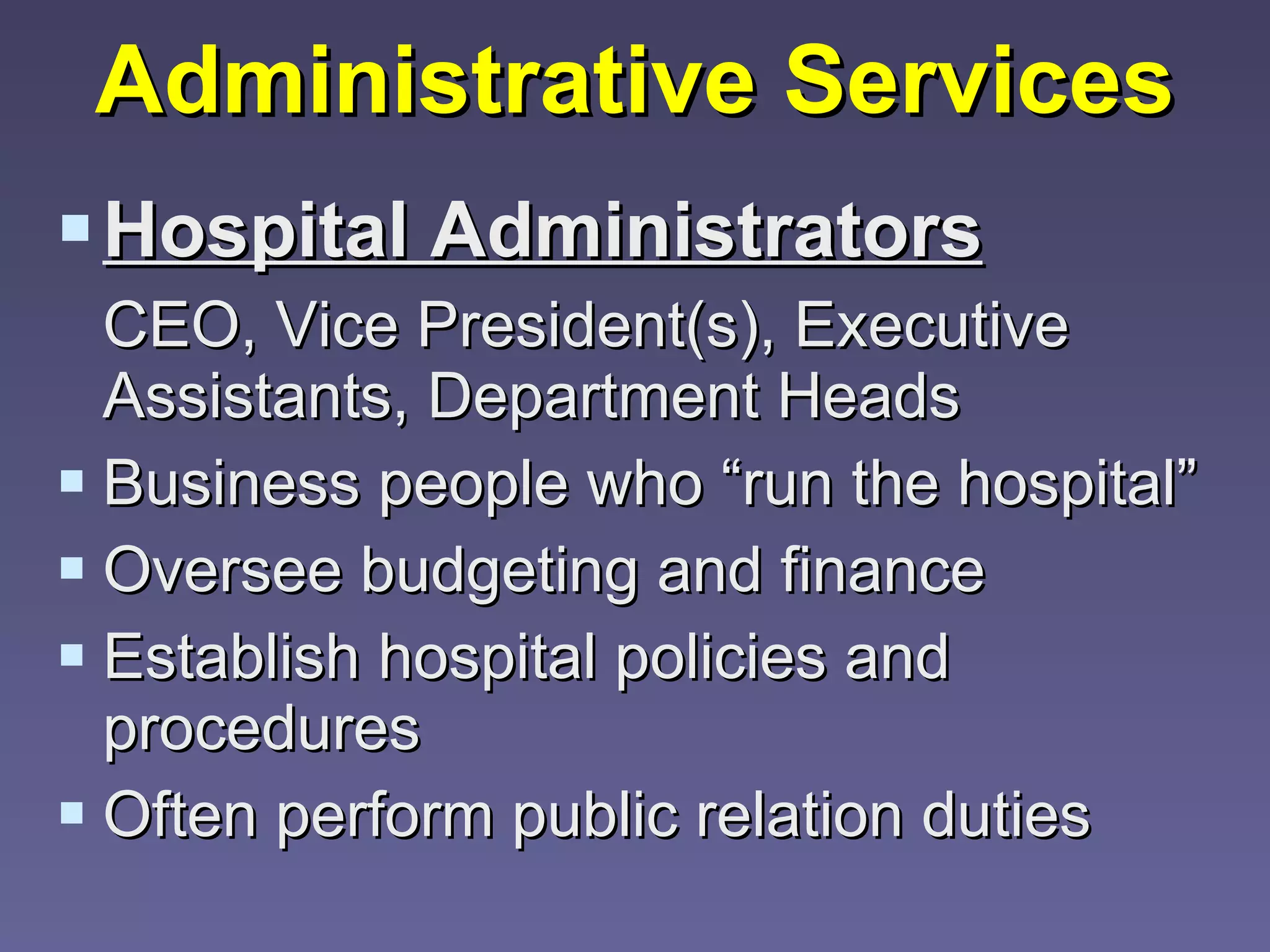
Administrative Services Hospital Administrators   CEO, Vice President(s), Executive Assistants, Department Heads Business people who “run the hospital” Oversee budgeting and finance Establish hospital policies and procedures Often perform public relation duties
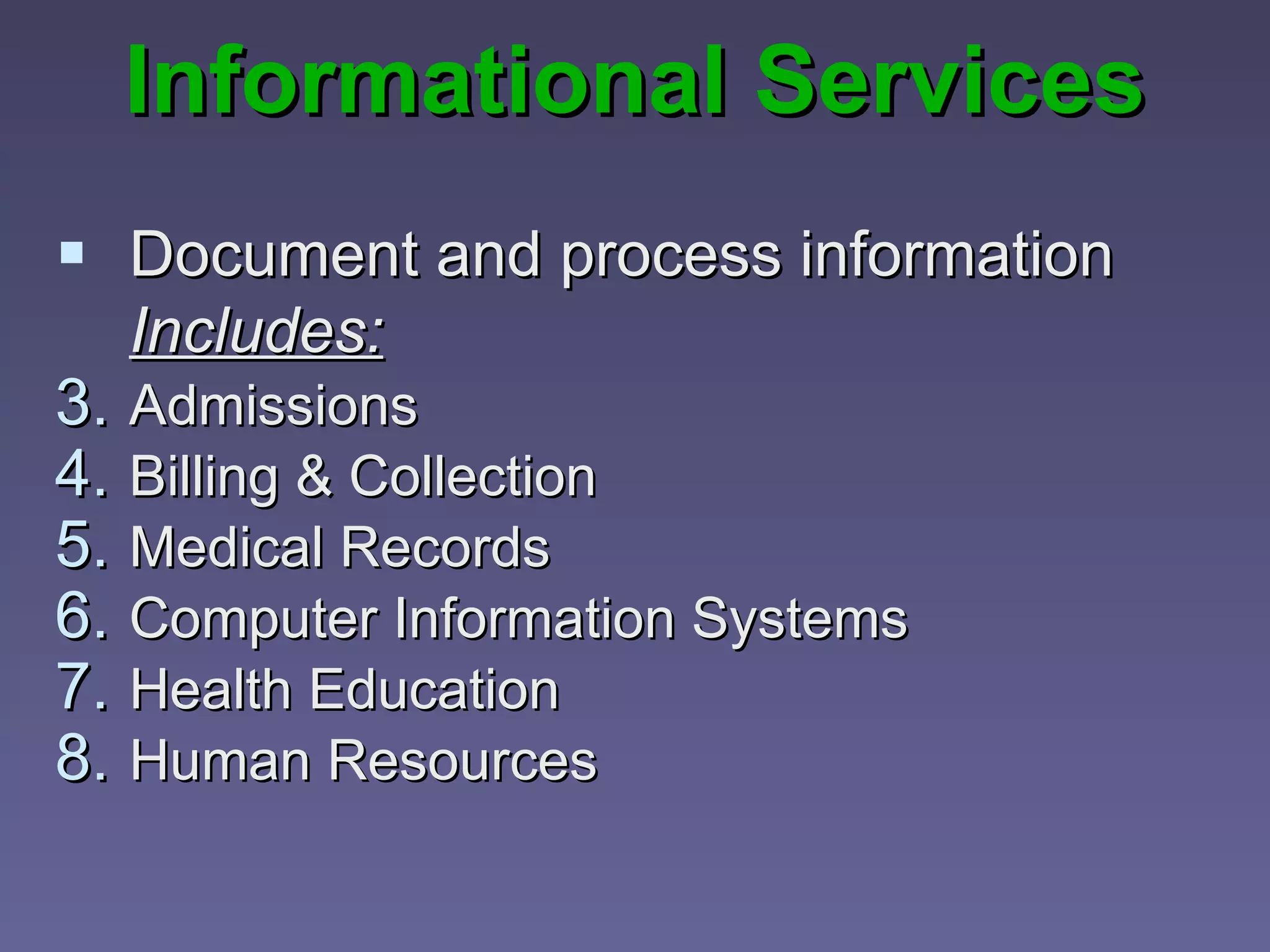
Informational Services Document and process information Includes:   Admissions Billing & Collection Medical Records Computer Information Systems Health Education Human Resources
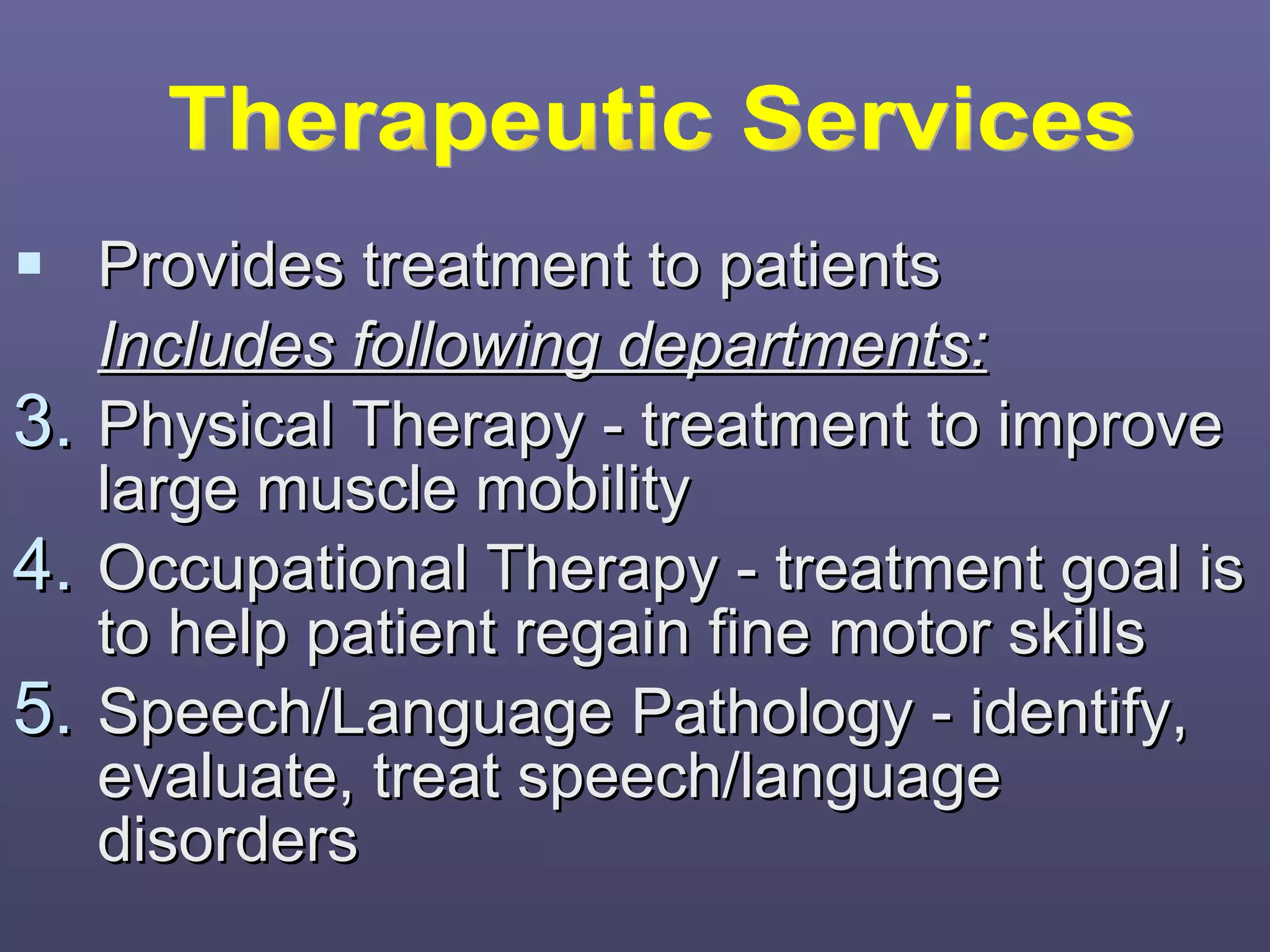
Provides treatment to patients Includes following departments: Physical Therapy - treatment to improve large muscle mobility Occupational Therapy - treatment goal is to help patient regain fine motor skills Speech/Language Pathology - identify, evaluate, treat speech/language disorders Therapeutic Services
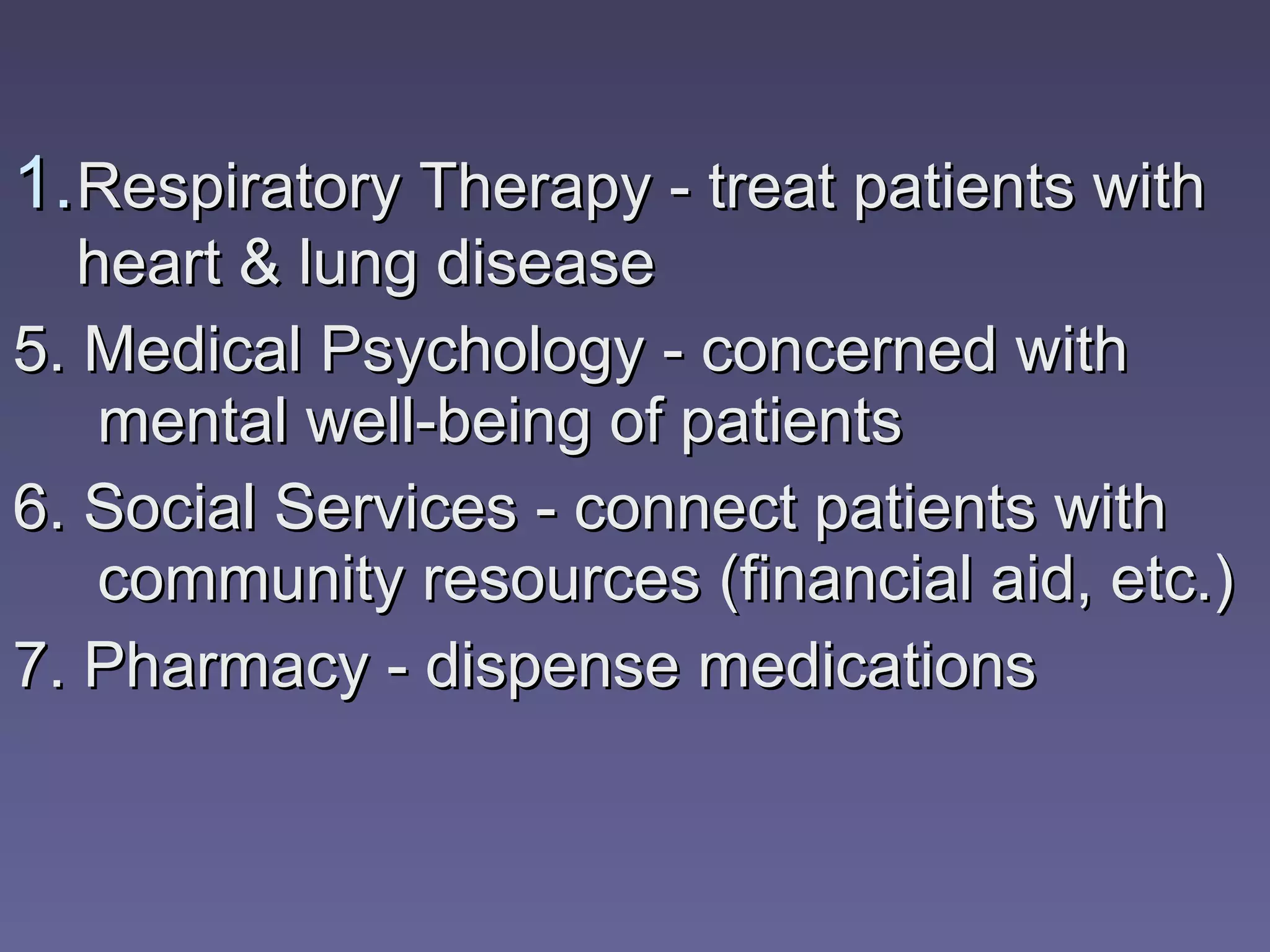
5. Medical Psychology - concerned with mental well-being of patients 6. Social Services - connect patients with community resources (financial aid, etc.) 7. Pharmacy - dispense medications Respiratory Therapy - treat patients with heart & lung disease
Sports Medicine - provide rehabilitative services to athletes Nursing - provide care for patients Dietary - maintain nutritionally sound  diets for patients
Diagnostic Services Determines the cause(s) of illness or injury Includes: Medical Laboratory  - studies body tissues Medical Imaging  - radiology, MRI, CT, Ultra Sound Emergency Medicine  -provides emergency diagnoses & treatment
Support Services Provides support for entire hospital Includes : Central Supply -  orders, receives, stocks & distributes equipment & supplies Biomedical Technology -  design, build repair, medical equipment Housekeeping & Maintenance -  maintain safe, clean environment
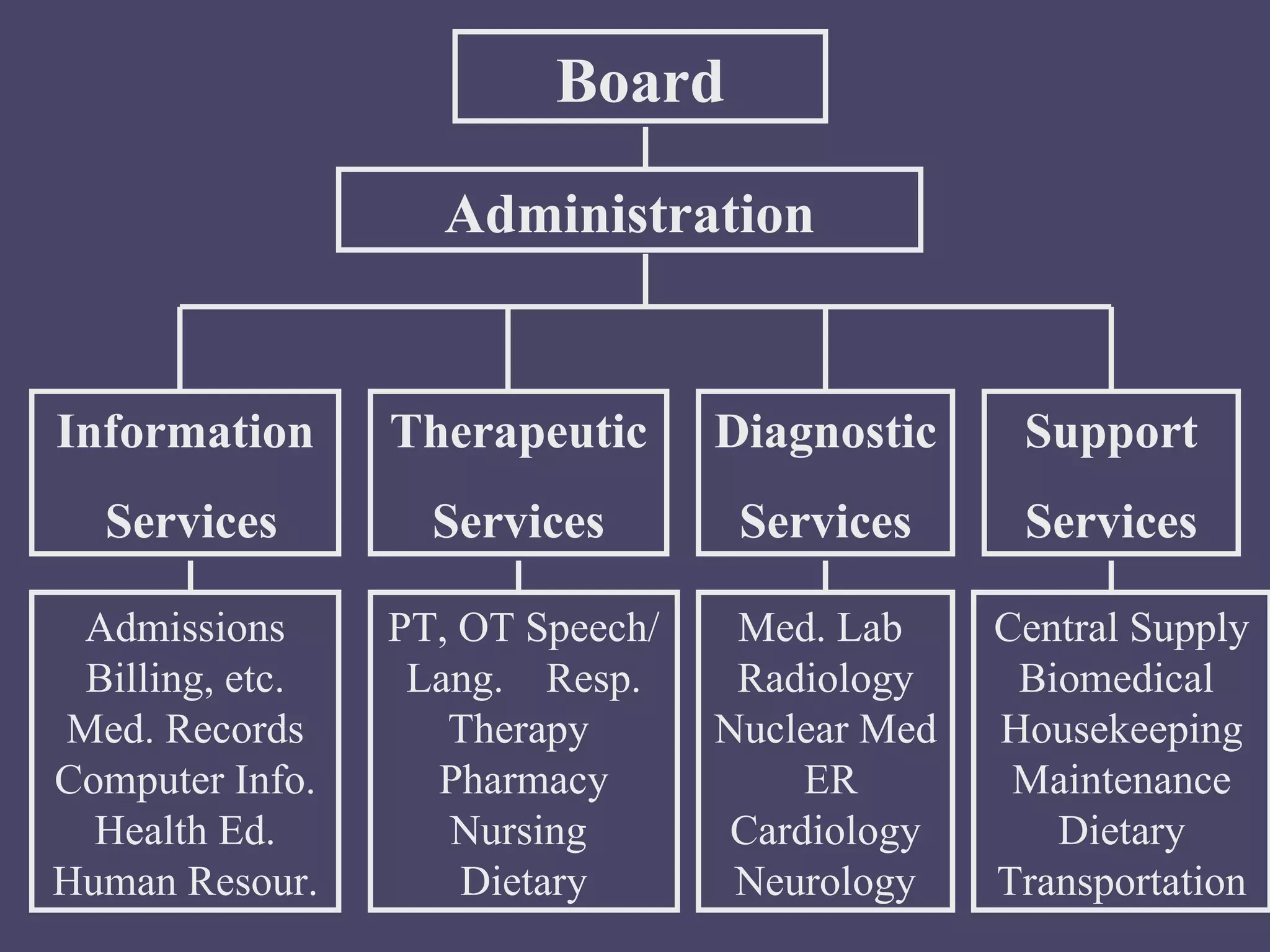
Traditional Organizational Chart
Board Administration Therapeutic Services Information Services Diagnostic Services Support Services Admissions Billing, etc. Med. Records Computer Info. Health Ed. Human Resour. PT, OT Speech/Lang.  Resp. Therapy  Pharmacy Nursing  Dietary Med. Lab  Radiology Nuclear Med  ER Cardiology Neurology Central Supply Biomedical  Housekeeping Maintenance Dietary Transportation
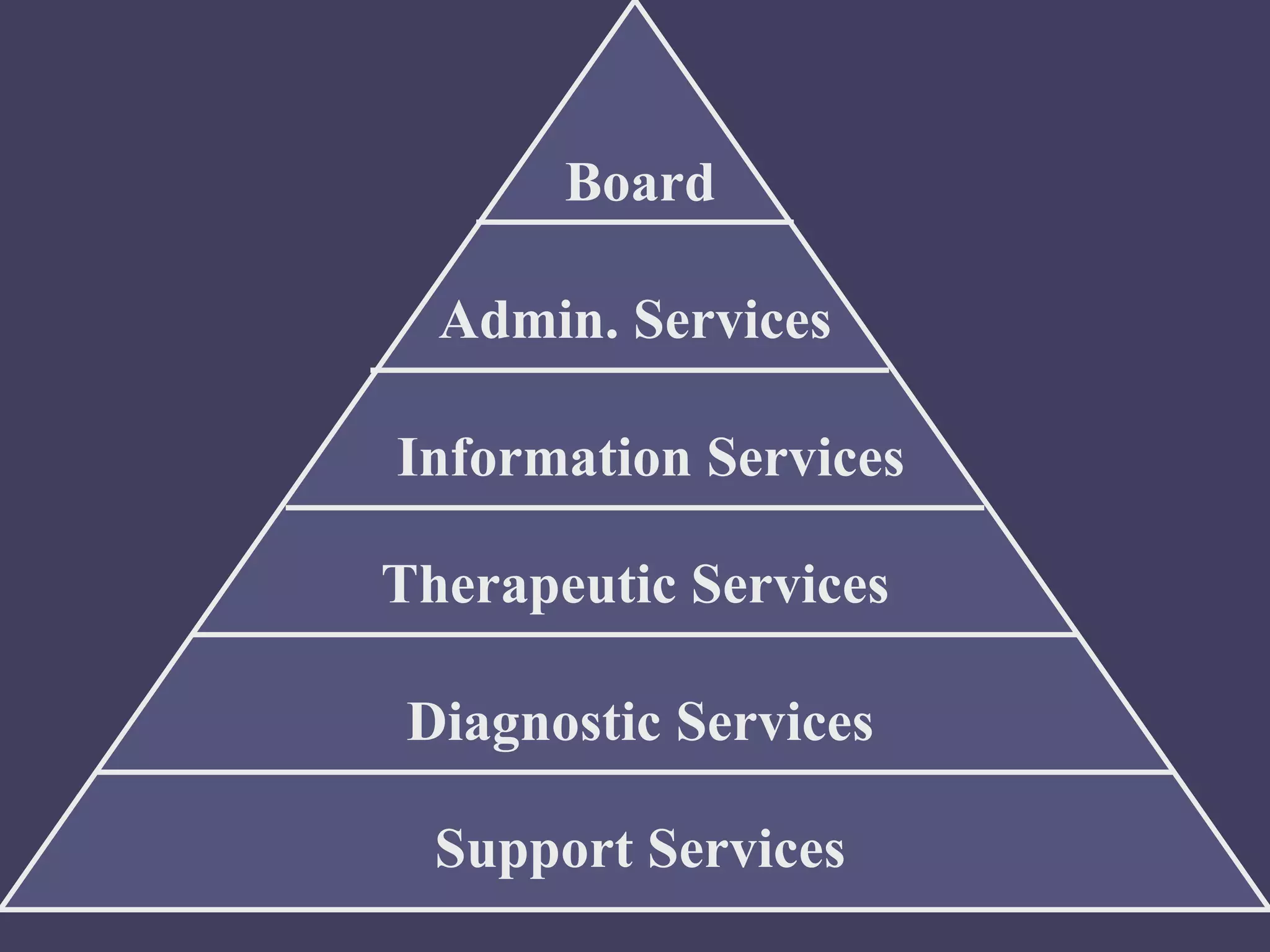
Pyramid demonstrates a symbolic organizational structure of a hospital.
Admin. Services Information Services Therapeutic Services Diagnostic Services Support Services Board
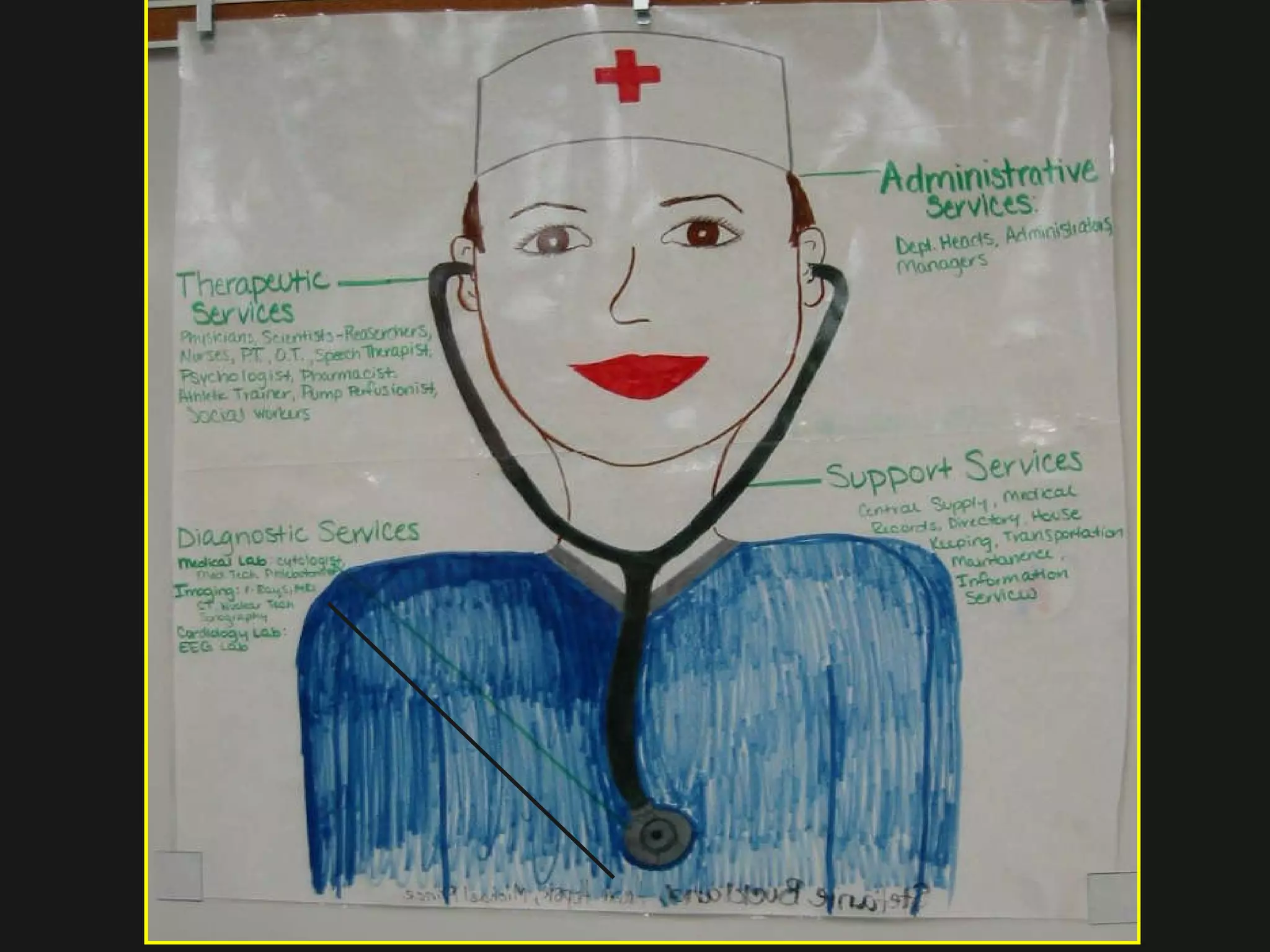
Example of “symbolic representation” of organizational structure
 

Organizational structure of_a_hospital

  • 1.
  • 2.
    Levels allow efficientmanagement of hospital departments. The structure helps one understand the hospital’s chain of command. Organizational Structure refers to levels of management within a hospital.
  • 3.
    Large hospitals havecomplex organizational structures. Smaller hospitals tend to have much simpler organizational structures. Organizational structure varies from hospital to hospital.
  • 4.
    Grouping of HospitalDepartments Within the Structure: Hospital departments are grouped in order to promote efficiency of facility. Grouping is generally done according to similarity of duties.
  • 5.
    Common Categorical Grouping:Administrative Services Informational Services Therapeutic Services Diagnostic Services Support Services
  • 6.
    Administrative Services HospitalAdministrators CEO, Vice President(s), Executive Assistants, Department Heads Business people who “run the hospital” Oversee budgeting and finance Establish hospital policies and procedures Often perform public relation duties
  • 7.
    Informational Services Documentand process information Includes: Admissions Billing & Collection Medical Records Computer Information Systems Health Education Human Resources
  • 8.
    Provides treatment topatients Includes following departments: Physical Therapy - treatment to improve large muscle mobility Occupational Therapy - treatment goal is to help patient regain fine motor skills Speech/Language Pathology - identify, evaluate, treat speech/language disorders Therapeutic Services
  • 9.
    5. Medical Psychology- concerned with mental well-being of patients 6. Social Services - connect patients with community resources (financial aid, etc.) 7. Pharmacy - dispense medications Respiratory Therapy - treat patients with heart & lung disease
  • 10.
    Sports Medicine -provide rehabilitative services to athletes Nursing - provide care for patients Dietary - maintain nutritionally sound diets for patients
  • 11.
    Diagnostic Services Determinesthe cause(s) of illness or injury Includes: Medical Laboratory - studies body tissues Medical Imaging - radiology, MRI, CT, Ultra Sound Emergency Medicine -provides emergency diagnoses & treatment
  • 12.
    Support Services Providessupport for entire hospital Includes : Central Supply - orders, receives, stocks & distributes equipment & supplies Biomedical Technology - design, build repair, medical equipment Housekeeping & Maintenance - maintain safe, clean environment
  • 13.
  • 14.
    Board Administration TherapeuticServices Information Services Diagnostic Services Support Services Admissions Billing, etc. Med. Records Computer Info. Health Ed. Human Resour. PT, OT Speech/Lang. Resp. Therapy Pharmacy Nursing Dietary Med. Lab Radiology Nuclear Med ER Cardiology Neurology Central Supply Biomedical Housekeeping Maintenance Dietary Transportation
  • 15.
    Pyramid demonstrates asymbolic organizational structure of a hospital.
  • 16.
    Admin. Services InformationServices Therapeutic Services Diagnostic Services Support Services Board
  • 17.
    Example of “symbolicrepresentation” of organizational structure
  • 18.

Editor's Notes

  • #17 This is a simplistic organizational structure of a hospital. It allows the student to see the structure in a less abstract fashion. Explain that the line between Diagnostic and Therapeutic services is sometimes blurred due to new technological advances. (Example is interventional radiology.) Provide additional information on the role of physicians in acute care facilities. Point out that “Support Services” is at the bottom of the pyramid and thus supports the entire structure. Have the students note that the pyramid forms a hierarchy (in terms of levels of services). Food for thought might be: “ Do you believe that these service levels could represent monetary compensation and occupational status?”
  • #19 This is the “symbolic” organizational structure of a hospital as planned and drawn by a team of my HSTE I students. After each group completes their drawing, they present it to the class and explain the symbolism as depicted in their picture. The drawing up above was rationalized as such: 1. Steth. diaphragm: DIAGNOSTIC SERVICES - diaphragm determines cause of illness 2. Earpieces: THERAPEUTIC SERVICES - hears/interprets and decides course of treatment 3. Tubing: SUPPORT SERVICES - supports structure of stethoscope (thus hospital departments) 4. Head: ADMINISTRATIVE SERVICES - runs everything Encourage students to be as creative (but logical) as possible. This activity not only helps them remember the levels of management in a hospital, but is an excellent way to promote camaraderie and teamwork. In the past my students have drawn: roller coaster, totem pole, hamburger, tennis shoe, ice cream cone, etc. Remember: Organizal Structure of a Hospital can be fun! (yes, even for the teacher…)