Group 8:
UM15002 Alisha Johney
UM15013 Ashish Parakh
UM15036 Priya Ranjan Mohanty
UM15046 Shilpi Agarwal
UM15054 Shree Kumar Sahu
UM15056 Syed Shaz Areeb
- A comparative analysis of the
Organizational Structure
vs
P&G’s Roadmap1987: Matrix Structure
39 US product category Bus
were created run by General
Managers
2005: Global
Business Unit
Structure :
Annual sales
grew 40% since
2000 and stock
price nearly
doubled
1995-99: Global Matrix
Structure
Extended to rest of the
world.
4 regional presidents
were reporting directly
to CEO
2013: Hybrid
Structure
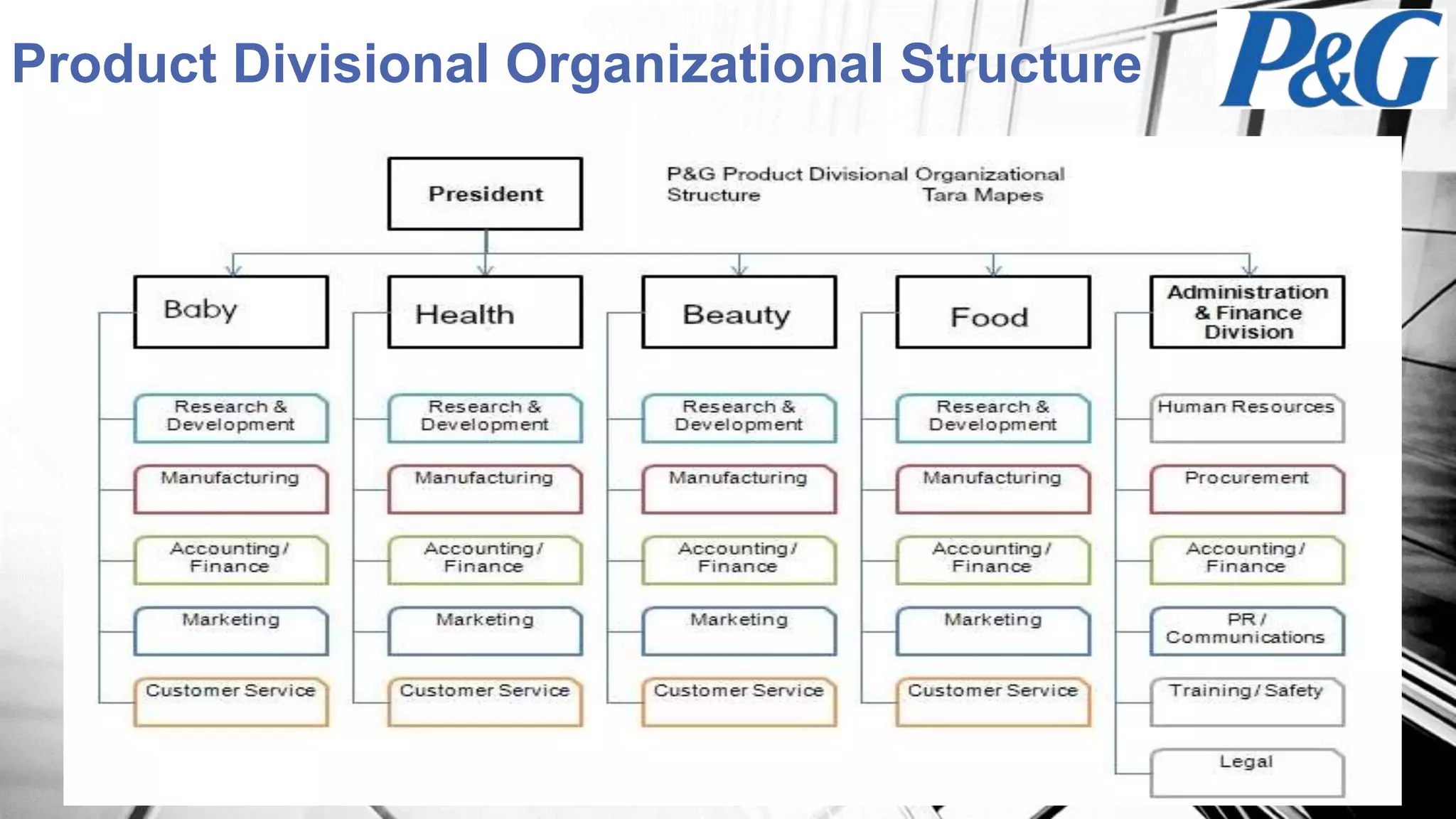
Product Divisional Organizational Structure
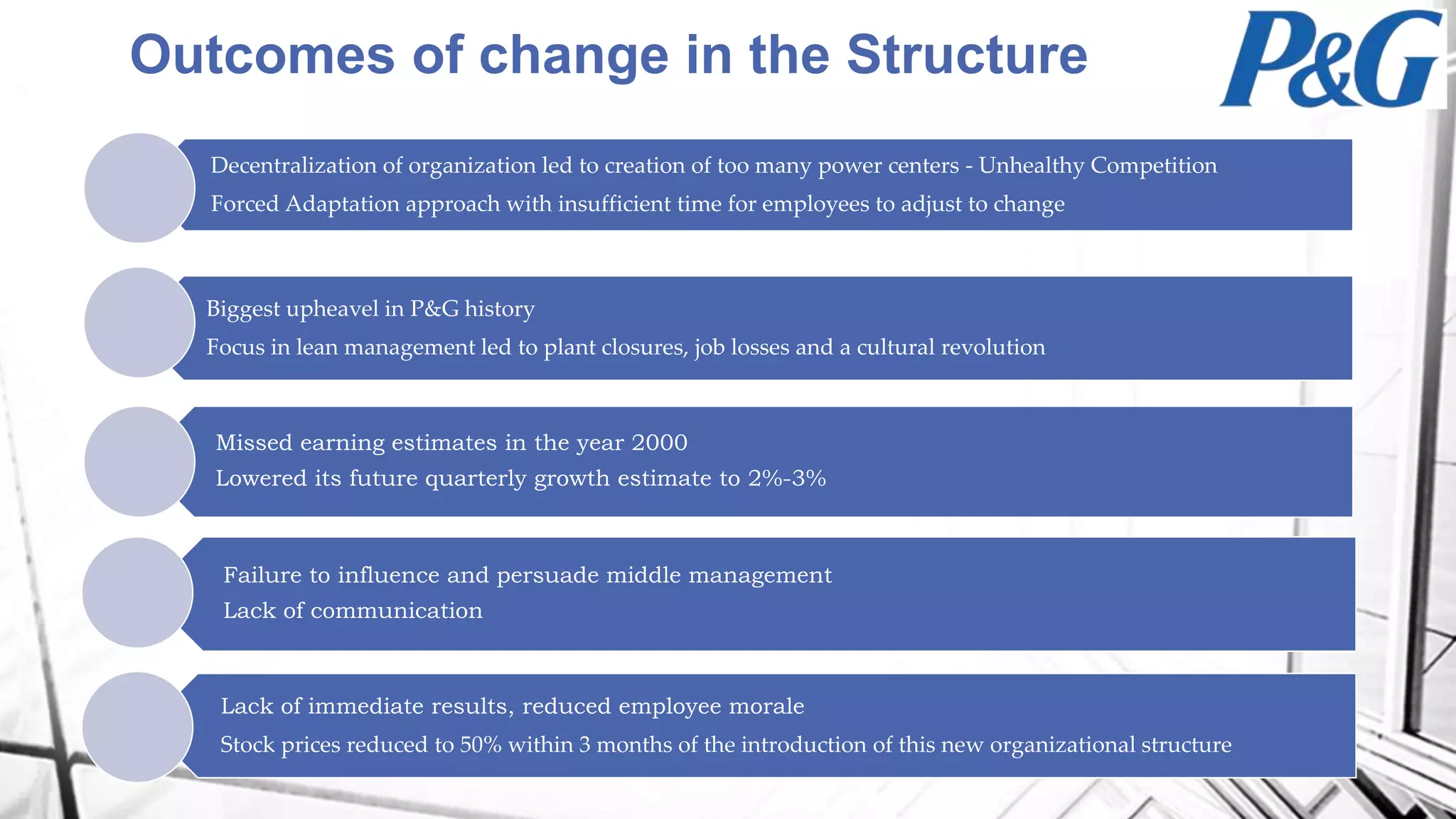
Biggest upheavel in P&G history
Focus in lean management led to plant closures, job losses and a cultural revolution
Missed earning estimates in the year 2000
Lowered its future quarterly growth estimate to 2%-3%
Lack of immediate results, reduced employee morale
Stock prices reduced to 50% within 3 months of the introduction of this new organizational structure
Decentralization of organization led to creation of too many power centers - Unhealthy Competition
Forced Adaptation approach with insufficient time for employees to adjust to change
Failure to influence and persuade middle management
Lack of communication
Outcomes of change in the Structure
Present Organisational Structure
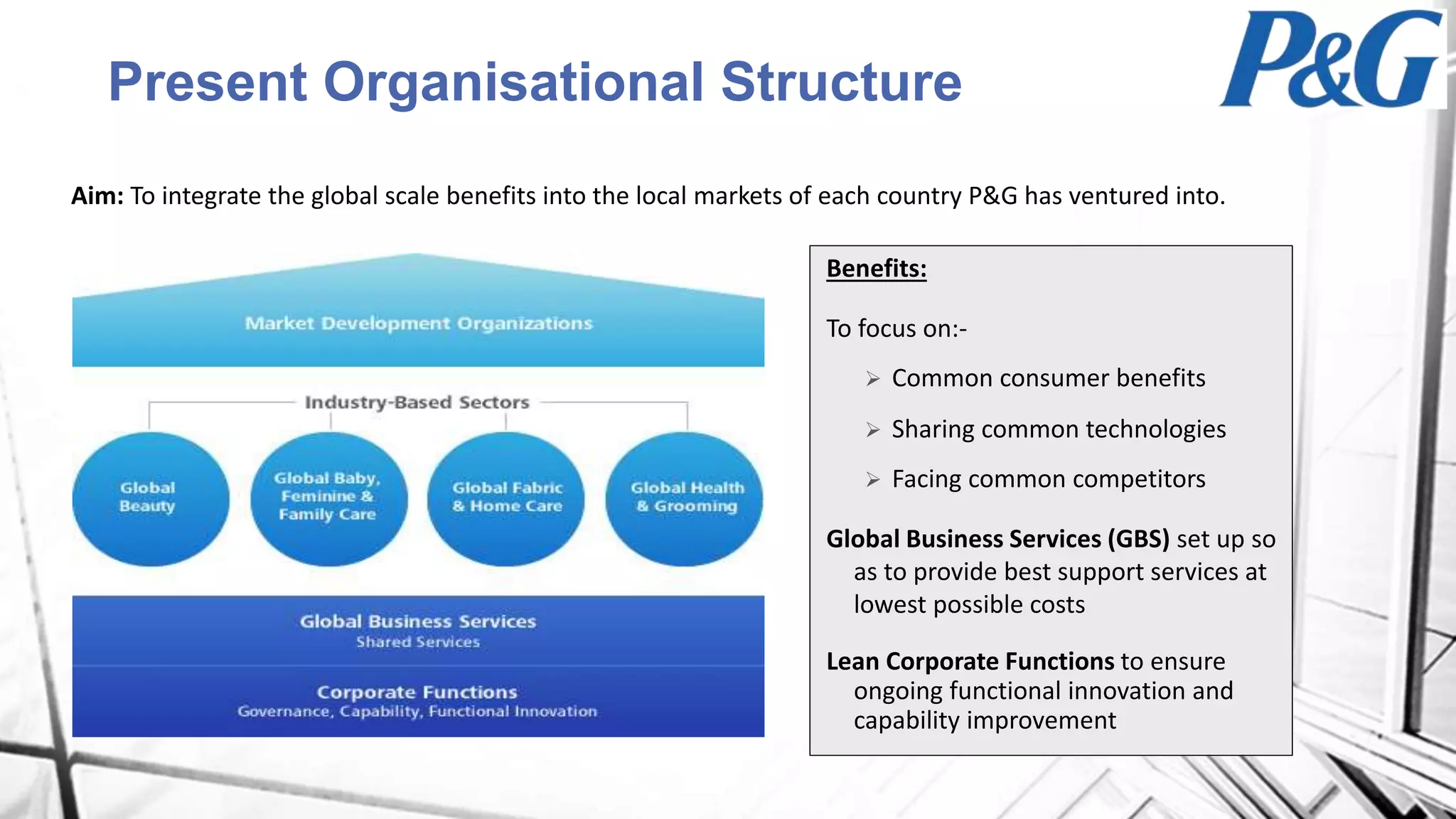
Aim: To integrate the global scale benefits into the local markets of each country P&G has ventured into.
Benefits:
To focus on:-
 Common consumer benefits
 Sharing common technologies
 Facing common competitors
Global Business Services (GBS) set up so
as to provide best support services at
lowest possible costs
Lean Corporate Functions to ensure
ongoing functional innovation and
capability improvement
Revised Organisational Structure in 2013
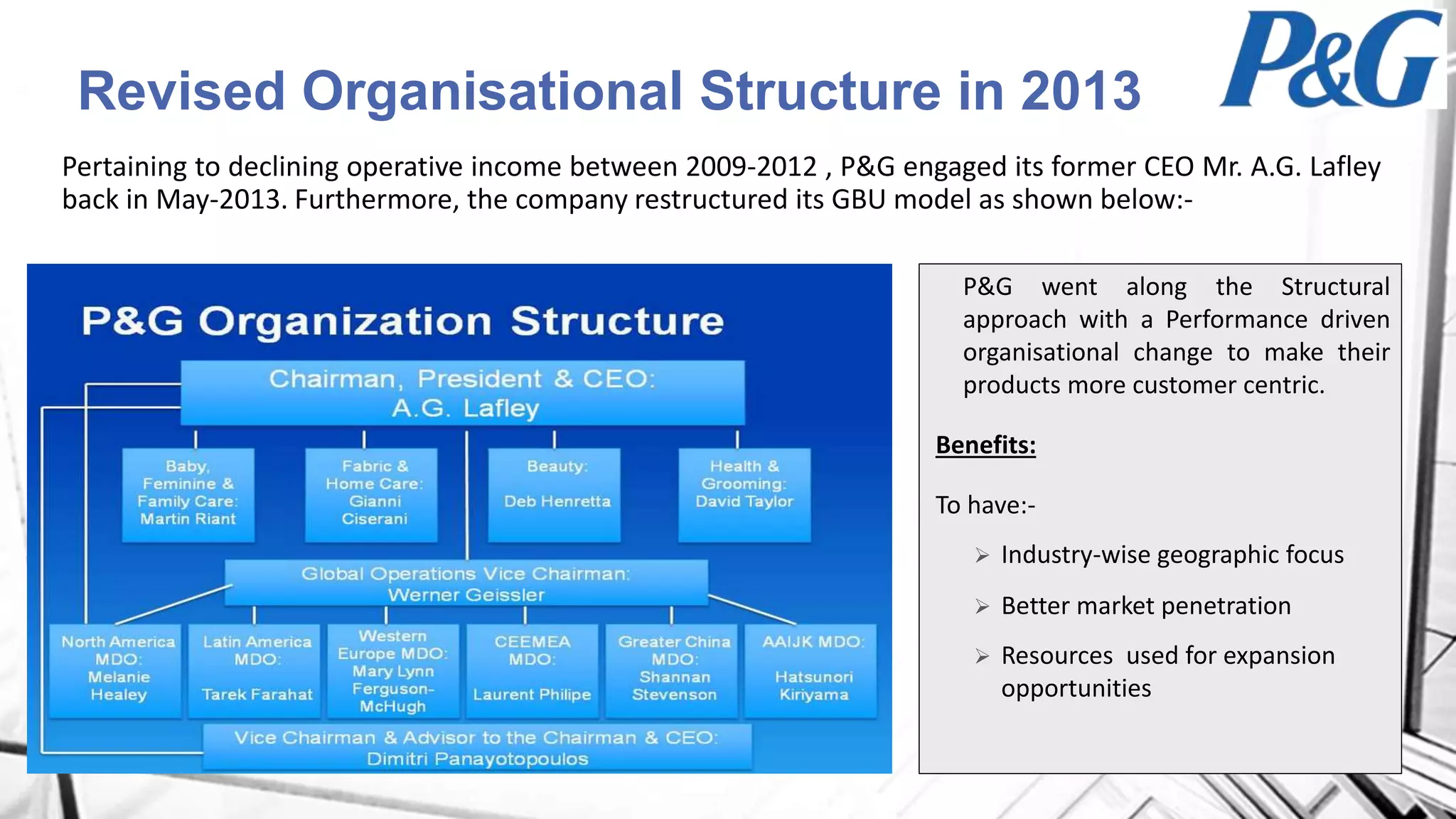
Pertaining to declining operative income between 2009-2012 , P&G engaged its former CEO Mr. A.G. Lafley
back in May-2013. Furthermore, the company restructured its GBU model as shown below:-
P&G went along the Structural
approach with a Performance driven
organisational change to make their
products more customer centric.
Benefits:
To have:-
 Industry-wise geographic focus
 Better market penetration
 Resources used for expansion
opportunities
- Unilever was organised on a decentralised
basis.
- In Europe the company had 17 subsidiaries
in the early 1990s, each focused on a
different national market
- The structure allowed managers to match
product offerings and market strategy to
local tastes and preferences.
- To drive localisation, Unilever recruited
local mangers to run local organizations.
- In 1990s competitive environment was changing.
- Emergence of a single market European Union in
1992.
- Allowing manufacturing of certain items at
favourable central locations.
- Some of Global competitors moved more rapidly to
exploit those changes in competitive environment.
- To re-establish a fit between competitive
environment, Unilever had to embrace the difficult
process of strategic and organisational change.
Decentralized
Unilever
Why we need a new
organizational
structure?
Current Structure
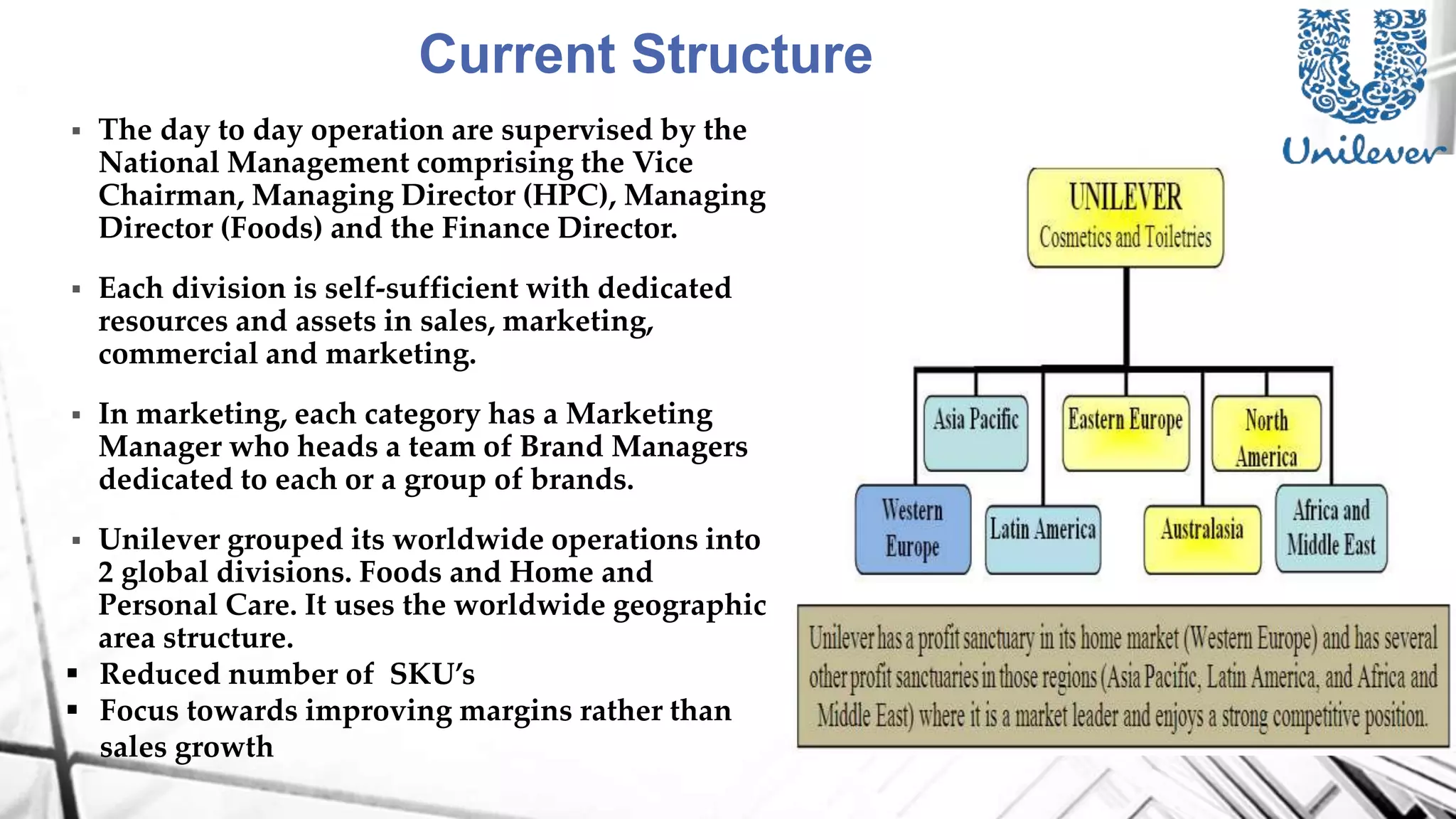
 The day to day operation are supervised by the
National Management comprising the Vice
Chairman, Managing Director (HPC), Managing
Director (Foods) and the Finance Director.
 Each division is self-sufficient with dedicated
resources and assets in sales, marketing,
commercial and marketing.
 In marketing, each category has a Marketing
Manager who heads a team of Brand Managers
dedicated to each or a group of brands.
 Unilever grouped its worldwide operations into
2 global divisions. Foods and Home and
Personal Care. It uses the worldwide geographic
area structure.
 Reduced number of SKU’s
 Focus towards improving margins rather than
sales growth
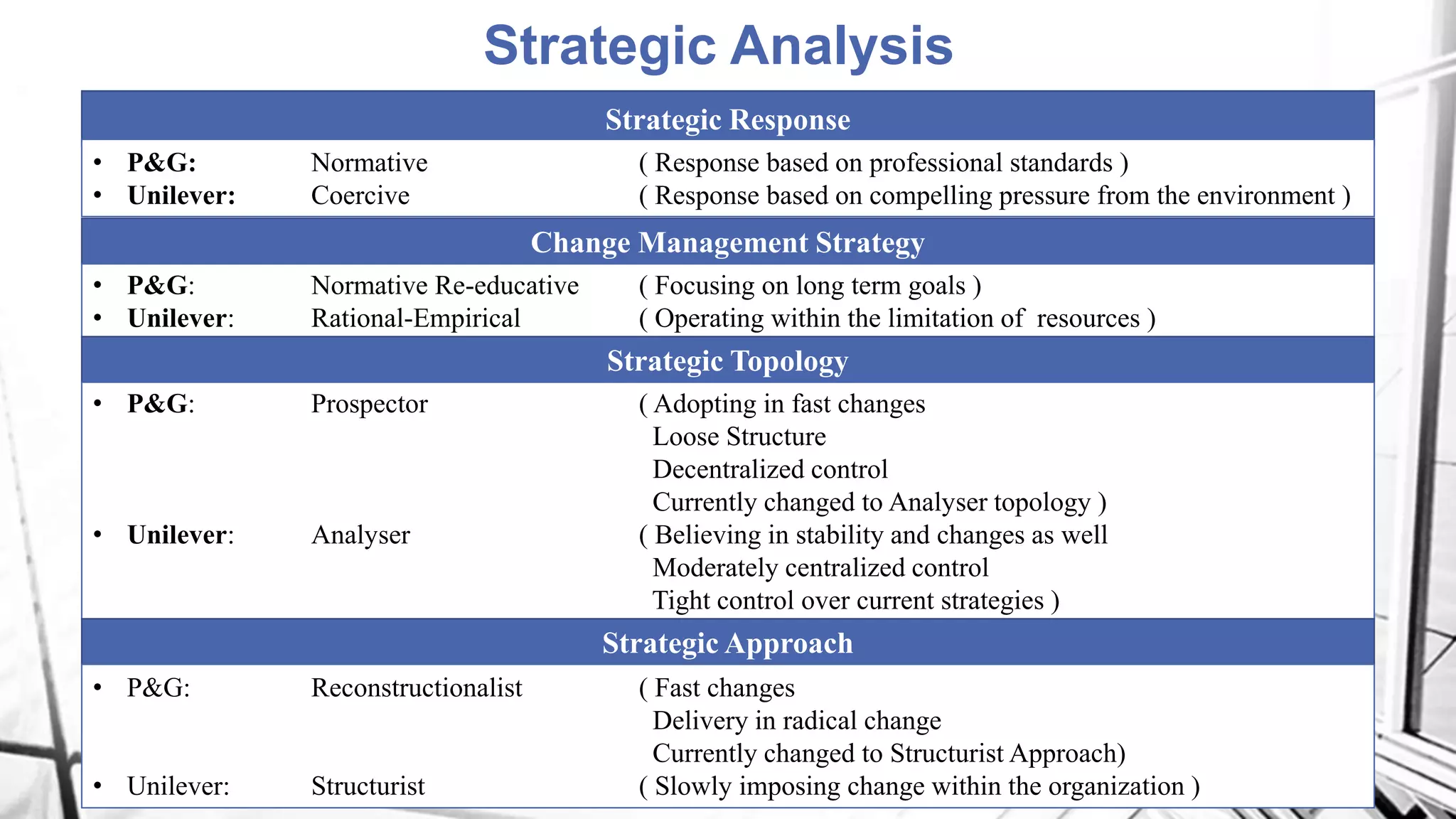
Strategic Analysis
Strategic Response
• P&G: Normative ( Response based on professional standards )
• Unilever: Coercive ( Response based on compelling pressure from the environment )
Change Management Strategy
• P&G: Normative Re-educative ( Focusing on long term goals )
• Unilever: Rational-Empirical ( Operating within the limitation of resources )
Strategic Topology
• P&G: Prospector ( Adopting in fast changes
Loose Structure
Decentralized control
Currently changed to Analyser topology )
• Unilever: Analyser ( Believing in stability and changes as well
Moderately centralized control
Tight control over current strategies )
Strategic Approach
• P&G: Reconstructionalist ( Fast changes
Delivery in radical change
Currently changed to Structurist Approach)
• Unilever: Structurist ( Slowly imposing change within the organization )
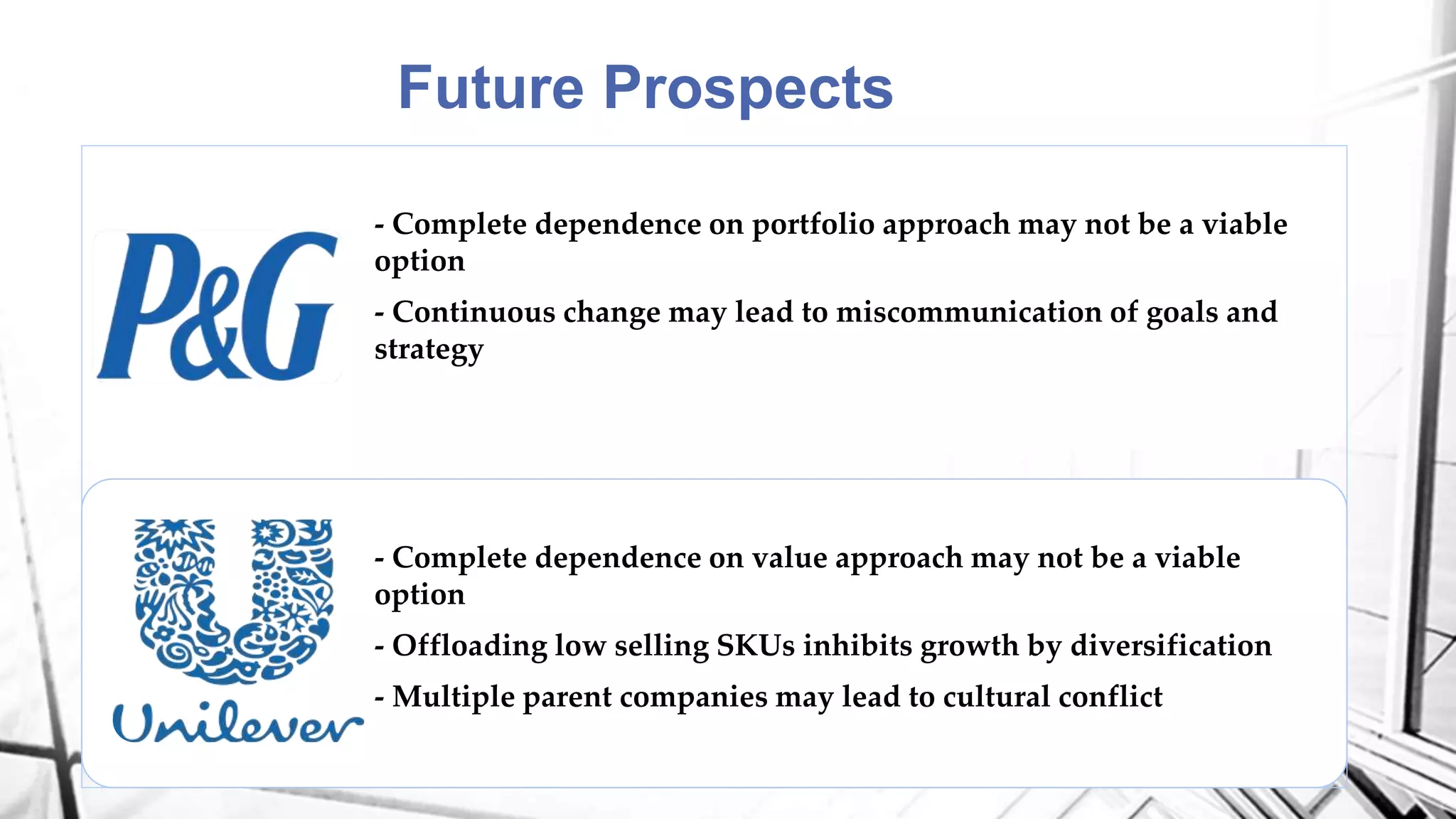
Future Prospects
- Complete dependence on portfolio approach may not be a viable
option
- Continuous change may lead to miscommunication of goals and
strategy
- Complete dependence on value approach may not be a viable
option
- Offloading low selling SKUs inhibits growth by diversification
- Multiple parent companies may lead to cultural conflict
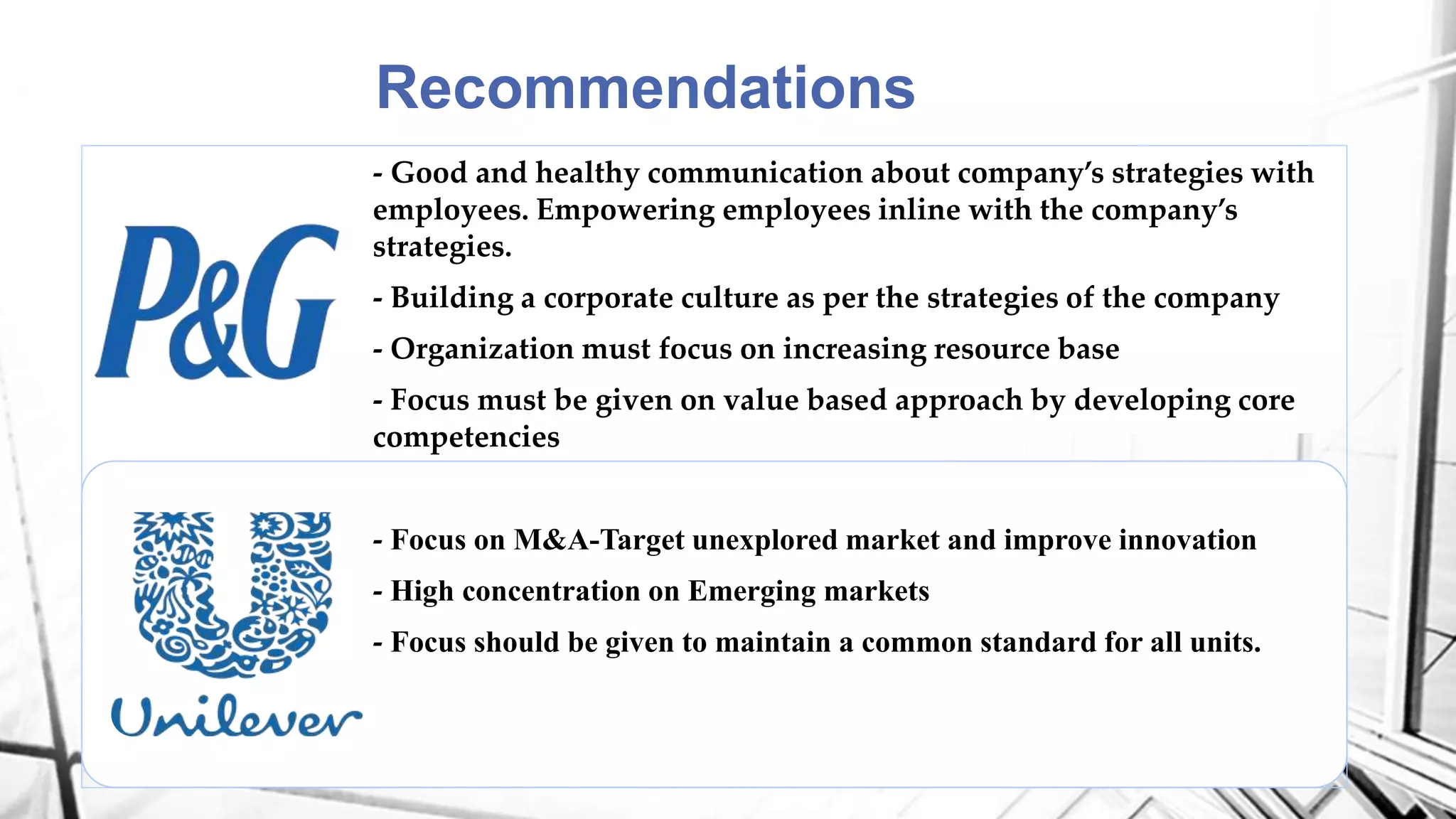
Recommendations
- Good and healthy communication about company’s strategies with
employees. Empowering employees inline with the company’s
strategies.
- Building a corporate culture as per the strategies of the company
- Organization must focus on increasing resource base
- Focus must be given on value based approach by developing core
competencies
- Focus on M&A-Target unexplored market and improve innovation
- High concentration on Emerging markets
- Focus should be given to maintain a common standard for all units.
Organizational Structure comparision | Proctor & Gamble and Unilever

Organizational Structure comparision | Proctor & Gamble and Unilever

  • 1.
    Group 8: UM15002 AlishaJohney UM15013 Ashish Parakh UM15036 Priya Ranjan Mohanty UM15046 Shilpi Agarwal UM15054 Shree Kumar Sahu UM15056 Syed Shaz Areeb - A comparative analysis of the Organizational Structure vs
  • 2.
    P&G’s Roadmap1987: MatrixStructure 39 US product category Bus were created run by General Managers 2005: Global Business Unit Structure : Annual sales grew 40% since 2000 and stock price nearly doubled 1995-99: Global Matrix Structure Extended to rest of the world. 4 regional presidents were reporting directly to CEO 2013: Hybrid Structure
  • 3.
  • 4.
    Biggest upheavel inP&G history Focus in lean management led to plant closures, job losses and a cultural revolution Missed earning estimates in the year 2000 Lowered its future quarterly growth estimate to 2%-3% Lack of immediate results, reduced employee morale Stock prices reduced to 50% within 3 months of the introduction of this new organizational structure Decentralization of organization led to creation of too many power centers - Unhealthy Competition Forced Adaptation approach with insufficient time for employees to adjust to change Failure to influence and persuade middle management Lack of communication Outcomes of change in the Structure
  • 5.
    Present Organisational Structure Aim:To integrate the global scale benefits into the local markets of each country P&G has ventured into. Benefits: To focus on:-  Common consumer benefits  Sharing common technologies  Facing common competitors Global Business Services (GBS) set up so as to provide best support services at lowest possible costs Lean Corporate Functions to ensure ongoing functional innovation and capability improvement
  • 6.
    Revised Organisational Structurein 2013 Pertaining to declining operative income between 2009-2012 , P&G engaged its former CEO Mr. A.G. Lafley back in May-2013. Furthermore, the company restructured its GBU model as shown below:- P&G went along the Structural approach with a Performance driven organisational change to make their products more customer centric. Benefits: To have:-  Industry-wise geographic focus  Better market penetration  Resources used for expansion opportunities
  • 7.
    - Unilever wasorganised on a decentralised basis. - In Europe the company had 17 subsidiaries in the early 1990s, each focused on a different national market - The structure allowed managers to match product offerings and market strategy to local tastes and preferences. - To drive localisation, Unilever recruited local mangers to run local organizations. - In 1990s competitive environment was changing. - Emergence of a single market European Union in 1992. - Allowing manufacturing of certain items at favourable central locations. - Some of Global competitors moved more rapidly to exploit those changes in competitive environment. - To re-establish a fit between competitive environment, Unilever had to embrace the difficult process of strategic and organisational change. Decentralized Unilever Why we need a new organizational structure?
  • 8.
    Current Structure  Theday to day operation are supervised by the National Management comprising the Vice Chairman, Managing Director (HPC), Managing Director (Foods) and the Finance Director.  Each division is self-sufficient with dedicated resources and assets in sales, marketing, commercial and marketing.  In marketing, each category has a Marketing Manager who heads a team of Brand Managers dedicated to each or a group of brands.  Unilever grouped its worldwide operations into 2 global divisions. Foods and Home and Personal Care. It uses the worldwide geographic area structure.  Reduced number of SKU’s  Focus towards improving margins rather than sales growth
  • 9.
    Strategic Analysis Strategic Response •P&G: Normative ( Response based on professional standards ) • Unilever: Coercive ( Response based on compelling pressure from the environment ) Change Management Strategy • P&G: Normative Re-educative ( Focusing on long term goals ) • Unilever: Rational-Empirical ( Operating within the limitation of resources ) Strategic Topology • P&G: Prospector ( Adopting in fast changes Loose Structure Decentralized control Currently changed to Analyser topology ) • Unilever: Analyser ( Believing in stability and changes as well Moderately centralized control Tight control over current strategies ) Strategic Approach • P&G: Reconstructionalist ( Fast changes Delivery in radical change Currently changed to Structurist Approach) • Unilever: Structurist ( Slowly imposing change within the organization )
  • 10.
    Future Prospects - Completedependence on portfolio approach may not be a viable option - Continuous change may lead to miscommunication of goals and strategy - Complete dependence on value approach may not be a viable option - Offloading low selling SKUs inhibits growth by diversification - Multiple parent companies may lead to cultural conflict
  • 11.
    Recommendations - Good andhealthy communication about company’s strategies with employees. Empowering employees inline with the company’s strategies. - Building a corporate culture as per the strategies of the company - Organization must focus on increasing resource base - Focus must be given on value based approach by developing core competencies - Focus on M&A-Target unexplored market and improve innovation - High concentration on Emerging markets - Focus should be given to maintain a common standard for all units.