Name Mohsin Raza
Roll No 26-FMS/MSCM/S17
 Its an American multinational food & beverage
 headquarter in Purchase, NY, USA.
 It was formed in 1965with merger of Pepsi Cola & Frito lay Inc. • Acquired
Tropicana in 1998 & Quaker oats in 2001.
 It has mainly 22 product lines generating $1 billion revenue each year.
 In 2012 it has annual net revenue of $ 43.3 billion.
Seasonality
subject to seasonal variations.
• Beverage sales are higher during the warmer
months and certain food sales are higher in the
cooler months
• Weekly beverage and snack sales are generally
highest in the third quarter due to seasonal and
holiday-related patterns, and generally lowest in
the first quarter
• However, taken as a whole, seasonality does not
have a material impact on our business
Raw Materials
 Raw material for Beverages:
• For drink: Water, sugar, color, caffeine
• For packaging: Tin, aluminum, PET plastic
Sources:
• More than 30% raw material of PET bottle comes
from organic waste
• 10% of packaging is done through recycled
products
 Raw material for chips and juices :
• Potatoes, oats, apples and milk
Sources :
• European organic farms
• Pepsi looks after the requirements of farmers
and also trains them to get desired size, color
etc.
Inventory Management
 Inventories are valued at the lower of cost or
market. Cost is determined using the average;
first-in, first-out (FIFO) or last-in, first-out
(LIFO) methods
 The Pepsi Bottling Group’s Detroit plant reduced its
number of sensors from 180 to 46
• A decrease of 66 percent, by standardizing it sensors
• Reduced downtime and inventory costs.
Transportation and Logistics
 PepsiCo manages 3 million Logistics
• Private fleets, dedicated
carriage, direct store delivery,
refrigerated trucks and
straight truck load shipments
• Uses various logistic
techniques
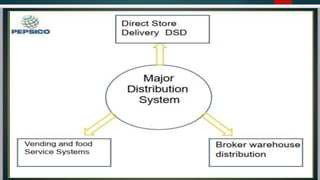
Direct Store Delivery
Broker Warehouse
Distribution
Vending & Food Service
System
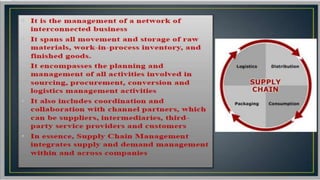
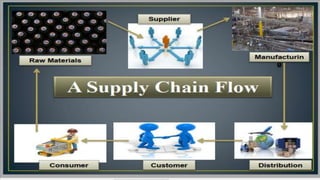
PEPSICO Supply chain

PEPSICO Supply chain

  • 1.
    Name Mohsin Raza RollNo 26-FMS/MSCM/S17
  • 2.
     Its anAmerican multinational food & beverage  headquarter in Purchase, NY, USA.  It was formed in 1965with merger of Pepsi Cola & Frito lay Inc. • Acquired Tropicana in 1998 & Quaker oats in 2001.  It has mainly 22 product lines generating $1 billion revenue each year.  In 2012 it has annual net revenue of $ 43.3 billion.
  • 3.
    Seasonality subject to seasonalvariations. • Beverage sales are higher during the warmer months and certain food sales are higher in the cooler months • Weekly beverage and snack sales are generally highest in the third quarter due to seasonal and holiday-related patterns, and generally lowest in the first quarter • However, taken as a whole, seasonality does not have a material impact on our business
  • 4.
    Raw Materials  Rawmaterial for Beverages: • For drink: Water, sugar, color, caffeine • For packaging: Tin, aluminum, PET plastic Sources: • More than 30% raw material of PET bottle comes from organic waste • 10% of packaging is done through recycled products
  • 5.
     Raw materialfor chips and juices : • Potatoes, oats, apples and milk Sources : • European organic farms • Pepsi looks after the requirements of farmers and also trains them to get desired size, color etc.
  • 6.
    Inventory Management  Inventoriesare valued at the lower of cost or market. Cost is determined using the average; first-in, first-out (FIFO) or last-in, first-out (LIFO) methods  The Pepsi Bottling Group’s Detroit plant reduced its number of sensors from 180 to 46 • A decrease of 66 percent, by standardizing it sensors • Reduced downtime and inventory costs.
  • 7.
    Transportation and Logistics PepsiCo manages 3 million Logistics • Private fleets, dedicated carriage, direct store delivery, refrigerated trucks and straight truck load shipments • Uses various logistic techniques Direct Store Delivery Broker Warehouse Distribution Vending & Food Service System