Welcome
Unilever 
“Making Sustainable Living Commonplace”
Background 
» Anglo–Dutch multinational consumer goods company 
» Primary beginning at 1890s 
»World's third-largest consumer goods company (after Protector & 
Gamble and Nestle) 
» Owns over 400 brands
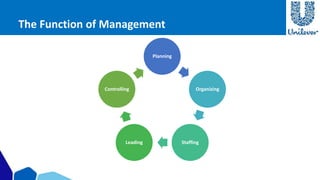
The Function of Management 
Planning 
Organizing 
Controlling 
Leading Staffing
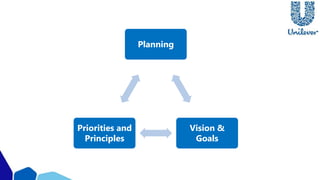
Planning 
Vision & 
Goals 
Priorities and 
Principles
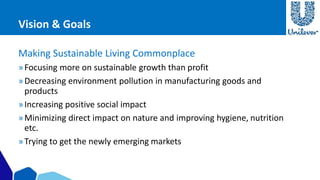
Vision & Goals 
Making Sustainable Living Commonplace 
» Focusing more on sustainable growth than profit 
» Decreasing environment pollution in manufacturing goods and 
products 
» Increasing positive social impact 
» Minimizing direct impact on nature and improving hygiene, nutrition 
etc. 
» Trying to get the newly emerging markets
Priorities and Principles 
Making a Healthy, Confident and Better future for this planet 
» Better Future for Children 
»Healthier Future 
»More Confident Future 
» Better Future for the Planet 
» Better Future for Farming & Farmers
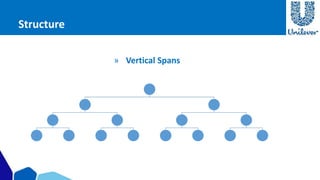
Structure 
» Vertical Spans
Departmentation 
Departmentation 
of Unilever 
By Territory or 
Geography 
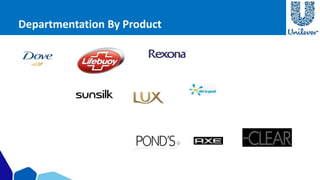
by Product
Departmentation By Territory or Geography 
Skin 
Care 
Food & 
Drinks 
Hair 
Care 
Products by Geography
Departmentation By Product
Recruitment of UBL 
Recruitment 
of UBL 
Under MTO 
PeopleScape HR Kites 
MTO or 
Above 
By UBL
MTO or Above Recruitment Process 
Resume 
Collection 
Writing 
test 
Day Long 
Screening 
Final 
Interview 
Medical 
Checkup
Training Methods 
Mentoring 
and 
Coaching 
Experienced employees 
help and support 
Experiential 
Exercise 
Participate in role playing, 
simulations 
Classroom 
Lectures 
Attending lectures designed 
to convey specific 
information
Different Leadership Style 
Charismatic 
Leadership 
Democratic 
Leadership 
Transformational 
Leadership
Charismatic Leadership 
Characteristics: 
» True charisma is a measure of a person's maturity and character 
» Exceptional communication skills 
» Listen to the concerns of their employees 
» Providing people something substantive 
» Important, but not essential, element of success
Democratic Leadership 
Characteristics: 
» Group members are encouraged to share ideas and opinions 
»Members of the group feel more engaged in the process 
» Creativity is encouraged and rewarded 
» Sharing Ideas 
» Brainstorming
Transformational Leadership 
Characteristics: 
» Identify themselves as change agents 
»Courageous individuals 
»Value-driven 
»Ability to deal with complexity, ambiguity and uncertainty 
»Visionaries
Managerial Grid 
Country Club Style, 
1, 9 
Impoverished Style, 
1, 1 
Middle of the road 
Style, 5, 5 
Team Style, 
9, 9 
Produce or Perish, 
9, 1 
10 
9 
8 
7 
6 
5 
4 
3 
2 
1 
0 
0 1 2 3 4 5 6 7 8 9 10 
Concern For People 
Concern for Production
Basic Control Process 
Establishment of 
standards 
Measurement of 
performance 
against these 
standards 
Correcting 
variations from 
standards and 
plans
Types of critical point standards 
1. Physical Standards 
2. Cost Standards 
3. Capital Standards 
4. Revenue Standards 
5. Program Standards 
6. Intangible Standards 
7. Goals as Standards 
8. Strategic plans as control points for strategic control
Control as a feedback system
• Exceptional Slogan 
• Well Planned Corporation 
• Great organization 
• Fair MTO recruiting process 
• Creative and Flexible leading 
• An entire department for Controlling 
Conclusion
Thank You 
We Appreciate Your 
Patience of 
Listening…

The Function & Management of Unilever

  • 1.
  • 2.
    Unilever “Making SustainableLiving Commonplace”
  • 3.
    Background » Anglo–Dutchmultinational consumer goods company » Primary beginning at 1890s »World's third-largest consumer goods company (after Protector & Gamble and Nestle) » Owns over 400 brands
  • 4.
    The Function ofManagement Planning Organizing Controlling Leading Staffing
  • 6.
    Planning Vision & Goals Priorities and Principles
  • 7.
    Vision & Goals Making Sustainable Living Commonplace » Focusing more on sustainable growth than profit » Decreasing environment pollution in manufacturing goods and products » Increasing positive social impact » Minimizing direct impact on nature and improving hygiene, nutrition etc. » Trying to get the newly emerging markets
  • 8.
    Priorities and Principles Making a Healthy, Confident and Better future for this planet » Better Future for Children »Healthier Future »More Confident Future » Better Future for the Planet » Better Future for Farming & Farmers
  • 9.
  • 10.
    Departmentation Departmentation ofUnilever By Territory or Geography by Product
  • 11.
    Departmentation By Territoryor Geography Skin Care Food & Drinks Hair Care Products by Geography
  • 12.
  • 13.
    Recruitment of UBL Recruitment of UBL Under MTO PeopleScape HR Kites MTO or Above By UBL
  • 14.
    MTO or AboveRecruitment Process Resume Collection Writing test Day Long Screening Final Interview Medical Checkup
  • 15.
    Training Methods Mentoring and Coaching Experienced employees help and support Experiential Exercise Participate in role playing, simulations Classroom Lectures Attending lectures designed to convey specific information
  • 16.
    Different Leadership Style Charismatic Leadership Democratic Leadership Transformational Leadership
  • 17.
    Charismatic Leadership Characteristics: » True charisma is a measure of a person's maturity and character » Exceptional communication skills » Listen to the concerns of their employees » Providing people something substantive » Important, but not essential, element of success
  • 18.
    Democratic Leadership Characteristics: » Group members are encouraged to share ideas and opinions »Members of the group feel more engaged in the process » Creativity is encouraged and rewarded » Sharing Ideas » Brainstorming
  • 19.
    Transformational Leadership Characteristics: » Identify themselves as change agents »Courageous individuals »Value-driven »Ability to deal with complexity, ambiguity and uncertainty »Visionaries
  • 20.
    Managerial Grid CountryClub Style, 1, 9 Impoverished Style, 1, 1 Middle of the road Style, 5, 5 Team Style, 9, 9 Produce or Perish, 9, 1 10 9 8 7 6 5 4 3 2 1 0 0 1 2 3 4 5 6 7 8 9 10 Concern For People Concern for Production
  • 21.
    Basic Control Process Establishment of standards Measurement of performance against these standards Correcting variations from standards and plans
  • 22.
    Types of criticalpoint standards 1. Physical Standards 2. Cost Standards 3. Capital Standards 4. Revenue Standards 5. Program Standards 6. Intangible Standards 7. Goals as Standards 8. Strategic plans as control points for strategic control
  • 23.
    Control as afeedback system
  • 24.
    • Exceptional Slogan • Well Planned Corporation • Great organization • Fair MTO recruiting process • Creative and Flexible leading • An entire department for Controlling Conclusion
  • 25.
    Thank You WeAppreciate Your Patience of Listening…

Editor's Notes

  • #26 In Slide Show mode, click the arrow to enter the PowerPoint Getting Started Center.