Organization
A social unit of people that is structured and
managed to meet a need or to pursue collective
goals. All organization have a management
structure that determine relationship between
different activities and the members, subdivides,
assign roles, responsibility, authority to carry out
different task.
Overview:
In order to have
administration it must have
organizational structure that is
designed properly. The types of
organizations must be present.
Organizations come in all sizes
and types. Each organization is
unique to some extent.
Types of Organization
There are two types of organization the Formal
and the Informal.
1. Informal Organization
- Refers to the relationship of individual because of similarity
of likes, dislikes, emotions, needs or attitudes. It may exist
within a formal organization. The existence is determined
not because of rules and regulations but by the reason of
human personalities and characteristics.
2. Formal Organization
- is a system of well-defined jobs
bearing a definite measure of authority,
responsibility and accountability, the whole
consciously designed to enable the people
of the enterprise to work most effectively
together in accomplishing their objectives. It
characterized by well-defined roles, bound
by delegation and relatively stable.
Coordination ay be obtained through a
prescribe pattern.
Forms of Organization
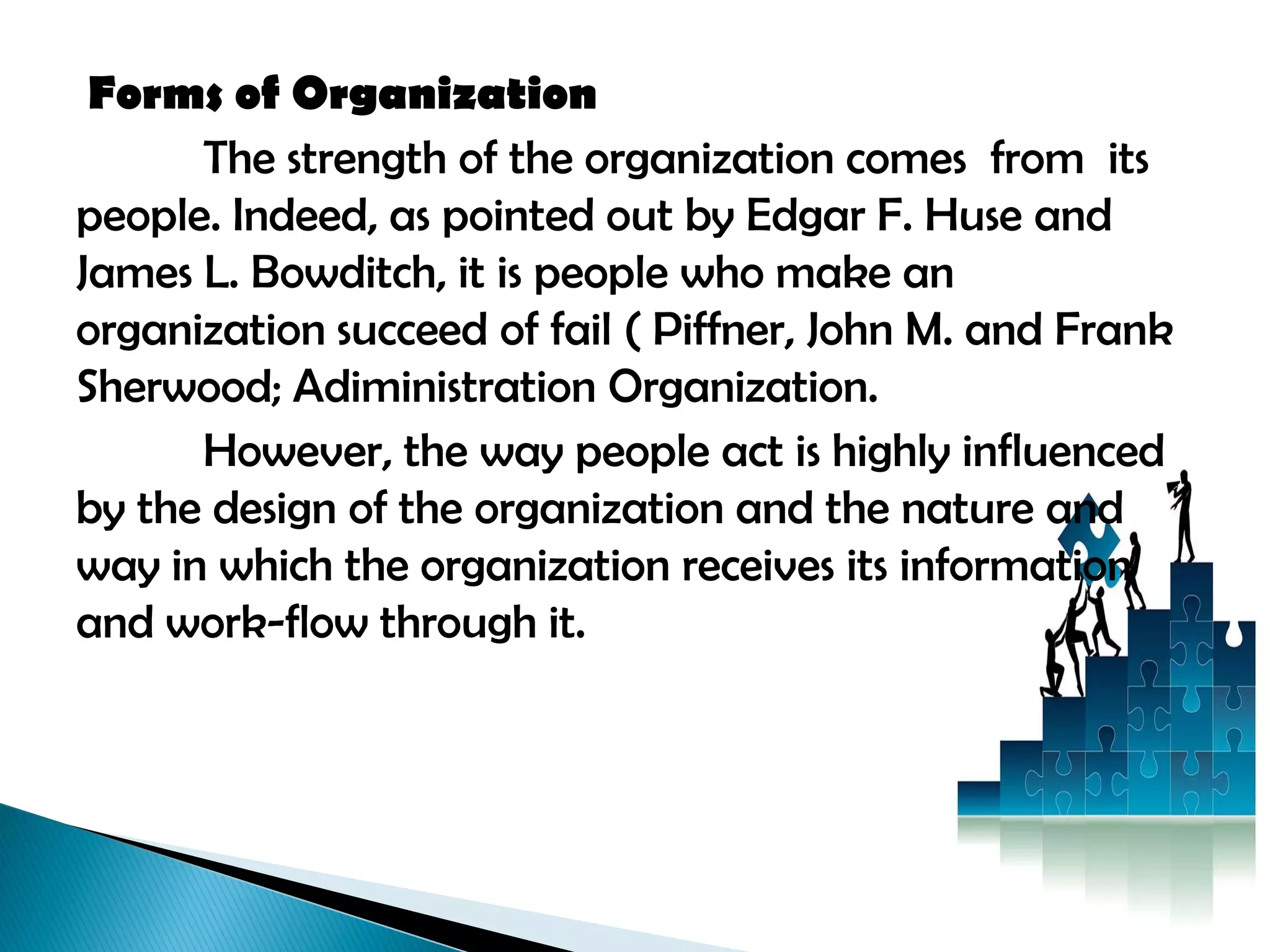
The strength of the organization comes from its
people. Indeed, as pointed out by Edgar F. Huse and
James L. Bowditch, it is people who make an
organization succeed of fail ( Piffner, John M. and Frank
Sherwood; Adiministration Organization.
However, the way people act is highly influenced
by the design of the organization and the nature and
way in which the organization receives its information
and work-flow through it.
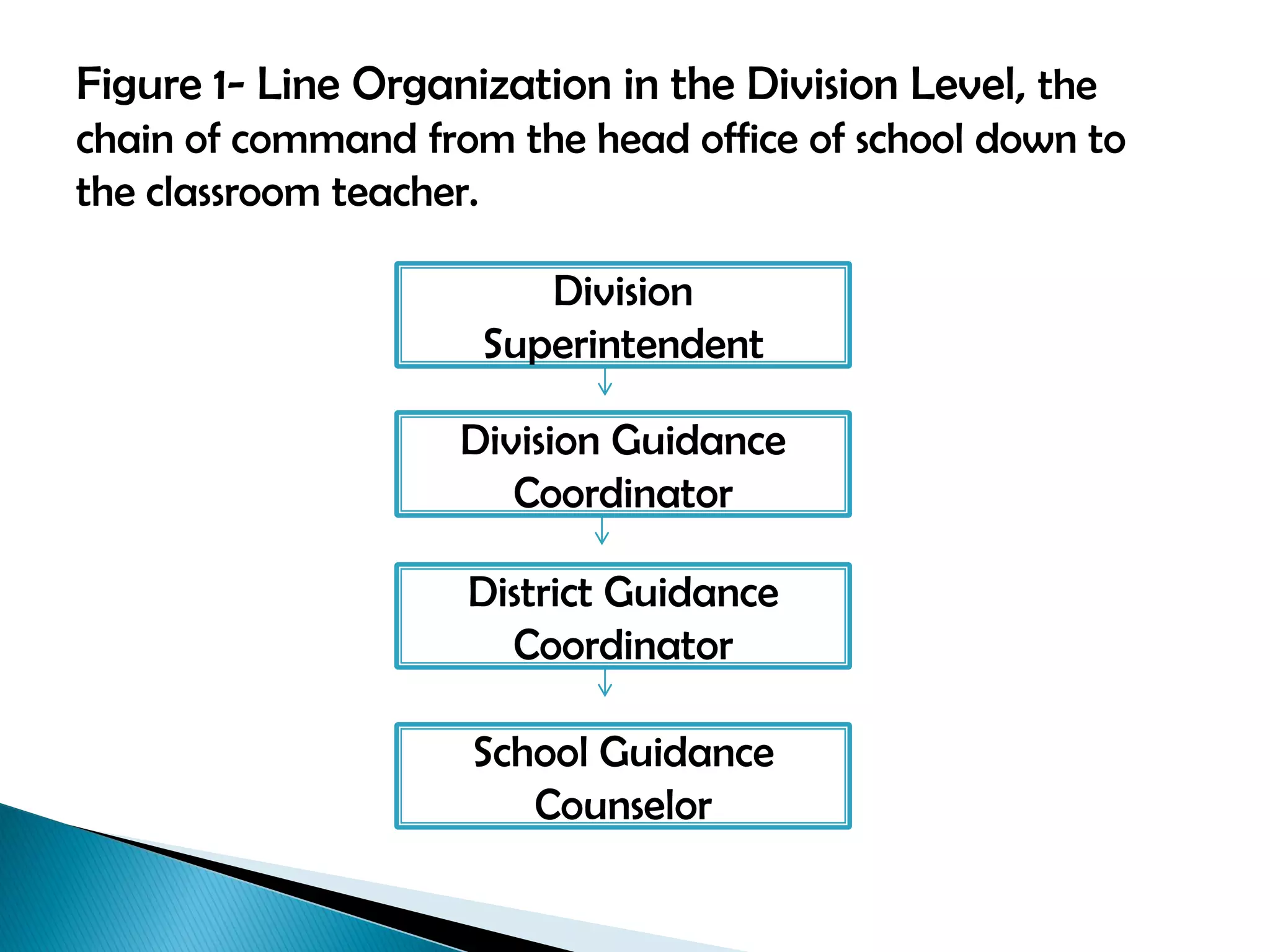
1. Line Organization
-Is the simplest and oldest form of organization structure. In
such structure, authority is delegated directly from the top to
bottom.
- Under the traditional or classical organization theories, line
officials are those who can give commands, enforce obedience
and impose disciplinary action. They have the responsibility
and authority for direct accomplishment of primary objectives .
Each individual is responsible only to the person immediately
above him.
Figure 1- Line Organization in the Division Level, the
chain of command from the head office of school down to
the classroom teacher.
Division
Superintendent
Division Guidance
Coordinator
District Guidance
Coordinator
School Guidance
Counselor
2. Line and Staff Organization
- is the pattern of the most large and complex
organizations. In it, all executives are either on the staff
or in the line depending on their authority and functions.
As such, its inherent nature is one of authority
relationship.
In this arrangement, the line authority carriers the
right to require the execution of order, while the staff
executive has the authority to support on how such
orders could be implemented. In short, the staff serves
the lines executive.
Figure 2 – Line and Staff Organization of
Guidance in the Division level
Division Superintendent
Guidance Supervisor
GuidanceTesting Research
Principal
Guidance Counselor Teacher
Student
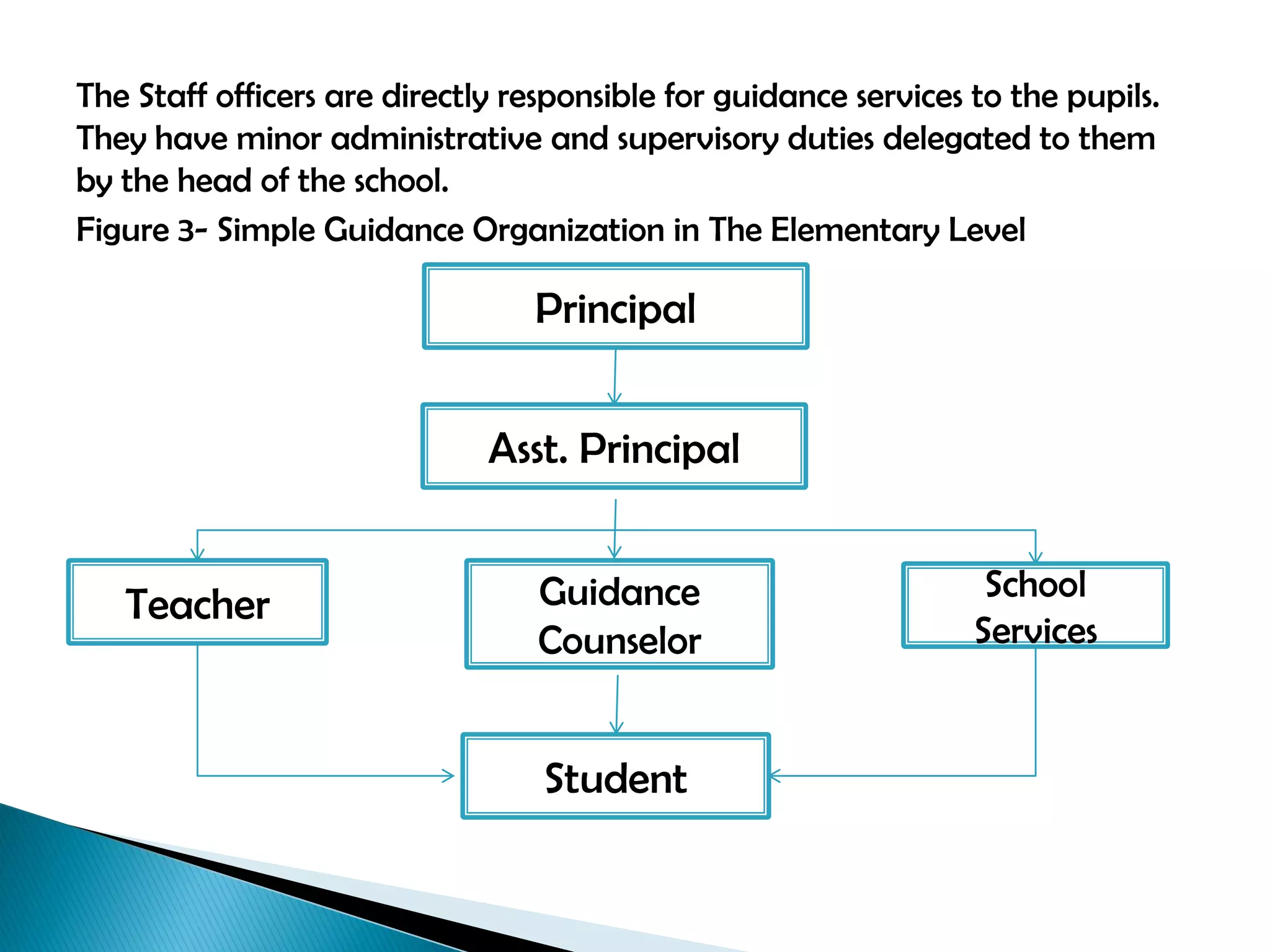
The Staff officers are directly responsible for guidance services to the pupils.
They have minor administrative and supervisory duties delegated to them
by the head of the school.
Figure 3- Simple Guidance Organization in The Elementary Level
Principal
Asst. Principal
School
Services
Teacher Guidance
Counselor
Student
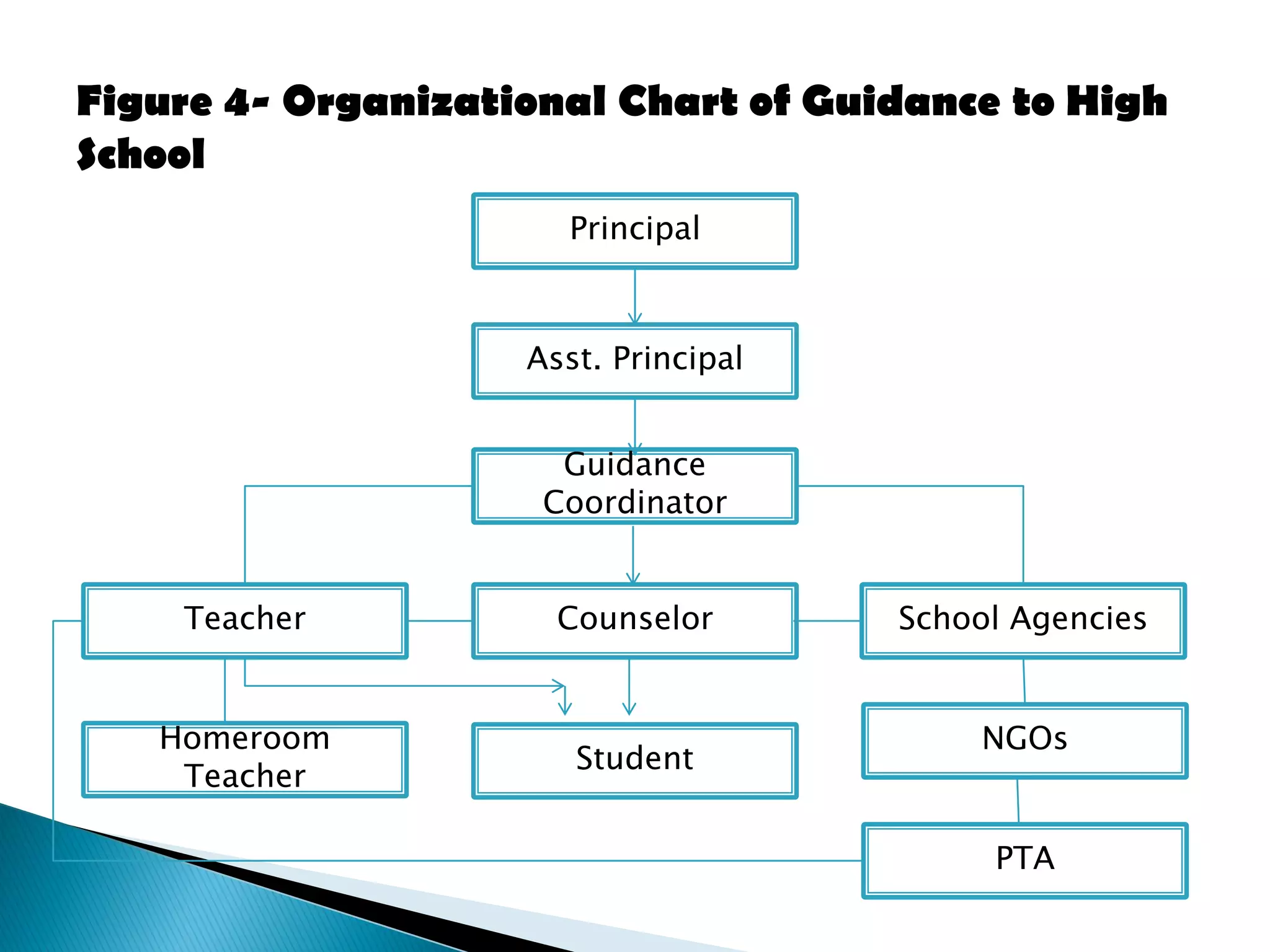
Figure 4- Organizational Chart of Guidance to High
School
Principal
Asst. Principal
Guidance
Coordinator
Counselor
Student
Teacher School Agencies
Homeroom
Teacher
NGOs
PTA
Small School requires a simple
organization which can be administered
with a minimum time and effort. The
head, usually the school, principal, can
create a committee that will oversee
school guidance programs. The
committee is composed of the principal
as chairman with guidance, counselors,
homeroom, teachers and teacher as
member.
The Guidance counselor who is
looking forward to the organization
of as rapidly expanding system, or
who faces the more difficult task of
the reorganization of a somewhat
static system, must pick from
organizational procedures and plans
those that will be most effective for his
system.

Organizational structure

  • 1.
    Organization A social unitof people that is structured and managed to meet a need or to pursue collective goals. All organization have a management structure that determine relationship between different activities and the members, subdivides, assign roles, responsibility, authority to carry out different task.
  • 3.
    Overview: In order tohave administration it must have organizational structure that is designed properly. The types of organizations must be present. Organizations come in all sizes and types. Each organization is unique to some extent.
  • 4.
    Types of Organization Thereare two types of organization the Formal and the Informal. 1. Informal Organization - Refers to the relationship of individual because of similarity of likes, dislikes, emotions, needs or attitudes. It may exist within a formal organization. The existence is determined not because of rules and regulations but by the reason of human personalities and characteristics.
  • 5.
    2. Formal Organization -is a system of well-defined jobs bearing a definite measure of authority, responsibility and accountability, the whole consciously designed to enable the people of the enterprise to work most effectively together in accomplishing their objectives. It characterized by well-defined roles, bound by delegation and relatively stable. Coordination ay be obtained through a prescribe pattern.
  • 6.
    Forms of Organization Thestrength of the organization comes from its people. Indeed, as pointed out by Edgar F. Huse and James L. Bowditch, it is people who make an organization succeed of fail ( Piffner, John M. and Frank Sherwood; Adiministration Organization. However, the way people act is highly influenced by the design of the organization and the nature and way in which the organization receives its information and work-flow through it.
  • 7.
    1. Line Organization -Isthe simplest and oldest form of organization structure. In such structure, authority is delegated directly from the top to bottom. - Under the traditional or classical organization theories, line officials are those who can give commands, enforce obedience and impose disciplinary action. They have the responsibility and authority for direct accomplishment of primary objectives . Each individual is responsible only to the person immediately above him.
  • 8.
    Figure 1- LineOrganization in the Division Level, the chain of command from the head office of school down to the classroom teacher. Division Superintendent Division Guidance Coordinator District Guidance Coordinator School Guidance Counselor
  • 9.
    2. Line andStaff Organization - is the pattern of the most large and complex organizations. In it, all executives are either on the staff or in the line depending on their authority and functions. As such, its inherent nature is one of authority relationship. In this arrangement, the line authority carriers the right to require the execution of order, while the staff executive has the authority to support on how such orders could be implemented. In short, the staff serves the lines executive.
  • 10.
    Figure 2 –Line and Staff Organization of Guidance in the Division level Division Superintendent Guidance Supervisor GuidanceTesting Research Principal Guidance Counselor Teacher Student
  • 11.
    The Staff officersare directly responsible for guidance services to the pupils. They have minor administrative and supervisory duties delegated to them by the head of the school. Figure 3- Simple Guidance Organization in The Elementary Level Principal Asst. Principal School Services Teacher Guidance Counselor Student
  • 12.
    Figure 4- OrganizationalChart of Guidance to High School Principal Asst. Principal Guidance Coordinator Counselor Student Teacher School Agencies Homeroom Teacher NGOs PTA
  • 13.
    Small School requiresa simple organization which can be administered with a minimum time and effort. The head, usually the school, principal, can create a committee that will oversee school guidance programs. The committee is composed of the principal as chairman with guidance, counselors, homeroom, teachers and teacher as member.
  • 14.
    The Guidance counselorwho is looking forward to the organization of as rapidly expanding system, or who faces the more difficult task of the reorganization of a somewhat static system, must pick from organizational procedures and plans those that will be most effective for his system.