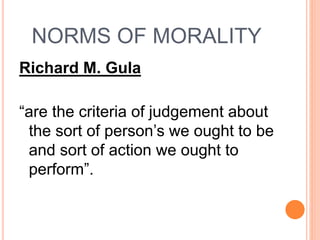
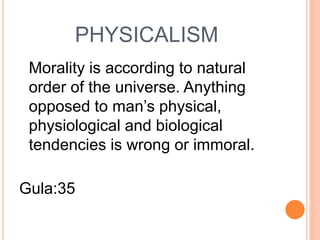
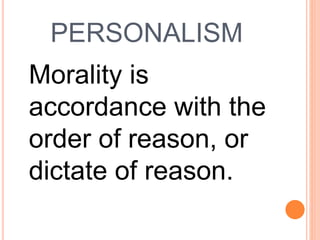


1. The document discusses different bases for moral judgement including eternal law, natural law, and conscience. Eternal law refers to God's divine will and natural order, while natural law involves humanity's participation in eternal law through reason. 2. Conscience involves making moral decisions and judgments about what is good and evil. There are different types of conscience including correct, erroneous, doubtful, scrupulous, and lax. Conscience can also be compulsory as a participation in God's eternal law. 3. The document contrasts a physicalist view of morality based on natural tendencies versus a personalist view where morality involves accordance with reason and human goals rather than just physical order.


