Download as DOCX, PPTX
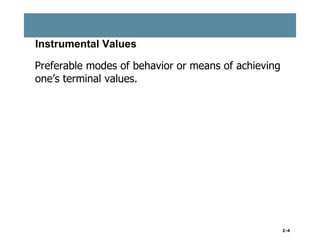





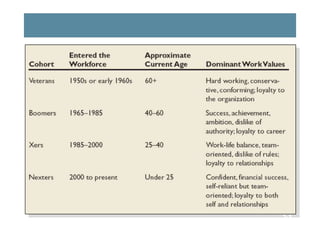
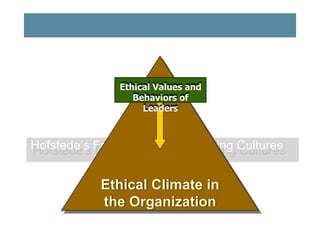
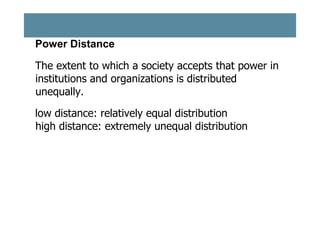
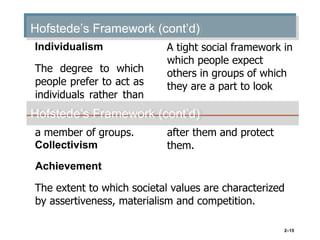
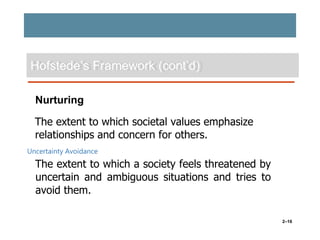
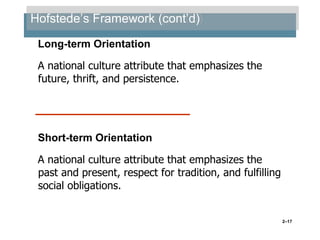
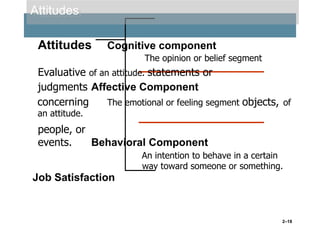
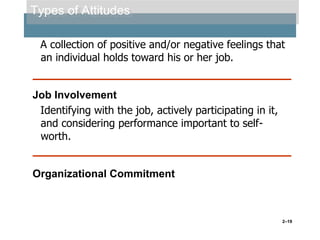
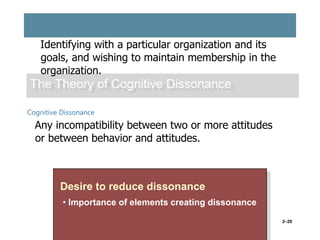
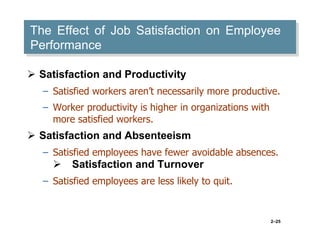

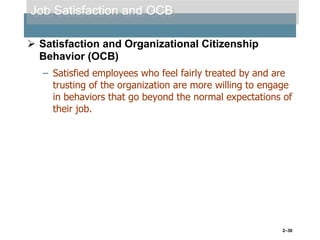


This document discusses values, attitudes, and job satisfaction. It defines values as basic convictions about what is good and defines attitudes as feelings toward objects, people, or events. Values provide understanding of behaviors and influence perceptions. The document also presents Hofstede's framework for assessing cultures based on power distance, individualism, uncertainty avoidance, and other dimensions. It discusses theories of cognitive dissonance and self-perception in forming attitudes. Job satisfaction is defined as feelings toward one's job, and the document notes satisfied employees are less likely to quit or be absent and more likely to engage in organizational citizenship behaviors. Satisfied employees also increase customer satisfaction.


