5/30/2015 Organizational behavior 2
Presentation on
 Contents:
 Definition.
 Nature.
 ABC Model.
 Functions.
 Determinants.
 Types.
 Changing attitude.
 Measurement of attitude.
5/30/2015 Organizational behavior 3
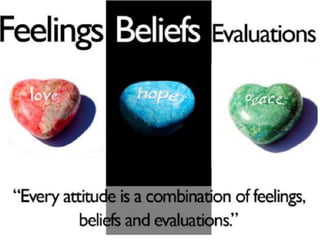
 “Attitudes”
 An Attitude is a relatively enduring
organization of beliefs, feelings, and
Evaluation towards socially significant
objects, groups, events or symbols.
5/30/2015 Organizational behaviour Lesson 2 5
Nature of Attitude
•It is the feeling ,Beliefs of individual
and groups.
•These feelings and beliefs are defined
ones Predispositions towards given
aspects of the world.
•It is not permanent it changed
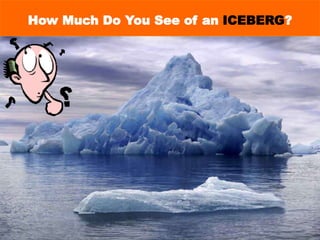
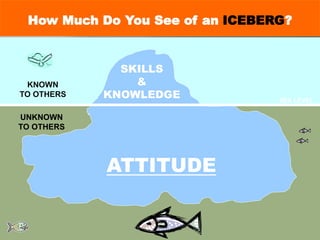
How Much Do You See of an ICEBERG?
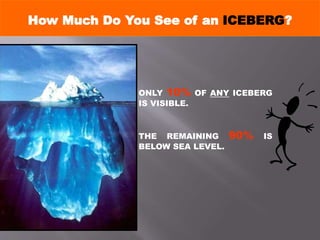
ONLY 10% OF ANY ICEBERG
IS VISIBLE.
THE REMAINING 90% IS
BELOW SEA LEVEL.
How Much Do You See of an ICEBERG?
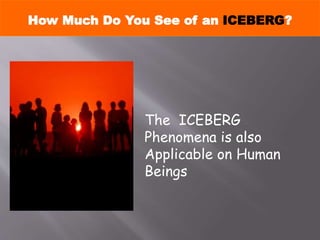
The ICEBERG
Phenomena is also
Applicable on Human
Beings
How Much Do You See of an ICEBERG?
SEA LEVEL
SKILLS
&
KNOWLEDGE
ATTITUDE
UNKNOWN
TO OTHERS
KNOWN
TO OTHERS
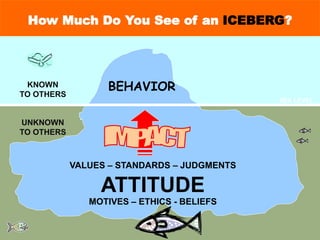
How Much Do You See of an ICEBERG?
SEA LEVEL
BEHAVIOR
VALUES – STANDARDS – JUDGMENTS
ATTITUDE
MOTIVES – ETHICS - BELIEFS
KNOWN
TO OTHERS
UNKNOWN
TO OTHERS
How Much Do You See of an ICEBERG?
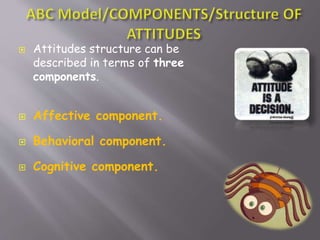
 Attitudes structure can be
described in terms of three
components.
 Affective component.
 Behavioral component.
 Cognitive component.
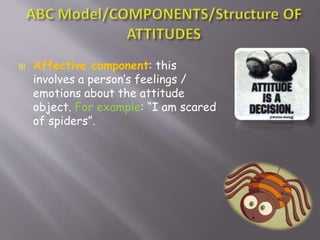
 Affective component: this
involves a person’s feelings /
emotions about the attitude
object. For example: “I am scared
of spiders”.
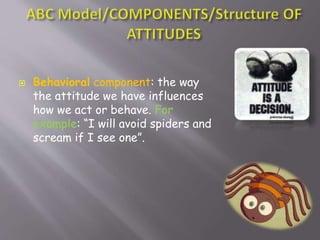
 Behavioral component: the way
the attitude we have influences
how we act or behave. For
example: “I will avoid spiders and
scream if I see one”.
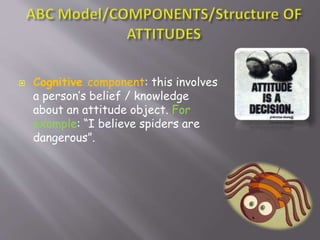
 Cognitive component: this involves
a person’s belief / knowledge
about an attitude object. For
example: “I believe spiders are
dangerous”.
 According to Katz, attitudes serve five
important functions from the viewpoint of
organizational behavior. These are as
follows.
 1.Attitude is a determine function.
 2.Attitude is a contradictions.
 3.Attitude is a adjustment function.
 4.Ego Defense Function.
 5.Attitude is a knowledge function.
 1.Attitude is a determine function.
 Attitude determine the meaning
of what is seen in the environment may be good
or bad means favorable attitude has good
meaning and unfavorable attitudes are bad
meaning.
 2.Attitude is a contradictions .
 Means some time they give two
meaning words and diplomatic opinions about
the same things.
 3. Attitude is a adjustment function.
 Attitude is provides a
function to adjust in the proper environment
to adjust themselves in that environment.
Treated them badly negative attitude and
treated them good a positive attitude.
 4.Ego Defense Function.
 Employees in organization
want to protect their own image and some
negative attitude for the new comers and they
have ego defensive function when may not be
changed.
 5.Attitude is a knowledge function.
 Attitudes provide
standards and frames of reference that allow
people to understand, and perceive the world
around him.
 Family and peer group.
 If the parents has a positive attitude or negative
attitude for a object the children's will follow the
same attitude.
 Neighborhood.
 The Cultural Facilities, Religious group possible
ethnic which is affect the attitude.
5/30/2015 Organizational behavior 20
 Economical Status.
 The economical status of an individual change the
attitude and belief towards the Trade Unions and
Workers and Manager is different.
 Mass Communication.
 The Medias like TV, Radio, News Paper from
which they got the information's can changed the
attitude.
5/30/2015 Organizational behavior 21
 Positive attitude in Organization. was initiated by
Martin Seligman in 1998
 Positive thinking is a mental attitude that admits into
the mind thoughts, words and images that are conductive
to growth, expansion and success. It is a mental attitude
that expects good and favorable results. A positive mind
anticipates happiness, joy, health and a successful outcome
of every situation and action. Whatever the mind expects,
it finds.
Function of Positive attitude
1.Maximize the Productivity.
2.Team Work.
3.Self Management and Problem Solving.
4.Improve quality.
5.Reduce Stress.
6.Loayl to Organizations
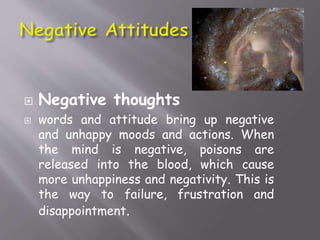
 Negative thoughts
 words and attitude bring up negative
and unhappy moods and actions. When
the mind is negative, poisons are
released into the blood, which cause
more unhappiness and negativity. This is
the way to failure, frustration and
disappointment.
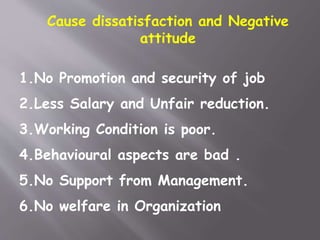
Cause dissatisfaction and Negative
attitude
1.No Promotion and security of job
2.Less Salary and Unfair reduction.
3.Working Condition is poor.
4.Behavioural aspects are bad .
5.No Support from Management.
6.No welfare in Organization
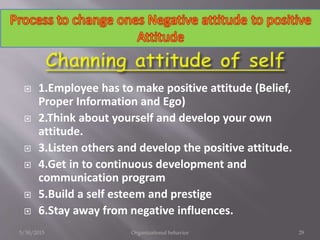
 1.Employee has to make positive attitude (Belief,
Proper Information and Ego)
 2.Think about yourself and develop your own
attitude.
 3.Listen others and develop the positive attitude.
 4.Get in to continuous development and
communication program
 5.Build a self esteem and prestige
 6.Stay away from negative influences.
5/30/2015 Organizational behavior 29
Changing the attitude of Employees
1. Give feedback-Employees are told about their
negative attitude and if it is harmful and manager
needs to offer alternative attitude.
2. Good Working Condition to work in the culture.
3. Positive Role Model means if the Manager is the
positive attitude and the role model the workers
provides the positive attitude.
Changing the attitude of Employees
1. Providing new information's means updated
information and do not ignore the
information's.
2. Use of fear to change some unethical
negative attitude.
3. Providing coopering some situations to change
their attitude .
4. Degree of commitment on target means
morale development.
Barriers to Changing an Attitude
Cognitive Dissonance- When a person behaves in
a fashion that is inconsistent with his or her
attitude, Means he or she knows it is wrong but steal
continue to inconsistency .
Prior Commitment-Means the belief is unchanged
and unwilling to change.
Insufficient Information-Two Way
Communication is not possible from TOP
Management and Workers which creates a negative
attitude.
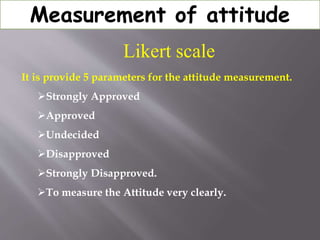
Measurement of attitude
Likert scale
It is provide 5 parameters for the attitude measurement.
Strongly Approved
Approved
Undecided
Disapproved
Strongly Disapproved.
To measure the Attitude very clearly.
Measurement of attitude
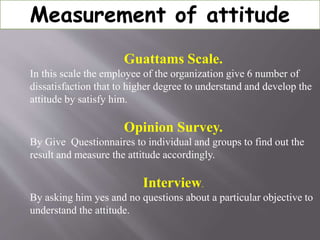
Guattams Scale.
In this scale the employee of the organization give 6 number of
dissatisfaction that to higher degree to understand and develop the
attitude by satisfy him.
Opinion Survey.
By Give Questionnaires to individual and groups to find out the
result and measure the attitude accordingly.
Interview.
By asking him yes and no questions about a particular objective to
understand the attitude.
Attitude in Organization and its Types

Attitude in Organization and its Types

  • 2.
  • 3.
     Contents:  Definition. Nature.  ABC Model.  Functions.  Determinants.  Types.  Changing attitude.  Measurement of attitude. 5/30/2015 Organizational behavior 3
  • 4.
     “Attitudes”  AnAttitude is a relatively enduring organization of beliefs, feelings, and Evaluation towards socially significant objects, groups, events or symbols.
  • 5.
  • 6.
    Nature of Attitude •Itis the feeling ,Beliefs of individual and groups. •These feelings and beliefs are defined ones Predispositions towards given aspects of the world. •It is not permanent it changed
  • 7.
    How Much DoYou See of an ICEBERG?
  • 8.
    ONLY 10% OFANY ICEBERG IS VISIBLE. THE REMAINING 90% IS BELOW SEA LEVEL. How Much Do You See of an ICEBERG?
  • 9.
    The ICEBERG Phenomena isalso Applicable on Human Beings How Much Do You See of an ICEBERG?
  • 10.
  • 11.
    SEA LEVEL BEHAVIOR VALUES –STANDARDS – JUDGMENTS ATTITUDE MOTIVES – ETHICS - BELIEFS KNOWN TO OTHERS UNKNOWN TO OTHERS How Much Do You See of an ICEBERG?
  • 12.
     Attitudes structurecan be described in terms of three components.  Affective component.  Behavioral component.  Cognitive component.
  • 13.
     Affective component:this involves a person’s feelings / emotions about the attitude object. For example: “I am scared of spiders”.
  • 14.
     Behavioral component:the way the attitude we have influences how we act or behave. For example: “I will avoid spiders and scream if I see one”.
  • 15.
     Cognitive component:this involves a person’s belief / knowledge about an attitude object. For example: “I believe spiders are dangerous”.
  • 16.
     According toKatz, attitudes serve five important functions from the viewpoint of organizational behavior. These are as follows.  1.Attitude is a determine function.  2.Attitude is a contradictions.  3.Attitude is a adjustment function.  4.Ego Defense Function.  5.Attitude is a knowledge function.
  • 17.
     1.Attitude isa determine function.  Attitude determine the meaning of what is seen in the environment may be good or bad means favorable attitude has good meaning and unfavorable attitudes are bad meaning.
  • 18.
     2.Attitude isa contradictions .  Means some time they give two meaning words and diplomatic opinions about the same things.  3. Attitude is a adjustment function.  Attitude is provides a function to adjust in the proper environment to adjust themselves in that environment. Treated them badly negative attitude and treated them good a positive attitude.
  • 19.
     4.Ego DefenseFunction.  Employees in organization want to protect their own image and some negative attitude for the new comers and they have ego defensive function when may not be changed.  5.Attitude is a knowledge function.  Attitudes provide standards and frames of reference that allow people to understand, and perceive the world around him.
  • 20.
     Family andpeer group.  If the parents has a positive attitude or negative attitude for a object the children's will follow the same attitude.  Neighborhood.  The Cultural Facilities, Religious group possible ethnic which is affect the attitude. 5/30/2015 Organizational behavior 20
  • 21.
     Economical Status. The economical status of an individual change the attitude and belief towards the Trade Unions and Workers and Manager is different.  Mass Communication.  The Medias like TV, Radio, News Paper from which they got the information's can changed the attitude. 5/30/2015 Organizational behavior 21
  • 23.
     Positive attitudein Organization. was initiated by Martin Seligman in 1998  Positive thinking is a mental attitude that admits into the mind thoughts, words and images that are conductive to growth, expansion and success. It is a mental attitude that expects good and favorable results. A positive mind anticipates happiness, joy, health and a successful outcome of every situation and action. Whatever the mind expects, it finds.
  • 25.
    Function of Positiveattitude 1.Maximize the Productivity. 2.Team Work. 3.Self Management and Problem Solving. 4.Improve quality. 5.Reduce Stress. 6.Loayl to Organizations
  • 26.
     Negative thoughts words and attitude bring up negative and unhappy moods and actions. When the mind is negative, poisons are released into the blood, which cause more unhappiness and negativity. This is the way to failure, frustration and disappointment.
  • 28.
    Cause dissatisfaction andNegative attitude 1.No Promotion and security of job 2.Less Salary and Unfair reduction. 3.Working Condition is poor. 4.Behavioural aspects are bad . 5.No Support from Management. 6.No welfare in Organization
  • 29.
     1.Employee hasto make positive attitude (Belief, Proper Information and Ego)  2.Think about yourself and develop your own attitude.  3.Listen others and develop the positive attitude.  4.Get in to continuous development and communication program  5.Build a self esteem and prestige  6.Stay away from negative influences. 5/30/2015 Organizational behavior 29
  • 30.
    Changing the attitudeof Employees 1. Give feedback-Employees are told about their negative attitude and if it is harmful and manager needs to offer alternative attitude. 2. Good Working Condition to work in the culture. 3. Positive Role Model means if the Manager is the positive attitude and the role model the workers provides the positive attitude.
  • 31.
    Changing the attitudeof Employees 1. Providing new information's means updated information and do not ignore the information's. 2. Use of fear to change some unethical negative attitude. 3. Providing coopering some situations to change their attitude . 4. Degree of commitment on target means morale development.
  • 32.
    Barriers to Changingan Attitude Cognitive Dissonance- When a person behaves in a fashion that is inconsistent with his or her attitude, Means he or she knows it is wrong but steal continue to inconsistency . Prior Commitment-Means the belief is unchanged and unwilling to change. Insufficient Information-Two Way Communication is not possible from TOP Management and Workers which creates a negative attitude.
  • 33.
    Measurement of attitude Likertscale It is provide 5 parameters for the attitude measurement. Strongly Approved Approved Undecided Disapproved Strongly Disapproved. To measure the Attitude very clearly.
  • 34.
    Measurement of attitude GuattamsScale. In this scale the employee of the organization give 6 number of dissatisfaction that to higher degree to understand and develop the attitude by satisfy him. Opinion Survey. By Give Questionnaires to individual and groups to find out the result and measure the attitude accordingly. Interview. By asking him yes and no questions about a particular objective to understand the attitude.