Downloaded 2,172 times

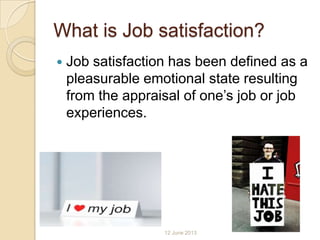


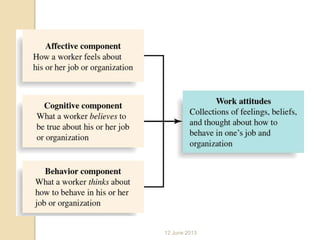
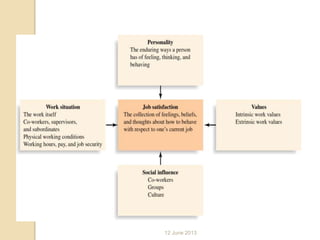
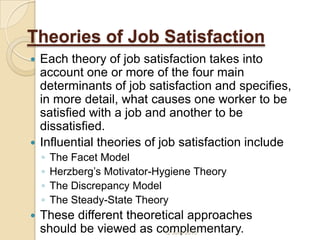
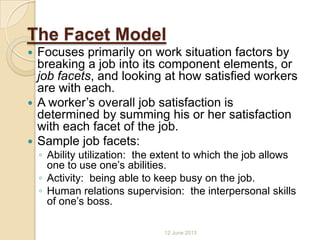
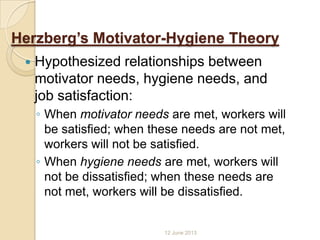
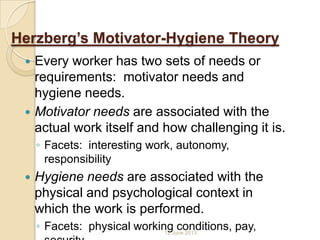
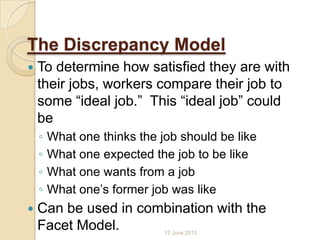

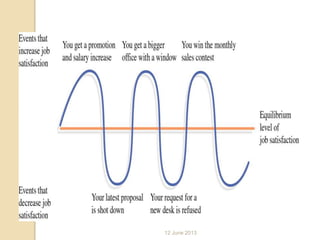
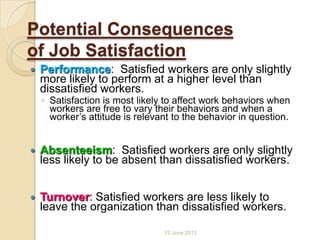
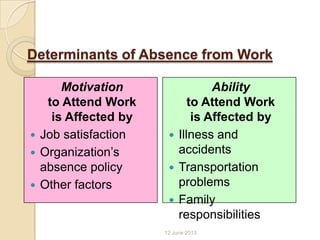
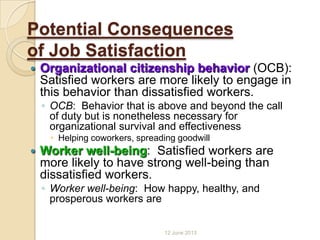
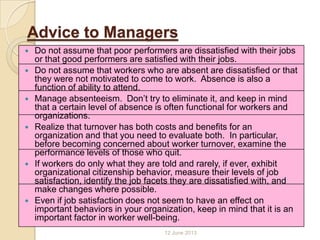


This document discusses job satisfaction, including its definition as a pleasurable emotional state resulting from one's job appraisal. It examines work values like intrinsic values of interesting work and extrinsic values like pay. Work attitudes like job satisfaction and organizational commitment are more specific and less lasting than values. Influential theories of job satisfaction are presented, like the Facet Model that breaks jobs into elements to assess satisfaction. Herzberg's theory separates motivator and hygiene needs. The Discrepancy Model compares jobs to ideals. Job satisfaction can impact performance, absenteeism, turnover, organizational citizenship, and worker well-being. Managers are advised not to assume satisfaction causes behaviors and to manage absenteeism and turnover.


